
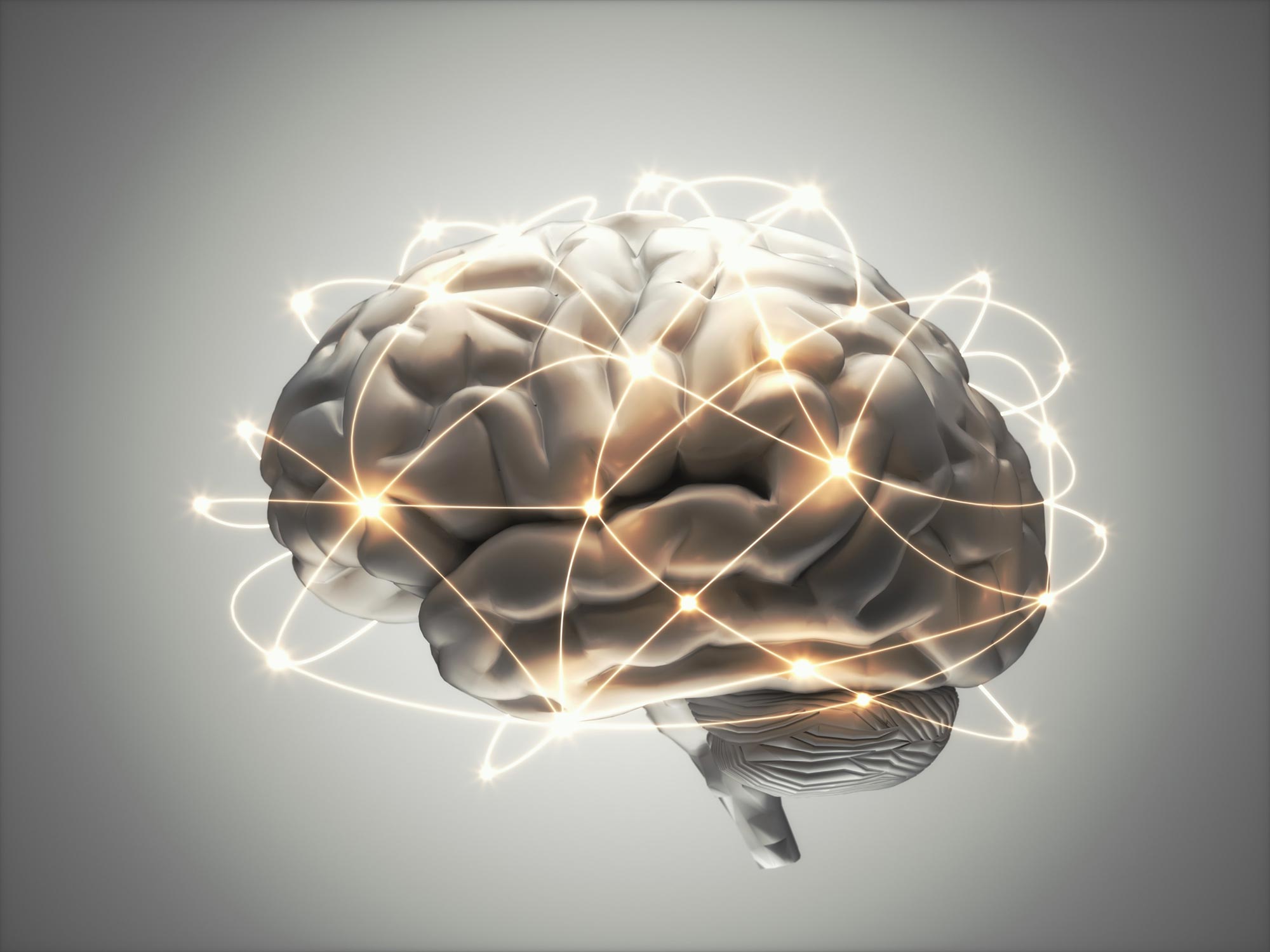
Why do primates possess large brains? To investigate this, researchers in the Panamanian rainforest conducted experiments comparing the foraging intelligence of primates with larger brains to mammals with smaller brains.
Primates, such as humans, possess larger brains than most other mammals. For years, researchers have explored the possibility that diet, particularly fruit consumption, might explain why primates developed such large brains. A team from the Max Planck Institute of Animal Behavior and the Smithsonian Institute of Tropical Research recently put this hypothesis to the test for the first time and discovered that the fruit-diet theory might be out of juice.
The researchers used drone imaging, GPS tracking, and fine-scale behavioral analyses to test how four species of fruit-eating mammals solved the same natural foraging puzzle in a Panamanian rainforest.
They found that the larger-brained primate species did not solve the fruit-finding puzzle more efficiently than smaller-brained mammals. The study, published today in Proceedings of the Royal Society B, upends the traditional view that a large brain is needed to make smart decisions when finding food.
According to the leading theory for how primates evolved larger brains, fruit, and intelligence worked hand in hand to power brain growth. Larger-brained animals could use their intelligence to find fruit more efficiently, which in turn provided more energy to fuel a larger brain.
Fruit, after all, is a valuable but variable resource. It places cognitive demands on animals who must find fruiting trees and remember when they ripen. Studies have lent support for the dietary theory of brain evolution by showing correlations between brain size and the amount of fruit in the diet.
But researchers from MPI-AB and STRI thought that the theory was ripe for questioning. “The fruit-diet hypothesis had never been supported experimentally,” says first author Ben Hirsch, a STRI research associate.
Testing fruit-eaters in Panama
The barrier has been methodological. To test the fruit-diet hypothesis, scientists must measure how efficiently an animal finds fruit. Says Hirsch: “Primates and many other mammals travel long distances every day in search for food, making it almost impossible to replicate their real-world navigation challenges in a lab.” The team circumvented this problem by exploiting a natural phenomenon that occurs in the rainforest on Barro Colorado Island in Panama. For three months every year, fruit-eating mammals are forced to feed on one tree species, Dipteryx oleifera.
“With animals feeding almost exclusively on Dipteryx fruit, they are simultaneously solving the same foraging puzzle,” says senior author Meg Crofoot, a director at MPI-AB and Humboldt Professor at the University of Konstanz. “This gives us a powerful tool for comparing their foraging efficiency.”
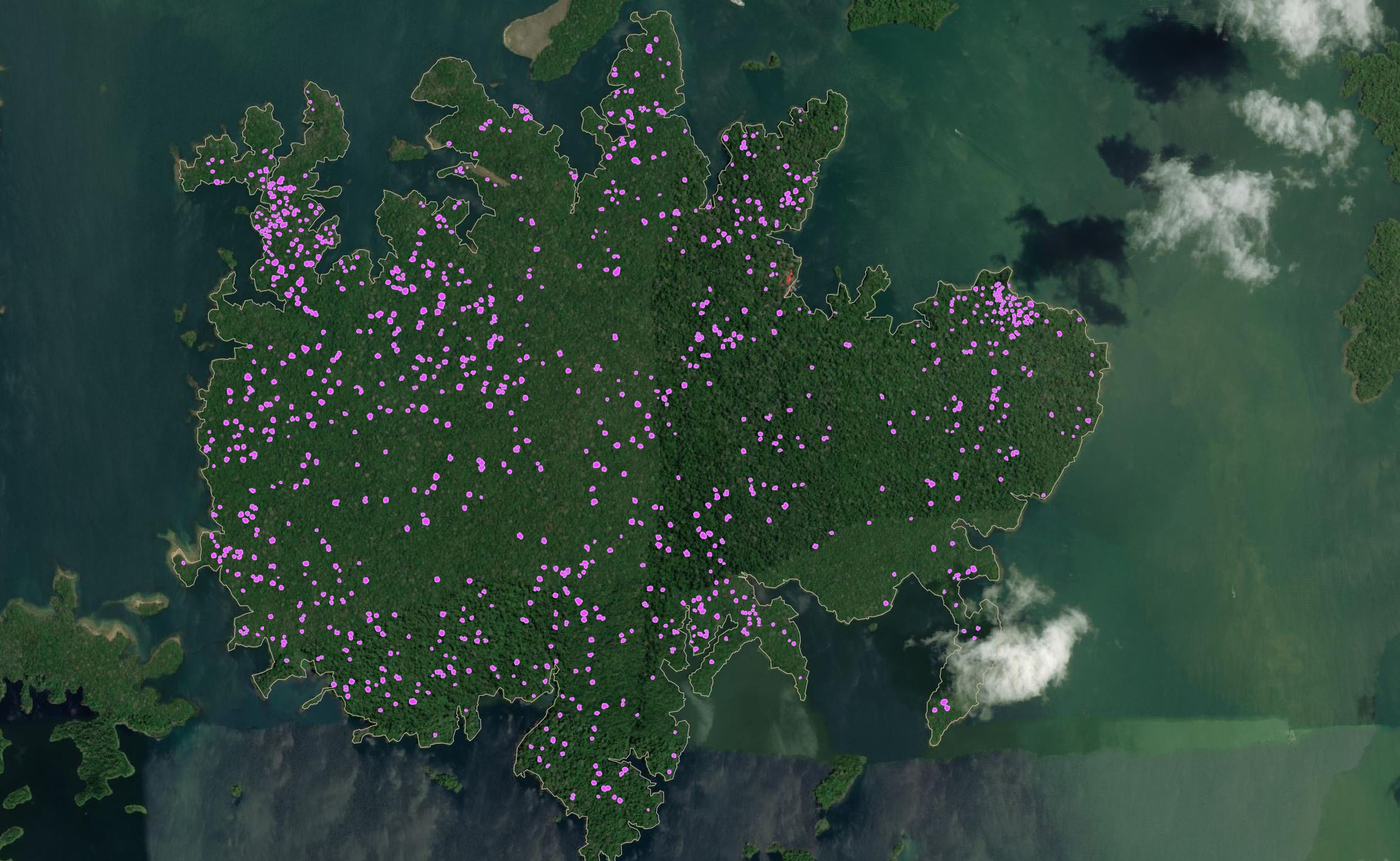
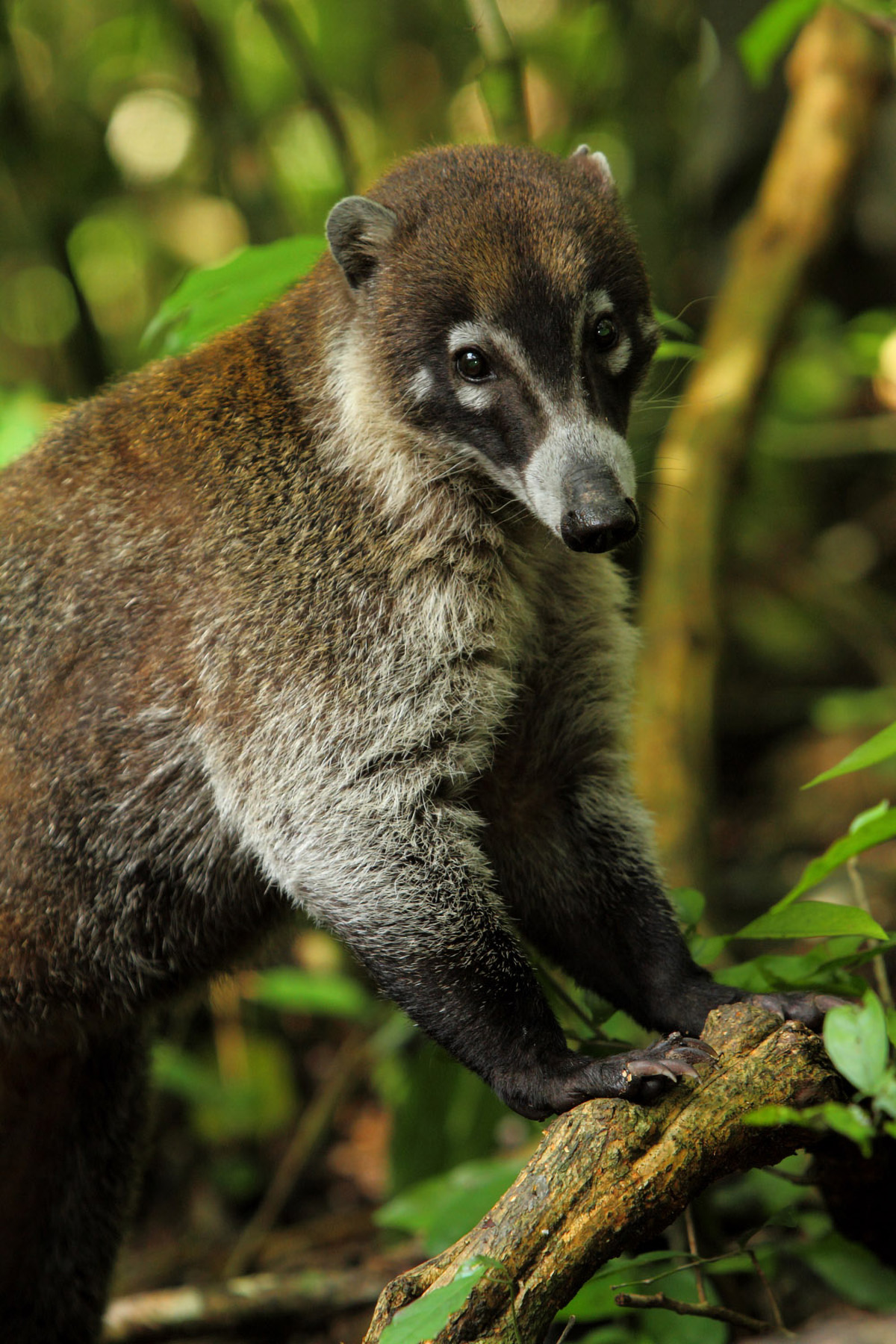
The team mapped the location of all Dipteryx trees on Barro Colorado Island by flying drones over the canopy in summer, when the tall trees were crowned with conspicuous purple blossoms. The fruit tree map revealed the full extent of the fruit puzzle faced by animals, but the scientists still needed to test how efficiently mammals with different brain sizes visited these trees. They tracked several individuals of two large-brained primates (spider monkeys and white-faced capuchins) and two smaller-brained raccoon relatives (white-nosed coatis and kinkajous). GPS sensors revealed the paths that animals took to Dipteryx trees, while accelerometers confirmed that an animal was active, and potentially feeding, during a tree visit.
The scientists then calculated route efficiency as the daily amount of time spent active in Dipteryx trees divided by the distance traveled. According to the fruit-diet hypothesis, the big-brained capuchins and spider monkeys should exhibit greater route efficiency than the coatis and kinkajous.
“We didn’t find any evidence that animals with larger brains made smarter foraging decisions,” says Crofoot. “If larger brains do make animals smarter, then this intelligence is not being used to route themselves more efficiently to fruit trees in this tropical rainforest.”
So why did brain size increase in some species? The authors say that by refuting the fruit-diet hypothesis, their study can shift the focus to ideas beyond foraging efficiency. “Larger brains might promote better episodic memory, allowing those species to better time tree visits to maximize the amount of ripe fruit encountered,” says Hirsch. The authors also suggest that larger brains might be linked to tool use, culture, or the complexity of living in a social group.
“Our study can’t determine the exact drivers of brain evolution,” says Crofoot, “but we have been able to use minimally-invasive techniques to empirically test a big hypothesis about evolution, cognition, and behavior of wild animals.”
Reference: “Smarter foragers do not forage smarter: a test of the diet hypothesis for brain expansion” by Ben T. Hirsch, Roland Kays, Shauhin Alavi, Damien Caillaud, Rasmus Havmoller, Rafael Mares and Margaret Crofoot, 29 May 2024, Proceedings of the Royal Society B.
DOI: 10.1098/rspb.2024.0138
Never miss a breakthrough: Join the SciTechDaily newsletter.
Follow us on Google and Google News.