

NIH-funded study in mice offers a possible new target for high blood pressure treatments.
A study supported by the National Institutes of Health suggests that the response of immune system cells inside the protective covering surrounding the brain may contribute to the cognitive decline that can occur in a person with chronic high blood pressure. This finding, published in Nature Neuroscience, may shed light on new ways to counteract the effects of high blood pressure on cognition. The study was funded by the National Institute of Neurological Disorders and Stroke (NINDS), a part of NIH.
“The role of immune signaling in cognitive decline is critically important to understand,” said Roderick Corriveau, Ph.D., program director, NINDS. “These findings offer insight into how signaling from the immune system could contribute to symptoms of cognitive decline that ultimately result in dementia diagnoses.”
Hypertension’s Global Impact and Cognitive Effects
Hypertension affects more than 1 billion people worldwide and can lead to a decline in cognitive function including when a stroke occurs, but also even when a person with high blood pressure does not have a stroke. However, efforts to control cognitive loss in people who do not experience a stroke with treatments that lower blood pressure have shown mixed results. The findings of this mouse study suggest that immune cells around and within the brain become abnormally activated under conditions that mimic a common form of hypertension, and this activation leads to impaired brain function.
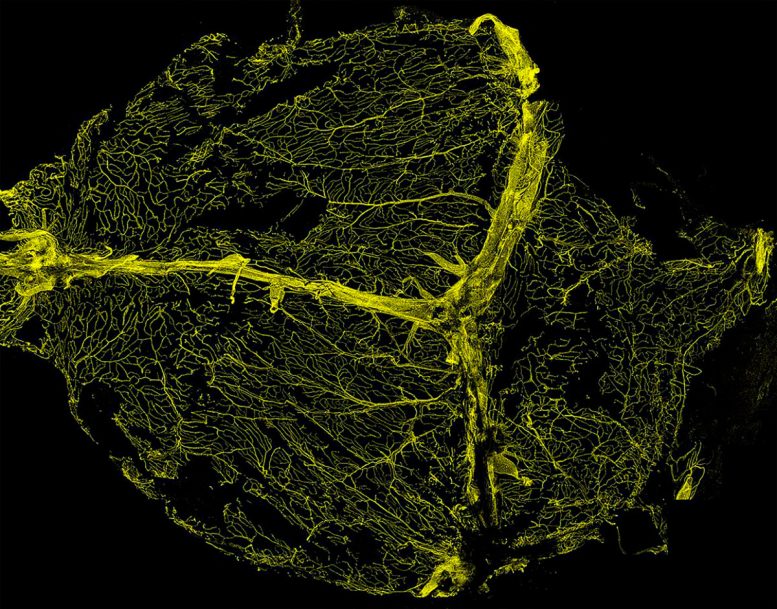
Research Insights: Mouse Model of Hypertension
Using a mouse model of high blood pressure, the researchers led by Costantino Iadecola, M.D., director and chair of the Feil Family Brain and Mind Research Institute, New York City, found abnormally increased levels of interleukin-17 (IL-17), a chemical normally released in the body to activate the immune system, in the cerebral spinal fluid and the brain. Previously, Dr. Iadecola’s team showed that a high salt diet increased IL-17 in the gut, which was followed by cognitive impairment. These new findings add to that story by showing that IL-17 is acting within the brain itself. It’s also notable that these experiments use a different mouse model, called the DOCA salt model, that more closely mimics a common form of hypertension in people.
“This is currently the most realistic model of hypertension that we have,” said Dr. Iadecola. “The DOCA mouse simulates low-renin hypertension, which is a common type of hypertension in people, particularly among Black Americans.”
The Role of IL-17 and Brain Macrophages
Further work showed that, once in the brain, IL-17 turned on immune cells responsible for activating inflammation and fighting off infections, known as macrophages. A series of experiments confirmed that these macrophages are important for the observed decline in cognition, as both mice in which the receptor for IL-17 was deleted in brain macrophages and those that had their brain macrophages depleted showed no effects of high blood pressure on cognitive function despite having other symptoms of hypertension.
Researchers still sought the source of the IL-17 acting on the brain macrophages. Based on their previous work, the researchers’ initial hypothesis was that the gut releases IL-17, which then travels to the brain through the bloodstream. Once there, it sets off a reaction that damages the ability of brain blood vessels to respond appropriately to increased brain activity. However, blocking the brain blood vessels’ ability to respond to IL-17 only partially rescued cognitive impairment, suggesting that there was another source of IL-17 acting on the brain.
Uncovering IL-17’s Pathway and Protective Barriers
One clue came from other recent studies suggesting that one layer of the protective covering of the brain, known as dura mater, contains immune T cells that can both secrete IL-17 and can affect the behavior of mice. Using special mice where cells light up fluorescent green when they make IL-17, the researchers confirmed that hypertension increases IL-17 in the dura mater which is then released into the tissue. Normally, barriers exist within the protective covering of the brain, called the meninges, to prevent unwanted spillage into the brain. However, this barrier appeared to be disrupted in the mice with experimentally induced hypertension, and this disruption allowed IL-17 to enter the cerebral spinal fluid.
Two additional experiments helped to confirm this hypothesis. First, a drug was used to prevent T-cell movement from the lymph nodes into the meninges. Second, an antibody was used to block the activity of T cells in the meninges. In both cases, cognitive function was restored in the mice with hypertension, suggesting that targeting overactive T cells could be a new treatment approach worth exploring.
“Together, our data suggest two different effects are caused by hypertension,” said Dr. Iadecola. “One is IL-17 acting on blood vessels, but this appears to be relatively minor. A more prominent, central effect is caused by cells in the meninges releasing IL-17 that directly affects immune cells in the brain. It is these immune cells, activated by signaling from the meninges, that ultimately affect the brain in a way that causes cognitive impairment.”
Future Research Directions
Dr. Iadecola and his team are now looking to connect the dots between the activation of immune cells in the meninges and decreased cognitive function. Previous work by the group suggested a connection between a high salt diet which suppressed the production of the chemical nitric oxide in brain vessels that in turn led to buildup of tau, a toxic protein that forms clumps in neurons affected by Alzheimer’s disease. The present findings also show suppression of nitric oxide production within brain vessels, and whether this also leads to an increase in tau production is currently under investigation.
Reference: “Meningeal interleukin-17-producing T cells mediate cognitive impairment in a mouse model of salt-sensitive hypertension” by Monica M. Santisteban, Samantha Schaeffer, Antoine Anfray, Giuseppe Faraco, David Brea, Gang Wang, Melissa J. Sobanko, Rose Sciortino, Gianfranco Racchumi, Ari Waisman, Laibaik Park, Josef Anrather and Costantino Iadecola, 4 December 2023, Nature Neuroscience.
DOI: 10.1038/s41593-023-01497-z
The NINDS’s Mind Your Risks® campaign serves to highlight the connection between high blood pressure and brain health (including risk of stroke and dementia), particularly among Black men ages 28-45, and offers strategies to prevent and mitigate high blood pressure’s effects on brain health.
This study was funded by NINDS (NS089323, NS095441, NS123507), the Leon Levy Fellowship in Neuroscience, and the Feil Family Foundation.
Never miss a breakthrough: Join the SciTechDaily newsletter.
Follow us on Google and Google News.
1 Comment
First diagnosed with multiple still medically unrecognized food allergies (e.g., Dr. Arthur F. Coca, by 1935) in late 1981 and mostly untreated (bad side effects) HTN in 1992 (later learned to be instigated with added MSG, FDA approved for expanded use in 1980), I doubt the mouse models are very representative of the human population. Still, the biochemistry might apply. Based upon my own serious allergen avoidance/failed blood testing caused calcium deficiency presenting by 2009, to progress with the research in humans I suggest including bone density, CRP, ionic calcium and serum uric acid testing as possible indicators of allergy/added MSG related high levels of IL-17. As to a greater prevalence of HTP in black people, more acquired/inherited food allergies aggravated with added MSG in conjunction with poorer dietary variety and fewer/shorter essential fasting intervals can probably account for that.