
Close Menu
    Facebook X (Twitter) Instagram
    SciTechDaily
    • Biology
    • Chemistry
    • Earth
    • Health
    • Physics
    • Science
    • Space
    • Technology
    Facebook X (Twitter) Pinterest YouTube RSS
    SciTechDaily
    Home»Biology»New Type of Multi-Tasking Taste Cells Discovered in Taste Buds
    Biology

    New Type of Multi-Tasking Taste Cells Discovered in Taste Buds

    By PLOSAugust 15, 2020No Comments3 Mins Read
    Facebook Twitter Pinterest Telegram LinkedIn WhatsApp Email Reddit
    Share
    Facebook Twitter LinkedIn Pinterest Telegram Email Reddit
    New Type of Taste Cell
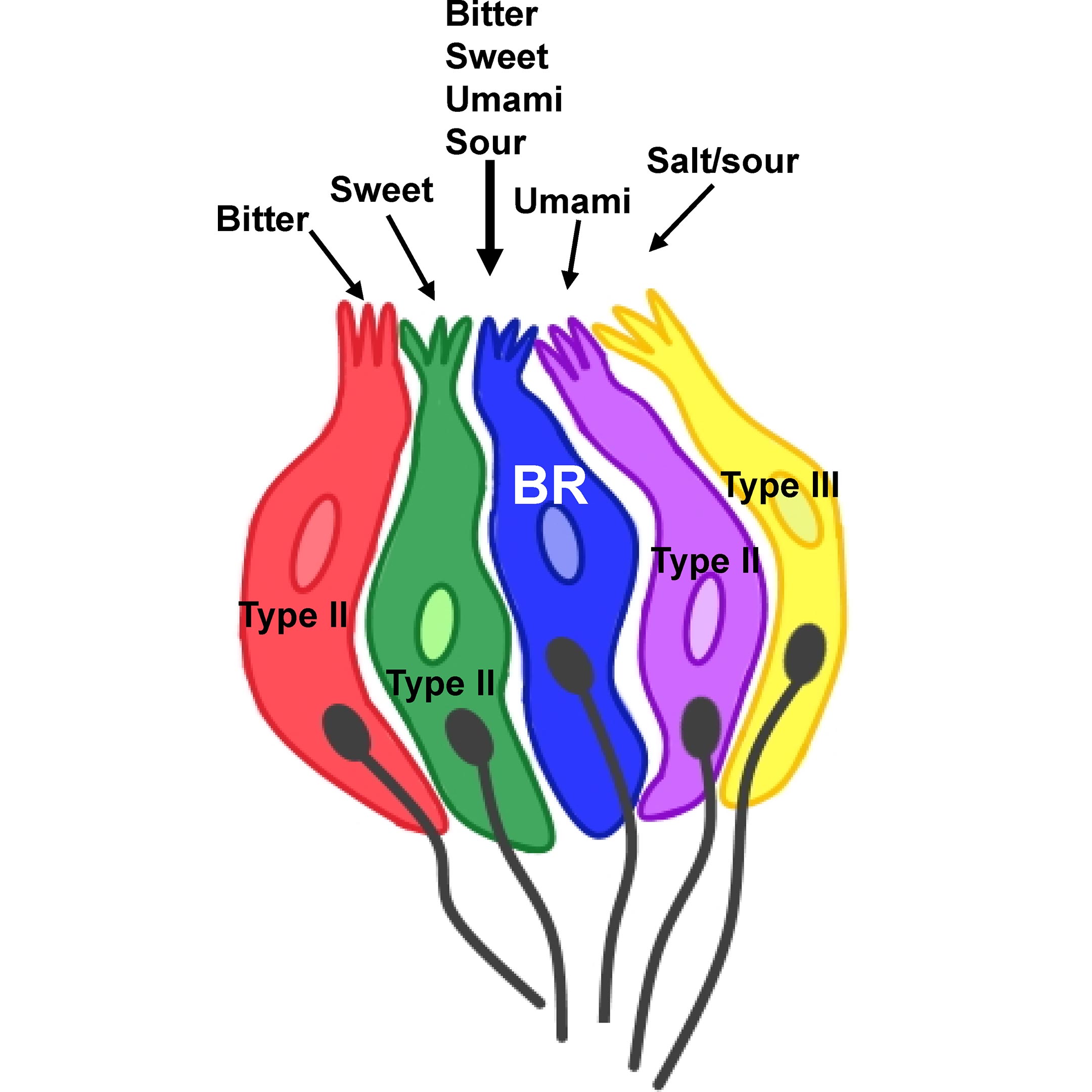
    Most taste cells selectively respond to a specific stimulus type while broadly responsive cells respond to multiple taste qualities. Credit: Jhanna Flora and Kathryn Medler

    Study in mice identifies a taste cell that detects every taste but salt.

    Our mouths may be home to a newly discovered set of multi-tasking taste cells that–unlike most known taste cells, which detect individual tastes–are capable of detecting sour, sweet, bitter and umami stimuli. A research team led by Kathryn Medler at the University at Buffalo reports this discovery in a study published 13th August in PLOS Genetics.

    Taste buds in the mouth are critical to our survival and help us to decide whether a food is a good source of nutrients or a potential poison. Taste buds employ three types of taste cells: Type I cells acts as support cells; Type II cells detect bitter, sweet and umami tastes; and Type III cells detect sour and salty flavors. To better understand how taste cells detect and signal the presence of different tastes, the researchers used an engineered mouse model to investigate the signaling pathways that the animals use to relay taste information to the brain. They discovered a previously unknown subset of Type III cells that were “broadly responsive” and could announce sour stimuli using one signaling pathway, and sweet, bitter and umami stimuli using another.

    The idea that mammals might possess broadly responsive taste cells has been put forth by multiple lab groups, but previously, no one had isolated and identified these cells. The researchers suspect that broadly responsive cells make a significant contribution to our ability to taste. Their discovery provides new insight into how taste information is sent to the brain for processing, and suggests that taste buds are far more complex than we currently appreciate.

    “Taste cells can be either selective or generally responsive to stimuli which is similar to the cells in the brain that process taste information,” commented author Kathryn Medler. “Future experiments will be focused on understanding how broadly responsive taste cells contribute to taste coding.”

    Reference: “A subset of broadly responsive Type III taste cells contribute to the detection of bitter, sweet and umami stimuli” by Debarghya Dutta Banik, Eric D. Benfey, Laura E. Martin, Kristen E. Kay, Gregory C. Loney, Amy R. Nelson, Zachary C. Ahart, Barrett T. Kemp, Bailey R. Kemp, Ann-Marie Torregrossa and Kathryn F. Medler, 13 August 2020, PLoS Genetics.
    DOI: 10.1371/journal.pgen.1008925

    This work was supported by NSF1256950 to KFM. The funders had no role in study design, data collection and analysis, decision to publish, or preparation of the manuscript.

    Never miss a breakthrough: Join the SciTechDaily newsletter.
    Follow us on Google and Google News.

    Cell Biology Genetics Physiology PLOS Popular
    Share. Facebook Twitter Pinterest LinkedIn Email Reddit

    Related Articles

    Anti-aging Protein in Red Blood Cells Helps Prevent Mental Decline, Poor Memory and Hearing Deficits

    Charles Darwin Investigated Goosebumps – Now Harvard Scientists Discover the Real Reason Behind Them

    DNA May Not Be the Blueprint for Life – Just a Scrambled List of Ingredients

    “Superpower” Discovered in Squids: They Can Massively Edit Their Own Genetics

    Genetic Analysis Shows Life’s Earliest Evolution Was More Complicated Than Previously Suspected

    Unlocking the Genetic Code of the Novel Coronavirus: How COVID-19 Made the Leap From Animals to Humans

    Breakthrough in Understanding Evolution – Mitochondrial Division Conserved Across Species

    Scientists Discover Genes for a Longer, Healthier Life

    Scientists Discover a Gene for Brain Size

    Leave A Reply Cancel Reply

    • Facebook
    • Twitter
    • Pinterest
    • YouTube

    Don't Miss a Discovery

    Subscribe for the Latest in Science & Tech!

    Trending News

    For the First Time, ChatGPT Has Solved an Unproven Math Problem in Geometry

    This Popular Supplement May Actually Slow Biological Aging, Scientists Reveal

    Can a Common Vitamin Fight the Most Aggressive Brain Cancer?

    Scientists Discover How to Stop Vision Loss Before It Starts

    The Mediterranean Isn’t Safe: Scientists Warn of Inevitable Tsunami

    Scientists Say Washing Dishes With a Sponge Has a Concerning Side Effect

    Scientists Break 50-Year-Old Bottleneck To Supercharge Cancer Drug Production

    Popular Weight-Loss Drug Wegovy Linked to Sudden Vision Loss

    Follow SciTechDaily
    • Facebook
    • Twitter
    • YouTube
    • Pinterest
    • Newsletter
    • RSS
    SciTech News
    • Biology News
    • Chemistry News
    • Earth News
    • Health News
    • Physics News
    • Science News
    • Space News
    • Technology News
    Recent Posts
    • Something Is Warping Saturn’s Magnetic Field and It’s Not What You Think
    • Coffee and Blood Pressure: What You Need To Know Before Your Next Cup
    • Just a Few Breathless Minutes a Day Could Slash Your Risk of 8 Major Diseases
    • This Simple Habit Could Cut Your Risk of Dementia by 30%
    • Hundreds of Times Colder Than Outer Space: Scientists Reach Near-Absolute Zero in Dark Matter Hunt
    Copyright © 1998 - 2026 SciTechDaily. All Rights Reserved.
    • Science News
    • About
    • Contact
    • Editorial Board
    • Privacy Policy
    • Terms of Use

    Type above and press Enter to search. Press Esc to cancel.