
Close Menu
    Facebook X (Twitter) Instagram
    SciTechDaily
    • Biology
    • Chemistry
    • Earth
    • Health
    • Physics
    • Science
    • Space
    • Technology
    Facebook X (Twitter) Pinterest YouTube RSS
    SciTechDaily
    Home»Health»Scientists Discover Surprising Consequence of a High-Fat Diet During Pregnancy
    Health

    Scientists Discover Surprising Consequence of a High-Fat Diet During Pregnancy

    By Tokyo Medical and Dental UniversityApril 29, 2023No Comments4 Mins Read
    Facebook Twitter Pinterest Telegram LinkedIn WhatsApp Email Reddit
    Share
    Facebook Twitter LinkedIn Pinterest Telegram Email Reddit
    Variety Unhealthy Junk Food
    A study by Tokyo Medical and Dental University reveals that offspring exposed to high-fat diets during gestation and early life exhibit a preference for salty tastes, possibly due to increased AT1 protein and gene expression in taste buds, potentially affecting obesity and diet-related health issues.

    A study reveals that a high-fat maternal diet during pregnancy and lactation alters the taste preferences and metabolism of offspring.

    It’s common knowledge that maintaining a healthy diet is important, particularly during pregnancy. Consuming a high-fat diet can have severe impacts on metabolism, increasing the risk of obesity, diabetes, liver disease, and even cancer. Studies have shown that consuming a diet high in fat during pregnancy can affect the taste preferences and metabolism of the offspring. In many households, both children and parents consume the same food.

    In other words, mothers who eat a high-fat diet are more likely to feed their children with similar fatty foods. The consequences of exposing offspring to high levels of fat both during pregnancy and early life is what the researchers from Tokyo Medical and Dental University (TMDU) aimed to uncover in their study published in Scientific Reports.

    The researchers used a rat model to investigate the effect on taste preference of a two-generational (i.e., pregnant mother and young newborns) exposure to a high-fat diet. Pregnant and lactating females were fed a high-fat diet, while a control group received a standard diet. After weaning, the offspring from each group received the same diet – babies from mothers fed a high-fat diet during pregnancy and those fed a standard diet continued receiving a high-fat diet and a standard diet, respectively.
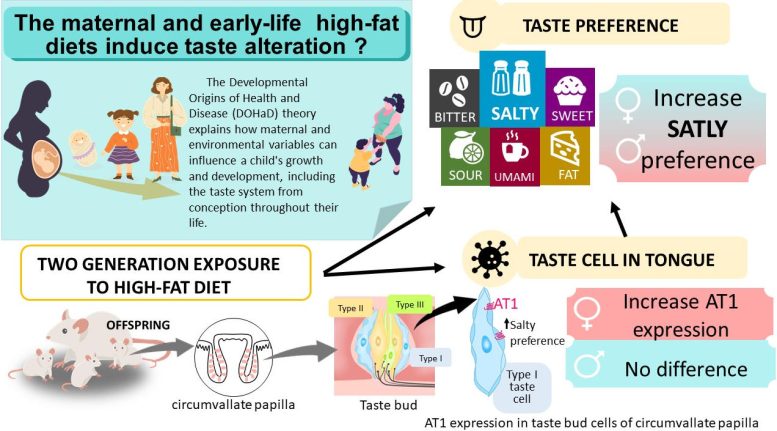
    Maternal and Early Life High Fat Diets Result in a Taste for Salty Food Infographic
    The Developmental Origins of Health and Disease (DOHaD) theory refers to the concept that maternal and environmental variables at a very early life stage can influence a child’s growth, development and health in later life. Maternal and early-life high-fat diets increase preference for salty taste, while there are no differences in bitter, sour, sweet, and umami tastes. The protein and gene expression of Angiotensin II receptor type 1 (AT1) in the taste buds of female offspring exposed to a high-fat diet is increased three weeks after birth. AT1 in taste bud cells relates to salty taste perception, and increasing AT1 in offspring’s taste bud cells affects the taste preference by increasing sodium intake. Credit: Department of Orthodontic Science, TMDU

    Young rats from the high-fat diet groups gained more weight and consumed more energy than their counterparts from the standard diet groups. “We wondered if the different diets had affected the taste preferences of the rats,” explains Takashi Ono, senior author. “It is well established that taste impacts food intake. If something tastes good, the brain reward circuits are activated, and you will likely eat more of it.”

    The researchers tested the animal preference for the five basic tastes: bitter, sour, salty, sweet, and umami, using a two-bottle challenge, in which two bottles – one containing water and the other one water with taste – were added to the rat cage. Offspring exposed to a high-fat diet during gestation and early life preferred salty water. In contrast, they showed no specific preference for the other tastes when compared with the standard-diet group.

    Mechanisms Behind Salty Taste Preference

    What mechanisms underlie this preference? The researchers investigated the levels of proteins involved in perceiving the salty taste. “The protein and gene expression of AT1 increased in the taste buds of female offspring exposed to a high-fat diet. This happened as early as three weeks after birth,” explains Saranya Serirukchutarungsee, lead author of the study. “AT1 is known to be associated with a preference for salty taste and evidence suggests that it is likely that AT1 affects the salty taste preference by increasing sodium intake in taste bud cells.”

    A better understanding of the programming of offspring’s eating behavior and taste preferences is vital when considering the strong links between poor diet and poor health. These findings provide a crucial first step that can lead to further studies aimed at reducing the risk of developing obesity and diet-linked diseases, such as cardiovascular disease in offspring and subsequent generations.

    The study was funded by the Ministry of Education, Culture, Sports, Science and Technology, JAPAN, and the Japanese Orthodontic Society.

    Never miss a breakthrough: Join the SciTechDaily newsletter.
    Follow us on Google and Google News.

    Diet Nutrition Obesity Taste Tokyo Medical and Dental University
    Share. Facebook Twitter Pinterest LinkedIn Email Reddit

    Related Articles

    Vegan Diets Enhance Diet Quality and Help You Lose Weight

    No, Exercise Can’t Make Up for a Bad Diet

    Scientists Discover That This Type of Diet Can Shrink Brains

    Change Your Kid’s Diet: Too Many Children Drink Specialized Baby Formula

    Researchers Find Belly Fat Is Resistant to Intermittent Fasting – “The Location Makes a Big Difference”

    Anorexia Nervosa Comes in Plus Size – Higher BMI Does Not Guard Against Dangerous Heart Risks

    Zero-Calorie Sweeteners Linked to Dramatic Increase in Diabetes and Obesity

    Yale Researchers Show Parents Underestimate Their Children’s Weight

    A Low-Glycemic Diet is More Effective at Burning Calories

    Leave A Reply Cancel Reply

    • Facebook
    • Twitter
    • Pinterest
    • YouTube

    Don't Miss a Discovery

    Subscribe for the Latest in Science & Tech!

    Trending News

    Scientists Uncover Potential Brain Risks of Popular Fish Oil Supplements

    Scientists Discover a Surprising Way To Make Bread Healthier and More Nutritious

    After 60 Years, Scientists Uncover Unexpected Brain Effects of Popular Diabetes Drug Metformin

    New Research Uncovers Hidden Side Effects of Popular Weight-Loss Drugs

    Scientists Rethink Extreme Warming After Surprising Ocean Discovery

    Landmark Study Links Never Marrying to Significantly Higher Cancer Risk

    Researchers Discover Unknown Beetle Species Just Steps From Their Lab

    Largest-Ever Study Finds Medicinal Cannabis Ineffective for Anxiety, Depression, PTSD

    Follow SciTechDaily
    • Facebook
    • Twitter
    • YouTube
    • Pinterest
    • Newsletter
    • RSS
    SciTech News
    • Biology News
    • Chemistry News
    • Earth News
    • Health News
    • Physics News
    • Science News
    • Space News
    • Technology News
    Recent Posts
    • Scientists Solve Mystery of Where the Colorado River Vanished Millions of Years Ago
    • Not Just Alzheimer’s: Scientists Uncover Clues to a Second, Overlooked Disorder
    • Scientists Uncover Dangerous Connection Between Serotonin and Heart Valve Disease
    • Scientists Discover a “Protector” Protein That Could Help Reverse Hair Loss
    • Powerful Lasers Reveal How Matter Becomes Plasma in Trillionths of a Second
    Copyright © 1998 - 2026 SciTechDaily. All Rights Reserved.
    • Science News
    • About
    • Contact
    • Editorial Board
    • Privacy Policy
    • Terms of Use

    Type above and press Enter to search. Press Esc to cancel.