
Close Menu
    Facebook X (Twitter) Instagram
    SciTechDaily
    • Biology
    • Chemistry
    • Earth
    • Health
    • Physics
    • Science
    • Space
    • Technology
    Facebook X (Twitter) Pinterest YouTube RSS
    SciTechDaily
    Home»Biology»Kayan Loris, A Newly Discovered Species of Slow Loris
    Biology

    Kayan Loris, A Newly Discovered Species of Slow Loris

    By SciTechDailyDecember 14, 20121 Comment2 Mins Read
    Facebook Twitter Pinterest Telegram LinkedIn WhatsApp Email Reddit
    Share
    Facebook Twitter LinkedIn Pinterest Telegram Email Reddit
    kayan-slow-loris-primate
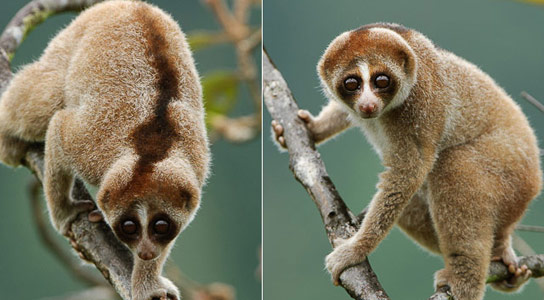
    Kayan loris. Credit: Ch’ien Lee/wildborneo.com.my

    The primate genus Nycticebus contains a group called slow lorises, which is closely related to lemurs, and can be found across South East Asia. Recently, biologists discovered a new species in the jungles of Borneo.

    The scientists published their findings in the American Journal of Primatology. The animals are omnivores, eating insects, small birds, reptiles, eggs, fruits, nectar and other vegetation. Slow lorises have unique fur coloration on their bodies and faces and a toxic bite. They are rated as Vulnerable / Endangered on the IUCN Red List.

    Historically, many species went unrecognized and were falsely lumped together as one species, states Rachel Munds, of the University of Missouri Columbia and lead author. The number of recognized primate species has doubled in the past 25 years.

    Differences among the facemasks resulted in the recognition of four species of Bornean and Philippine lorises. Nycticebus menagensis, N. bancanus, N. borneanus, and N. kayan have been identified.

    N. kayan, also known as the Kayan loris, is a species that went unrecognized before. The primate produces a toxic bite when it licks a gland on its arm. The saliva reacts with the secretions to form a toxin that they use to deter predators. N. kayan lives in the central-east highland area of Borneo, and it is named for a major river flowing through the region, the Kayan.

    This recognition indicates that there is more diversity in the jungles of Borneo and on the surrounding islands than previously thought. The scientists believe more conservation efforts are needed to protect the area from human activity and for future research.

    Reference: “Taxonomy of the Bornean Slow Loris, With New Species Nycticebus kayan (Primates, Lorisidae)” by Rachel A. Munds, K. A. I. Nekaris and Susan M. Ford, 18 December 2012, American Journal of Primatology.
    DOI: 10.1002/ajp.22071

    Never miss a breakthrough: Join the SciTechDaily newsletter.
    Follow us on Google and Google News.

    Primates Primatology Wildlife Biology
    Share. Facebook Twitter Pinterest LinkedIn Email Reddit

    Related Articles

    Super Enzyme That Controls Testosterone Found in “Crazy” Bird Species

    Are Chimpanzees Developing Culture Like Humans? Groundbreaking Study Says Yes

    Congo’s Elusive Great Apes: Scientists Unveil Secrets of “World’s Bonobo Stronghold”

    Wild Chimpanzees Found To Treat Illnesses With Medicinal Plants

    Area of Monkey Brain Keeps Tally of Altruistic Acts

    Survey Shows Great Apes Also Have Mid-Life Crisis

    Cooking Fueled the Growth of the Human Brain

    World’s Smallest Primate Issues High-Frequency Calls Like Bats

    Bonobo Great Apes Are Domesticating Themselves

    1 Comment

    1. Madanagopal.V.C. on December 16, 2012 6:40 am

      The super continent lemuria was named after this primates of Borneo. But I don’t think that they survived in lemuria in Jurassic or Pre-Jurassic age.
      Thank You.

      Reply
    Leave A Reply Cancel Reply

    • Facebook
    • Twitter
    • Pinterest
    • YouTube

    Don't Miss a Discovery

    Subscribe for the Latest in Science & Tech!

    Trending News

    Millions Take These IBS Drugs, But a New Study Finds Serious Risks

    Scientists Unlock Hidden Secrets of 2,300-Year-Old Mummies Using Cutting-Edge CT Scanner

    Bread Might Be Making You Gain Weight Even Without Eating More Calories

    Scientists Discover Massive Magma Reservoir Beneath Tuscany

    Europe’s Most Active Volcano Just Got Stranger – Here’s Why Scientists Are Rethinking It

    Alzheimer’s Symptoms May Start Outside the Brain, Study Finds

    Millions Take This Popular Supplement – Scientists Discover a Concerning Link to Heart Failure

    The Universe Is Expanding Too Fast and Scientists Can’t Explain Why

    Follow SciTechDaily
    • Facebook
    • Twitter
    • YouTube
    • Pinterest
    • Newsletter
    • RSS
    SciTech News
    • Biology News
    • Chemistry News
    • Earth News
    • Health News
    • Physics News
    • Science News
    • Space News
    • Technology News
    Recent Posts
    • Simple Blood Test May Predict Alzheimer’s Years Before Brain Scans Show Signs
    • Scientists Say Adding This Unusual Seafood to Your Diet Could Reverse Signs of Aging
    • U.S. Waste Holds $5.7 Billion Worth of Crop Nutrients
    • Scientists Say a Hidden Structure May Exist Inside Earth’s Core
    • Doctors Surprised by the Power of a Simple Drug Against Colon Cancer
    Copyright © 1998 - 2026 SciTechDaily. All Rights Reserved.
    • Science News
    • About
    • Contact
    • Editorial Board
    • Privacy Policy
    • Terms of Use

    Type above and press Enter to search. Press Esc to cancel.