
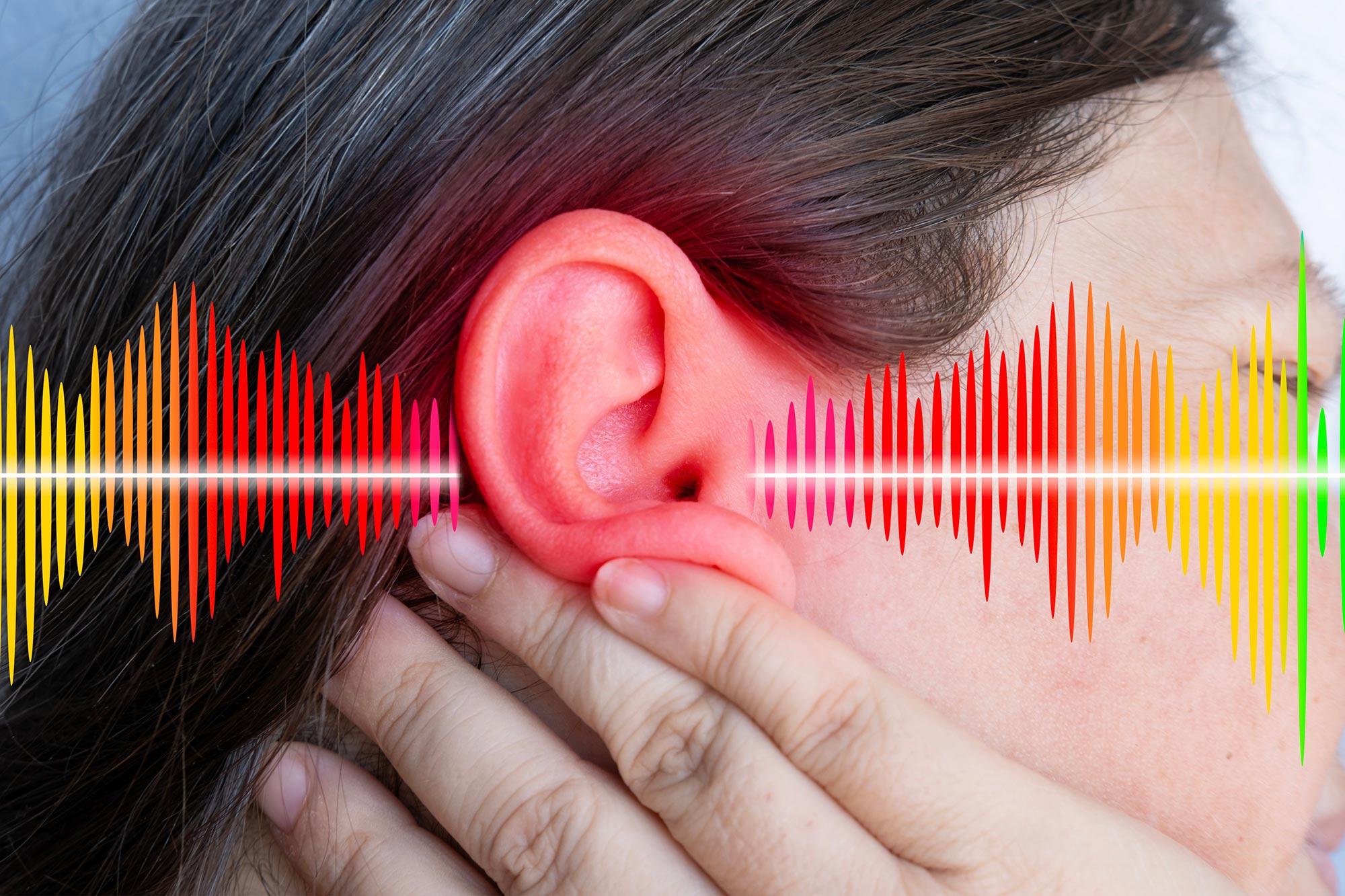
New research challenges a long-standing theory of how the inner ear detects sound, revealing a more complex process than previously understood.
Scientists have discovered that low-frequency sounds can produce nearly simultaneous vibrations across widely separated regions of the inner ear. The finding, observed in guinea pigs, challenges a long-standing model of how hearing works and could influence the development of more advanced cochlear implants.
For decades, scientists have understood the cochlea, the spiral-shaped structure inside the inner ear, as a frequency map. Different sounds activate different locations along its membrane, much like individual piano keys correspond to specific notes. High frequencies stimulate one end, while low frequencies primarily activate the other. This arrangement, known as the “place code,” has helped explain how the ear distinguishes sounds and forms a foundation of modern cochlear implant technology.
A New Look at How the Inner Ear Detects Sound
The traditional model dates back to research by Georg von Békésy, who received the 1961 Nobel Prize in Physiology or Medicine for demonstrating how different sound frequencies stimulate distinct regions of the cochlea. However, the new study, published in Science Advances, suggests that this location-based explanation does not fully account for how the inner ear processes low-frequency sounds.
To investigate, researchers used optical coherence tomography (OCT), an imaging technology (co-invented by OHSU physician-scientist David Huang) widely used in eye examinations. Combined with advanced signal processing to reduce background noise, the technique allowed scientists to detect extremely small vibrations at multiple locations inside the guinea pig cochlea.
The measurements showed that low-frequency sounds produced similar vibrations across distant regions, often with synchronized motion. Rather than disproving the cochlea’s frequency map, the findings indicate that additional mechanisms may contribute to how low-frequency information is represented and interpreted. The results build on earlier research published in 2022 that identified unexpected patterns of low-frequency responses.
Implications for Cochlear Implants and Speech Perception
Understanding low-frequency hearing is particularly important for interpreting complex sounds, including speech. These vibrations are difficult to measure experimentally, and people with hearing loss often struggle to understand conversations when background noise is present.
“When you bring in low-frequency background noise, it’s a very challenging environment for people with hearing loss,” said George Burwood, Ph.D., the study’s lead author and a research instructor at Oregon Health & Science University (OHSU). “Also, the place code paradigm limits the interpretation of how mammals evolved to detect extremely complex signals, especially speech.”
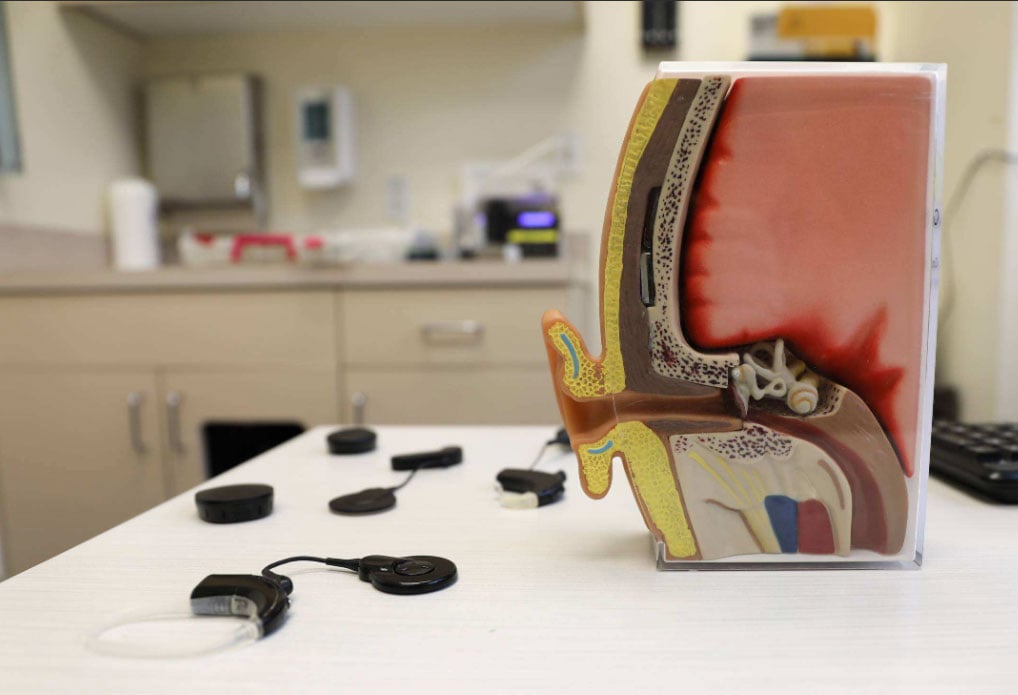
Current cochlear implants use electrodes to electrically stimulate different regions of the cochlea according to sound frequency. The new findings suggest that reproducing more of the natural cochlea’s complex vibration patterns might improve how these devices convey sound information.
“Cochlear implants are geared to take advantage of a place code,” Burwood said. “Our study suggests the optimal pattern of stimulation by electrodes in a cochlear implant may be more complex than just where and how intensely it’s being stimulated.”
How the Brain May Distinguish Frequencies
The findings also raise questions about how the auditory system separates frequencies when vibrations are distributed across multiple cochlear locations. Researchers suspect the brain may use information beyond the position of stimulation to distinguish certain sounds.
“This discovery advances our basic understanding in how hearing works,” said Larry Trussell, Ph.D., director of the Oregon Hearing Research Center at OHSU. “The brain appears to have mechanisms that are able to differentiate frequencies without having a map or place code.”
Reference: “Denoised vibrometry reveals noncanonical filtering at the apex of the cochlea” by George W. S. Burwood, Pierre Hakizimana, Karl Grosh, Wajiha Zaidi, Ruikang K. Wang, Alfred L. Nuttall and Anders Fridberger, 20 November 2026, Science Advances.
DOI: 10.1126/sciadv.aei4634
The research at OHSU was supported by the National Institutes of Health through award R01DC00141-44.
All research involving animal subjects at OHSU must be reviewed and approved by the university’s Institutional Animal Care and Use Committee (IACUC). The IACUC’s priority is to ensure the health and safety of animal research subjects. The IACUC also reviews procedures to ensure the health and safety of the people who work with the animals. No live animal work may be conducted at OHSU without IACUC approval.
Never miss a breakthrough: Join the SciTechDaily newsletter.
Follow us on Google and Google News.
1 Comment
EVERYONE NEEDS SALVATION HERE ARE THE WORDS OF SALVATION PLEASE FORGIVE ME JESUS IM A SINNER COME INTO MY HEART AND SAVE ME FROM MY SIN I NO THAT YOU ARE THE SAVIOR AND I NO THAT YOU DIED FOR ME ON CALVARY AND I NO THAT GOD RAISE YOU FROM THE DEAD AND YOU ARE ALIVE AND I THANKYOU FOR YOUR SALVATION IN JESUS HOLY NAME AMEN AND ITS IMPORTANT TO ALWAYS ASK FOR FORGIVENESS EVERY NIGHT AND HOPE SOMEONE GETS SAVED ITS IMPORTANT