
Close Menu
    Facebook X (Twitter) Instagram
    SciTechDaily
    • Biology
    • Chemistry
    • Earth
    • Health
    • Physics
    • Science
    • Space
    • Technology
    Facebook X (Twitter) Pinterest YouTube RSS
    SciTechDaily
    Home»Space»Astronaut Alexander Gerst Captures ‘Mind-Blowing’ Aurora Image
    Space

    Astronaut Alexander Gerst Captures ‘Mind-Blowing’ Aurora Image

    By Yvette Smith, NASAAugust 15, 2018No Comments1 Min Read
    Facebook Twitter Pinterest Telegram LinkedIn WhatsApp Email Reddit
    Share
    Facebook Twitter LinkedIn Pinterest Telegram Email Reddit
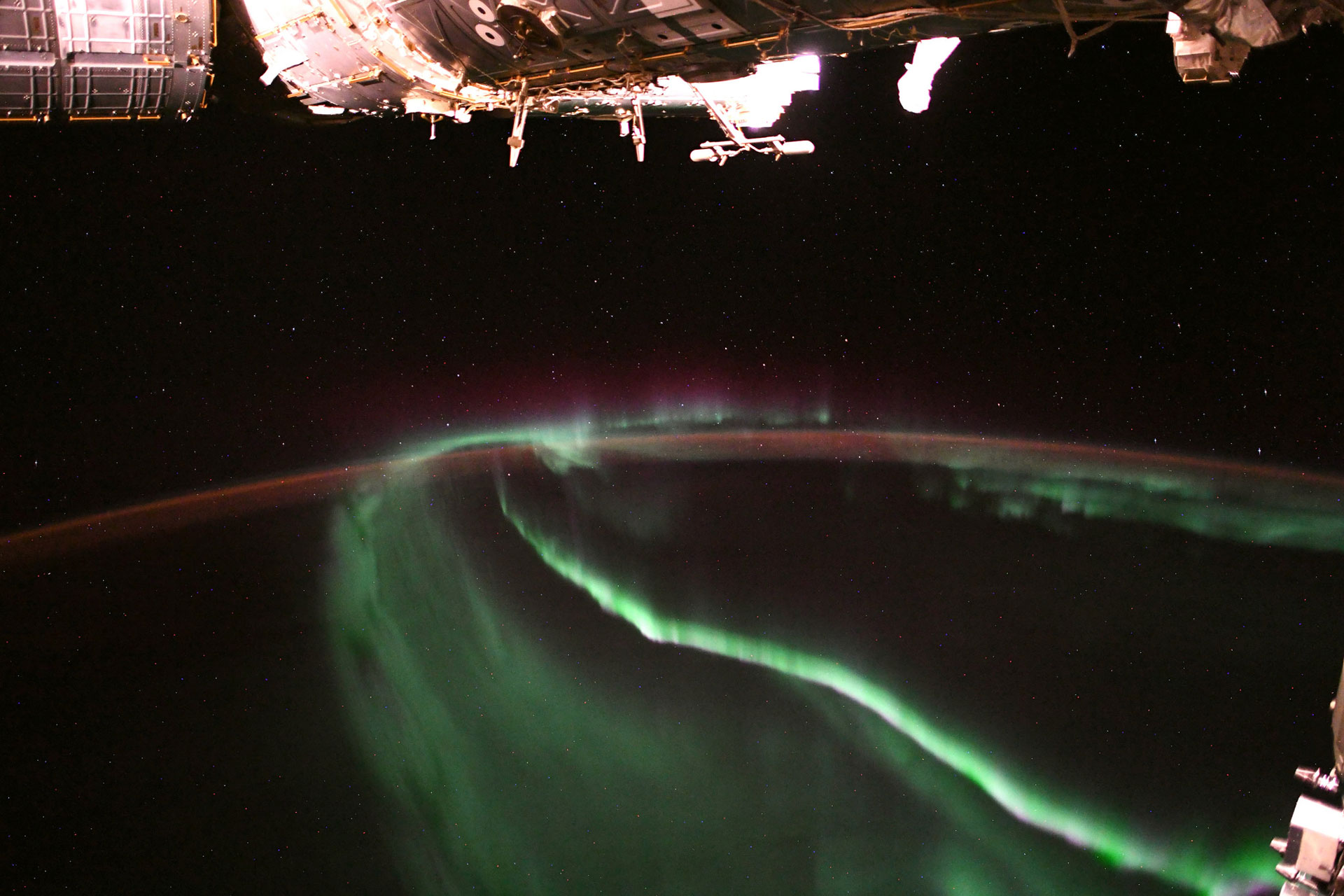
    Mind Blowing Aurora Image
    Aurora as seen from the International Space Station. Credit: ESA/NASA-A.Gerst

    Ever wondered what auroras look like from space? Astronaut Alexander Gerst, also known as @Astro_Alex, gives us his bird’s-eye view from aboard the International Space Station, tweeting that the experience is “mind-blowing, every single time.”

    The dancing lights of the auroras provide spectacular views on the ground and from space, but also capture the imagination of scientists who study incoming energy and particles from the Sun. Auroras are one effect of such energetic particles, which can speed out from the sun both in a steady stream called the solar wind and due to giant eruptions known as coronal mass ejections. After a trip toward Earth that can last 2 or 3 days, the solar particles and magnetic fields cause the release of particles already trapped near Earth, which in turn trigger reactions in the upper atmosphere in which oxygen and nitrogen molecules release photons of light. The result: the Northern and Southern lights.

    Never miss a breakthrough: Join the SciTechDaily newsletter.
    Follow us on Google and Google News.

    Astronomy Aurora International Space Station
    Share. Facebook Twitter Pinterest LinkedIn Email Reddit

    Related Articles

    Astronauts View an Aurora From the International Space Station

    Jupiter’s Powerful Auroras Present a Challenging Mystery

    Composite Image Shows International Space Station Transiting the Sun

    Good Night From Space – NASA Astronaut Scott Kelly Shares an Image

    Researchers Predicted Blue, Red and Green Aurorae at Mars

    Image of the Sunrise from the International Space Station

    Study Suggests Auroras Occur Outside Our Solar System

    Two Coronal Mass Ejections Strongly Compressed the Magnetopause

    Strong Geomagnetic Storms a Possibility After Active Sunspot 1401 Erupted

    Leave A Reply Cancel Reply

    • Facebook
    • Twitter
    • Pinterest
    • YouTube

    Don't Miss a Discovery

    Subscribe for the Latest in Science & Tech!

    Trending News

    Could Low Vitamin D Be Making Your Pain Worse?

    Scientists Discover Once-Weekly Workout That Melts Belly Fat Surprisingly Effectively

    Scientists Just Tested a Thruster Powerful Enough for Human Missions to Mars

    Doctors Say Your Ice Pack Might Be Making Injuries Worse

    Scientists Discover 43-Foot Sea Reptile Twice the Size of a Great White Shark

    Bees and Birds Are Drinking Alcohol From Flowers

    Scientists Discover How Obesity May Trigger Alzheimer’s Disease

    Scientists Confirm Alcohol Causes Widespread Health Damage

    Follow SciTechDaily
    • Facebook
    • Twitter
    • YouTube
    • Pinterest
    • Newsletter
    • RSS
    SciTech News
    • Biology News
    • Chemistry News
    • Earth News
    • Health News
    • Physics News
    • Science News
    • Space News
    • Technology News
    Recent Posts
    • Just Minutes of Intense Exercise Could Slash Disease Risk by 50%
    • People Who Stop Ozempic Often Don’t Gain the Weight Back
    • Why More People in Their 30s Are Suddenly Getting Colon Cancer
    • Scientists Discover Sperm Seem To Bypass a Fundamental Law of Physics
    • The Secret Behind Indigenous Andeans’ “Digestive Superpower” May Be Potatoes
    Copyright © 1998 - 2026 SciTechDaily. All Rights Reserved.
    • Science News
    • About
    • Contact
    • Editorial Board
    • Privacy Policy
    • Terms of Use

    Type above and press Enter to search. Press Esc to cancel.