
Close Menu
    Facebook X (Twitter) Instagram
    SciTechDaily
    • Biology
    • Chemistry
    • Earth
    • Health
    • Physics
    • Science
    • Space
    • Technology
    Facebook X (Twitter) Pinterest YouTube RSS
    SciTechDaily
    Home»Health»New Research Shows Glucose Is Not Primary Driver of Inflammation in Type 2 Diabetes
    Health

    New Research Shows Glucose Is Not Primary Driver of Inflammation in Type 2 Diabetes

    By University of KentuckyAugust 21, 2019No Comments3 Mins Read
    Facebook Twitter Pinterest Telegram LinkedIn WhatsApp Email Reddit
    Share
    Facebook Twitter LinkedIn Pinterest Telegram Email Reddit
    Barbara Nikolajczyk University of Kentucky Barnstable Brown Diabetes Center
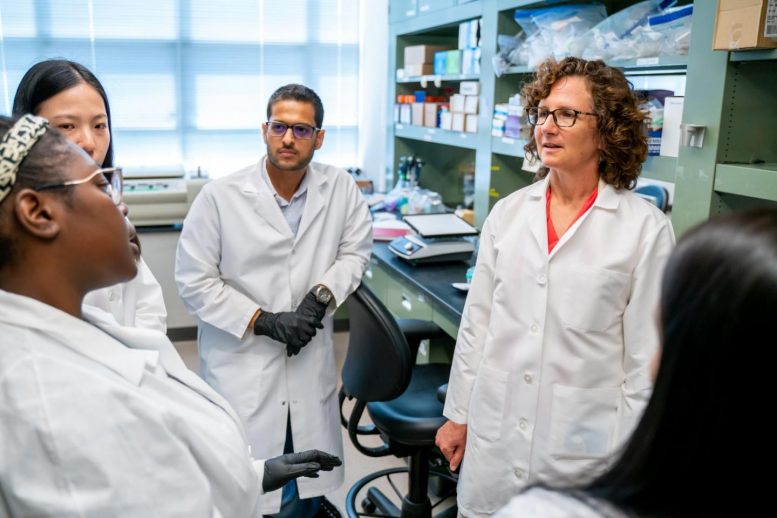
    Research led by Barbara Nikolajczyk, Ph.D., disproved the conventional wisdom that glucose was the primary driver of chronic inflammation in type 2 diabetes. Credit: University of Kentucky Office of Research Communications

    To date, the underlying causes of inflammation in obesity and type 2 diabetes mellitus (T2DM) have been poorly understood, which has hampered efforts to develop treatments to prevent complications from a disease that is the third leading cause of death in the United States.

    But new research at the University of Kentucky shows that changes to mitochondria–the powerhouse of cells–drive chronic inflammation from cells exposed to certain types of fats, shattering the prevailing assumption that glucose was the culprit.

    Chronic inflammation fuels many of the devastating complications of type 2 diabetes, including cardiovascular, kidney, and periodontal diseases, and is thus one of the key targets for therapy development. This new data may enlighten the conversation about tight glycemic control as the dominant treatment goal for people with diabetes.

    The research was recently published in Cell Metabolism by a team led by Barbara Nikolajczyk (UK Barnstable Brown Diabetes Center, Department of Pharmacology and Nutritional Sciences) and Douglas Lauffenberger (MIT Department of Biological Engineering).

    Nikolajczyk and Lauffenberger didn’t set out to disprove the glucose-inflammation causation theory. Based on the importance of glycolysis–a 10-reaction sequence that produces energy–in other types of inflammation, the team hypothesized that immune cells from patients with type 2 diabetes would produce energy by burning glucose. “We were wrong,” Nikolajczyk said.

    “We exclusively used immune cells from human subjects for all of the work, ” Nikolajczyk explained, noting that humans, but not animal models of type 2 diabetes, have the specific pro-inflammatory T cell profile her team had identified in earlier research.

    The team was surprised to find that glycolysis wasn’t driving chronic inflammation. Instead, a combination of defects in mitochondria and elevated fat derivatives were responsible.

    Nikolajczyk said she sees applications for this research in both basic and clinical sciences. She hopes to precisely define pro-inflammatory lipid types and explore associations between circulating and/or tissue-associated lipids and insulin resistance, one key feature of Type 2 diabetes. She is also interested in contributing to the development of new analytical approaches, spearheaded by Dr. Lauffenburger’s team, that leverage ongoing lipid-related findings into a new understanding of pathology in type 2 diabetes.

    “Aggressive blood glucose control to lower the risk of diabetic complications has been the goal for most people with Type 2 Diabetes for decades,” Nikolajczyk said. “Our data provide an explanation for why people with tight glucose control can nonetheless have disease progression.”

    Reference: “Fatty Acid Metabolites Combine with Reduced β Oxidation to Activate Th17 Inflammation in Human Type 2 Diabetes” by Dequina A. Nicholas, Elizabeth A. Proctor, Philip A. Kern, Madhur Agrawal, Anna C. Belkina, Stephen C. Van Nostrand, Leena Panneerseelan-Bharath, Albert R. Jones IV, Forum Raval, Blanche C. Ip, Min Zhu, Jose M. Cacicedo, Chloe Habib, Nestor Sainz-Rueda, Leah Persky, Patrick G. Sullivan, Barbara E. Corkey, Caroline M. Apovian, Douglas A. Lauffenburger and Barbara S. Nikolajczyk, 1 August 2019, Cell Metabolism.
    DOI: 10.1016/j.cmet.2019.07.004

    Never miss a breakthrough: Join the SciTechDaily newsletter.
    Follow us on Google and Google News.

    Diabetes Inflammation University of Kentucky
    Share. Facebook Twitter Pinterest LinkedIn Email Reddit

    Related Articles

    Eating Pistachios at Night Could Transform Your Gut Health, Study Reveals

    Diabetes Breakthrough: Fish Oil May Reverse Insulin Resistance

    Researchers Warn: Eating Too Much Salt Could Increase Your Risk of Diabetes

    Diabetes Breakthrough: Dahlia Flower Extract Found To Stabilize Blood Sugar Levels

    Top 5 Health Benefits of Cinnamon: Heart, Diabetes, Inflammation, Weight Loss, Brain

    Surprise Protector of Females’ Brains: Subcutaneous Fat

    Infant Infections May Increase the Risk of Heart Disease Later in Life

    Moderate Calorie Restriction Rewires Metabolism, Immunity for Longer Health Span

    Low-Frequency Intermittent Fasting Helps Fight Inflammation

    Leave A Reply Cancel Reply

    • Facebook
    • Twitter
    • Pinterest
    • YouTube

    Don't Miss a Discovery

    Subscribe for the Latest in Science & Tech!

    Trending News

    This Copper Drug Clears Alzheimer’s Brain Toxins and Boosts Memory

    Adults Over 65 Lost Massive Amounts of Weight With Ozempic

    How Flocking Birds “Defy” One of Physics’ Most Fundamental Laws

    Physicists Create a New Kind of Schrödinger’s Cat State From Exotic Quantum Building Blocks

    Your Diet Could Be Missing the Key Ingredient for Heart Protection

    Researchers Warn Widely Prescribed Blood Pressure Drugs Could Be Harming Diabetic Kidneys

    James Webb Spots Something Strange Between Day and Night on an Alien Planet

    How Ancient People Moved a 6-Ton Stone 700 Kilometers to Stonehenge

    Follow SciTechDaily
    • Facebook
    • Twitter
    • YouTube
    • Pinterest
    • Newsletter
    • RSS
    SciTech News
    • Biology News
    • Chemistry News
    • Earth News
    • Health News
    • Physics News
    • Science News
    • Space News
    • Technology News
    Recent Posts
    • Scientists Uncover Cause of Inflammatory Bowel Disease Solving Decades-Old Mystery
    • The Surprising Reason Swimming Could Be Better for Your Heart Than Running
    • Could Vitamin C Be the Secret to Keeping Your Brain Younger?
    • The Surprising Fix for Robot Traffic Jams
    • Near Absolute Zero, This Transistor Starts Acting Like a Brain Cell
    Copyright © 1998 - 2026 SciTechDaily. All Rights Reserved.
    • Science News
    • About
    • Contact
    • Editorial Board
    • Privacy Policy
    • Terms of Use

    Type above and press Enter to search. Press Esc to cancel.