
Close Menu
    Facebook X (Twitter) Instagram
    SciTechDaily
    • Biology
    • Chemistry
    • Earth
    • Health
    • Physics
    • Science
    • Space
    • Technology
    Facebook X (Twitter) Pinterest YouTube RSS
    SciTechDaily
    Home»Biology»Ants Fight Plant Diseases by Secreting Antibiotics – Potential for Use in Agriculture
    Biology

    Ants Fight Plant Diseases by Secreting Antibiotics – Potential for Use in Agriculture

    By Aarhus UniversityOctober 16, 2019No Comments3 Mins Read
    Facebook Twitter Pinterest Telegram LinkedIn WhatsApp Email Reddit
    Share
    Facebook Twitter LinkedIn Pinterest Telegram Email Reddit
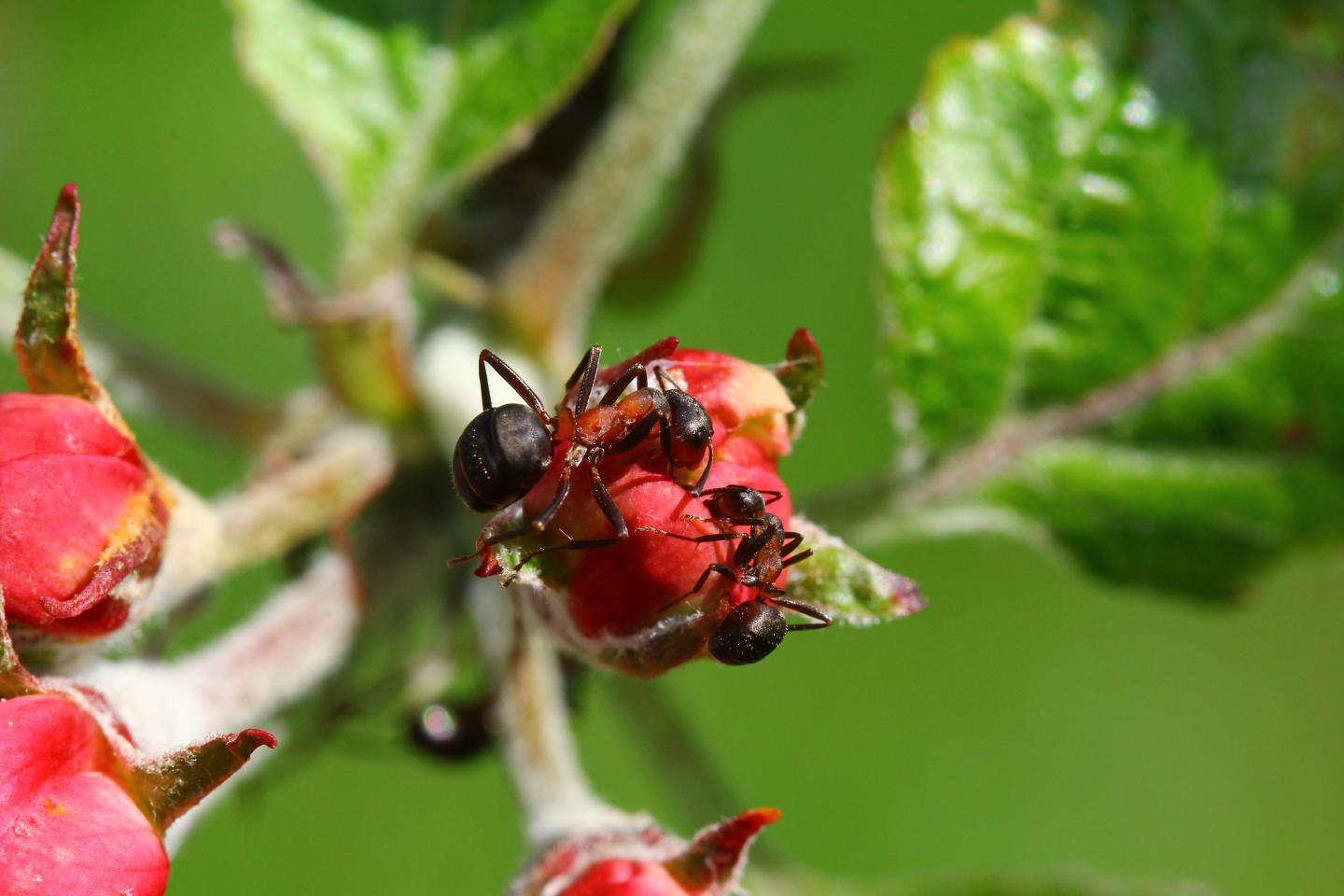
    Ants in Apple Plantation
    Wood ants moved from the forest to an apple plantation reduced the occurrence of apple diseases in the plantation. Credit: Jens Henrik Petersen

    New research from Aarhus University shows that ants inhibit at least 14 different plant diseases. The small insects secrete antibiotics from glands in the body. On their legs and body, they also host colonies of bacteria that secrete antibiotics. It is probably these substances that inhibit a number of different diseases and researchers now hope to find biological pesticides that may conquer resistant plant diseases.

    Ants live closely together in their ant hills and are therefore highly exposed to the spread of infections. But they have their own medication against diseases. On the one hand, they are very hygienic and, on the other hand, they can cure themselves and treat each other with antibiotics produced by themselves. Through body glands, the ants secrete antibiotics, and bacterial colonies, which the ants cultivate on their legs and body, may also secrete antibiotics.
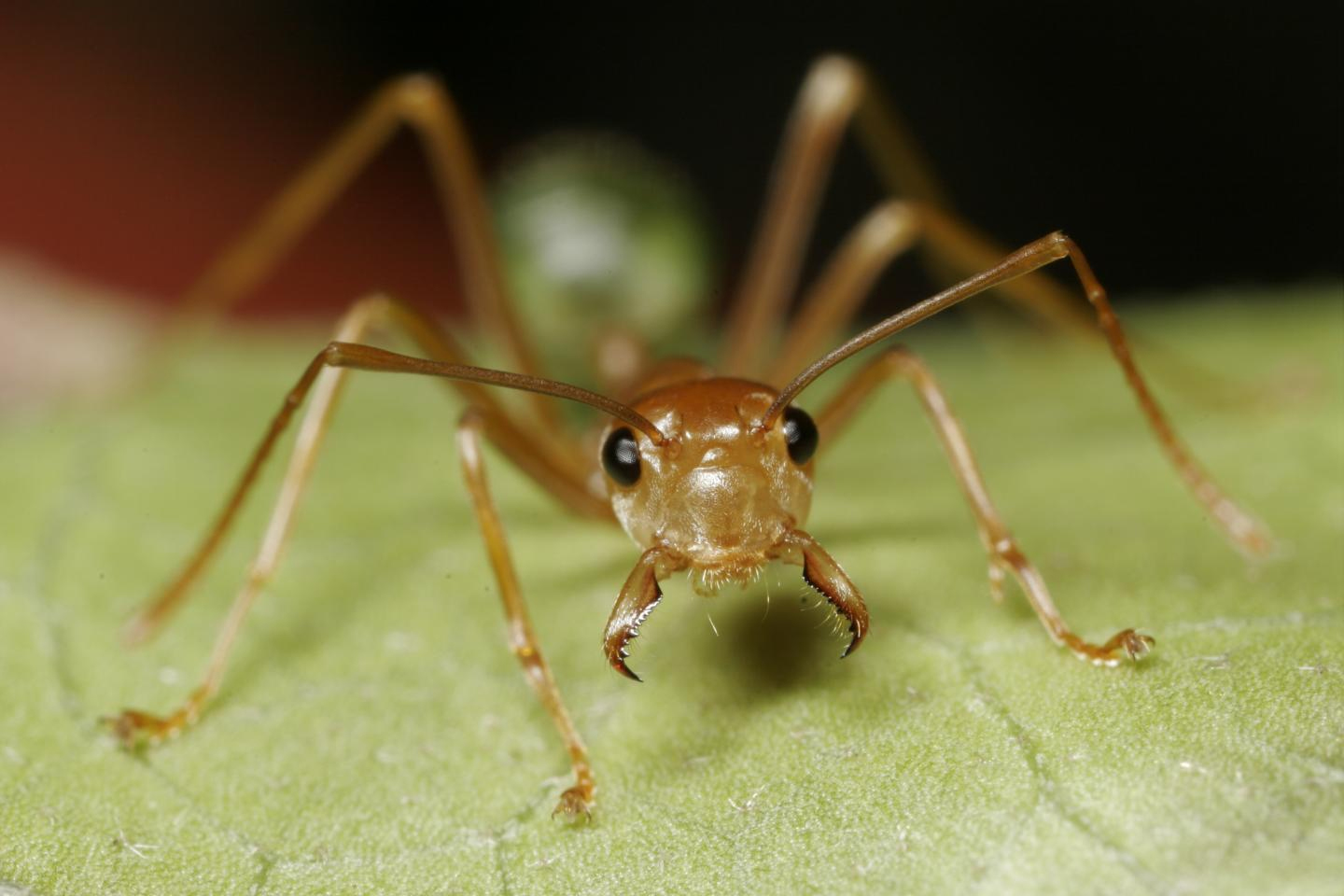
    Ant Pheromones
    To find their way, ants secrete pheromones on their trails. Some of these pheromones have antibiotic properties. Credit: Kim Aaen, NatureEyes

    Previous research has shown that wood ants moved to an apple plantation reduced the occurrence of two apple diseases (scab and apple rot) in the plantation. This prompted researchers to go through the existing literature where they have now found scientific evidence that ants can inhibit at least 14 different plant diseases.

    “We don’t yet know how the ants cure the plants,” says senior researcher Joachim Offenberg, Department of Bioscience, Aarhus University, who led the research.
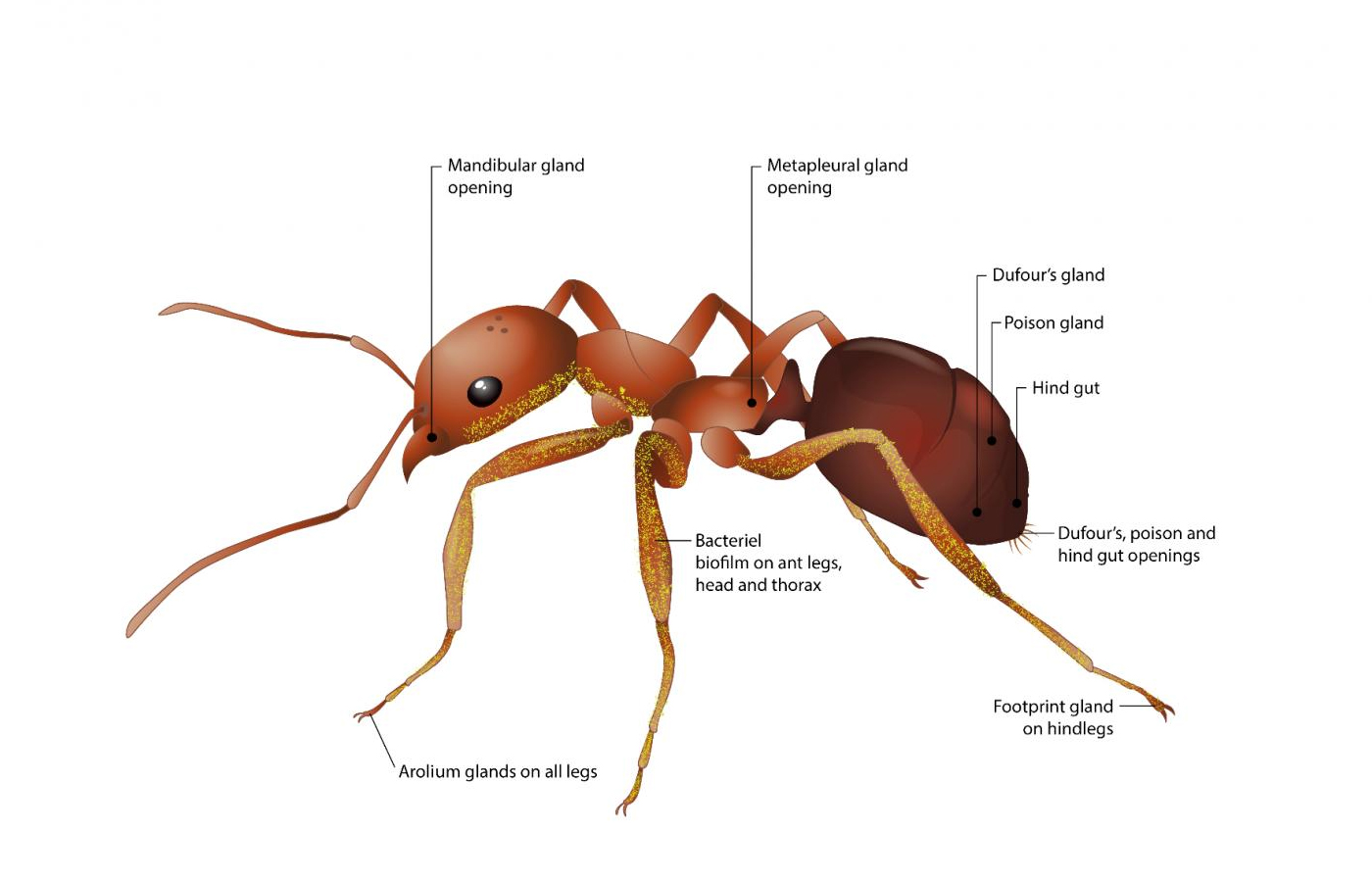
    Ant Gland Illustration
    Ants secrete antibiotics from a number of body glands. Furthermore, bacteria grow on their legs and bodies. These bacteria also secrete antibiotics. Credit: Tinna Christensen

    “But we do know that the ants secrete pheromones on their trails on the plants to find their way. And we know that some of these have antibiotic properties. The curing effect on plant diseases could be due to these pheromones,” Joachim Offenberg explains.

    The researchers believe that ants and their antibiotics can be put to use in agriculture in the future.

    “We hope that more research in the field will reveal new types of biological control agents that can be used in the fight against resistant plant diseases in agriculture,” Joachim Offenberg says.

    And the idea is not a mere utopia: Other researchers have found antibiotics on African ants that are capable of killing MRSA and other multi-resistant bacteria.

    ###

    Reference: “Ants suppressing plant pathogens: a review” by Joachim Offenberg and Christian Damgaard, 11 October 2019, Oikos.
    DOI: 10.1111/oik.06744

    Never miss a breakthrough: Join the SciTechDaily newsletter.
    Follow us on Google and Google News.

    Aarhus University Ants Entomology Plant Science
    Share. Facebook Twitter Pinterest LinkedIn Email Reddit

    Related Articles

    In a Twist of Fate, Ant Expert Discovers Distinct New Species in His Own Backyard

    Ants the Size of Lions: Augmented Ants [Video]

    Invasion of Zombie Ants in Florida – Fungal Infection Takes Over the Ants’ Brains

    Cannibal Wood Ants Were Stuck in a Polish Nuclear Weapons Bunker – Here’s What Happened

    Ants vs. Humans: Solving the Mystery of How Ants Manage Traffic So Well

    Recording Breaking Speed: World’s Fastest Ant Clocked at 855mm/s, an Incredible 47 Strides/s

    The Unexpected Role Ant-Plant Partnerships May Play in Ant Evolution

    Wood Ants Survive for Years Trapped in a Nuclear Weapons Bunker

    Hyperparasite Fungus Limits the Effects of ‘Zombie-Ant’ Fungus

    Leave A Reply Cancel Reply

    • Facebook
    • Twitter
    • Pinterest
    • YouTube

    Don't Miss a Discovery

    Subscribe for the Latest in Science & Tech!

    Trending News

    Doctors May Need To Rethink Calcium and Vitamin D Recommendations After Major Review

    Scientists Discover a Hidden Cause of Cellular Aging That Can Be Reversed

    Archaeologists Have Found Something Unexpected Inside a 1,600-Year-Old Egyptian Mummy

    Scientists May Have Found a Completely New Way To Treat Depression

    New 7-Dimensional Theory May Finally Solve the Black Hole Information Paradox

    Scientists Made Older Mice Biologically Younger Using Gut Microbes

    Scientists Finally Uncover Why Ozempic Stops Working for Some People

    Wasp Colonies Explode Into Violence After Losing Their Queen

    Follow SciTechDaily
    • Facebook
    • Twitter
    • YouTube
    • Pinterest
    • Newsletter
    • RSS
    SciTech News
    • Biology News
    • Chemistry News
    • Earth News
    • Health News
    • Physics News
    • Science News
    • Space News
    • Technology News
    Recent Posts
    • Researchers Measured Alien Planet Spins and Discovered a Surprising Pattern
    • NASA’s Roman Telescope Will Search 100 Million Stars for New Worlds
    • A Cannibal Star Finally Solves One of Astronomy’s Biggest Mysteries
    • Researchers Solve the Mystery Behind a Billion-Dollar Dental Implant Disease
    • Scientists Finally Uncover How a “Forever Chemical” Causes Birth Defects
    Copyright © 1998 - 2026 SciTechDaily. All Rights Reserved.
    • Science News
    • About
    • Contact
    • Editorial Board
    • Privacy Policy
    • Terms of Use

    Type above and press Enter to search. Press Esc to cancel.