
Close Menu
    Facebook X (Twitter) Instagram
    SciTechDaily
    • Biology
    • Chemistry
    • Earth
    • Health
    • Physics
    • Science
    • Space
    • Technology
    Facebook X (Twitter) Pinterest YouTube RSS
    SciTechDaily
    Home»Technology»Warning: Smart Light Bulbs Could Open Up Your Personal Information to Hackers
    Technology

    Warning: Smart Light Bulbs Could Open Up Your Personal Information to Hackers

    By Milady Nazir, University of Texas at San AntonioOctober 22, 2019No Comments3 Mins Read
    Facebook Twitter Pinterest Telegram LinkedIn WhatsApp Email Reddit
    Share
    Facebook Twitter LinkedIn Pinterest Telegram Email Reddit
    Smart Bulbs Vulnerabilities
    University of Texas at San Antonio researchers review the security gaps on smart bulbs exposing consumers to hacks.
    Credit: UTSA

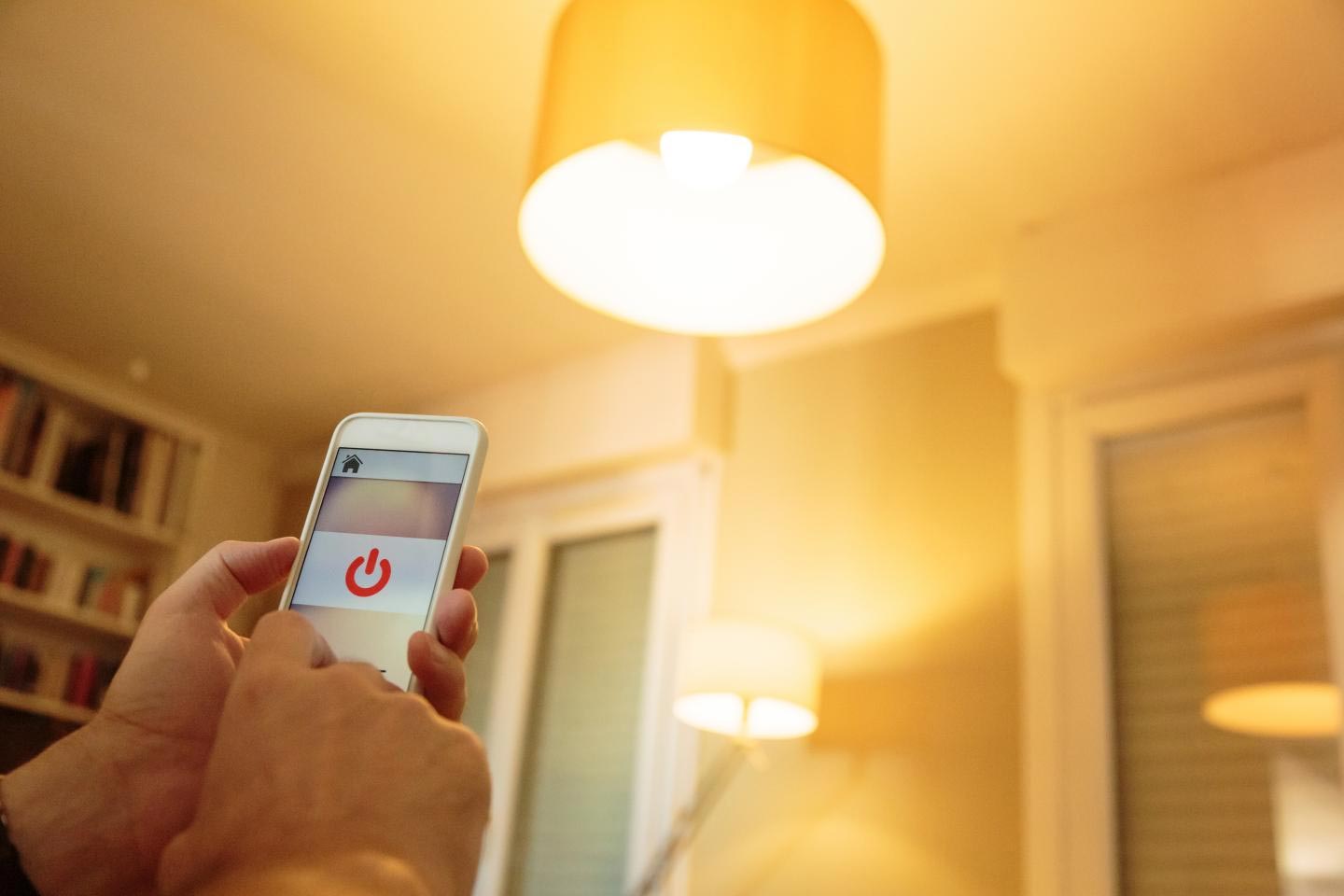
    Smart bulbs are expected to be a popular purchase this holiday season. But could lighting your home open up your personal information to hackers?

    Earlier this year Amazon’s Echo made global headlines when it was reported that consumers’ conversations were recorded and heard by thousands of employees.

    Now researchers at UTSA have conducted a review of the security holes that exist in popular smart-light brands. According to the analysis, the next prime target could be that smart bulb that shoppers buy this coming holiday season. 

    “Your smart bulb could come equipped with infrared capabilities, and most users don’t know that the invisible wave spectrum can be controlled. You can misuse those lights,” said Murtuza Jadliwala, professor and director of the Security, Privacy, Trust, and Ethics in Computing Research Lab in UTSA’s Department of Computer Science. “Any data can be stolen: texts or images. Anything that is stored in a computer.” 

    Some smart bulbs connect to a home network without needing a smart home hub, a centralized hardware or software device where other internet of things products communicate with each other. Smart home hubs, which connect either locally or to the cloud, are useful for IoT devices that use the Zigbee or Z-Wave protocols or Bluetooth, rather than Wi-Fi. 

    If these same bulbs are also infrared-enabled, hackers can send commands via the infrared invisible light emanating from the bulbs to either steal data or spoof other connected IoT devices on the home network. The owner might not know about the hack because the hacking commands are communicated within the owner’s home Wi-Fi network, without using the internet. 

    This study, titled “Light Ears: Information Leakage via Smart Lights,” was co-authored by Anindya Maiti and published in the September 2019 issue of the journal Proceedings of the ACM on Interactive, Mobile, Wearable and Ubiquitous Technologies. 

    Smart bulbs have moved beyond novelty to a lucrative mature market. Last year consumers spent close to $8 billion, and that amount is expected to more than triple to $28 billion in less than a decade. 

    “Think of the bulb as another computer,” adds Jadliwala. “These bulbs are now poised to become a much more attractive target for exploitation even though they have very simple chips.” 

    Jadliwala recommends that consumers opt for bulbs that come with a smart home hub rather than those that connect directly to other devices. He also recommends that manufacturers do a better job in developing security measures to limit the level of access that these bulbs have to other smart home appliances or electronics within a home.

    Reference: “Light Ears: Information Leakage via Smart Lights” by Anindya Maiti and Murtuza Jadliwala, 9 September 2019, Proceedings of the ACM on Interactive, Mobile, Wearable and Ubiquitous Technologies.
    DOI: 10.1145/3351256

    Never miss a breakthrough: Join the SciTechDaily newsletter.
    Follow us on Google and Google News.

    Computer Science Security Smart Home University of Texas at San Antonio
    Share. Facebook Twitter Pinterest LinkedIn Email Reddit

    Related Articles

    New Debugging Method Finds 23 Undetected Security Flaws in Popular Web Applications

    DARPA Focuses on Behavioral Biometrics to Enhance Cyber Security

    Cyber-Attacks Could Be Thwarted By CPU Symbiotes

    Verifying Identity With Patterns Could Make Computers More Secure

    New Programming System Could Help Prevent Information Leaks

    New Approach Uses Mathematics to Improve Automated Security Monitoring

    DARPA’s HACMS Program Seeks to Create New Technology

    Sleeping On The Job: Russian Rocket Security

    Hackers Attack ATT. Is Your Wireless Phone Safe?

    Leave A Reply Cancel Reply

    • Facebook
    • Twitter
    • Pinterest
    • YouTube

    Don't Miss a Discovery

    Subscribe for the Latest in Science & Tech!

    Trending News

    Scientists Recreate a Nuclear Fireball and Uncover Fallout’s Hidden Chemistry

    These Tiny Gut Particles Could Be Accelerating Aging Throughout the Body

    Doctors Changed One Thing and Weight Gain Stopped

    Magnetic Fields May Solve a Longstanding Binary Star Mystery

    The Probiotic Breakthrough for Natural Anxiety Relief and Better Mental Health

    Animal vs. Plant Protein: Scientists Found a Surprising Nutritional Difference

    According to Scientists, This Simple Dietary Change Is Linked to Lower Depression Scores

    Researchers Discover a Hidden Vitamin D Problem That Persists Year-Round

    Follow SciTechDaily
    • Facebook
    • Twitter
    • YouTube
    • Pinterest
    • Newsletter
    • RSS
    SciTech News
    • Biology News
    • Chemistry News
    • Earth News
    • Health News
    • Physics News
    • Science News
    • Space News
    • Technology News
    Recent Posts
    • Scientists Uncover Why Walking Gets Slower and More Exhausting As We Age
    • 24 Hours Without Sleep Changes Your Saliva in Measurable Ways
    • A Major Update Just Hit Cholesterol Guidelines – Here’s What Every Adult Needs To Know
    • Scientists Tracked 4,500 Animals During COVID – What They Discovered Was Surprising
    • Hidden Phase of Matter Finally Captured After Decades of Predictions
    Copyright © 1998 - 2026 SciTechDaily. All Rights Reserved.
    • Science News
    • About
    • Contact
    • Editorial Board
    • Privacy Policy
    • Terms of Use

    Type above and press Enter to search. Press Esc to cancel.