
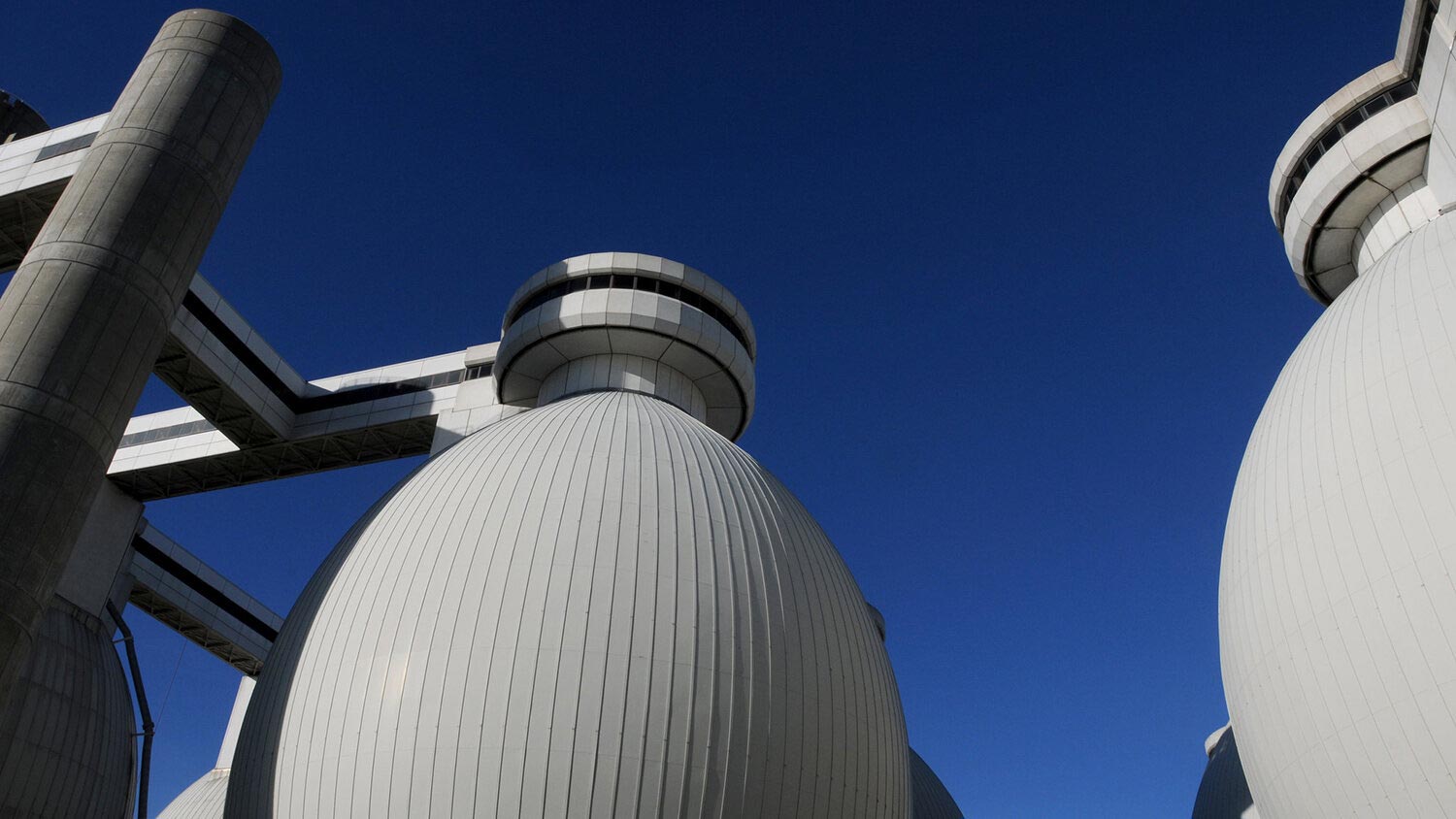
North Carolina State University researchers have developed what is, to date, the most efficient means of converting sewage sludge and restaurant grease into methane.
After treating sewage, wastewater treatment plants are left with solid sludge, called biosolids. For years, utilities have treated biosolids with microbes that produce methane. In recent years, utilities have been adding grease interceptor waste (GIW) into the mix.
Grease interceptors are used to trap fat, oil, and grease from food service establishments so that they don’t clog up sewers. By adding GIW in with their biosolids, utilities can produce more methane, making the entire operation more efficient. But there are challenges.
“Turning biosolids and GIW into a renewable source of clean energy is a laudable goal,” says Francis de los Reyes, a professor of civil, construction, and environmental engineering at NC State and lead author of a paper on the work. “But if you add too much GIW into the anaerobic digester they use to treat biosolids, the system goes haywire – and methane production plummets.
“Our goal with this work was to figure out the best balance of biosolids and GIW for maximizing methane production. And we were able to make significant advances.”
The researchers determined that increasing the amount of GIW they fed into the digester a little at a time allowed them to increase the amount of GIW in the mix to the point where it made up 75% of the overall volatile solids, or feedstock.
“This is significantly higher than the typical amount of GIW added to the biosolids in existing facilities,” de los Reyes says.
This allowed the researchers to achieve the highest methane yield reported to date for lipid-rich waste: 0.785 liters of methane per gram of volatile solids put into the digester.
“This is roughly twice what is commonly reported for similar systems,” de los Reyes says.
“This should make methane production on a commercial scale more economically attractive for many wastewater treatment facilities, which may encourage them to capture and sell their methane, rather than burning it off on-site.”
The researchers were also able to identify a suite of microbes that appear to be particularly important in converting lipid-rich waste into methane. The researchers are following up with studies on other types of food waste, such as meat and fruit/vegetable waste. They are also looking at fundamental microbial ecological theories to explain how the needed microbial species come to dominate and persist in the ecosystems found inside the waste digesters.
The paper, “Increased loading stress leads to convergence of microbial communities and high methane yields in adapted anaerobic co-digesters,” is published in the journal Water Research. The first author of the paper is Ling Wang, a former Ph.D. student at NC State who is now a postdoctoral researcher at the University of Chicago. The paper was co-authored by Elvin Hossen, a Ph.D. student at NC State; Tarek Aziz, an assistant professor of civil, construction, and environmental engineering at NC State; and Joel Ducoste, a professor of civil, construction, and environmental engineering at NC State.
###
Reference: “Increased loading stress leads to convergence of microbial communities and high methane yields in adapted anaerobic co-digesters” by Ling Wang, Elvin H. Hossen, Tarek N. Aziz, Joel J. Ducoste and Francis L. de los Reyes III, 12 October 2019, Water Research.
DOI: 10.1016/j.watres.2019.115155
The work was done with support from the North Carolina Water Resources Research Institute.
Never miss a breakthrough: Join the SciTechDaily newsletter.
Follow us on Google and Google News.