
Close Menu
    Facebook X (Twitter) Instagram
    SciTechDaily
    • Biology
    • Chemistry
    • Earth
    • Health
    • Physics
    • Science
    • Space
    • Technology
    Facebook X (Twitter) Pinterest YouTube RSS
    SciTechDaily
    Home»Earth»Earth From Space: Awe-Inspiring Vatnajökull, Iceland [Video]
    Earth

    Earth From Space: Awe-Inspiring Vatnajökull, Iceland [Video]

    By European Space AgencySeptember 18, 2020No Comments2 Mins Read
    Facebook Twitter Pinterest Telegram LinkedIn WhatsApp Email Reddit
    Share
    Facebook Twitter LinkedIn Pinterest Telegram Email Reddit
    Vatnajökull, Iceland
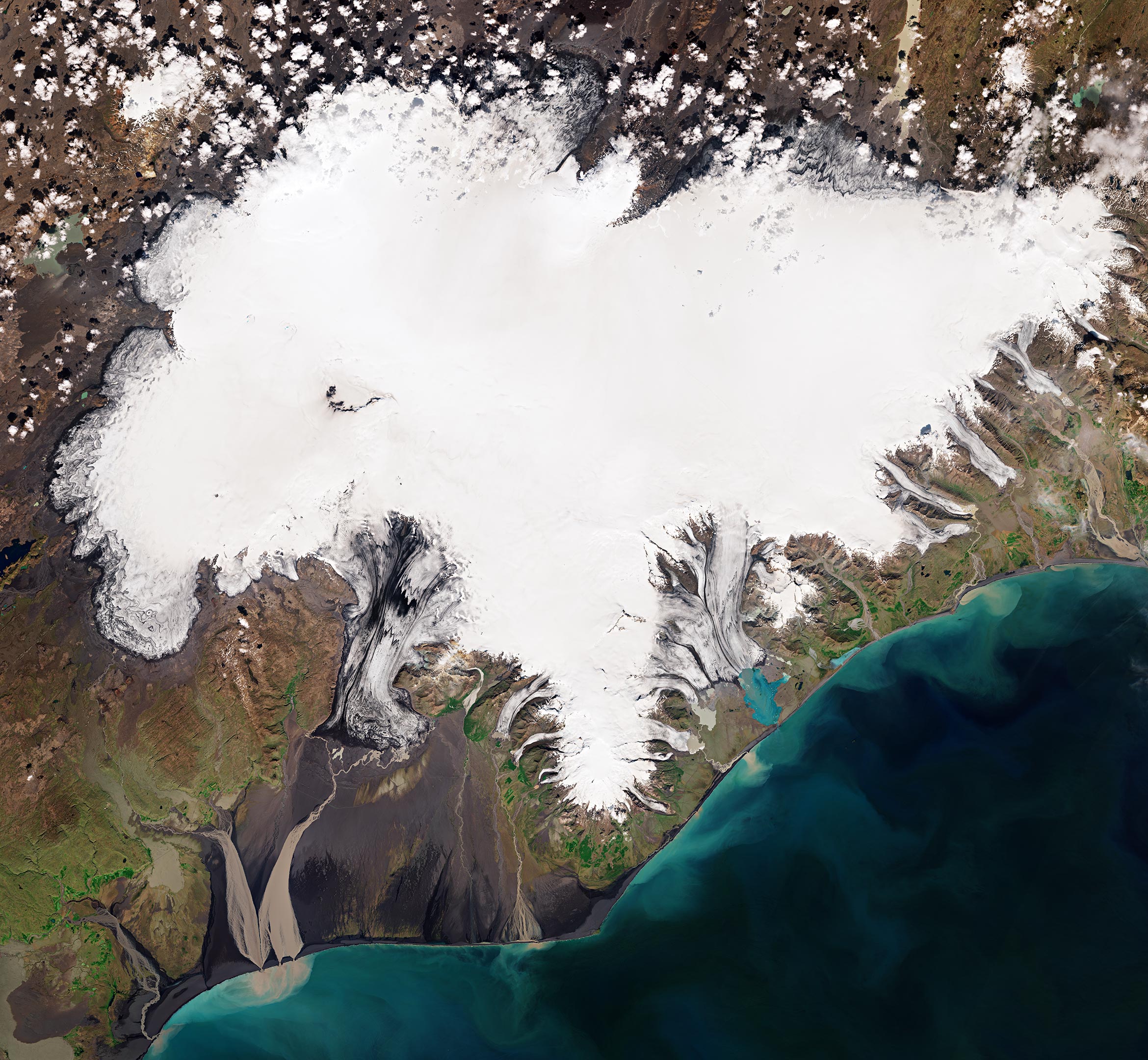
    Vatnajökull, Iceland captured by the Copernicus Sentinel-2 mission on July 6, 2019. Credit: C contains modified Copernicus Sentinel data (2019), processed by ESA

    The Copernicus Sentinel-2 mission takes us over the Vatnajökull ice cap, in southeast Iceland, in this summery image captured on July 6, 2019.

    Covering an area of around 8,400 sq km (3,200 sq mi), which is three times the size of Luxembourg, Vatnajökull is not only classified as the biggest glacier in Iceland, but the biggest in Europe. With an average ice thickness of around 900 m (3,000 ft), the ice cap has about 30 outlet glaciers – many of which are retreating owing to warming temperatures.

    The most prominent outlet glaciers of Vatnajökull include Dyngjujökull in the north, Breiðamerkurjökull, and Skeiðarárjökull to the south. Vatnajökull conceals some of the most active volcanoes in the country, of which Bárðarbunga is the largest and Grímsvötn the most active. Periodic eruptions of these volcanoes melt the surrounding ice and create large pockets of water, which can often burst the weakened ice causing glacial floods, or ‘jökulhlaup’ in Icelandic.

    During these jökulhlaups, the glacier’s meltwater carries sediments and sands composed of ash to the coast. These outwash plains are called ‘sandurs’ and are commonly found in Iceland. Skeiðarársandur, the large area of black sand, visible south of the Skeiðarárjökull outlet glacier, covers an area of around 1300 sq km (500 sq mi) and was formed as the glacial rivers in the area washed ash and ice towards the sea.

    In the bottom-right of the image, on the southern side of Vatnajökull, the Jökulsárlón glacial lake, dotted with icebergs, is visible. Jökulsárlón began to form when the Breiðamerkurjökull glacier began retreating from the Atlantic Ocean owing to rising temperatures.

    The lake has grown considerably over time because of the melting of the glacier. It now covers an area of around 18 sq km (7 sq mi), and with a maximum depth of around 250 m (820 ft), it is considered Iceland’s deepest lake. The lake connects with the ocean and is, therefore, composed of both seawater and freshwater – causing its unique color.

    Copernicus Sentinel-2 is a two-satellite mission. Each satellite carries a high-resolution camera that images Earth’s surface in 13 spectral bands. Together they cover all Earth’s land surfaces, large islands, inland and coastal waters every five days at the equator.

    Never miss a breakthrough: Join the SciTechDaily newsletter.
    Follow us on Google and Google News.

    European Space Agency Geography Popular Volcano
    Share. Facebook Twitter Pinterest LinkedIn Email Reddit

    Related Articles

    Mount Etna’s Fiery Fury: Lava and Ash Eruption Towers Over Sicily

    Stunning Photo Captured From Space: New Eruption at Krakatoa Volcano

    A Wolf Awakens in the Galápagos Islands at Night

    Stunning Satellite Image Shows Lava Burning a Path to the Sea From La Palma Volcano

    Seen From Space: Ever Given Container Ship Wedged in the Suez Canal – and the Resulting Traffic Jam

    Earth From Space: Great Rift Valley, Kenya – Shaped by Major Tectonic and Volcanic Activity

    Earth From Space: An Incredible View of Abu Dhabi

    Vast Mineral Deposits in the Atacama Desert Seen From Space

    Taal Volcano in the Philippines Erupted – See the Incredible Satellite View

    Leave A Reply Cancel Reply

    • Facebook
    • Twitter
    • Pinterest
    • YouTube

    Don't Miss a Discovery

    Subscribe for the Latest in Science & Tech!

    Trending News

    Scientists May Have Discovered How To Heal Damaged Kidneys

    Interstellar Visitor 3I/ATLAS Is Bursting With an Unexpected Chemical

    Scientists Just Found All 5 Genetic “Letters” of DNA and RNA on an Asteroid

    The 4,000-Year-Old City That Defied History’s Rules on Wealth and Power

    The World’s Biggest Population Fear Has Flipped – and It Could Change Everything

    This “Fake” Pill Improved Memory and Physical Performance in Just 3 Weeks

    Scientists Say Frequent Ejaculation May Improve Sperm Quality and Fertility

    Scientists Have Found “The Heaven Sword” After Years of Looking

    Follow SciTechDaily
    • Facebook
    • Twitter
    • YouTube
    • Pinterest
    • Newsletter
    • RSS
    SciTech News
    • Biology News
    • Chemistry News
    • Earth News
    • Health News
    • Physics News
    • Science News
    • Space News
    • Technology News
    Recent Posts
    • Watch What Happened When a Lost Elephant Calf Returned to Her Family
    • 17,000 Brain Scans Reveal Surprising Ethnic Differences in Alzheimer’s Biology
    • New Autism Treatment Strategy Restores Key Brain Receptor Function
    • Younger Generations Are Aging Faster – and It May Be Fueling a Surge in Cancer
    • Scientists Turn Ordinary Sunlight Into UV Light in Major Energy Breakthrough
    Copyright © 1998 - 2026 SciTechDaily. All Rights Reserved.
    • Science News
    • About
    • Contact
    • Editorial Board
    • Privacy Policy
    • Terms of Use

    Type above and press Enter to search. Press Esc to cancel.