
Close Menu
    Facebook X (Twitter) Instagram
    SciTechDaily
    • Biology
    • Chemistry
    • Earth
    • Health
    • Physics
    • Science
    • Space
    • Technology
    Facebook X (Twitter) Pinterest YouTube RSS
    SciTechDaily
    Home»Earth»A Wolf Awakens in the Galápagos Islands at Night
    Earth

    A Wolf Awakens in the Galápagos Islands at Night

    By Sara E. Pratt, NASA Earth ObservatoryJanuary 8, 20223 Comments2 Mins Read
    Facebook Twitter Pinterest Telegram LinkedIn WhatsApp Email Reddit
    Share
    Facebook Twitter LinkedIn Pinterest Telegram Email Reddit
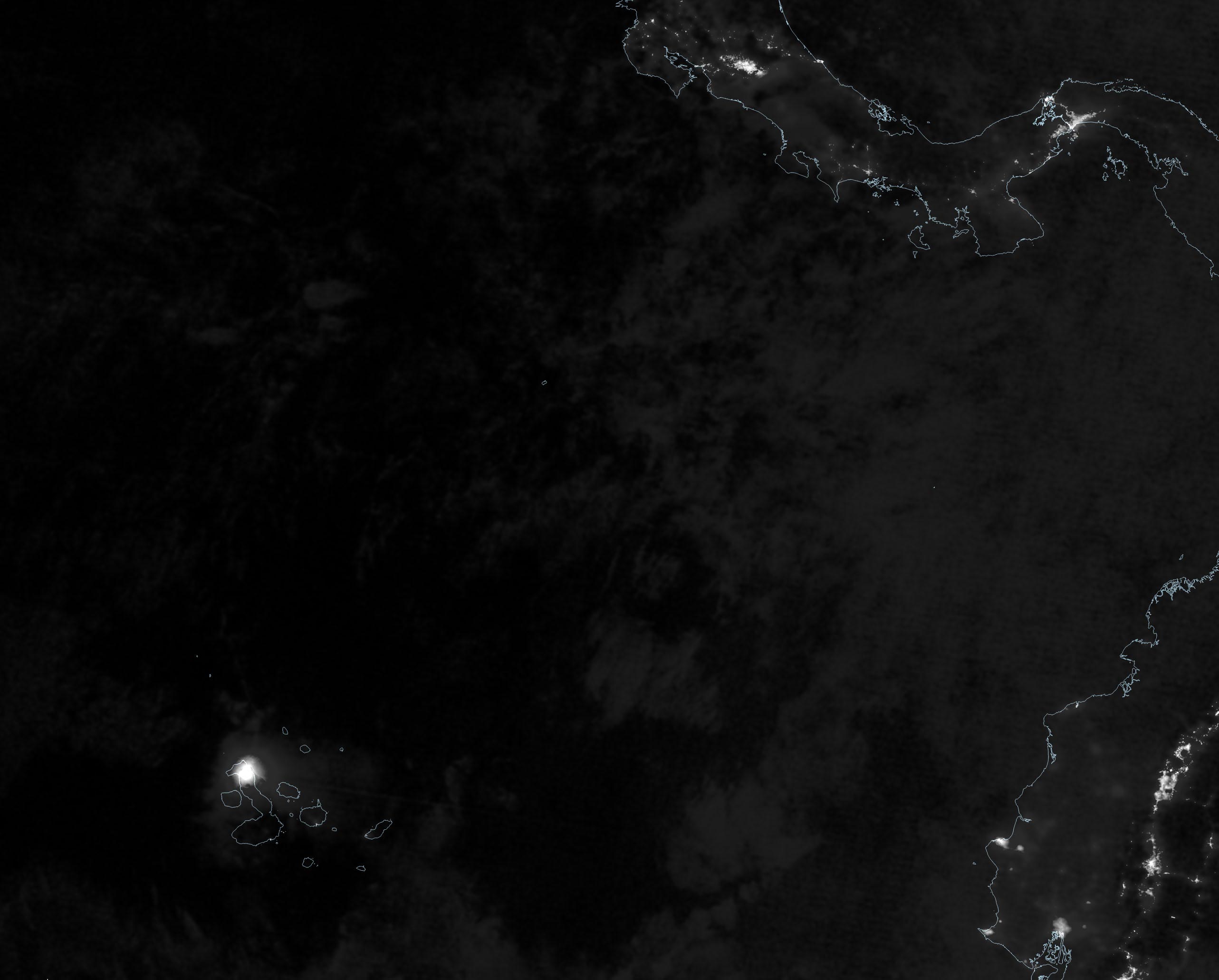
    Galápagos Islands Night January 2022 Annotated
    Satellite view of the glow of a volcanic eruption in the Galápagos Islands captured on January 7, 2022, by the Visible Infrared Imaging Radiometer Suite on the NOAA-NASA Suomi NPP satellite.

    Satellites captured the intense volcanic activity on Isabela Island in the Galápagos, with the eruption starting late on January 6, 2022. Lava and ash clouds rose up to 3,800 meters, and images from space showed the ash plume spreading west over the ocean. The area is notable for its unique biodiversity, including the endangered pink land iguana.

    The glow of a volcanic eruption in the Galápagos Islands was captured by the Visible Infrared Imaging Radiometer Suite (VIIRS) on the NOAA-NASA Suomi NPP satellite. The image, acquired by the VIIRS “day-night band” at 1:20 a.m. local time (7:20 UTC) on January 7, 2022, shows lava spewing from Wolf Volcano, on the northern end of Isabela Island. The largest island in the Galápagos archipelago lies roughly 1,100 kilometers (700 miles) off the west coast of Ecuador.

    According to the Geophysical Institute in Quito, the volcano began erupting late on January 6, ejecting ash clouds up to 3,800 meters (12,500 feet) and sending incandescent lava flows down the volcano’s sides. The next day, on January 7, NASA’s Terra satellite’s Moderate Resolution Imaging Spectroradiometer (MODIS) captured an image (below) of the plume moving west over the Pacific Ocean.
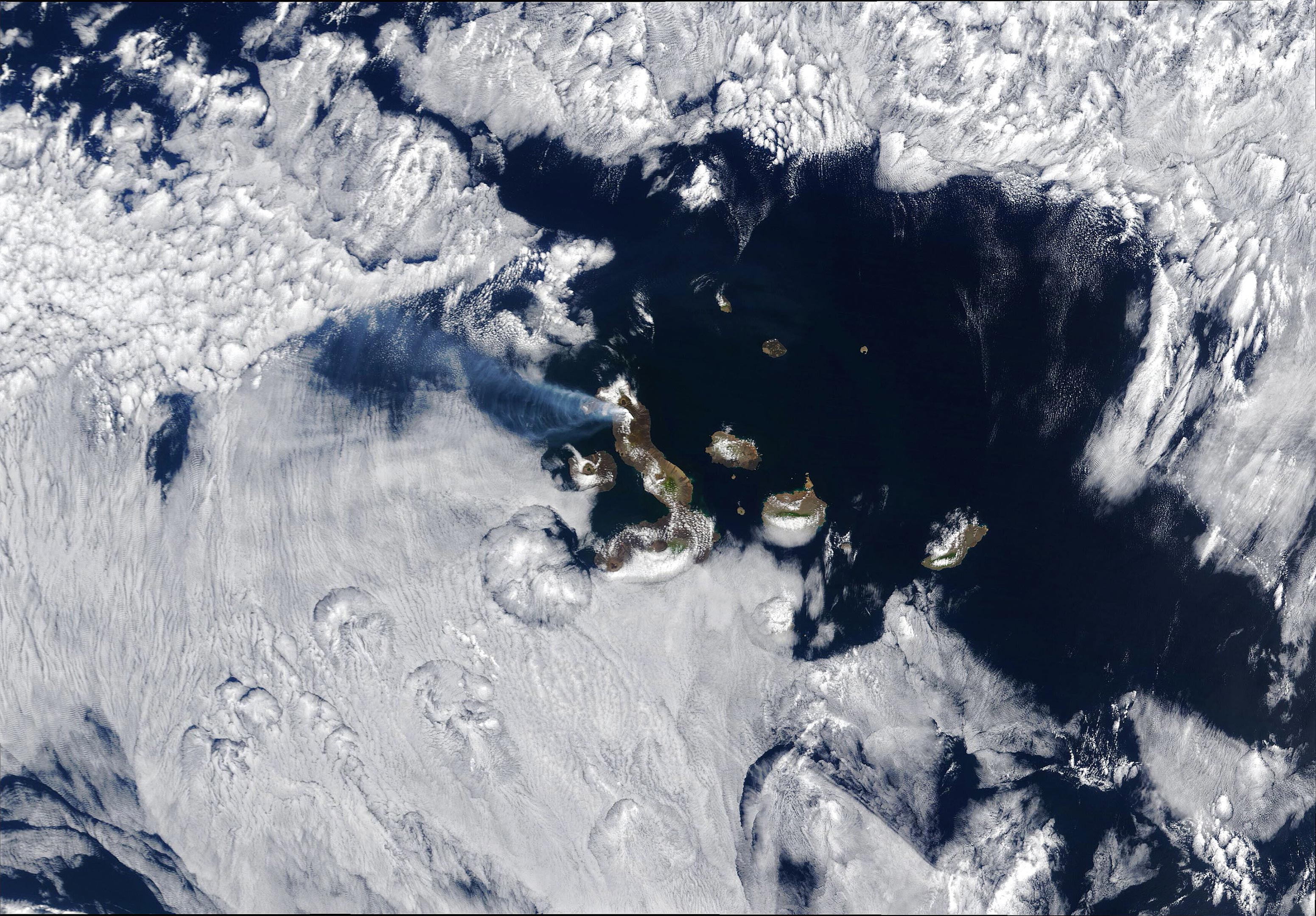
    Galápagos Islands January 2022 Annotated
    Satellite view of the plume left by a volcanic eruption in the Galápagos Islands captured on January 7, 2022, by the Visible Infrared Imaging Radiometer Suite on the NOAA-NASA Suomi NPP satellite.

    Wolf is the largest and tallest volcano in the Galápagos Islands. It last erupted in May and June 2015, with an eruption rated 4 on the Volcanic Explosivity Index (VEI) (range from 0 to 8). One of the volcano’s earlier eruptions, in 1797, was the first historical eruption documented in the Galápagos Islands.

    Isabela Island is home to the critically endangered pink land iguana. The isolation of the islands and their location at the confluence of major ocean currents gave rise to unique species, including the land iguana, the giant tortoise, and many varieties of finch. The Galápagos archipelago is a UNESCO World Heritage site.

    NASA Earth Observatory images by Joshua Stevens, using VIIRS day-night band data from the Suomi National Polar-orbiting Partnership and MODIS data from NASA EOSDIS LANCE and GIBS/Worldview.

    Never miss a breakthrough: Join the SciTechDaily newsletter.
    Follow us on Google and Google News.

    Geography NASA NASA Earth Observatory Popular Volcano
    Share. Facebook Twitter Pinterest LinkedIn Email Reddit

    Related Articles

    Blue Lagoon in Peril As Iceland’s Volcano Roars to Life

    Dark Skies Over Indonesia: Explosive Eruption Sends Ash Miles Into the Sky

    Deadly Ashfall: Over 10,000 Impacted by Mount Lewotobi’s Explosive Eruption

    Popocatépetl’s Persistent Eruptions Pose Ongoing Threat to Millions

    The Towering Inferno: Mount Erebus’ Dramatic Emergence From the Antarctic Clouds

    Antarctic Volcano: A Mountain of Terror?

    Massive Tonga Volcano Plume Reached the Mesosphere – 36 Miles Into the Atmosphere

    Island Obliterated: Dramatic Changes at Hunga Tonga-Hunga Ha’apai

    Hunga Tonga Island Obliterated – NASA Satellites Capture Massive Blast

    3 Comments

    1. Bob on January 11, 2022 6:09 am

      Wow

      Reply
    2. Don on February 7, 2022 10:07 pm

      Is this volcano the same as Sierra Negra?

      Reply
    3. kamir bouchareb st on May 12, 2025 10:33 am

      thank you

      Reply
    Leave A Reply Cancel Reply

    • Facebook
    • Twitter
    • Pinterest
    • YouTube

    Don't Miss a Discovery

    Subscribe for the Latest in Science & Tech!

    Trending News

    Scientists Discover Game-Changing New Way To Treat High Cholesterol

    This Small Change to Your Exercise Routine Could Be the Secret to Living Longer

    Scientists Discover 430,000-Year-Old Wooden Tools, Rewriting Human History

    AI Could Detect Early Signs of Alzheimer’s in Under a Minute – Far Before Traditional Tests

    What if Dark Matter Has Two Forms? Bold New Hypothesis Could Explain a Cosmic Mystery

    This Metal Melts in Your Hand – and Scientists Just Discovered Something Strange

    Beef vs. Chicken: Surprising Results From New Prediabetes Study

    Alzheimer’s Breakthrough: Scientists Discover Key Protein May Prevent Toxic Protein Clumps in the Brain

    Follow SciTechDaily
    • Facebook
    • Twitter
    • YouTube
    • Pinterest
    • Newsletter
    • RSS
    SciTech News
    • Biology News
    • Chemistry News
    • Earth News
    • Health News
    • Physics News
    • Science News
    • Space News
    • Technology News
    Recent Posts
    • Quantum Breakthrough: Unhackable Keys Sent Over 120 km Using Quantum Dots
    • Researchers Discover Unknown Beetle Species Just Steps From Their Lab
    • Jellyfish Caught Feasting on Exploding Sea Worms for the First Time
    • Ancient “Spaghetti” in Dogs’ Hearts Reveals Heartworm’s Shocking Origins
    • Milk Nanoparticles Could Revolutionize Treatment for Deadly Bile Duct Cancer
    Copyright © 1998 - 2026 SciTechDaily. All Rights Reserved.
    • Science News
    • About
    • Contact
    • Editorial Board
    • Privacy Policy
    • Terms of Use

    Type above and press Enter to search. Press Esc to cancel.