
Close Menu
    Facebook X (Twitter) Instagram
    SciTechDaily
    • Biology
    • Chemistry
    • Earth
    • Health
    • Physics
    • Science
    • Space
    • Technology
    Facebook X (Twitter) Pinterest YouTube RSS
    SciTechDaily
    Home»Earth»Lost and Found: Geologists “Resurrect” Missing Tectonic Plate That Some Argued Was Never Real
    Earth

    Lost and Found: Geologists “Resurrect” Missing Tectonic Plate That Some Argued Was Never Real

    By University of HoustonOctober 20, 20203 Comments4 Mins Read
    Facebook Twitter Pinterest Telegram LinkedIn WhatsApp Email Reddit
    Share
    Facebook Twitter LinkedIn Pinterest Telegram Email Reddit
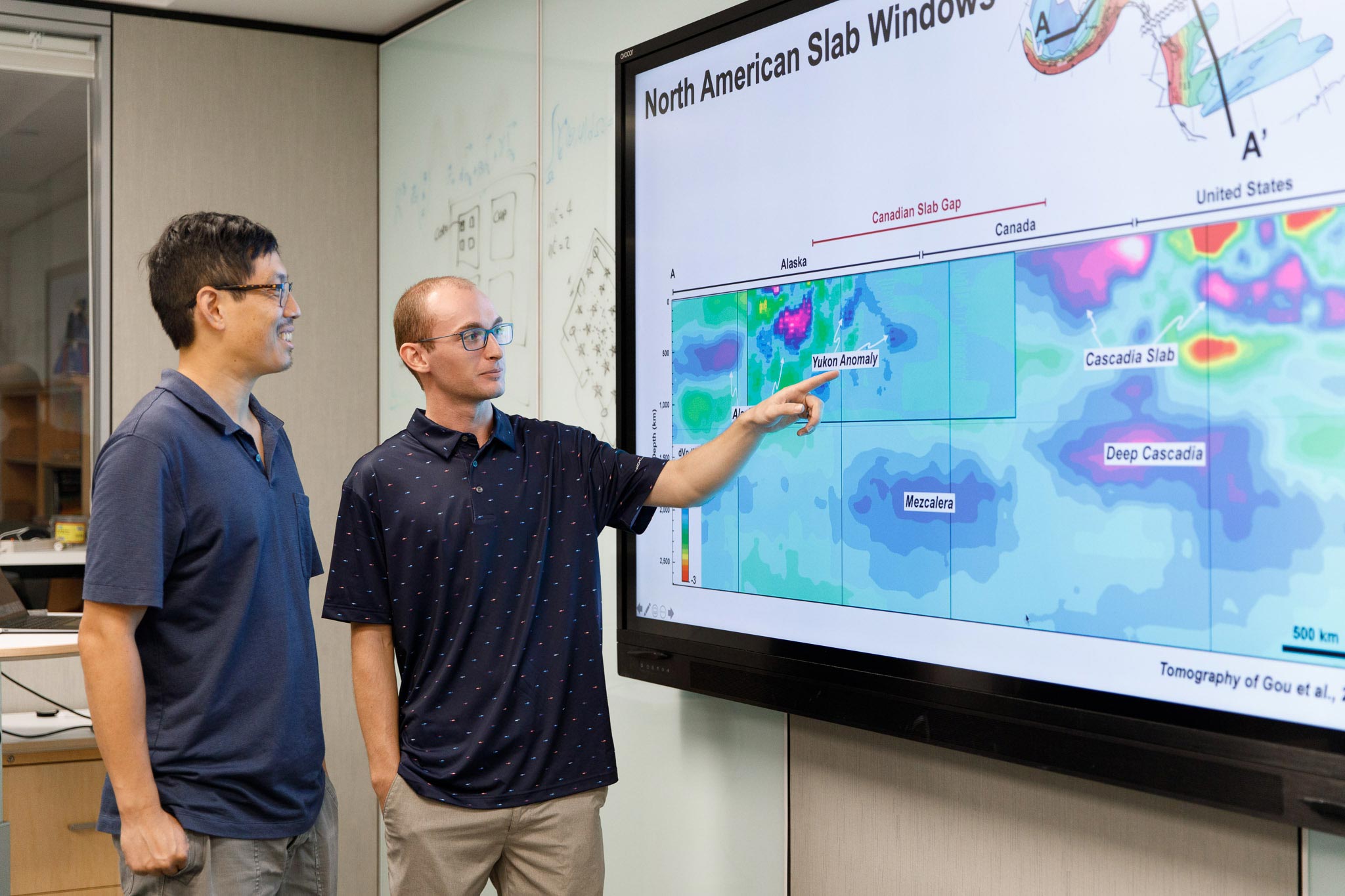
    Jonny Wu and Spencer Fuston
    (l-r) Jonny Wu, assistant professor of geology in the UH Department of Earth and Atmospheric Sciences and Spencer Fuston, a third-year geology doctoral student, applied a technique developed by the UH Center for Tectonics and Tomography called slab unfolding to reconstruct what tectonic plates in the Pacific Ocean looked like during the early Cenozoic Era. Credit: University of Houston

    Long-debated plate located in Northern Canada using 3D mapping technology.

    The existence of a tectonic plate called Resurrection has long been a topic of debate among geologists, with some arguing it was never real. Others say it subducted – moved sideways and downward – into the earth’s mantle somewhere in the Pacific Margin between 40 and 60 million years ago.

    A team of geologists at the University of Houston College of Natural Sciences and Mathematics believes they have found the lost plate in northern Canada by using existing mantle tomography images – similar to a CT scan of the earth’s interior. The findings, published in Geological Society of America Bulletin, could help geologists better predict volcanic hazards as well as mineral and hydrocarbon deposits.
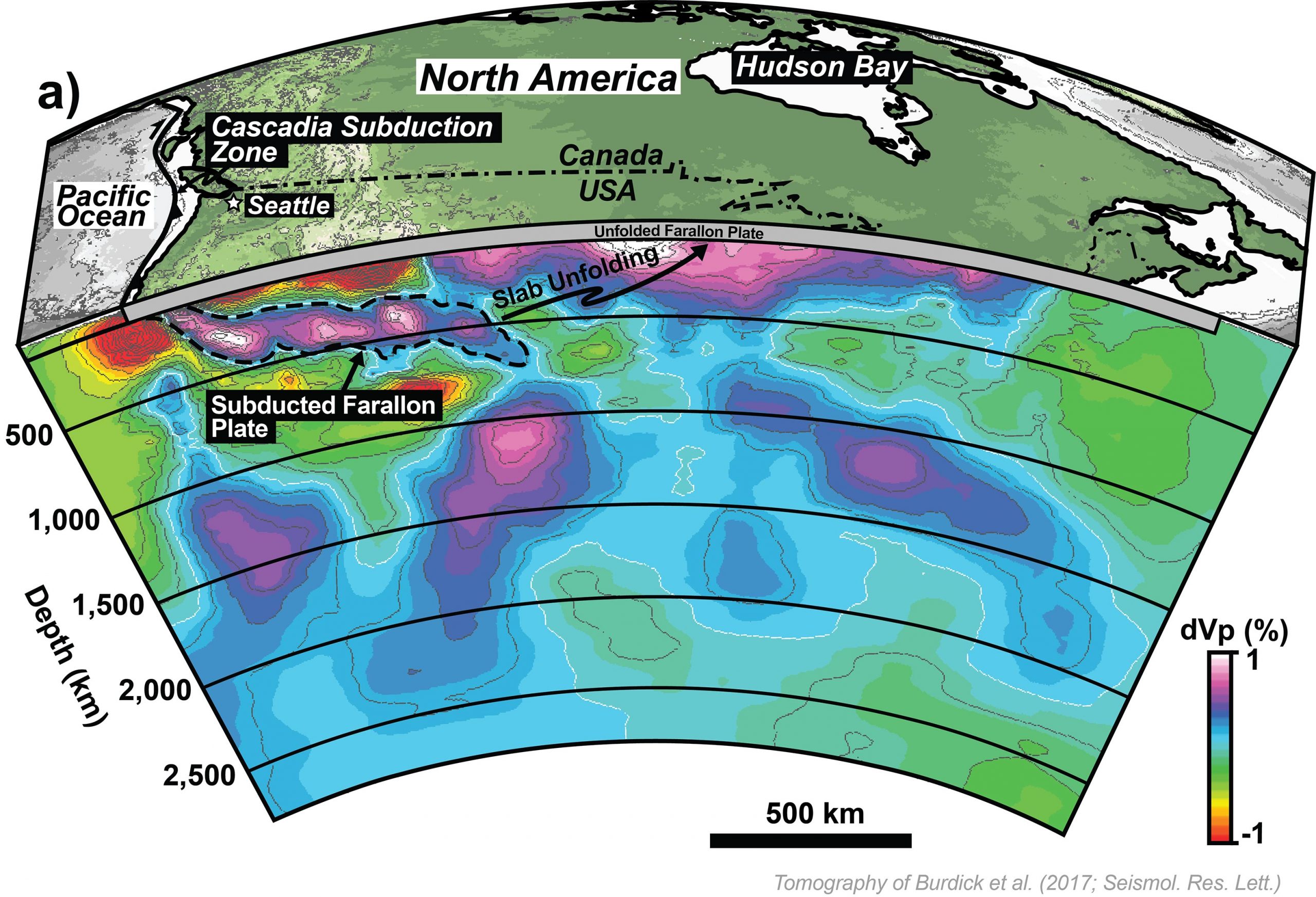
    3D Block Diagram of Tectonic Plates
    A 3D block diagram across North America showing a mantle tomography image reveals the Slab Unfolding method used to flatten the Farallon tectonic plate. By doing this, Fuston and Wu were able to locate the lost Resurrection plate. Credit: Spencer Fuston and Jonny Wu, University of Houston Dept. of Earth and Atmospheric Sciences in the College of Natural Sciences and Mathematics

    “Volcanoes form at plate boundaries, and the more plates you have, the more volcanoes you have,” said Jonny Wu, assistant professor of geology in the Department of Earth and Atmospheric Sciences. “Volcanoes also affect climate change. So, when you are trying to model the earth and understand how climate has changed since time, you really want to know how many volcanoes there have been on earth.”

    Wu and Spencer Fuston, a third-year geology doctoral student, applied a technique developed by the UH Center for Tectonics and Tomography called slab unfolding to reconstruct what tectonic plates in the Pacific Ocean looked like during the early Cenozoic Era. The rigid outermost shell of Earth, or lithosphere, is broken into tectonic plates and geologists have always known there were two plates in the Pacific Ocean at that time called Kula and Farallon. But there has been discussion about a potential third plate, Resurrection, having formed a special type of volcanic belt along Alaska and Washington State.
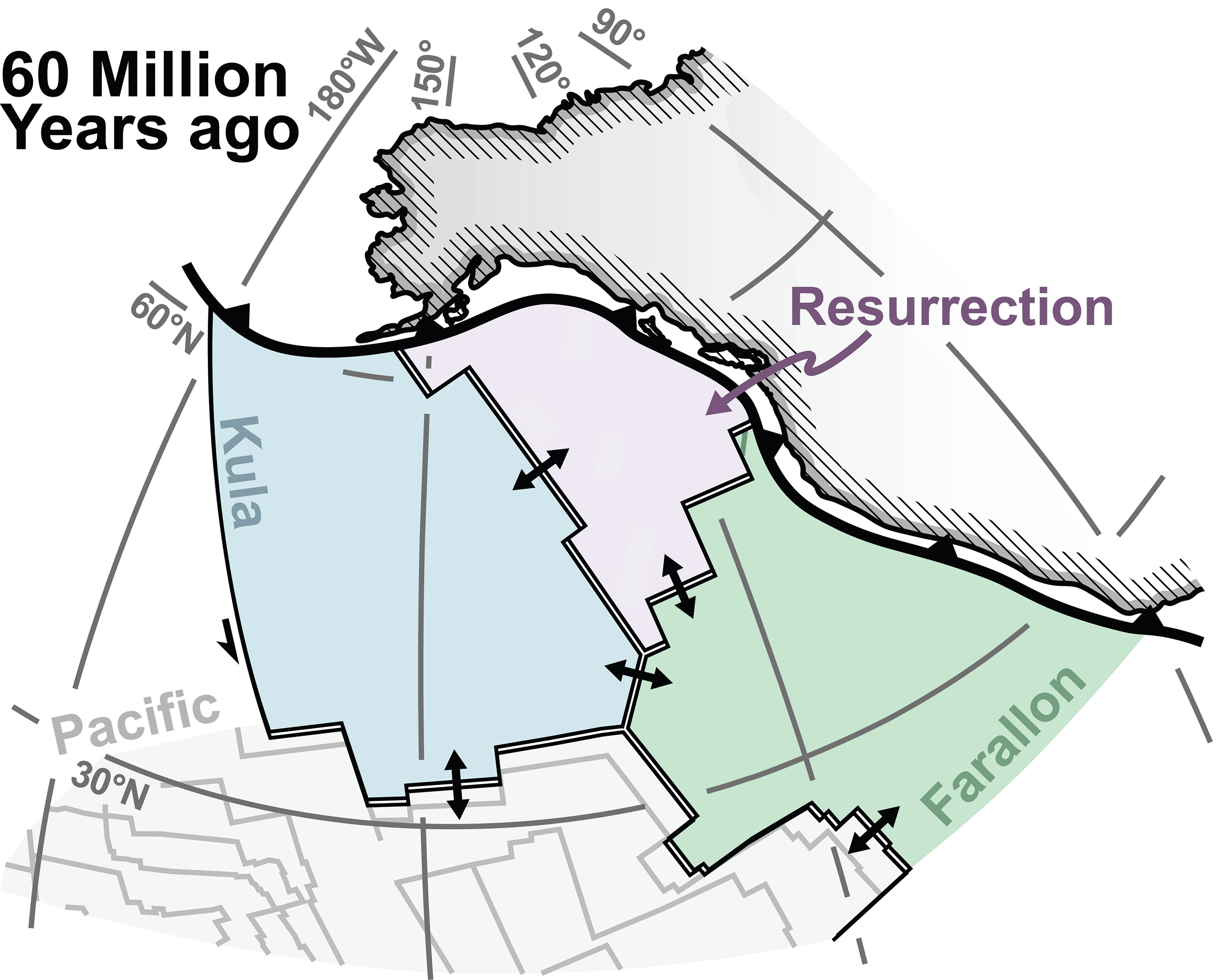
    Plate Tectonic Reconstruction
    A 3D block diagram across North America showing a mantle tomography image reveals the Slab Unfolding method used to flatten the Farallon tectonic plate. By doing this, Fuston and Wu were able to locate the lost Resurrection plate. Credit: Spencer Fuston and Jonny Wu, University of Houston Dept. of Earth and Atmospheric Sciences in the College of Natural Sciences and Mathematics

    “We believe we have direct evidence that the Resurrection plate existed. We are also trying to solve a debate and advocate for which side our data supports,” Fuston said.

    Using 3D mapping technology, Fuston applied the slab unfolding technique to the mantle tomography images to pull out the subducted plates before unfolding and stretching them to their original shapes.

    “When ‘raised’ back to the earth’s surface and reconstructed, the boundaries of this ancient Resurrection tectonic plate match well with the ancient volcanic belts in Washington State and Alaska, providing a much sought after link between the ancient Pacific Ocean and the North American geologic record,” explained Wu.

    Reference: “Raising the Resurrection plate from an unfolded-slab plate tectonic reconstruction of northwestern North America since early Cenozoic time” by Spencer Fuston and Jonny Wu, 19 October 2020, GSA Bulletin.
    DOI: 10.1130/B35677.1

    This study is funded by a five-year, $568,309 National Science Foundation CAREER Award led by Wu.

    Note: Animation below shows the subduction of Kula, Farallon, and Resurrection tectonic plates in western North America 60 million years ago to the present day.


    Never miss a breakthrough: Join the SciTechDaily newsletter.
    Follow us on Google and Google News.

    Geology Oceanography Popular Tectonic Plates University of Houston
    Share. Facebook Twitter Pinterest LinkedIn Email Reddit

    Related Articles

    Reimagining Earth’s Surface: The Gibraltar Subduction Zone Is Invading the Atlantic Ocean

    A Tectonic Twist: How Gibraltar Could Close the Atlantic Ocean

    When Oceans Close – New Study Suggests the Atlantic Will “Soon” Enter Its Declining Phase

    Scientists Discover Mysterious Warm Liquid Spewing From Oregon Seafloor

    Diamonds That Formed Deep in the Earth’s Mantle Contain Evidence of Deep-Earth Recycling Processes

    New Type of Rock Created During Exceptionally Hot Volcanic Eruptions Discovered Beneath the Pacific Ocean

    Earth’s Molten Core Is Leaking Heavy Iron Isotopes

    Early Earth May Have Been a ‘Waterworld’ – Likely Covered by a Global Ocean 3.2 Billion Years Ago

    Earth’s Water Supply Summed Up in One “Tiny” Bubble

    3 Comments

    1. Eric on October 21, 2020 6:50 am

      interesting

      Reply
    2. Torbjörn Larsson on October 21, 2020 2:40 pm

      2nd that. If it can explain the volcano chains as well as the seismology, it’s neat.

      Also, the “unwrinkling” model of the seismology appeal to anyone who have tried to smooth a crimpled up piece of paper!

      Reply
    3. Torbjörn Larsson on October 21, 2020 2:41 pm

      “the “unwrinkling” model of the seismology” in the paper, I mean. There is a neat figure on the wrinkled up slab they see by seismology in there.

      Reply
    Leave A Reply Cancel Reply

    • Facebook
    • Twitter
    • Pinterest
    • YouTube

    Don't Miss a Discovery

    Subscribe for the Latest in Science & Tech!

    Trending News

    JWST Finds a “Star” 100 Billion Times Brighter Than Any Star Should Be

    Scientists Find a Hidden Biological Link Across Different Forms of Autism

    Astronomers Discover a Ghostly River of Stars That Could Reveal Dark Matter

    Why Is Colorectal Cancer Rising in People Under 50? New Clues Point to the Environment

    Quantum Fluctuations Break a Crystal’s Symmetry Rules

    Why Does an Irregular Heartbeat Strike 40 Years Early in Some People?

    Scientists Reveal How ADHD Could Fuel Creative Thinking

    Scientists Find Just 3 Minutes of Sprinting Can Transform Blood Chemistry

    Follow SciTechDaily
    • Facebook
    • Twitter
    • YouTube
    • Pinterest
    • Newsletter
    • RSS
    SciTech News
    • Biology News
    • Chemistry News
    • Earth News
    • Health News
    • Physics News
    • Science News
    • Space News
    • Technology News
    Recent Posts
    • Common Plant Chemical Linked to Widespread Organ Damage in Aquatic Animals
    • Scientists Discover a Hidden Baobab Species in Madagascar
    • Dogs and Humans May Share a Surprising Biological Secret to Longevity
    • A 150-Million-Year-Old Dinosaur Flight Mystery May Finally Have an Answer
    • Giant Crocodylians Ruled South America’s Ancient Food Chain
    Copyright © 1998 - 2026 SciTechDaily. All Rights Reserved.
    • Science News
    • About
    • Contact
    • Editorial Board
    • Privacy Policy
    • Terms of Use

    Type above and press Enter to search. Press Esc to cancel.