
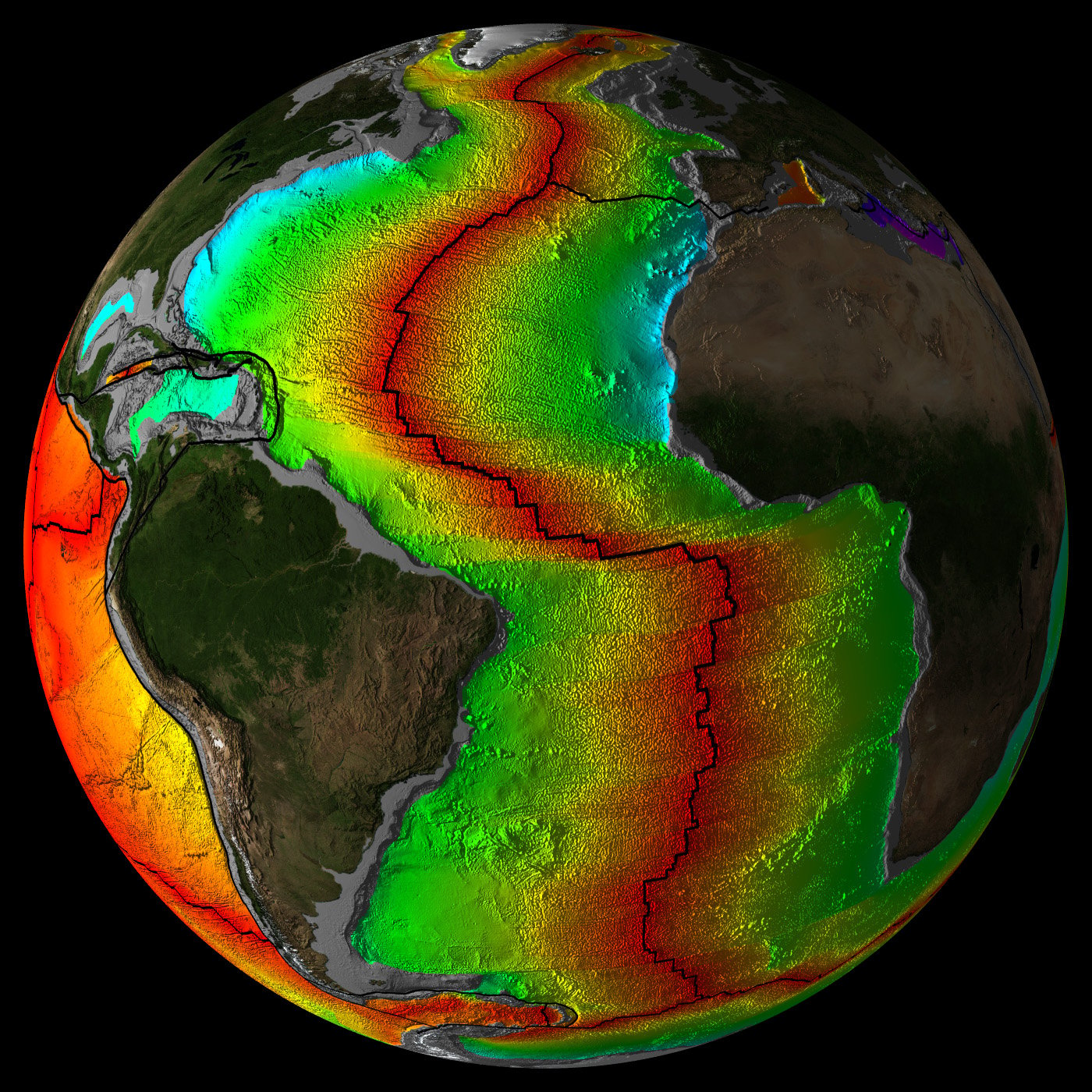
Recent research employing computational simulations predicts that the subduction zone presently beneath the Strait of Gibraltar will extend further into the Atlantic, playing a key role in the development of an Atlantic subduction system – essentially an Atlantic ring of fire. In geological timeframes, this event is anticipated to occur ‘soon’, roughly in the next 20 million years.
Oceans seem eternal to our lifespan, but they are not here for long: they are born, grow, and one day close. This process, which takes a few hundred million years, is called Wilson Cycle. The Atlantic, for example, was born when Pangea broke up, around 180 million years ago, and will one day close. And the Mediterranean is what remains from a big ocean – the Tethys– that once existed between Africa and Eurasia.
Understanding Subduction Zones
For an ocean like the Atlantic to stop growing and start closing, new subduction zones – places where one tectonic plate sinks below another – have to form. But subduction zones are hard to form, as it requires plates to break and bend, and plates are very strong. A way out of this “paradox” is to consider that subduction zones can migrate from a dying ocean in which they already exist – the Mediterranean – into pristine oceans – such as the Atlantic. This process was dubbed subduction invasion.
This study shows for the first time how such a direct invasion can happen. The computational, gravity-driven 3-D model predicts that a subduction zone currently below the Gibraltar Strait will propagate further inside the Atlantic and contribute to forming an Atlantic subduction system – an Atlantic ring of fire, in an analogy to the already existing structure in the Pacific. This will happen ‘soon’ in geological terms – but not before approximately 20 million years.
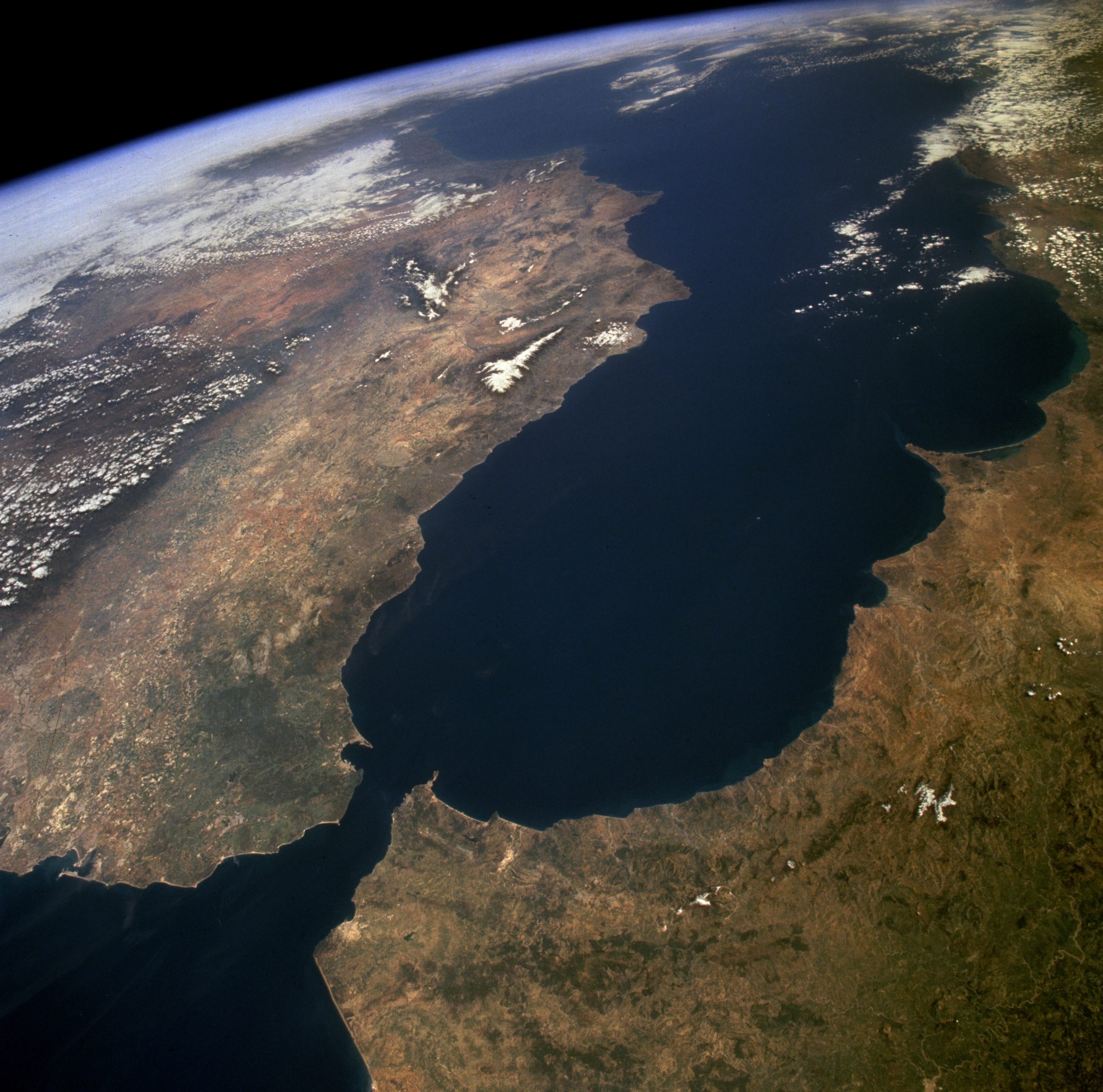
“Subduction invasion is inherently a three-dimensional process that requires advanced modeling tools and supercomputers that were not available a few years ago. We can now simulate the formation of the Gibraltar Arc with great detail and also how it may evolve in the deep future” explains João Duarte, first author, researcher at Instituto Dom Luiz, at Faculty of Sciences of the University of Lisbon (Ciências ULisboa) (Portugal).
Active Subduction at the Gibraltar Zone
This study sheds a new light on the Gibraltar subduction zone, as few authors considered it to be still active, because it has significantly slowed down in the past million years. According to these results, its slow phase will last for another 20 million years and, after that, will invade the Atlantic Ocean and accelerate. That will be the beginning of the recycling of crust on the eastern side of the Atlantic, and might be the start of the Atlantic itself beginning to close.
“There are two other subduction zones on the other side of the Atlantic – the Lesser Antilles, in the Caribbean, and the Scotia Arc, near Antarctica. However, these subduction zones invaded the Atlantic several million years ago. Studying Gibraltar is an invaluable opportunity because it allows observing the process in its early stages when it is just happening”, adds João Duarte.
Broadly, this study shows that subduction invasion is likely a common mechanism of subduction initiation in Atlantic-type oceans, and thus plays a fundamental role in the geological evolution of our planet.
The finding that the Gibraltar subduction is still currently active has also important implications for seismic activity in the area. Subduction zones are known for producing the strongest earthquakes on Earth. Events such as the 1755 Great Lisbon Earthquake are a threat and require preparedness.
Reference: “Gibraltar subduction zone is invading the Atlantic” by João C. Duarte, Nicolas Riel, Filipe M. Rosas, Anton Popov, Christian Schuler and Boris J.P. Kaus, 13 February 2024, Geology.
DOI: 10.1130/G51654.1
This study results from a collaboration between researchers of the Faculty of Sciences of the University of Lisbon (Portugal) – João Duarte and Filipe Rosas – and researchers of the Johannes Gutenberg University Mainz (Germany) Nicolas Riel, Anton Popov, Christian Schuler and Boris Kaus.
Read More: A Tectonic Twist: How Gibraltar Could Close the Atlantic Ocean
Never miss a breakthrough: Join the SciTechDaily newsletter.
Follow us on Google and Google News.
4 Comments
20 million years of sleepless nights
Better start filling the bunker with supplies. The next 20 million years are going to be a bumpy ride.
Compliance With Irs **
Is this the fake threat politicians were throwing around so they could steal millions more of American tax payers’ money to fund Ukraine. That was 100% Fear Mongering and si is this. Lies lies lies just like the devil the media worships.