
Close Menu
    Facebook X (Twitter) Instagram
    SciTechDaily
    • Biology
    • Chemistry
    • Earth
    • Health
    • Physics
    • Science
    • Space
    • Technology
    Facebook X (Twitter) Pinterest YouTube RSS
    SciTechDaily
    Home»Biology»Microbes Turn Back the Clock: New Research Discovers Their Potential To Reverse Aging in the Brain
    Biology

    Microbes Turn Back the Clock: New Research Discovers Their Potential To Reverse Aging in the Brain

    By University College CorkAugust 11, 2021No Comments3 Mins Read
    Facebook Twitter Pinterest Telegram LinkedIn WhatsApp Email Reddit
    Share
    Facebook Twitter LinkedIn Pinterest Telegram Email Reddit

    Brain Energy

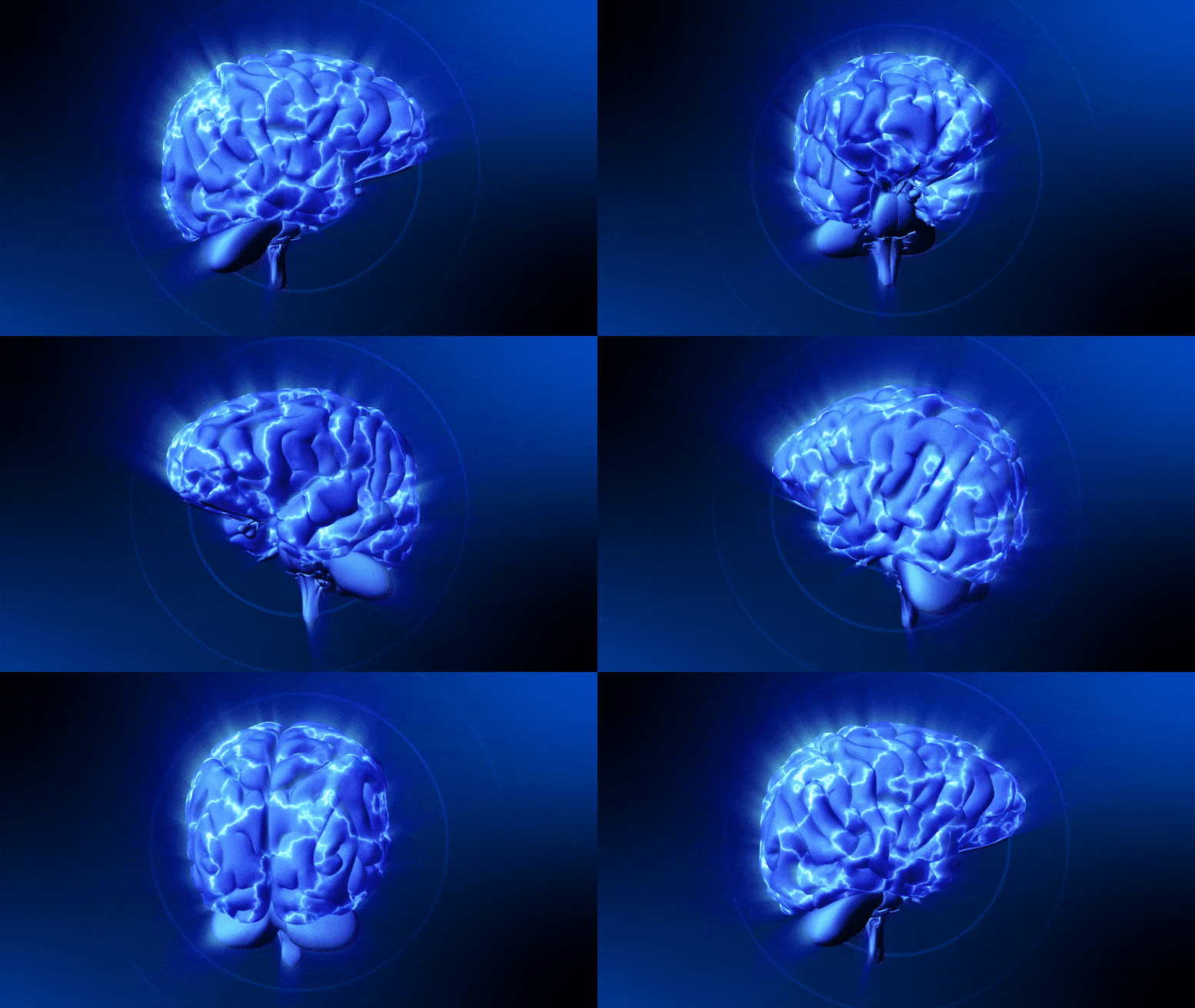
    Transferring young gut microbes rejuvenated aging mouse brains, pointing to new ways to combat cognitive decline.

    Research from APC Microbiome Ireland (APC) at University College Cork (UCC) published on August 9, 2021, in the leading international scientific journal Nature Aging introduces a novel approach to reverse aspects of aging-related deterioration in the brain and cognitive function via the microbes in the gut.

    As our population ages, one of the key global challenges is to develop strategies to maintain healthy brain function. This ground-breaking research opens up potentially new therapeutic avenues in the form of microbial-based interventions to slow down brain aging and associated cognitive problems. 

    The work was carried out by researchers in the Brain-Gut-Microbiota lab in APC led by Prof John F. Cryan, Vice President for Research & Innovation, University College Cork as well as a Principal Investigator at APC Microbiome Ireland an SFI Research Centre,  based in University College Cork and Teagasc Moorepark.

    Researchers at APC Microbiome in UCC
    Researchers at APC Microbiome in UCC have discovered the potential to reverse aging in the brain – Pictured are Professor John Cryan, Dr. Marcus Boehme, Katherine Guzzetta, Dr. Thomaz Bastiaanssen. The UCC researchers at APC Microbiome Ireland, a world-leading SFI Research Centre, have found that aging-associated changes in the immune system of old mice were reversed by the transfer of gut microbiota from the young mice. The researchers saw improved behavior of older mice in several cognitive tests for learning, memory, and anxiety. Credit: Clare Keogh

    There is a growing appreciation of the importance of the microbes in the gut in all aspects of physiology and medicine. In this latest mouse study the authors show that by transplanting microbes from young into old animals they could rejuvenate aspects of brain and immune function. Prof John F. Cryan, says “Previous research published by the APC and other groups internationally has shown that the gut microbiome plays a key role in aging and the aging process. This new research is a potential game-changer, as we have established that the microbiome can be harnessed to reverse age-related brain deterioration. We also see evidence of improved learning ability and cognitive function.” Although very exciting Cryan cautions that “it is still early days and much more work is needed to see how these findings could be translated in humans.”

    APC Director Prof Paul Ross stated “This research of Prof. Cryan and colleagues further demonstrates the importance of the gut microbiome in many aspects of health, and particularly across the brain/gut axis where brain functioning can be positively influenced. The study opens up possibilities in the future to modulate gut microbiota as a therapeutic target to influence brain health” The study was led by co-first authors Dr. Marcus Boehme along with PhD students Katherine E. Guzzetta, and Thomaz Bastiaansen.

    Reference: “Microbiota from young mice counteracts selective age-associated behavioral deficits” by Marcus Boehme, Katherine E. Guzzetta, Thomaz F. S. Bastiaanssen, Marcel van de Wouw, Gerard M. Moloney, Andreu Gual-Grau, Simon Spichak, Loreto Olavarría-Ramírez, Patrick Fitzgerald, Enrique Morillas, Nathaniel L. Ritz, Minal Jaggar, Caitlin S. M. Cowan, Fiona Crispie, Francisco Donoso, Evelyn Halitzki, Marta C. Neto, Marzia Sichetti, Anna V. Golubeva, Rachel S. Fitzgerald, Marcus J. Claesson, Paul D. Cotter, Olivia F. O’Leary, Timothy G. Dinan and John F. Cryan, 9 August 2021, Nature Aging.
    DOI: 10.1038/s43587-021-00093-9

    Never miss a breakthrough: Join the SciTechDaily newsletter.
    Follow us on Google and Google News.

    Aging Anti-Aging Brain Immunology Microbiome Popular University College Cork
    Share. Facebook Twitter Pinterest LinkedIn Email Reddit

    Related Articles

    Could “Zombie Cells” in Your Skin Be Aging Your Entire Body? Mayo Clinic’s Startling Discovery

    New Potential for Reversing Aging: Scientists Discover Changes in Aging Stem Cells

    Anti-Inflammatory Molecules Discovered That Decline in the Aging Brain

    Giant “Super Neurons” Discovered in SuperAger Brains

    Life-Extending Effects: How Serotonin, Dopamine, and the Smell of Food Affect Aging

    Fecal Transplants Reverse Hallmarks of Aging in the Gut, Eyes, and Brain

    New Discovery Helps Explain How COVID-19 Overpowers the Immune System

    Scientists Explore Molecular Connections Between Genetics, Gut Microbiome, and Memory

    Synergistic Cellular Pathways Identified That Extend Lifespan by 500%

    Leave A Reply Cancel Reply

    • Facebook
    • Twitter
    • Pinterest
    • YouTube

    Don't Miss a Discovery

    Subscribe for the Latest in Science & Tech!

    Trending News

    One of the Universe’s Largest Stars May Be Getting Ready To Explode

    Scientists Discover Enzyme That Could Supercharge Ozempic-Like Weight Loss Drugs

    Popular Sweetener Linked to DNA Damage – “It’s Something You Should Not Be Eating”

    Ancient “Rock” Microbes May Reveal How Complex Life Began

    Researchers Capture Quantum Interference in One of Nature’s Rarest Atoms

    “A Plague Is Upon Us”: The Mass Death That Changed an Ancient City Forever

    Scientists Discover Game-Changing New Way To Treat High Cholesterol

    This Small Change to Your Exercise Routine Could Be the Secret to Living Longer

    Follow SciTechDaily
    • Facebook
    • Twitter
    • YouTube
    • Pinterest
    • Newsletter
    • RSS
    SciTech News
    • Biology News
    • Chemistry News
    • Earth News
    • Health News
    • Physics News
    • Science News
    • Space News
    • Technology News
    Recent Posts
    • Natural Compounds Boost Bone Implant Success While Killing Bacteria and Cancer Cells
    • After 60 Years, Scientists Uncover Unexpected Brain Effects of Popular Diabetes Drug Metformin
    • New Research Uncovers Hidden Side Effects of Popular Weight-Loss Drugs
    • Scientists Rethink Extreme Warming After Surprising Ocean Discovery
    • The Surprising Role of Asteroids in the Origin of Life
    Copyright © 1998 - 2026 SciTechDaily. All Rights Reserved.
    • Science News
    • About
    • Contact
    • Editorial Board
    • Privacy Policy
    • Terms of Use

    Type above and press Enter to search. Press Esc to cancel.