
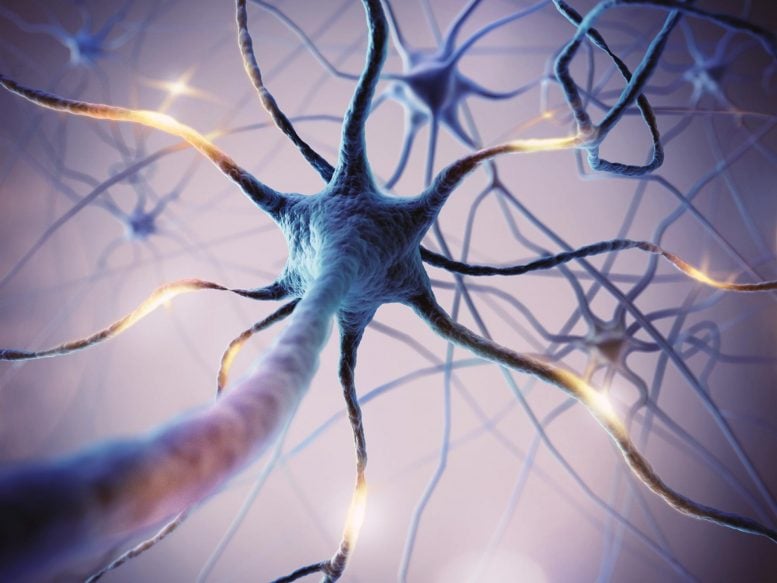
Post-mortem brains of SuperAgers reveal significantly larger neurons in memory region.
- SuperAger neurons are even larger than those in individuals 20 to 30 years younger
- These neurons do not have tau tangles that are a hallmark of Alzheimer’s
- Larger neurons in the brain’s memory region are a biological signature of SuperAging trajectory
Neurons in the entorhinal cortex, an area of the brain responsible for memory, were significantly larger in SuperAgers compared to cognitively average peers and individuals with early-stage Alzheimer’s disease. They were even larger compared to individuals 20 to 30 years younger than SuperAgers — who are aged 80 years and older. This is all according to a new Northwestern Medicine study that was published on September 30 in The Journal of Neuroscience.
Unique Biological Signature of SuperAgers
These SuperAger neurons did not harbor tau tangles, a signature hallmark of Alzheimer’s disease.
“The remarkable observation that SuperAgers showed larger neurons than their younger peers may imply that large cells were present from birth and are maintained structurally throughout their lives,” said lead author Tamar Gefen. She is an assistant professor of psychiatry and behavioral sciences at Northwestern University Feinberg School of Medicine. “We conclude that larger neurons are a biological signature of the SuperAging trajectory.”
The study of SuperAgers with exceptional memory was the first research to demonstrate that these individuals carry a unique biological signature that comprises larger and healthier neurons in the entorhinal cortex that are relatively void of tau tangles (pathology).
The Northwestern SuperAging Research Program studies unique individuals known as SuperAgers, 80+ year-olds who show extraordinary memory at least as good as individuals 20 to 30 years their junior.
“To understand how and why people may be resistant to developing Alzheimer’s disease, it is important to closely investigate the postmortem brains of SuperAgers,” Gefen said. “What makes SuperAgers’ brains unique? How can we harness their biologic traits to help elderly stave off Alzheimer’s disease?”
Researchers investigated the entorhinal cortex of the brain because it controls memory and is one of the first locations targeted by Alzheimer’s disease. The entorhinal cortex is comprised of six layers of neurons packed on top of one another. Layer II, in particular, receives information from other memory centers and is a very specific and crucial hub along the brain’s memory circuit.
In the study, the research team demonstrated that SuperAgers harbor large, healthier neurons in layer II of the entorhinal cortex compared to their same-aged peers, people with early stages of Alzheimer’s disease, and even individuals 20 to 30 years younger. They also found that these large layer II neurons were spared from the formation of tau tangles.
Link Between Tau Tangles and Neuronal Shrinkage
Taken together, the findings indicate that a neuron spared from tangle formation can maintain its structural integrity (i.e., remain healthy and large). The inverse also appears to be true: Tau tangles can lead to neuronal shrinkage.
Participants in the SuperAger study donate their brains for research after their death.
For the study, researchers analyzed the brains of six SuperAgers, seven cognitively average elderly individuals, six young individuals, and five individuals with early stages of Alzheimer’s. They measured the size of neurons in layer II of the entorhinal cortex (compared to layers III and V) of all the brains. They also assessed the presence of tau tangles in these cases.
For reasons that remain unknown, cell populations in the entorhinal cortex are selectively vulnerable to tau tangle formation during normal aging and in the early stages of Alzheimer’s disease.
“In this study, we show that in Alzheimer’s, neuronal shrinkage (atrophy) in the entorhinal cortex appears to be a characteristic marker of the disease,” Gefen said.
“We suspect this process is a function of tau tangle formation in the affected cells leading to poor memory abilities in older age,” Gefen said. “Identifying this contributing factor (and every contributing factor) is crucial to the early identification of Alzheimer’s, monitoring its course and guiding treatment.”
Future research is necessary to determine how and why neuronal integrity is preserved in SuperAgers. Gefen wants to specifically focus on probing the cellular environment.
“What are the chemical, metabolic or genetic features of these cells that render them resilient?” she asked. She also plans to investigate other hubs along the memory circuit of the brain to better understand the spread of or resistance to disease.
“We expect this research to be amplified and more impactful through a $20 million expansion of the SuperAging Initiative now enrolling five sites in the U.S. and Canada,” said Emily Rogalski. She is the associate director of the Mesulam Center for Cognitive Neurology and Alzheimer’s Disease at Northwestern University Feinberg School of Medicine.
Reference: “Integrity of neuronal size in the entorhinal cortex is a biologic substrate of exceptional cognitive aging” by Caren Nassif, Allegra Kawles, Ivan Ayala, Grace Minogue, Nathan P. Gill, Robert A. Shepard, Antonia Zouridakis, Rachel Keszycki, Hui Zhang, Qinwen Mao [MD, PhD], Margaret E. Flanagan [MD], Eileen H. Bigio [MD], M.-Marsel Mesulam [MD], Emily Rogalski [PhD], Changiz Geula [PhD] and Tamar Gefen [PhD], 30 September 2022, The Journal of Neuroscience.
DOI: 10.1523/JNEUROSCI.0679-22.2022
This study was supported by the National Institute on Aging of the National Institutes of Health (grant numbers P30AG013854, R01AG062566, R01AG067781, R01AG045571, R56AG045571, and U19AG073153).
Never miss a breakthrough: Join the SciTechDaily newsletter.
Follow us on Google and Google News.
2 Comments
Fine, but I also look forward to reading about the 80+ y.o. who can improvise historic or gestalt truth or fantasy very well (if not super agers who insisted on being buried whole following studies, putting the research program or mortuary out many extra steps.)
Ville gjerne vite omega3 andel av fettsyrer i hjernen til superagers