
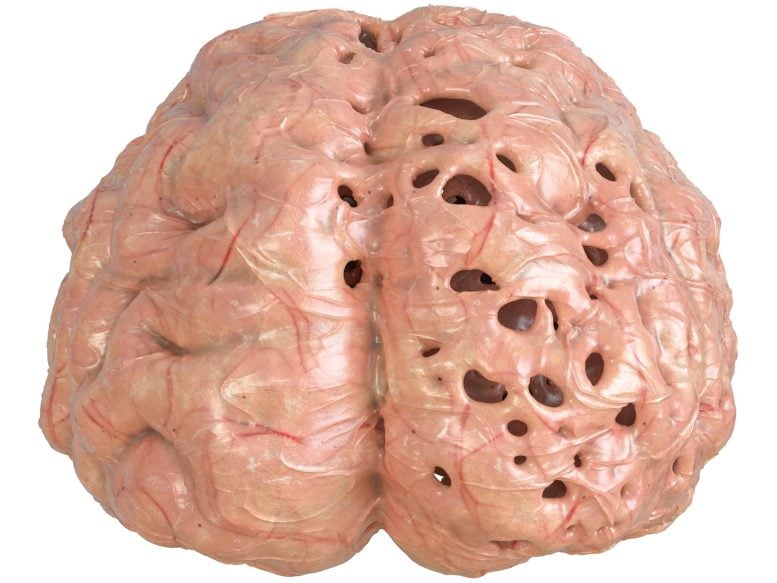
Researchers discovered how tau, a key protein in Alzheimer’s disease, undergoes multiple damaging changes by identifying master sites that control other modifications.
New research explored how a protein called tau, critical to Alzheimer’s, turns from normal to a diseased state. This discovery presents a new target to potentially prevent or treat this debilitating progressive illness that slowly destroys cognitive function and memory. Alzheimer’s disease is the most common cause of dementia in older adults and the 7th leading cause of death in the United States, according to the National Institute on Aging.
Alzheimer’s disease, the most prevalent form of dementia, currently has no cure or effective therapy, in part due to gaps in our understanding of how the progressive neurodegenerative disorder emerges in the brain.
Now, new research from Flinders University has demonstrated how a protein called tau, which is a critical factor in the development of Alzheimer’s disease, turns from normal to a disease state. Furthermore, the study reveals how this discovery could deliver a therapeutic target.
Published on July 6, 2022, in the journal Science Advances, the team’s findings provide hope for preventing the tau transformation process from happening, thereby maintaining tau in a healthy state and avoiding damaging consequences on brain cells.
“Alongside a small peptide called amyloid-beta, the tau protein is a central factor in Alzheimer’s disease. Tau is necessary for the toxic effects on brain cells that then result in impaired memory function,” says senior study author Dr. Arne Ittner, Senior Research Fellow in Neuroscience in the Flinders Health and Medical Research Institute.
How Tau Modifications Progress
Tau accumulates in deposits inside brain cells as Alzheimer’s disease progresses. Tau is highly transformed throughout this process, with various deposits made up of tau bearing multiple minor modifications at many different positions within the tau molecule.
While neuropathologists have known about these changes to tau for decades, it remained unclear how tau arrives at this multi-modified stage. The new research has solved part of this mystery and provides a new mechanism to explain how tau gets progressively modified.
Identifying Master Sites in Tau
The study set out to answer whether one change at one specific spot in tau would make it easier for another spot to be modified. The team focussed on the relationship between tau and protein kinases, which are enzymes that introduce changes in tau.
“Usually, protein kinases target specific spots, called phosphorylation sites, in tau and other proteins, and introduce changes only at these specific spots,” says study lead author Dr. Kristie Stefanoska, Research Fellow in Dementia at Flinders University.
“However, we suspected that some of these enzymes are able to target several spots in tau and would do so even more efficiently if tau were already modified at one spot to begin with.”
The researchers conducted a large experiment that included up to 20 different changes in tau and 12 enzymes, focussing on the most abundant type of change seen in tau from the brains of Alzheimer’s patients.
While the study did discover that one change in tau does make it easier for another change to be introduced, it was also able to identify “master sites” in tau, being specific spots that govern subsequent modifications at most of the other sites.
Potential Therapeutic Target in Master Sites
“By modifying these master sites, we were able to drive modification at multiple other spots within tau, leading to a similar state seen in the brains of Alzheimer’s patients,” says Dr. Ittner.
The next step for the team was to see whether master sites could be targeted to reduce the toxic properties of tau in Alzheimer’s, in a bid to improve memory function.
The current study employed mice that have both amyloid and tau and developed Alzheimer’s-like symptoms, including memory deficits. The researchers found that mice did not develop memory deficits when they had a version of tau that lacked one of the identified master sites, compared with mice that had the usual version of tau.
The team will now investigate how its findings can be translated into a treatment.
“We have shown that this new concept has therapeutic potential, but future work is needed to understand the role of these master sites in health and disease,” says Dr. Stefanoska.
“Tau modification in Alzheimer’s disease is a complicated process. Ours is the first study to link an initial change in tau with multi-site modification along the entire protein.”
The authors say the new mechanism and the master sites at its center could apply to a range of neurological disorders in which tau is involved, including Parkinson’s disease, concussion-induced chronic brain injury, and stroke.
“Slowing down the changes at master sites of tau in these diseases may put the brakes on tau toxicity and dementia,” says Dr. Ittner.
“This new mechanism helps us understand why there is extensive tau modification in Alzheimer’s disease in the first place. This will assist researchers and clinicians in designing means for better and earlier diagnosis.”
Reference: “Alzheimer’s disease: Ablating single master site abolishes tau hyperphosphorylation” by Kristie Stefanoska, Mehul Gajwani, Amanda R. P. Tan, Holly I. Ahel, Prita Riana Asih, Alexander Volkerling, Anne Poljak and Arne Ittner, 6 July 2022, Science Advances.
DOI: 10.1126/sciadv.abl8809
This work was supported by funding from the National Health and Medical Research Council (grant nos. 1143978 and 1176628); the Australian Research Council (grant nos. DP170100843, DP200102396, and DP220101900); the Dementia Australia Research Foundation; the Flinders Foundation, Flinders University, and Macquarie University; and the BrightFocus Foundation (to K.S.; grant no. A2022022F). Dr. Stefanoska is a Scientia Professor Henry Brodaty Post-doctoral Fellow of the Dementia Australia Research Foundation. Dr. Ittner is a National Health and Medical Research Council Emerging Leadership 2 fellow (grant no. 1176628).
Never miss a breakthrough: Join the SciTechDaily newsletter.
Follow us on Google and Google News.
2 Comments
There remains a kind of medically unrecognized and unresearched food allergy reaction which, in conjunction with officially (FDA in the US) approved food poisoning (namely added ‘cultured free’ MSG and common incomplete protein phytoestrogen rich allergen soy), contribute to now epidemic dementia in the US (minimally, going/gone global with the so-called ‘Western Diet’). First identified, studied and reported on by then renowned American immunologist Arthur F. Coca, MD by 1935, mainstream medicine still fails to consider chronic subclinical non-IgE-mediated allergy reactions true allergies or consider their long-term impact on a person’s health. With a family history of allergies, three known cases of dementia and personally experiencing temporary mild short-term memory trouble in late 2010 and again in early 2021 (due in part at least to allergy related nutritional deficiencies; calcium and phosphorus, minimally), I believe the more efficacious direction would be to focus on prevention instead of trying to create new drugs for symptomatic relief and/or repurpose older drugs to do the same. So, just how costly and difficult would it be to ban added MSG and soy (minimally; others) from commercially prepared pseudo-foods to eliminate at least some of the underlying cause?
MSG also has to a link to migraine, debilitating. Vitamin D deficient levels as well.