
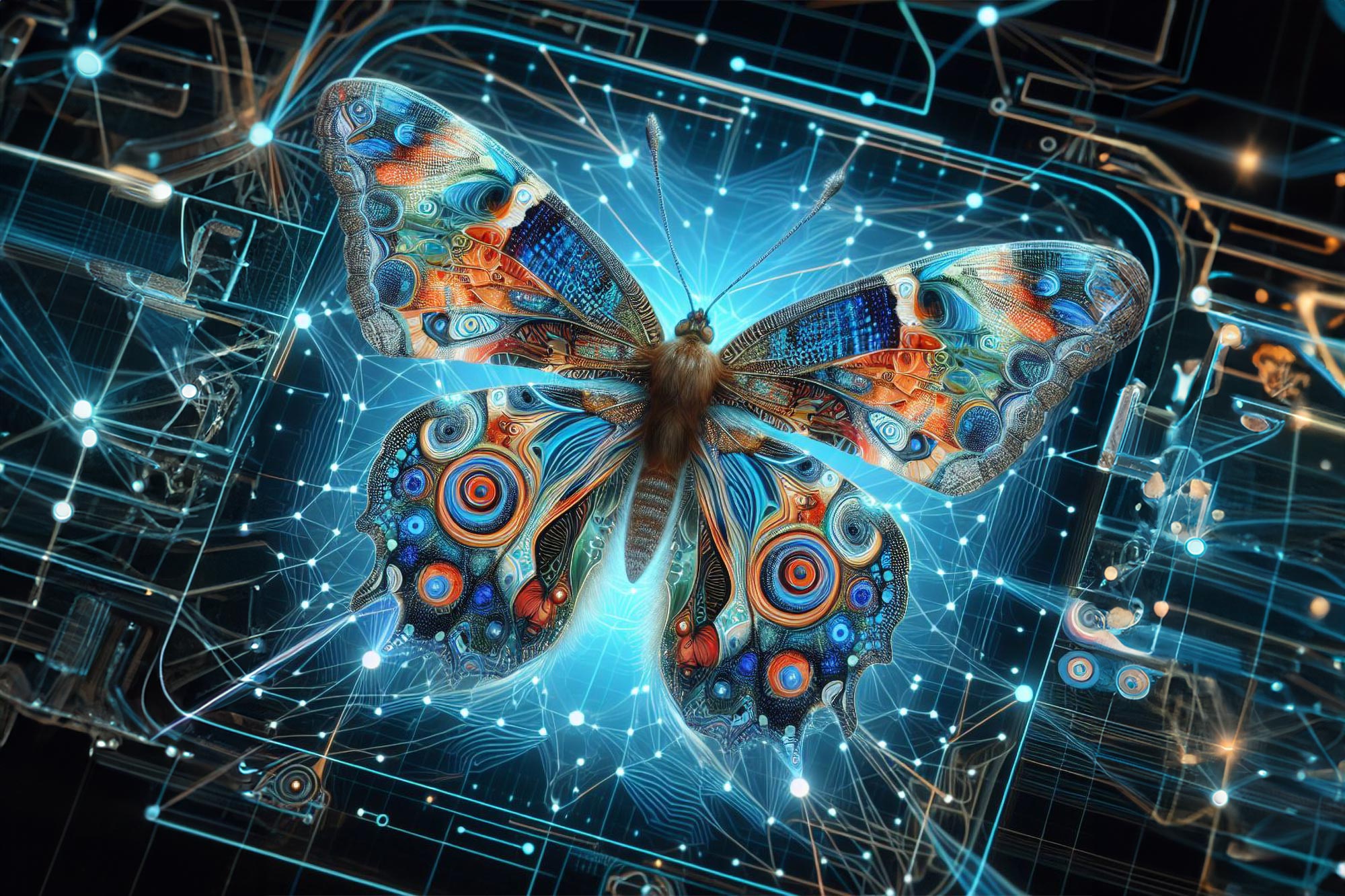
Research on mimicry in butterflies provides one example.
Imageomics, a new field of science, has made stunning progress in the past year and is on the verge of major discoveries about life on Earth, according to one of the founders of the discipline.
Tanya Berger-Wolf, faculty director of the Translational Data Analytics Institute at The Ohio State University, outlined the state of imageomics in a presentation on February 17, 2024, at the annual meeting of the American Association for the Advancement of Science (AAAS).
“Imageomics is coming of age and is ready for its first major discoveries,” Berger-Wolf said in an interview before the meeting.
The Scope and Potential of Imageomics
Imageomics is a new interdisciplinary scientific field focused on using machine learning tools to understand the biology of organisms, particularly biological traits, from images.
Those images can come from camera traps, satellites, drones – even the vacation photos that tourists take of animals like zebras and whales, said Berger-Wolf, who is director of the Imageomics Institute at Ohio State, funded by the National Science Foundation.
These images contain a wealth of information that scientists couldn’t properly analyze and use before the development of artificial intelligence and machine learning.
Advancements and Applications
The field is new – the Imageomics Institute was just founded in 2021 – but big things are happening, Berger-Wolf told AAAS.
One major area of study that is coming to fruition involves how phenotypes – the observable traits of animals that can be seen in images – are related to their genome, the DNA sequence that produces these traits.
“We are on the cusp of understanding the direct connections of observable phenotype to genotype,” she said.
“We couldn’t do this without imageomics. It is pushing forward both artificial intelligence and biological science.”
Innovations in Research Methodologies
Berger-Wolf cited new research on butterflies as one example of the advances that imageomics is making. She and colleagues are studying mimics – butterfly species whose appearance is similar to a different species. One reason for mimicry is to look like a species that predators, such as birds, avoid because their taste is not appealing.
In these cases, birds – as well as humans – can’t tell the species apart by looking at them, even though the butterflies themselves know the difference. However, machine learning can analyze images and learn the very subtle differences in color or other traits that differentiate the types of butterflies.
“We can’t tell them apart because these butterflies didn’t evolve these traits for our benefit. They evolved to signal to their own species and to their predators,” she said.
“The signal is there – we just can’t see it. Machine learning can allow us to learn what those differences are.”
But more than that, we can use the imageomics approach to change the images of the butterflies to see how extensive the mimics’ differences must be to fool birds. Researchers are planning to print realistic images of the butterflies with subtle differences to see which ones real birds respond to.
This is doing something new with AI that hasn’t been done before.
“We’re not using AI to just recapitulate what we know. We are using AI to generate new scientific hypotheses that are actually testable. It is exciting,” Berger-Wolf said.
Researchers are going even further with the imageomics approach to connect these subtle differences in how the butterflies look to the actual genes that lead to those differences.
The Future Impact of Imageomics
“There’s a lot we are going to be learning in the next few years that will push imageomics forward into new areas that we can only imagine now,” she said.
One key goal is to use this new knowledge generated by imageomics to find ways to protect threatened species and the habitats where they live.
“There’s a lot of good that will come from imageomics in the coming years,” Berger-Wolf said.
Berger-Wolf’s AAAS presentation, titled “Imageomics: Images as the Source of Information About Life” was part of the session “Imageomics: Powering Machine Learning for Understanding Biological Traits.”
Never miss a breakthrough: Join the SciTechDaily newsletter.
Follow us on Google and Google News.