
Close Menu
    Facebook X (Twitter) Instagram
    SciTechDaily
    • Biology
    • Chemistry
    • Earth
    • Health
    • Physics
    • Science
    • Space
    • Technology
    Facebook X (Twitter) Pinterest YouTube RSS
    SciTechDaily
    Home»Space»NASA’s Lucy Mission to Study Trojan Asteroids
    Space

    NASA’s Lucy Mission to Study Trojan Asteroids

    By NASAJanuary 19, 2021No Comments2 Mins Read
    Facebook Twitter Pinterest Telegram LinkedIn WhatsApp Email Reddit
    Share
    Facebook Twitter LinkedIn Pinterest Telegram Email Reddit
    Trojan Asteroids
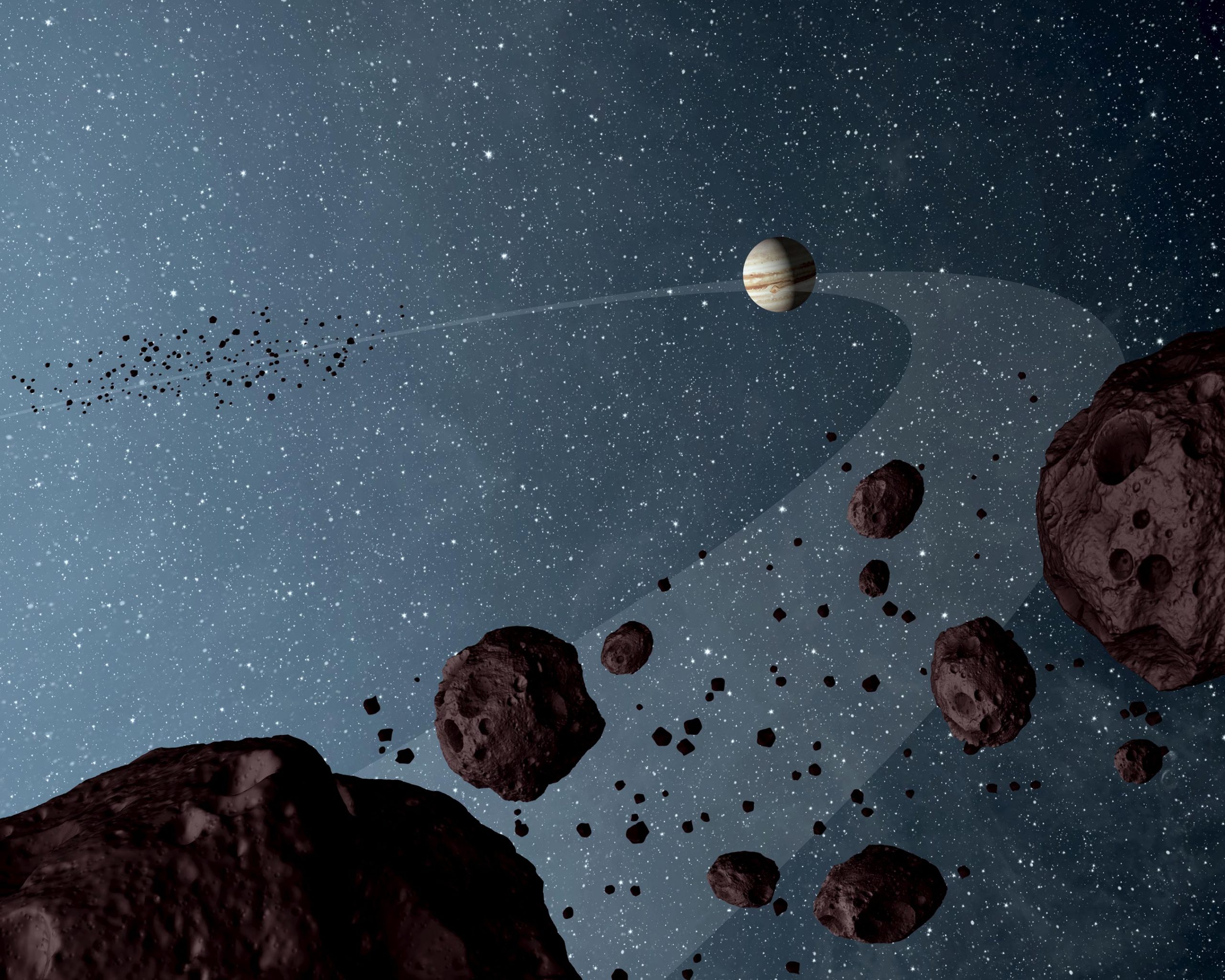
    Artist’s impression shows Jovian Trojans. Credit: NASA/JPL-Caltech

    NASA’s Lucy mission will explore Jupiter’s Trojan asteroids to better understand the early solar system.

    Slated to launch in October 2021, NASA’s Lucy mission will be the first space mission to study the Trojan asteroids, leftover building blocks of the solar system’s outer planets orbiting the Sun at the distance of Jupiter. The mission takes its name from the fossilized human ancestor (called “Lucy” by her discoverers) whose skeleton provided unique insight into humanity’s evolution. Likewise, the Lucy mission will revolutionize our knowledge of planetary origins and the formation of our solar system.

    This artist’s impression shows Jovian Trojans, based on data from a 2012 study by NASA’s Wide-field Infrared Explorer, or WISE. The Jovian Trojans — asteroids that lap the Sun in the same orbit as Jupiter — are uniformly dark with a hint of burgundy color, and have matte surfaces that reflect little sunlight. The results are illustrated in this artist’s concept, showing both the leading and trailing packs of Trojans in orbit with Jupiter. Observations from WISE also confirmed the previous suspicion that there are more asteroids in the leading pack of Trojans (seen in the distance) than the trailing bunch.

    Never miss a breakthrough: Join the SciTechDaily newsletter.
    Follow us on Google and Google News.

    JPL Lucy Mission NASA
    Share. Facebook Twitter Pinterest LinkedIn Email Reddit

    Related Articles

    Lucky Lucy: WISE’s Serendipitous Observations Light Path to Asteroid Dinkinesh

    NASA’s GRAIL Mission Returns Video From Far Side of the Moon

    Scientists Believe Water Ice May Exist on the Giant Asteroid Vesta

    NASA’s NuSTAR is One Step Closer to Launching

    NASA’s Opportunity Rover Continues Research at Greeley Haven

    Extrasolar Planetary System Suggests Our Own Isn’t That Special

    Milky Way Galaxy Mosaic of Images from WISE

    New Herschel Space Observatory Image Shows Magellanic Cloud Galaxy

    NASA Plans Trajectory Maneuver for Mars Science Laboratory Spacecraft

    Leave A Reply Cancel Reply

    • Facebook
    • Twitter
    • Pinterest
    • YouTube

    Don't Miss a Discovery

    Subscribe for the Latest in Science & Tech!

    Trending News

    Bone-Strengthening Discovery Could Reverse Osteoporosis

    Scientists Uncover Hidden Trigger Behind Stem Cell Aging

    Scientists Find Way to Reverse Fatty Liver Disease Without Changing Diet

    Could Humans Regrow Limbs? New Study Reveals Promising Genetic Pathway

    Scientists Reveal Eating Fruits and Vegetables May Increase Your Risk of Lung Cancer

    Scientists Reverse Brain Aging With Simple Nasal Spray

    Scientists Uncover Potential Brain Risks of Popular Fish Oil Supplements

    Scientists Discover a Surprising Way To Make Bread Healthier and More Nutritious

    Follow SciTechDaily
    • Facebook
    • Twitter
    • YouTube
    • Pinterest
    • Newsletter
    • RSS
    SciTech News
    • Biology News
    • Chemistry News
    • Earth News
    • Health News
    • Physics News
    • Science News
    • Space News
    • Technology News
    Recent Posts
    • AI Meets Quantum Computing and the Predictions Get Scary Accurate
    • Wind Farms Are Disrupting Ocean Currents, Moving Millions of Tons of Mud Each Year
    • Scientists Discover Massive Magma Reservoir Beneath Tuscany
    • Scientists Create “Neurobots” – Living Machines With Their Own Nervous Systems
    • Europe’s Most Active Volcano Just Got Stranger – Here’s Why Scientists Are Rethinking It
    Copyright © 1998 - 2026 SciTechDaily. All Rights Reserved.
    • Science News
    • About
    • Contact
    • Editorial Board
    • Privacy Policy
    • Terms of Use

    Type above and press Enter to search. Press Esc to cancel.