
Close Menu
    Facebook X (Twitter) Instagram
    SciTechDaily
    • Biology
    • Chemistry
    • Earth
    • Health
    • Physics
    • Science
    • Space
    • Technology
    Facebook X (Twitter) Pinterest YouTube RSS
    SciTechDaily
    Home»Space»Festive Hubble Image Resembles a Holiday Wreath
    Space

    Festive Hubble Image Resembles a Holiday Wreath

    By Space Telescope Science Institute (STScI)December 21, 2018No Comments2 Mins Read
    Facebook Twitter Pinterest Telegram LinkedIn WhatsApp Email Reddit
    Share
    Facebook Twitter LinkedIn Pinterest Telegram Email Reddit
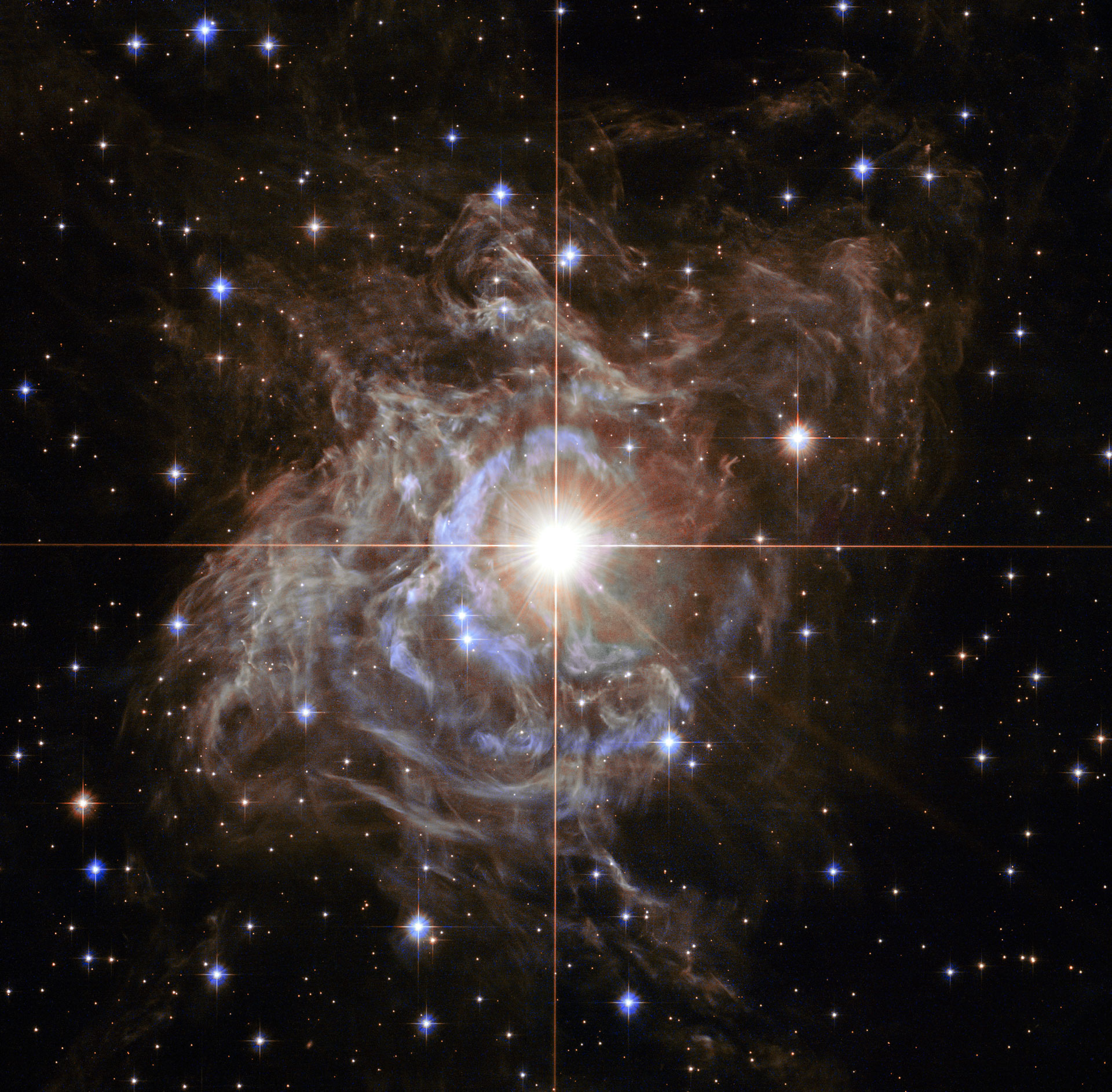
    Hubble’s Cosmic Holiday Wreath
    At the center of the image, the brilliant southern hemisphere star RS Puppis is swaddled in a gossamer cocoon of reflective dust illuminated by the glittering star. The superstar is ten times more massive and 200 times bigger than the Sun. Credit: NASA, ESA, and the Hubble Heritage Team (STScI/AURA) – Hubble/Europe Collaboration; Acknowledgement: H. Bond (STScI and Pennsylvania State University)

    This festive NASA Hubble Space Telescope image resembles a holiday wreath made of sparkling lights. The bright southern hemisphere star RS Puppis, at the center of the image, is swaddled in a gossamer cocoon of reflective dust illuminated by the glittering star. The superstar is ten times more massive than the Sun and 200 times larger.

    RS Puppis rhythmically brightens and dims over a six-week cycle. It is one of the most luminous in the class of so-called Cepheid variable stars. Its average intrinsic brightness is 15,000 times greater than the Sun’s luminosity.

    The nebula flickers in brightness as pulses of light from the Cepheid propagate outwards. Hubble took a series of photos of light flashes rippling across the nebula in a phenomenon known as a “light echo.” Even though light travels through space fast enough to span the gap between Earth and the Moon in a little over a second, the nebula is so large that reflected light can actually be photographed traversing the nebula.

    By observing the fluctuation of light in RS Puppis itself, as well as recording the faint reflections of light pulses moving across the nebula, astronomers are able to measure these light echoes and pin down a very accurate distance. The distance to RS Puppis has been narrowed down to 6,500 light-years (with a margin of error of only one percent).

    Never miss a breakthrough: Join the SciTechDaily newsletter.
    Follow us on Google and Google News.

    Astronomy Hubble Space Telescope
    Share. Facebook Twitter Pinterest LinkedIn Email Reddit

    Related Articles

    A Morphing Spiral Galaxy Amongst Friends

    Hubble Views Magnificent Lopsided Galaxy NGC 2276

    Hubble Captures Fantastic Detail of Eponymous Spiral Galaxy NGC 691

    Spectacular Image Captured by Hubble Shows a Strangely Contorted Spiral Galaxy

    A Distant Spiral in Virgo: Extraordinary Detail Seen in a Galaxy 150 Million Light-Years Away From Earth

    Magnetic Monsters: Hubble Tracks Down Location of Mysterious Radio Signals From Intergalactic Space

    A Menagerie of Galaxies: Hubble Captures a Cluster With Galaxies of All Shapes and Sizes

    How Habitable Are Planets That Orbit Red Dwarfs – The Most Common Type of Stars in the Galaxy?

    Cosmic Silver Lining: Hubble Spots V565 Surrounded by Four Prominent Diffraction Spikes

    Leave A Reply Cancel Reply

    • Facebook
    • Twitter
    • Pinterest
    • YouTube

    Don't Miss a Discovery

    Subscribe for the Latest in Science & Tech!

    Trending News

    Massive Study Warns Marijuana Use in Teens Is Linked to Serious Mental Illness

    Scientists Discover a Completely Unexpected Way T Cells Kill Cancer

    Scientists Just Found the Solar System’s Original “Planet Factory”

    Study Warns Widely Used Food Preservatives Linked to High Blood Pressure and Heart Disease

    New Treatment Could Reverse Osteoarthritis Within Weeks

    Physicists Have Measured “Negative Time” in Bizarre Quantum Experiment

    The Deadly Tapeworm Spreading Across America Has Reached the Pacific Northwest

    Could Low Vitamin D Be Making Your Pain Worse?

    Follow SciTechDaily
    • Facebook
    • Twitter
    • YouTube
    • Pinterest
    • Newsletter
    • RSS
    SciTech News
    • Biology News
    • Chemistry News
    • Earth News
    • Health News
    • Physics News
    • Science News
    • Space News
    • Technology News
    Recent Posts
    • Breakthrough Technique Reveals Atomic Secrets of Record-Breaking Superconductors
    • The Future of Work Belongs to People Who Master AI
    • Scientists Challenge a 70-Year-Old Theory of Language With a Surprising Discovery
    • Scientists Discover Mysterious Creature Living in the Great Salt Lake – and It Exists Nowhere Else on Earth
    • It’s Alive? Surprising Discovery Changes What We Know About Fog
    Copyright © 1998 - 2026 SciTechDaily. All Rights Reserved.
    • Science News
    • About
    • Contact
    • Editorial Board
    • Privacy Policy
    • Terms of Use

    Type above and press Enter to search. Press Esc to cancel.