
Researchers discovered genetic evidence of an ancient coronavirus epidemic in East Asia more than 20,000 years ago, causing adaptive changes that may have helped human populations withstand severe viral illness, similar to COVID-19.
An international study has discovered a coronavirus epidemic broke out in the East Asia region more than 20,000 years ago, with traces of the outbreak evident in the genetic makeup of people from that area.
Professor Kirill Alexandrov from CSIRO-QUT Synthetic Biology Alliance and QUT’s Centre for Genomics and Personalised Health, is part of a team of researchers from the University of Arizona, the University of California San Francisco, and the University of Adelaide who has published their findings in the journal Current Biology.
In the past 20 years, there have been three outbreaks of epidemic severe coronaviruses: SARS-CoV leading to Severe Acute Respiratory Syndrome, which originated in China in 2002 and killed more than 800 people; MERS-CoV leading to Middle East Respiratory Syndrome, which killed more than 850 people, and SARS-CoV-2 leading to COVID-19, which has killed 3.8 million people.
Genetic Evidence of an Ancient Epidemic
But this study of the evolution of the human genome has revealed another large coronavirus epidemic broke out thousands of years earlier.
“The modern human genome contains evolutionary information tracing back tens of thousands of years, like studying the rings of a tree gives us insight into the conditions it experienced as it grew,” Professor Alexandrov said.
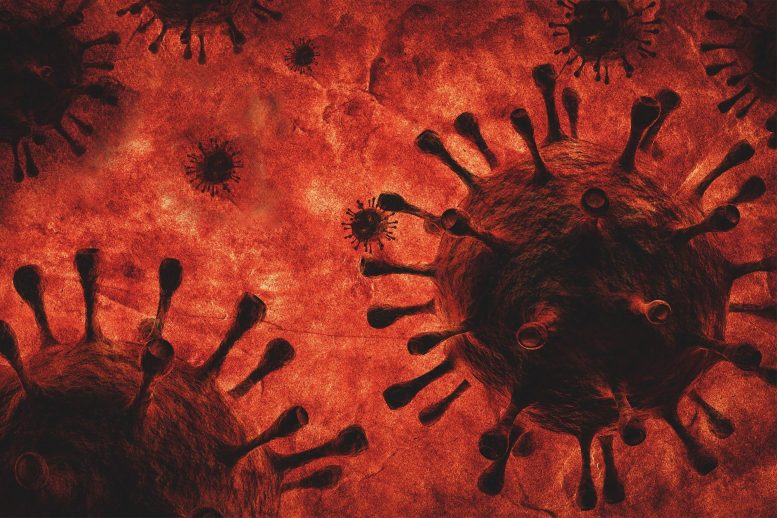
An international study has discovered a coronavirus epidemic broke out in the East Asia region more than 20,000 years ago, with traces of the outbreak evident in the genetic makeup of people from that area. Credit: QUT
Protein Analysis Validates Ancient Viral Interaction
In the study, the researchers used data from the 1000 Genomes Project, which is the largest public catalog of common human genetic variation, and looked at the changes in the human genes coding for SARS-CoV-2 interacting proteins.
They then synthesized both human and SARS-CoV-2 proteins, without using living cells, and showed that these interacted directly and specifically pointed to the conserved nature of the mechanism coronaviruses use for cell invasion.
“Computational scientists on the team applied evolutionary analysis to the human genomic dataset to discover evidence that the ancestors of East Asian people experienced an epidemic of a coronavirus-induced disease similar to COVID-19,” Professor Alexandrov said.

East Asian people come from the area that is now China, Japan, Mongolia, North Korea, South Korea, and Taiwan.
Adaptive Genetic Variants Reduced Disease Severity
“In the course of the epidemic, selection favored variants of pathogenesis-related human genes with adaptive changes presumably leading to a less severe disease,” Professor Alexandrov said.
“By developing greater insights into the ancient viral foes, we gain understanding of how genomes of different human populations adapted to the viruses that have been recently recognized as a significant driver of human evolution.
“Another important offshoot of this research is the ability to identify viruses that have caused epidemic in the distant past and may do so in the future.
“This, in principle, enables us to compile a list of potentially dangerous viruses and then develop diagnostics, vaccines, and drugs for the event of their return.”
Reference: “An ancient viral epidemic involving host coronavirus interacting genes more than 20,000 years ago in East Asia” by Yassine Souilmi, M. Elise Lauterbur, Ray Tobler, Christian D. Huber, Angad S. Johar, Shayli Varasteh Moradi, Wayne A. Johnston, Nevan J. Krogan, Kirill Alexandrov and David Enard, 24 June 2021, Current Biology.
DOI: 10.1016/j.cub.2021.05.067
Never miss a breakthrough: Join the SciTechDaily newsletter.
Follow us on Google and Google News.