
Close Menu
    Facebook X (Twitter) Instagram
    SciTechDaily
    • Biology
    • Chemistry
    • Earth
    • Health
    • Physics
    • Science
    • Space
    • Technology
    Facebook X (Twitter) Pinterest YouTube RSS
    SciTechDaily
    Home»Biology»Virus Infection Cycle Revealed in Incredible Dynamic Detail
    Biology

    Virus Infection Cycle Revealed in Incredible Dynamic Detail

    By John Innes CentreMay 24, 2021No Comments3 Mins Read
    Facebook Twitter Pinterest Telegram LinkedIn WhatsApp Email Reddit
    Share
    Facebook Twitter LinkedIn Pinterest Telegram Email Reddit
    Mimics Virus Like Particles
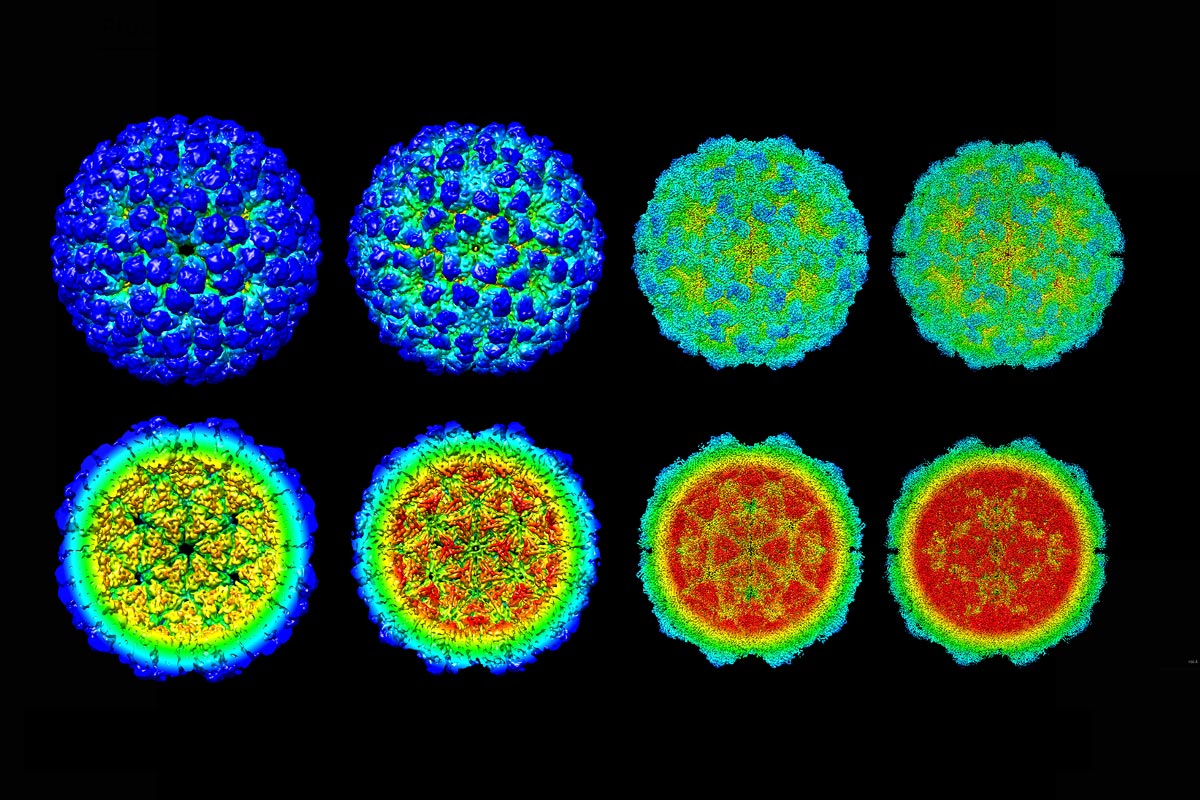
    Virus Like Particles are mimics of the Nudaurelia capensis omega virus a model used to provide dynamic details about the process of viral maturation. Credit: Roger Castells-Graells

    Plant-Based Models Have Unveiled the Dynamic Steps of Virus Maturation

    A critical process in the infection cycle of viruses has been revealed for the first time in dynamic detail using pioneering plant-based technology.

    Evidence about the process of virus maturation revealed in the research could help us develop new methods for treating viral infections.

    Maturation plays a critical role for all animal and bacterial viruses and is required to produce infectious virions or particles. Though the outlines of the process have been determined for many groups of viruses, detailed mechanistic studies have not been reported.

    To provide the first detailed mechanistic study of maturation, Roger Castells-Graells, a rotation Ph.D. student working in Professor George Lomonossoff’s laboratory at the John Innes Centre, infiltrated genetic material of the insect virus Nudaurelia capensis omega virus (N⍵V) into dwarf tobacco plants N.benthamiana.

    This transient expression technique uses Virus Like Particles (VLPs) which are mimics of the authentic virus. The capsid or protein coat of the virus is produced by plant cells and the research team then analyses the material purified from infiltrated leaves.

    The research demonstrated that maturation of procapsids — immature viral structures — can occur within plant cells to yield fully functional mature capsids. This has not been observed previously in the absence of a natural infection and is a new application for the transient expression system pioneered by Professor Lomonossoff at the John Innes Centre.

    Cryo-EM Uncovers Structural Shifts

    Comparative cryo-EM analysis of the structures of the procapsids and mature capsids revealed the large structural rearrangements both inside and between the protein subunits of the capsid that accompany maturation. These shape changes enable the chemical reactions that are necessary for the virus to infect the host.

    Professor Lomonossoff, a group leader at the John Innes Centre, said: “Most structural studies of virus particles to date have given a static picture of the particles. By isolating particles from plants that are undergoing the process of maturation, we have managed to obtain a picture of the dynamics of an essential part of a virus infection cycle.”

    The present study, a collaboration involving scientists at the University of Leeds, in Brazil and the USA, as well as at the John Innes Centre, reveals details of the structures at the beginning and the end of the maturation process. What is now required is an analysis of intermediate steps to get a complete understanding of the dynamics.

    This will enable the research team to determine the 3-D structures of intermediates in the maturation process to create a “movie.”

    “We have shown that maturation occurs over time within plant cells and that means we have discovered a valuable tool for studying virus maturation. We hope it will be of interest to potential collaborators and industry,” said Professor Lomonossoff.

    Reference: “Plant-expressed virus-like particles reveal the intricate maturation process of a eukaryotic virus” by Roger Castells-Graells, Jonas R. S. Ribeiro, Tatiana Domitrovic, Emma L. Hesketh, Charlotte A. Scarff, John E. Johnson, Neil A. Ranson, David M. Lawson and George P. Lomonossoff, 24 May 2021, Communications Biology.
    DOI: 10.1038/s42003-021-02134-w

    Never miss a breakthrough: Join the SciTechDaily newsletter.
    Follow us on Google and Google News.

    Bioinformatics Biotechnology Infectious Diseases John Innes Centre Microbiology Molecular Biology Plant Science Virology
    Share. Facebook Twitter Pinterest LinkedIn Email Reddit

    Related Articles

    Watching SARS-CoV-2 Spread in Animal Models in Real Time Using New “Reporter Viruses”

    A Coronavirus Epidemic Broke Out in East Asia More Than 20,000 Years Ago

    New COVID-19 “Mexican Variant” Identified: Increasingly Spreading Across North America

    Harnessing Next Generation Sequencing to Detect SARS-CoV-2 …and Prepare for the Next Pandemic

    New $2 Test Can Accurately Detect COVID-19 Antibodies in a Drop of Blood in Less Than an Hour

    Live Capture: Researchers Develop Virus Live Stream to Study Viral Infections

    Making Sense of the Viral Multiverse: Situating Coronaviruses Within Mind-Bendingly Vast Virosphere

    Chemists Discovered the Structure of a Key Influenza Protein – Breakthrough Could Lead to Flu Treatment

    Deadliest Crop Killing Viruses Revealed at High Resolution for the First Time

    Leave A Reply Cancel Reply

    • Facebook
    • Twitter
    • Pinterest
    • YouTube

    Don't Miss a Discovery

    Subscribe for the Latest in Science & Tech!

    Trending News

    First-of-Its-Kind Discovery: Homer’s Iliad Found Embedded in a 1,600-Year-Old Egyptian Mummy

    Beyond Inflammation: Scientists Uncover New Cause of Persistent Rheumatoid Arthritis

    A Simple Molecule Could Unlock Safer, Easier Weight Loss

    Scientists Just Built a Quantum Battery That Charges Almost Instantly

    Researchers Unveil Groundbreaking Sustainable Solution to Vitamin B12 Deficiency

    Millions of People Have Osteopenia Without Realizing It – Here’s What You Need To Know

    Researchers Discover Boosting a Single Protein Helps the Brain Fight Alzheimer’s

    World-First Study Reveals Human Hearts Can Regenerate After a Heart Attack

    Follow SciTechDaily
    • Facebook
    • Twitter
    • YouTube
    • Pinterest
    • Newsletter
    • RSS
    SciTech News
    • Biology News
    • Chemistry News
    • Earth News
    • Health News
    • Physics News
    • Science News
    • Space News
    • Technology News
    Recent Posts
    • New Research Challenges Long-Held Beliefs About How the Brain Makes Decisions
    • Breakthrough Technology Reveals New Treatment Targets for Cancer
    • Scientists Discover New Way To Make Drug-Resistant Cancer Treatable Again
    • This Simple Exercise Trick Builds Muscle With Less Effort, Study Finds
    • Middle Age Is Becoming a Breaking Point in America, Study Reveals
    Copyright © 1998 - 2026 SciTechDaily. All Rights Reserved.
    • Science News
    • About
    • Contact
    • Editorial Board
    • Privacy Policy
    • Terms of Use

    Type above and press Enter to search. Press Esc to cancel.