

Scientists have identified the altermagnetic properties of an organic crystal using a new optical approach, uncovering unique magnetic features and opening possibilities for next-generation magnetic materials.
Scientists have revealed the hidden magnetic behavior of a newly discovered type of magnet by applying advanced optical methods. Their investigation centered on an organic crystal thought to be a strong candidate for an “altermagnet,” a third category of magnetic material that has only recently been proposed. Altermagnets behave in ways that set them apart from the more familiar ferromagnets and antiferromagnets.
The findings were recently reported in Physical Review Research.
“Unlike typical magnets that attract each other, altermagnets do not exhibit net magnetization, yet they can still influence the polarization of reflected light,” points out Satoshi Iguchi, associate professor at Tohoku University’s Institute for Materials Research. “This makes them difficult to study using conventional optical techniques.”
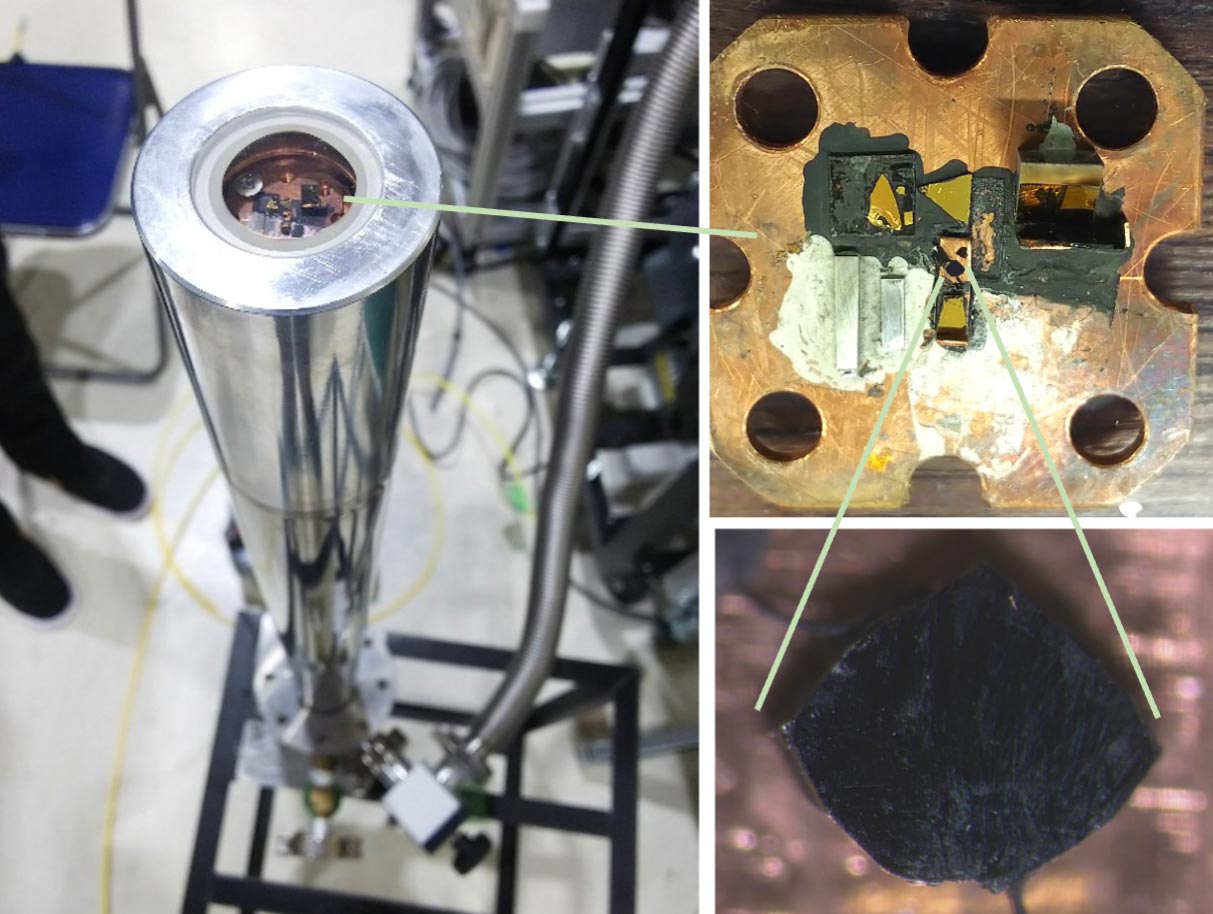
To address this challenge, Iguchi and his team applied a newly developed general formula for light reflection to the organic crystal. This approach enabled them to successfully identify the crystal’s magnetic characteristics and trace their origin.
A Collaborative Effort
The group also comprised Yuka Ikemoto and Taro Moriwaki from the Japan Synchrotron Radiation Research Institute; Hirotake Itoh from the Department of Physics and Astronomy at Kwansei Gakuin University; Shinichiro Iwai from the Department of Physics at Tohoku University; and Tetsuya Furukawa and Takahiko Sasaki, also from the Institute for Materials Research.
The team’s newly derived general formula for light reflection was based on Maxwell’s equations and is applicable to a wide range of materials, including those with low crystal symmetry, such as the organic compound studied here.
A New Optical Framework
This new theoretical framework also allowed the team to develop a precise optical measurement method and apply it to the organic crystal κ-(BEDT-TTF)₂Cu[N(CN)₂]Cl. They successfully measured the magneto-optical Kerr effect (MOKE) and extracted the off-diagonal optical conductivity spectrum, which provides detailed information about the material’s magnetic and electronic properties.
The results revealed three key features in the spectrum: (1) edge peaks indicating spin band splitting, (2) a real component associated with crystal distortion and piezomagnetic effects, and (3) an imaginary component linked to rotational currents. These findings not only confirm the altermagnetic nature of the material but also demonstrate the power of the newly developed optical method.
“This research opens the door to exploring magnetism in a broader class of materials, including organic compounds, and lays the groundwork for future development of high-performance magnetic devices based on lightweight, flexible materials,” adds Iguchi.
Reference: “Magneto-optical spectra of an organic antiferromagnet as a candidate for an altermagnet” by Satoshi Iguchi, Hiroki Kobayashi, Yuka Ikemoto, Tetsuya Furukawa, Hirotake Itoh, Shinichiro Iwai, Taro Moriwaki and Takahiko Sasaki, 7 July 2025, Physical Review Research.
DOI: 10.1103/nnz3-tq7y
Never miss a breakthrough: Join the SciTechDaily newsletter.
Follow us on Google and Google News.
7 Comments
OMG how elementary!!! Raise your hand if ANY of this article confused you.
This could be the start of THE revolution in physics needed to arrive at a unified theory. Maxwell is as far as it really got …before being derailed by quarks and Einstein nonsense. Go from there with an eye for pulling it all together in a NEW CORRECT UNDERSTANDING.
The results revealed three key features in the spectrum: (1) edge peaks indicating spin band splitting, (2) a real component associated with crystal distortion and piezomagnetic effects, and (3) an imaginary component linked to rotational currents.
VERY GOOD.
The spins are ubiquitous.
An entire generation has been severely misled and poisoned by so-called peer-reviewed publications. In today’s physics, these so-called peer-reviewed journals—including Physical Review Letters, Nature, Science, and others—stubbornly insist on and promote the following:
1. Even though θ and τ particles exhibit differences in experiments, physics can falsely claim they are the same particle. This is science.
2. Even though topological vortices and antivortices have identical structures and opposite rotational directions, physics can define their structures and directions as entirely different. This is science.
3. Even though two sets of cobalt-60 rotate in opposite directions and experiments reveal asymmetry, physics can still define them as mirror images of each other. This is science.
4. Even though vortex structures are ubiquitous—from cosmic accretion disks to particle spins—physics must insist that vortex structures do not exist and require verification. Only the particles that like God, Demonic, or Angelic are the most fundamental structures of the universe. This is science.
5. Even though everything occupies space and maintains its existence in time, physics must still debate and insist on whether space exists and whether time is a figment of the human mind. This is science.
6. Even though space, with its non-stick, incompressible, and isotropic characteristics, provides a solid foundation for the development of physics, physics must still insist that the ideal fluid properties of space do not exist. This is science.
And so on.
The so-called peer-reviewed journals—including Physical Review Letters, Nature, Science, and others openly define differences as sameness, sameness as differences, existence as nonexistence, and nonexistence as existence—all while deceiving and fooling the public with so-called “impact factors (IF),” never knowing what shame is.
4th….? Believe would probably be a better wording of what Data we do have at hand.
Good day to all!
Thank you for browsing and commenting.
The universe is not a God, nor is it merely Particles; moreover, it is not Algebra, Formulas, or Fractions. The universe is the superposition, deflection, entanglement, and locking of spacetime vortex geometries, the interaction and balance of topological vortices and their fractal structures. Topological invariants are the identical intrinsic properties between two isomorphic topological spaces. Different civilizations may create distinct mathematical codes or tools to describe the universality and specificity of these topological invariants under different physical laws.
Topology provides stability blueprints, but specific physics (spatial features, gravitational collapse, fluid viscosity, quantum measurement) dictates vortex generation, evolution, and decay. If researchers are interested in this, please visit https://zhuanlan.zhihu.com/p/1933484562941457487 and https://zhuanlan.zhihu.com/p/1925124100134790589.
With all new tools of scientific wisdom yet no one does the work of history of the ecosystem maybe egpt was right you all need to dig with your hands.
Try changing the formula to read the crystals effect on light as a plasma property not a physical one. Same w the humans in space calcs. We’ve been plotting as solid state matter but we are plasma and the velocity moves/holds the states of matter diff. If the formulas need updating/then try them w this adjustment.