
Machine learning has been used to accurately predict Parkinson’s disease subtypes from images of stem cells.
This advancement offers the potential for personalized medicine by classifying four subtypes with up to 95% accuracy, leveraging stem cell models and AI to potentially revolutionize treatment and drug testing approaches.
Breakthrough in Parkinson’s Research Using AI
Researchers at the Francis Crick Institute and UCL Queen Square Institute of Neurology, working with technology company Faculty AI, have shown that machine learning can accurately predict subtypes of Parkinson’s disease using images of patient-derived stem cells.
Their work, published in the scientific journal Nature Machine Intelligence, has shown that computer models can accurately classify four subtypes of Parkinson’s disease, with one reaching an accuracy of 95%. This could pave the way for personalized medicine and targeted drug discovery.
Understanding Parkinson’s Disease Variability
Parkinson’s disease is a neurodegenerative condition impacting movement and cognition. Symptoms and disease progression vary from person to person due to differences in the underlying mechanisms causing the disease.
Until now there hasn’t been a way to accurately differentiate subtypes, which means people are given nonspecific diagnoses and don’t always have access to targeted treatments, support or care.
Parkinson’s disease involves misfolding of key proteins and dysfunction in the clearance of faulty mitochondria, the source of energy production in the cell. The majority of Parkinson’s disease cases start sporadically, but some can be linked to genetic mutations.
The researchers generated stem cells from patients’ own cells and chemically created four different subtypes of Parkinson’s disease, two involving pathways leading to toxic build-up of a protein called α-synuclein and two involving pathways leading to defunct mitochondria, to create a ‘human model of brain disease in a dish’.
AI-Powered Disease Classification
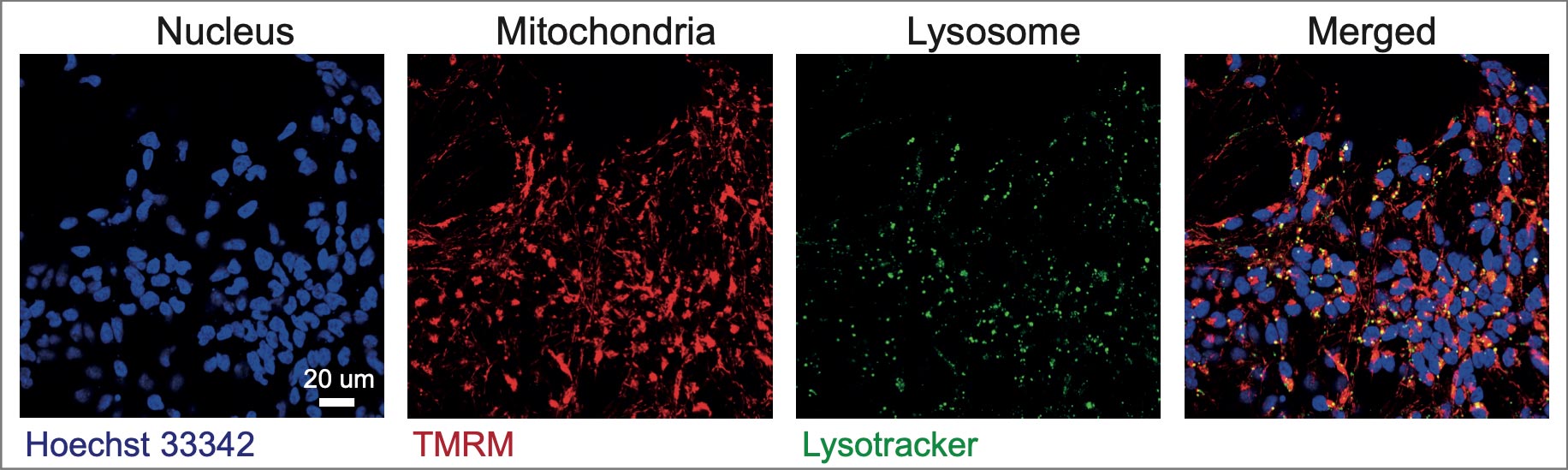
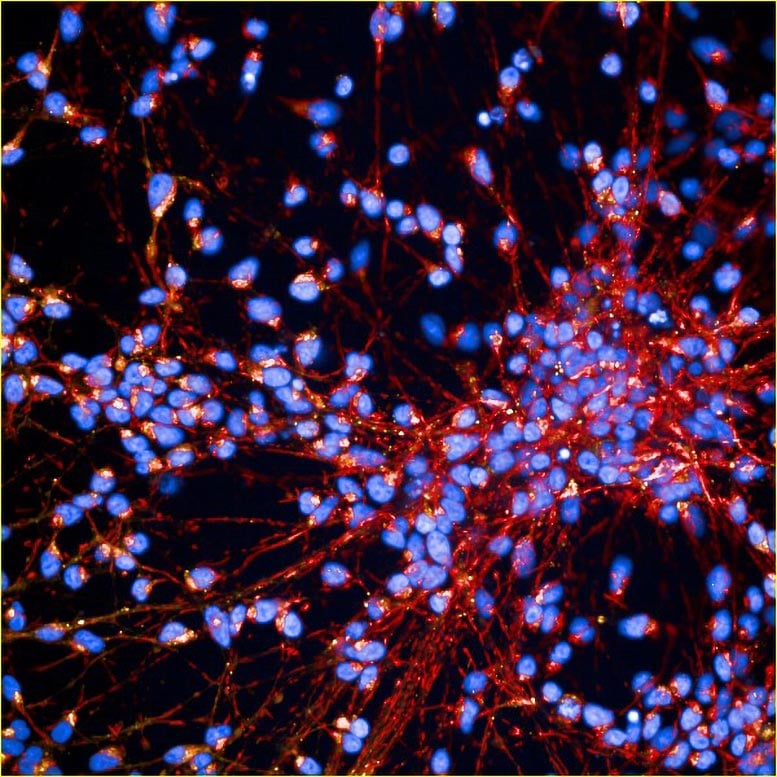
They then imaged the disease models in microscopic detail and labeled key cell components including lysosomes, which are involved in breaking down worn-out parts of the cell. The researchers ‘trained’ a computer program to recognize each subtype, which was then able to predict the subtype when presented with images it hadn’t seen before.
The mitochondria and lysosomes were the most important features in predicting the correct subtype – confirming their involvement in how Parkinson’s disease develops – but other areas of the cell like the nucleus were also found to be important, as well as aspects of the images we can’t yet explain.
Leveraging AI for Detailed Disease Insights
James Evans, PhD student at the Crick and UCL, and co-first author with Karishma D’Sa and Gurvir Virdi, said, “Now that we use more advanced image techniques, we generate vast quantities of data, much of which is discarded when we manually select a few features of interest.
“Using AI in this study enabled us to evaluate a larger number of cell features, and assess the importance of these features in discerning disease subtype. Using deep learning, we were able to extract much more information from our images than with conventional image analysis. We now hope to expand this approach to understand how these cellular mechanisms contribute to other subtypes of Parkinson’s.”
Potential for Precision Medicine
Sonia Gandhi, assistant research director and group leader of the Neurodegeneration Biology Laboratory at the Crick, said, “We understand many of the processes that are causing Parkinson’s in people’s brains. But, while they are alive, we have no way of knowing which mechanism is happening, and therefore can’t give precise treatments.
“We don’t currently have treatments which make a huge difference in the progression of Parkinson’s disease. Using a model of the patient’s own neurons, and combining this with large numbers of images, we generated an algorithm to classify certain subtypes – a powerful approach that could open the door to identifying disease subtypes in life. Taking this one step further, our platform would allow us to first test drugs in stem cell models, and predict whether a patient’s brain cells would be likely to respond to a drug, before enrolling into clinical trials. The hope is that one day this could lead to fundamental changes in how we deliver personalized medicine.”
Development Amidst the Pandemic
The project was developed during the disruption to the lab’s research during the COVID-19 pandemic – the whole team undertook an intensive coding course, learning to code in Python, developing skills that they are now applying to current projects.
James Fleming, Chief Information Officer at the Crick, who worked with Faculty AI on the project, said, “AI is a fascinating and powerful technology, but one which is often rendered impenetrable by hype and jargon. This paper came about as a result of a unique industry partnership with Faculty to see if a group of complete AI beginners could learn and apply best practices directly to their science in a very compressed time frame. The success of this project not only proved that they could, unlocking new insights in the process, but has also helped drive investment into the rapid expansion of our own AI and software engineering team, which has over 25 projects ‘in-flight’ with different labs across the Crick, with new projects kicking off every month.”
Future Directions in Parkinson’s Research
Next steps for the research team are to understand disease subtypes in people with other genetic mutations, and to work out whether sporadic cases of Parkinson’s disease (i.e., without genetic mutations) can be classified in a similar way.
Reference: “Prediction of mechanistic subtypes of Parkinson’s using patient-derived stem cell models” by Karishma D’Sa, James R. Evans, Gurvir S. Virdi, Giulia Vecchi, Alexander Adam, Ottavia Bertolli, James Fleming, Hojong Chang, Craig Leighton, Mathew H. Horrocks, Dilan Athauda, Minee L. Choi and Sonia Gandhi, 10 August 2023, Nature Machine Intelligence.
DOI: 10.1038/s42256-023-00702-9
Never miss a breakthrough: Join the SciTechDaily newsletter.
Follow us on Google and Google News.
2 Comments
But this all begs the question, how can Big Pharma exploit this to make obscene profits?
I hope this helped someone…
Michael