
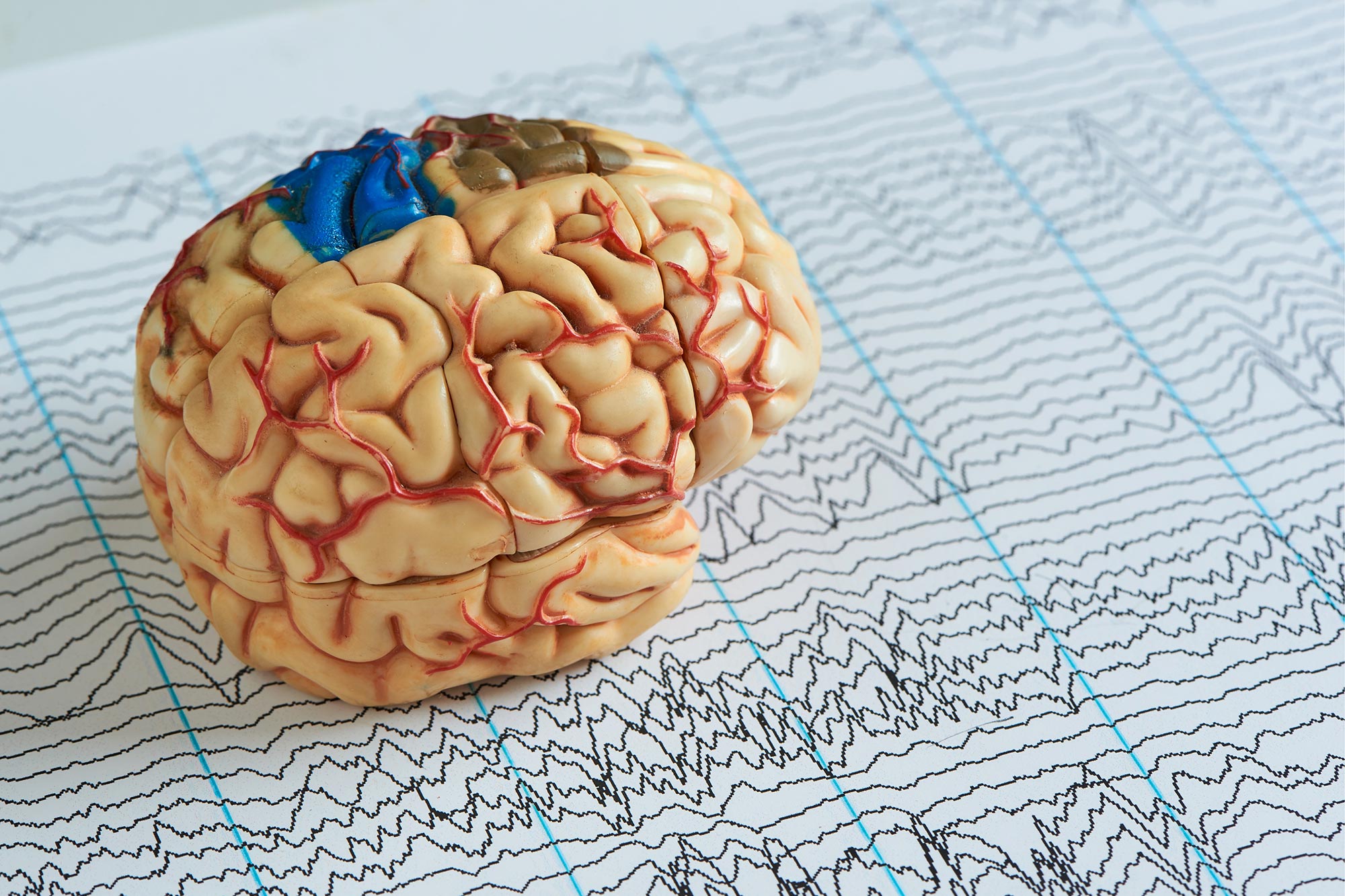
Mayo Clinic researchers are using AI to improve the analysis of EEG tests, aiding early dementia detection.
By analyzing brain wave patterns more precisely, AI reveals subtle signs of cognitive decline that experts may miss. This development, based on data from over 11,000 patients, shows potential for EEGs to become a more accessible diagnostic tool for cognitive issues, especially in underserved areas.
Advancing EEG Analysis With AI and Machine Learning
Mayo Clinic scientists are using artificial intelligence (AI) and machine learning to analyze electroencephalogram (EEG) tests more quickly and precisely, enabling neurologists to find early signs of dementia among data that typically go unexamined.
The century-old EEG, during which a dozen or more electrodes are stuck to the scalp to monitor brain activity, is often used to detect epilepsy. Its results are interpreted by neurologists and other experts trained to spot patterns among the test’s squiggly waves.
Enhancing Early Dementia Detection With AI
In new research published today (July 31) in the journal Brain Communications, scientists at the Mayo Clinic Neurology AI Program (NAIP) demonstrate how AI can not only speed up analysis, but also alert experts reviewing the test results to abnormal patterns too subtle for humans to detect. The technology shows the potential to one day help doctors distinguish among causes of cognitive problems, such as Alzheimer’s disease and Lewy body dementia. The research suggests that EEGs, which are more widely available, less expensive, and less invasive than other tests to capture brain health, could be a more accessible tool to help doctors catch cognitive issues in patients early.
“There’s a lot of medical information in these brain waves about the health of the brain in the EEG,” says senior author David T. Jones, M.D., a neurologist and director of NAIP. “It’s well known that you can see these waves slow down and look a bit different in people who have cognitive problems. In our study, we wanted to know if we could accurately measure and quantify that type of slowing with the aid of AI.”
Developing the AI Tool With Extensive Data
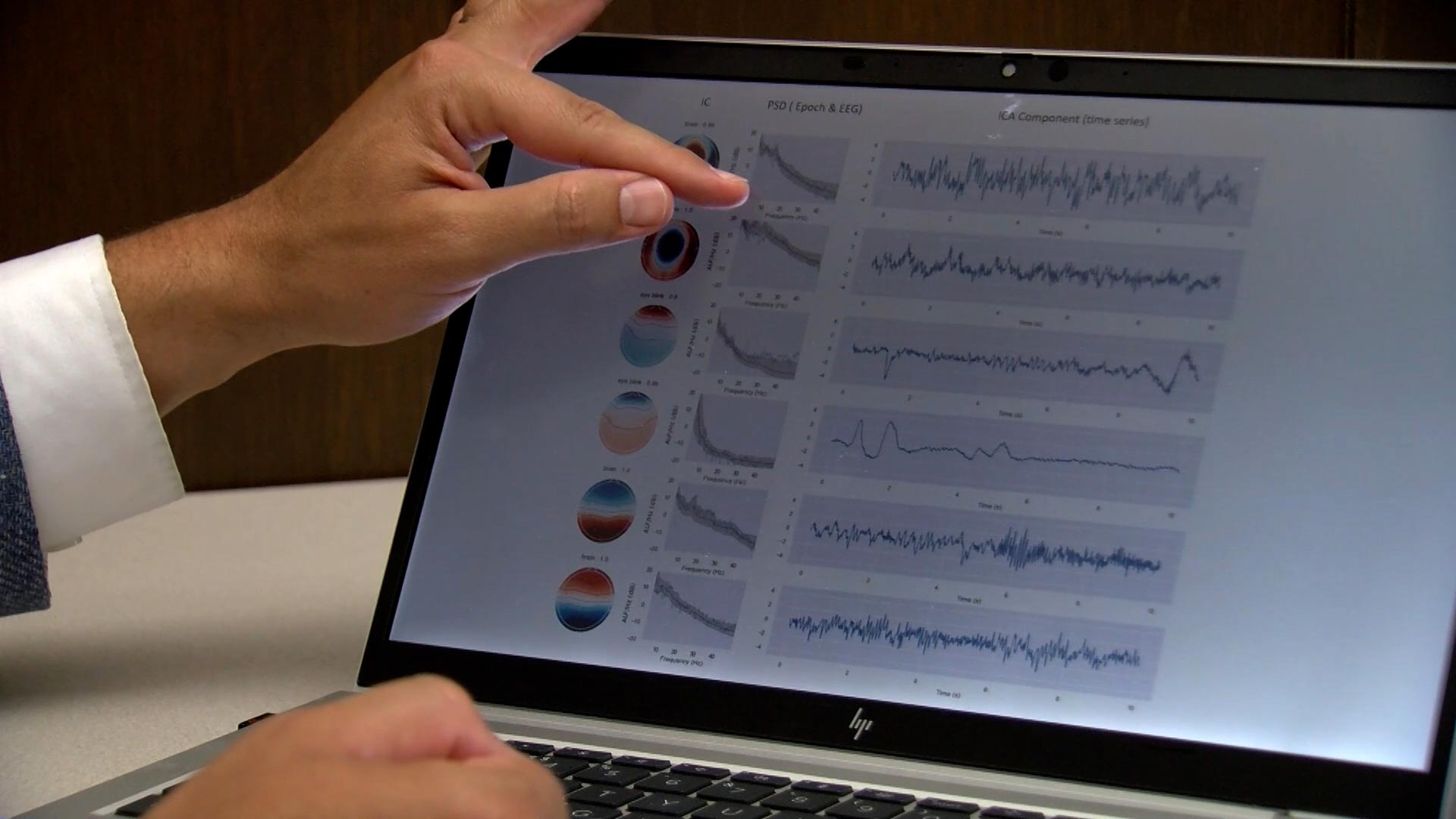
To develop the tool, researchers assembled data from more than 11,000 patients who received EEGs at Mayo Clinic over the course of a decade. They used machine learning and AI to simplify complex brain wave patterns into six specific features, teaching the model to automatically discard certain elements, such as data that should be ignored, in order to zero in on patterns characteristic of cognitive problems like Alzheimer’s disease.
“It was remarkable the way the technology helped quickly extract EEG patterns compared to traditional measures of dementia like bedside cognitive testing, fluid biomarkers and brain imaging,” says Wentao Li, M.D., a co-first author of the paper who conducted the research with NAIP while a Mayo Clinic clinical behavioral neurology fellow.
“Right now, one common way that we quantify patterns in medical data is by expert opinion. And how do we know that the patterns are present? Because that expert tells you they’re present,” Dr. Jones says. “But now with AI and machine learning, not only do we see things that the expert can’t see, but the things they can see, we can put a precise number on.”
EEG as an Accessible Tool for Early Diagnosis
Using EEG to spot cognitive issues would not necessarily replace other types of exams, such as MRIs or PET scans. But with the power of AI, EEG could one day provide healthcare professionals a more economical and accessible tool for early diagnosis in communities without easy access to specialty clinics or specialty equipment, such as in rural settings, according to Dr. Jones.
“It’s really important to catch memory problems early, even before they’re obvious,” Dr. Jones says. “Having the right diagnosis early helps us give patients the right outlook and best treatment. The methods we’re looking at could be a cheaper way to identify people with early memory loss or dementia compared to the current tests we have, like spinal fluid tests, brain glucose scans or memory tests.”
Future Research and Validation
Continuing to test and validate the tools will take several years of additional research, according to Dr. Jones. However, he says the research demonstrates that there are ways to use clinical data to incorporate new tools into clinical workflow to achieve the researchers’ goal to bring new models and innovation into clinical practice, enhance the capabilities of existing assessments, and scale this knowledge outside of Mayo Clinic.
“This work exemplifies multidisciplinary teamwork to advance translational technology-based healthcare research,” says Yoga Varatharajah, Ph.D., co-first author of the paper who was a NAIP research collaborator when the work was completed.
Reference: “Data-driven retrieval of population-level EEG features and their role in neurodegenerative diseases” by Wentao Li, Yogatheesan Varatharajah, Ellen Dicks, Leland Barnard, Benjamin H Brinkmann, Daniel Crepeau, Gregory Worrell, Winnie Fan, Walter Kremers, Bradley Boeve, Hugo Botha, Venkatsampath Gogineni and David T Jones, 31 July 2024, Brain Communications.
DOI: 10.1093/braincomms/fcae227
Funding for the research includes support from the Edson Family Fund, the Epilepsy Foundation of America, the Benjamin A. Miller Family Fellowship in Aging and Related Diseases, the Mayo Clinic Neurology Artificial Intelligence Program, the National Science Foundation (Award No. IIS-2105233), and the National Institutes of Health, including grant UG3 NS123066.
Never miss a breakthrough: Join the SciTechDaily newsletter.
Follow us on Google and Google News.