
Close Menu
    Facebook X (Twitter) Instagram
    SciTechDaily
    • Biology
    • Chemistry
    • Earth
    • Health
    • Physics
    • Science
    • Space
    • Technology
    Facebook X (Twitter) Pinterest YouTube RSS
    SciTechDaily
    Home»Science»Ancient Ecosystem of Alaskan Peninsula Revealed by Dinosaur Footprints
    Science

    Ancient Ecosystem of Alaskan Peninsula Revealed by Dinosaur Footprints

    By PLOSNovember 3, 2019No Comments3 Mins Read
    Facebook Twitter Pinterest Telegram LinkedIn WhatsApp Email Reddit
    Share
    Facebook Twitter LinkedIn Pinterest Telegram Email Reddit
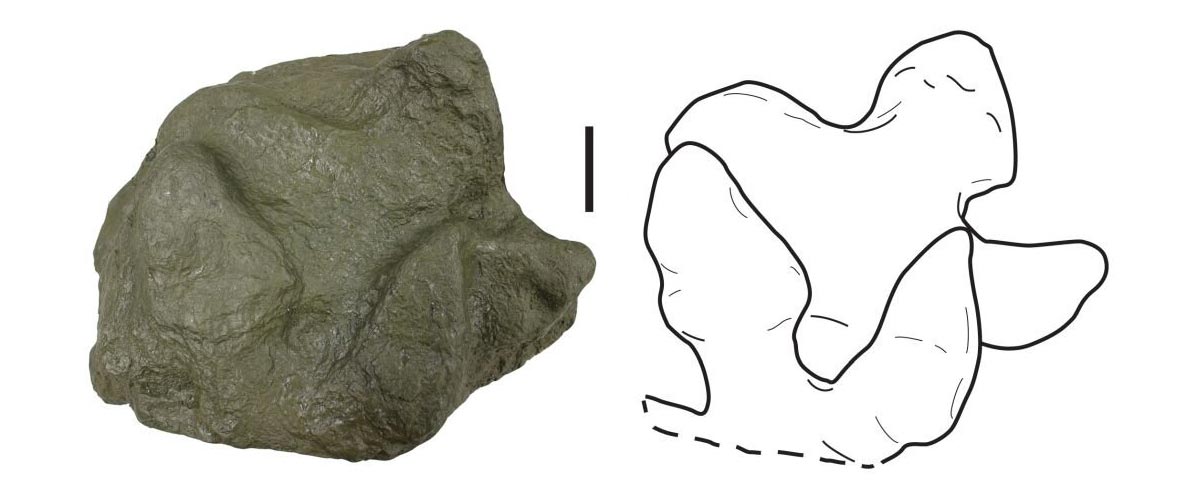
    Hadrosaur Dinosaur Double Prints
    Hadrosaur double prints. Credit: Fiorillo et al, 2019

    These trackways allow researchers to explore habitat preferences in high-latitude dinosaurs.

    Abundant dinosaur footprints in Alaska reveal that high-latitude hadrosaurs preferred tidally influenced habitats, according to a study released on October 30, 2019, in the open-access journal PLOS ONE by Anthony Fiorillo of the Perot Museum of Nature and Science in Texas and colleagues.

    Dinosaur fossils are well-known from Alaska, most famously from areas like Denali National Park and the North Slope, but there are very few records of dinosaurs from the Alaskan Peninsula in the southwest part of the state. In this study, Fiorillo and colleagues document abundant dinosaur trackways from Aniakchak National Monument, around 670km southwest of Anchorage.

    The trackways were preserved in the Chignik Formation, a series of coastal sediment deposits dating back to the Late Cretaceous Period around 66 million years ago. Survey work from 2001-2002 and 2016-2018 identified more than 75 trackway sites including dozens of dinosaur footprints. Based on the anatomy of the prints, the authors identified two footprints of armored dinosaurs, one of a large predatory tyrannosaur, and a few footprints attributable to two types of birds. The remaining 93% of the trackways belonged to hadrosaurs, highly successful herbivores which are typically the most common dinosaurs in high-latitude fossil ecosystems.

    Previous research on skeletal dinosaur remains in northern Alaska has found that hadrosaurs were most abundant in coastal habitats. The trackways documented in this study reveal that the same trend was true in southern Alaska. The authors suggest that understanding habitat preferences in these animals will contribute to the understanding of how ecosystems changed through time as environmental conditions shifted and dinosaurs migrated across northern corridors between continents.

    Fiorillo adds, “Our study shows us something about habitat preferences for some dinosaurs and also that duck-billed dinosaurs were incredibly abundant. Duck-billed dinosaurs were as commonplace as cows, though given we are working in Alaska, perhaps it is better to consider them the caribou of the Cretaceous.”

    Reference: “Dinosaur ichnology and sedimentology of the Chignik Formation (Upper Cretaceous), Aniakchak National Monument, southwestern Alaska; Further insights on habitat preferences of high-latitude hadrosaurs” by Anthony R. Fiorillo, Yoshitsugu Kobayashi, Paul J. McCarthy, Tomonori Tanaka, Ronald S. Tykoski, Yuong-Nam Lee, Ryuji Takasaki and  Junki Yoshida, 30 October 2019, PLoS ONE.
    DOI: 10.1371/journal.pone.0223471

    Funding: ARF received funding for this project through the Perot Paleo Club, a private donation. The Perot Paleo Club played no role in the study design, data collection, and analysis, decision to publish, or preparation of the manuscript.

    Never miss a breakthrough: Join the SciTechDaily newsletter.
    Follow us on Google and Google News.

    Archaeology Dinosaurs Paleontology
    Share. Facebook Twitter Pinterest LinkedIn Email Reddit

    Related Articles

    Complete Brain of One of the Oldest Dinosaurs Reconstructed for the First Time

    Dinosaur Feather Study Debunked: Overwhelming Evidence Supports Jurassic Fossil Belongs to Archaeopteryx

    Naked Prehistoric Monsters! Pterosaurs, Ancient Flying Reptiles, May Not Have Had Feathers at All

    Researchers Stunned to Discover Ancient Crocodiles That Walked on Two Legs

    Evidence T. Rex’s Long Legs Evolved for Distance, Not Speed Like Previously Thought

    The ‘Firewalkers’ of Karoo: Dinosaurs Left Tracks in a ‘Land of Fire’ 183 Million Years Ago

    Growing Up Tyrannosaurus Rex: Researchers Learn More About Teen-Age T.Rex

    New Species of Giant Predatory Dinosaur Discovered in Thailand Provides a New Glimpse at Dinosaur Evolution

    Paleontologists Provide New Perspective on Triassic Period, Emergence of Dinosaurs

    Leave A Reply Cancel Reply

    • Facebook
    • Twitter
    • Pinterest
    • YouTube

    Don't Miss a Discovery

    Subscribe for the Latest in Science & Tech!

    Trending News

    Artificial Sweeteners May Harm Future Generations, Study Suggests

    Splashdown! NASA Artemis II Returns From Record-Breaking Moon Mission

    What If Consciousness Exists Beyond Your Brain

    Scientists Finally Crack the 100-Million-Year Evolutionary Mystery of Squid and Cuttlefish

    Beyond “Safe Levels”: Study Challenges What We Know About Pesticides and Cancer

    Researchers Have Found a Dietary Compound That Increases Longevity

    Scientists Baffled by Bizarre “Living Fossil” From 275 Million Years Ago

    Your IQ at 23 Could Predict Your Wealth at 27, Study Finds

    Follow SciTechDaily
    • Facebook
    • Twitter
    • YouTube
    • Pinterest
    • Newsletter
    • RSS
    SciTech News
    • Biology News
    • Chemistry News
    • Earth News
    • Health News
    • Physics News
    • Science News
    • Space News
    • Technology News
    Recent Posts
    • What if Dark Matter Has Two Forms? Bold New Hypothesis Could Explain a Cosmic Mystery
    • Researchers Expose Hidden Chemistry of “Ore-Forming” Elements in Biology
    • Geologists Reveal the Americas Collided Earlier Than We Thought
    • 20x Difference: Study Reveals True Source of Airborne Microplastics
    • Scientists Uncover Hidden Force Powering Yellowstone’s Supervolcano
    Copyright © 1998 - 2026 SciTechDaily. All Rights Reserved.
    • Science News
    • About
    • Contact
    • Editorial Board
    • Privacy Policy
    • Terms of Use

    Type above and press Enter to search. Press Esc to cancel.