
Close Menu
    Facebook X (Twitter) Instagram
    SciTechDaily
    • Biology
    • Chemistry
    • Earth
    • Health
    • Physics
    • Science
    • Space
    • Technology
    Facebook X (Twitter) Pinterest YouTube RSS
    SciTechDaily
    Home»Science»Mystery Surrounding Dinosaur Footprints on a Cave Ceiling Finally Solved
    Science

    Mystery Surrounding Dinosaur Footprints on a Cave Ceiling Finally Solved

    By University of QueenslandFebruary 18, 20204 Comments3 Mins Read
    Facebook Twitter Pinterest Telegram LinkedIn WhatsApp Email Reddit
    Share
    Facebook Twitter LinkedIn Pinterest Telegram Email Reddit
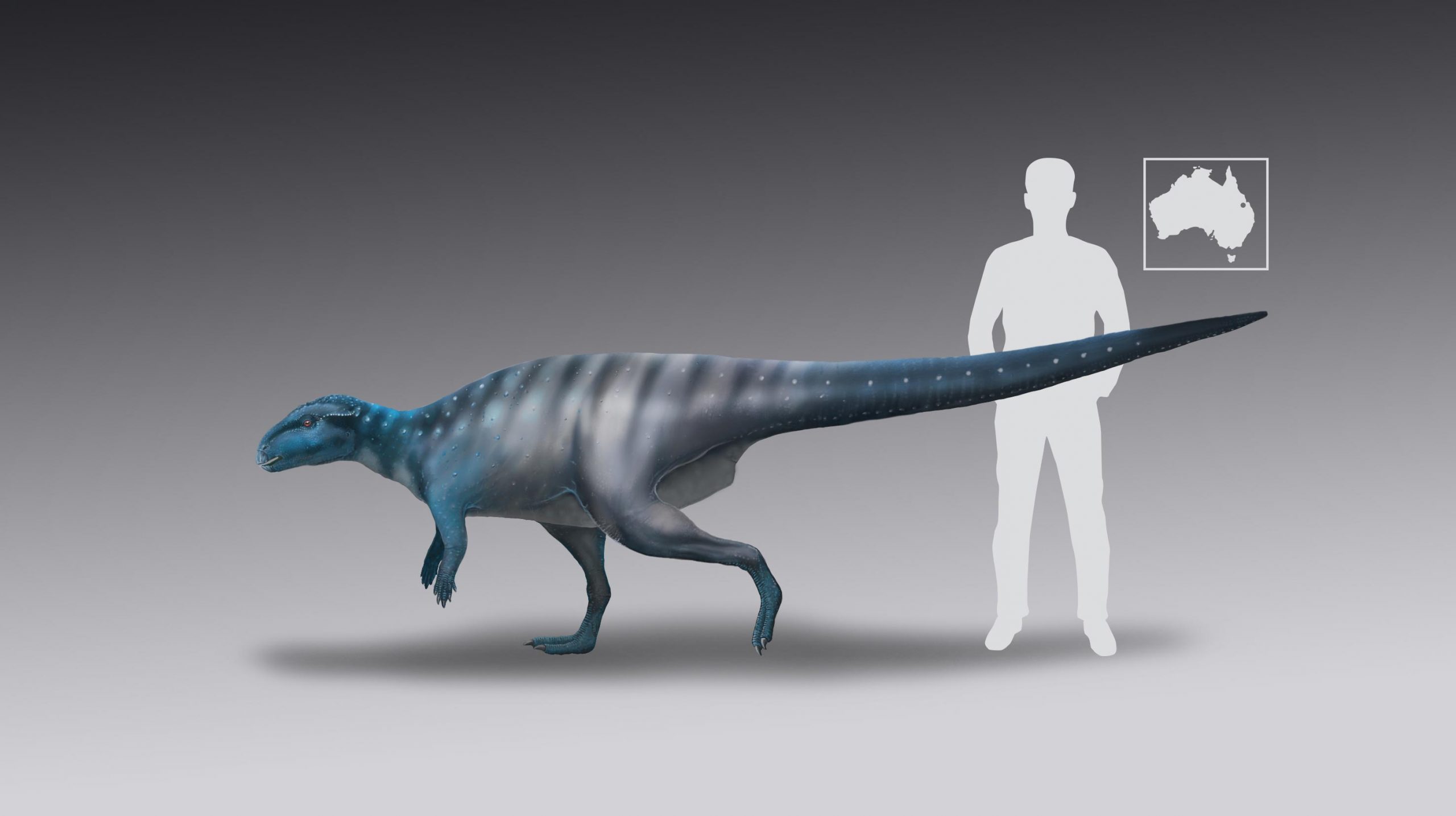
    Dinosaur Mount Morgan
    This is a life-reconstruction of the 200-million-year-old dinosaur track-maker from Mount Morgan. Credit: Dr. Anthony Romilio

    The dinosaur in the cupboard under the stairs.

    The mystery surrounding dinosaur footprints on a cave ceiling in Central Queensland has been solved after more than a half a century.

    University of Queensland paleontologist Dr. Anthony Romilio discovered pieces to a decades-old puzzle in an unusual place – a cupboard under the stairs of a suburban Sydney home.

    “The town of Mount Morgan near Rockhampton has hundreds of fossil footprints and has the highest dinosaur track diversity for the entire eastern half of Australia,” Dr. Romilio said. “Earlier examinations of the ceiling footprints suggested some very curious dinosaur behavior; that a carnivorous theropod walked on all four legs. You don’t assume T. rex used its arms to walk, and we didn’t expect one of its earlier predatory relatives of 200 million years ago did either.”
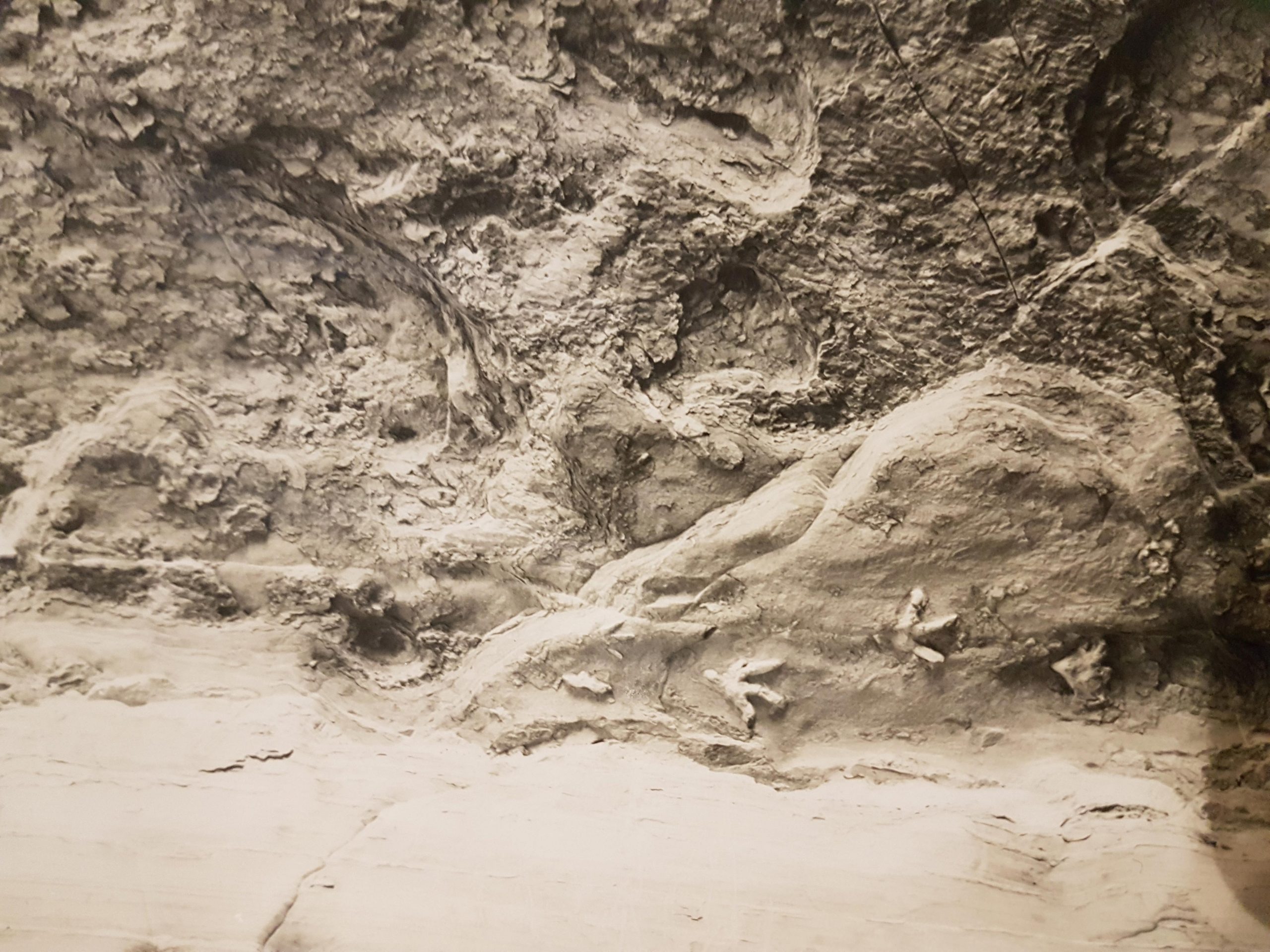
    Dinosaur Tracks Cave Ceiling
    These are the dinosaur trackways on the cave ceiling at Mount Morgan (c. 1954). Credit: Anthony Romilio

    Researchers wanted to determine if this dinosaur did move using its feet and arms, but found accessing research material was difficult.

    “For a decade the Mount Morgan track site has been closed, and the published 1950s photographs don’t show all the five tracks,” Dr. Romilio said.

    However, Dr. Romilio had a chance meeting with local dentist Dr. Roslyn Dick, whose father found many dinosaur fossils over the years.

    “I’m sure Anthony didn’t believe me until I mentioned my father’s name – Ross Staines,” Ms. Dick said. “Our father was a geologist and reported on the Mount Morgan caves containing the dinosaur tracks in 1954. Besides his published account, he had high-resolution photographs and detailed notebooks, and my sisters and I had kept it all.

    “We even have his dinosaur footprint plaster cast stored under my sister’s Harry Potter cupboard in Sydney.”

    Dr. Romilio said the wealth and condition of ‘dinosaur information’ archived by Ms. Dick and her sisters Heather Skinner and Janice Millar was amazing.
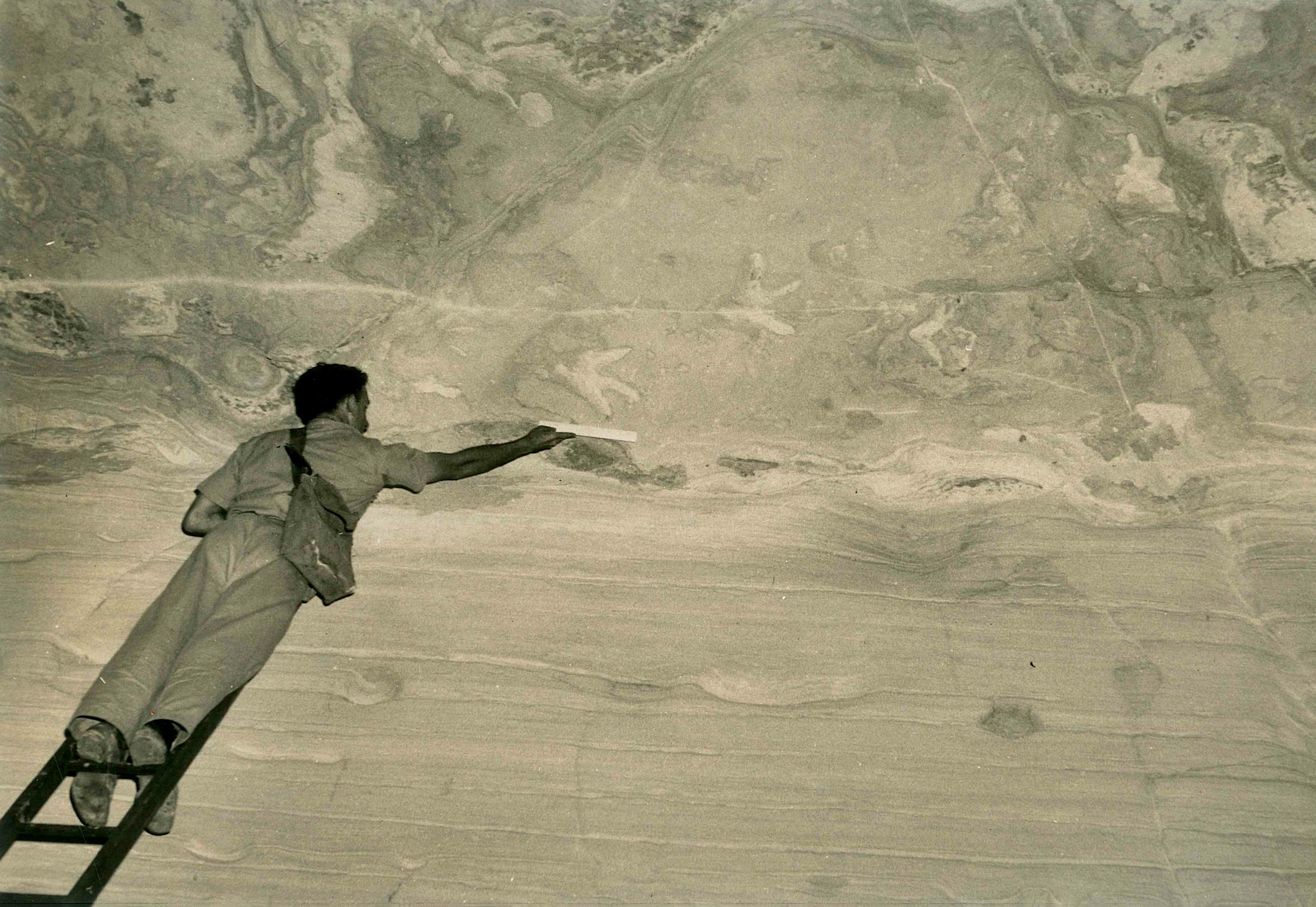
    Ross Staines Measuring Footprints
    Ross Staines measuring the footprints 4.5 meters above the cave floor (c. 1954). Credit: Anthony Romilio

    “I’ve digitized the analog photos and made a virtual 3D model of the dinosaur footprint, and left the material back to the family’s care,” he said.

    “In combination with our current understanding of dinosaurs, it told a pretty clear-cut story.”
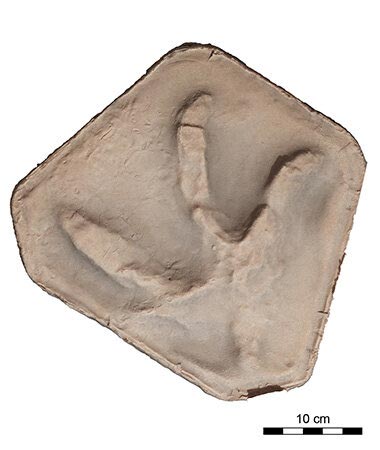
    Dinosaur Print
    A digital recreation of one of the prints captured by Ross Staines. Credit: Anthony Romilio

    The team firstly concluded that all five tracks were foot impressions – that none were dinosaur handprints.

    Also, the splayed toes and moderately long middle digit of the footprints resembled two-legged herbivorous dinosaur tracks, differing from prints made by theropods.

    “Rather than one dinosaur walking on four legs, it seems as though we got two dinosaurs for the price of one – both plant-eaters that walked bipedally along the shore of an ancient lake,” Dr. Romilio said.

    “The tracks lining the cave-ceiling were not made by dinosaurs hanging up-side-down, instead the dinosaurs walked on the lake sediment and these imprints were covered in sand.

    “In the Mount Morgan caves, the softer lake sediment eroded away and left the harder sandstone in-fills.”

    The research has been published in Historical Biology.

    Reference: “Archival data provides insights into the ambiguous track-maker gait from the Lower Jurassic (Sinemurian) Razorback beds, Queensland, Australia: evidence of theropod quadrupedalism?” by Anthony Romilio, Roslyn Dick, Heather Skinner and  Janice Millar, 13 February 2020, Historical Biology.
    DOI: 10.1080/08912963.2020.1720014

    Never miss a breakthrough: Join the SciTechDaily newsletter.
    Follow us on Google and Google News.

    Archaeology History Paleontology Popular University of Queensland
    Share. Facebook Twitter Pinterest LinkedIn Email Reddit

    Related Articles

    First Humans in New England May Have Shared the Landscape With Woolly Mammoths

    World’s Largest DNA Analysis of Viking Skeletons Yields Unexpected Results About Who They Really Were

    Researchers Stunned to Discover Ancient Crocodiles That Walked on Two Legs

    Mystifying Puzzle of Early Neolithic House Orientations Finally Solved

    Previously Dismissed As Myths, New Study Boosts Credibility of Columbus’ Cannibal Claims

    Growing Up Tyrannosaurus Rex: Researchers Learn More About Teen-Age T.Rex

    New Evidence Shows Humans Mastered Fire Earlier Than Thought

    California High Schooler Unearths Rare Fossil – Perfect Skull of Giant 52 Million-Year-Old Fish

    Jurassic Fossil Links Ancient Crocodiles With Dolphin-Like Animals

    4 Comments

    1. jayden on March 23, 2022 10:50 am

      bpppop

      Reply
    2. Missingpiece on November 26, 2024 7:42 pm

      I think the footprint in the cave is not from a dinosaur at least not a walking one… Rather a bird like type

      Reply
    3. Jimmy Lytle on January 20, 2025 6:00 am

      Maybe Abe Lincoln put those footprints up there.

      Reply
    4. David Taylor. on September 13, 2025 2:18 am

      Flooding of the caves once floor level leaving footprint inpression casts then the flooding washed away the lower cave the floor ended up the ceiling after the millions of years of water filtration then finally one formed natural cave… Who said…. Terradactils lived in the cave…… Dr who….. I was there……….

      Reply
    Leave A Reply Cancel Reply

    • Facebook
    • Twitter
    • Pinterest
    • YouTube

    Don't Miss a Discovery

    Subscribe for the Latest in Science & Tech!

    Trending News

    Scientists May Have Found the Key to Jupiter and Saturn’s Moon Mystery

    Scientists Uncover Brain Changes That Link Pain to Depression

    Saunas May Do More Than Raise Body Temperature – They Activate Your Immune System

    Exercise in a Pill? Metformin Shows Surprising Effects in Cancer Patients

    Hidden Oceans of Magma Could Be Protecting Alien Life

    New Study Challenges Alzheimer’s Theories: It’s Not Just About Plaques

    Artificial Sweeteners May Harm Future Generations, Study Suggests

    Splashdown! NASA Artemis II Returns From Record-Breaking Moon Mission

    Follow SciTechDaily
    • Facebook
    • Twitter
    • YouTube
    • Pinterest
    • Newsletter
    • RSS
    SciTech News
    • Biology News
    • Chemistry News
    • Earth News
    • Health News
    • Physics News
    • Science News
    • Space News
    • Technology News
    Recent Posts
    • This Small Change to Your Exercise Routine Could Be the Secret to Living Longer
    • Physicists Discover a Strange New Kind of One-Dimensional Particle
    • Scientists Discover Unexpected Climate Benefit Hidden in Forest Soils
    • The Grand Canyon’s “Swiss Cheese” Rocks Hold a Critical Secret
    • Scientists Discover 430,000-Year-Old Wooden Tools, Rewriting Human History
    Copyright © 1998 - 2026 SciTechDaily. All Rights Reserved.
    • Science News
    • About
    • Contact
    • Editorial Board
    • Privacy Policy
    • Terms of Use

    Type above and press Enter to search. Press Esc to cancel.