
New research reveals that the Pacific Coast’s kelp forests, rich ecosystems supporting diverse marine life, originated over 32 million years ago, much earlier than previously believed.
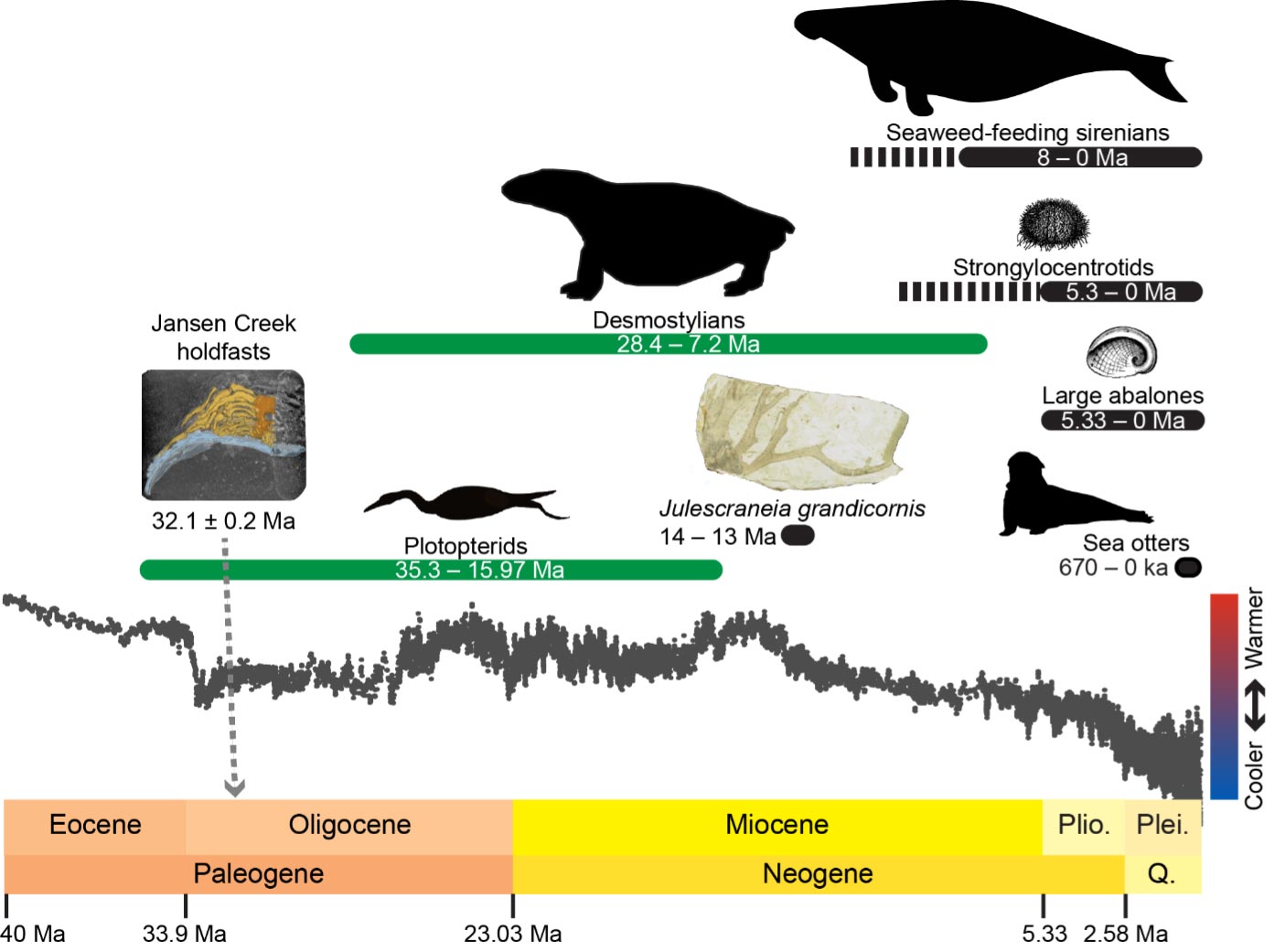
These ancient kelp forests provided sustenance for the now-extinct desmostylians and predate the marine mammals, sea urchins, and birds commonly associated with modern kelp forests. This discovery highlights the complex evolution of kelp ecosystems, significantly altering our understanding of their historical development and ecological significance.
Early Beginnings of Kelp Forests
The unique underwater kelp forests that line the Pacific Coast support a varied ecosystem that was thought to have evolved along with the kelp over the past 14 million years.
But a new study shows that kelp flourished off the Northwest Coast more than 32 million years ago, long before the appearance of modern groups of marine mammals, sea urchins, birds, and bivalves that today call the forests home.
The much greater age of these coastal kelp forests, which today are a rich ecosystem supporting otters, sea lions, seals, and many birds, fish, and crustaceans, means that they likely were a main source of food for an ancient, now-extinct mammal called a desmostylian. The hippopotamus-sized grazer is thought to be related to today’s sea cows, manatees, and their terrestrial relatives, the elephants.
Ancient Foundations and Modern Discoveries
“People initially said, “We don’t think the kelps were there before 14 million years ago because the organisms associated with the modern kelp forest were not there yet,’” said paleobotanist Cindy Looy, professor of integrative biology at the University of California, Berkeley. “Now, we show the kelps were there, it’s just that all the organisms that you expect to be associated with them were not. Which is not that strange, because you first need the foundation for the whole system before everything else can show up.”
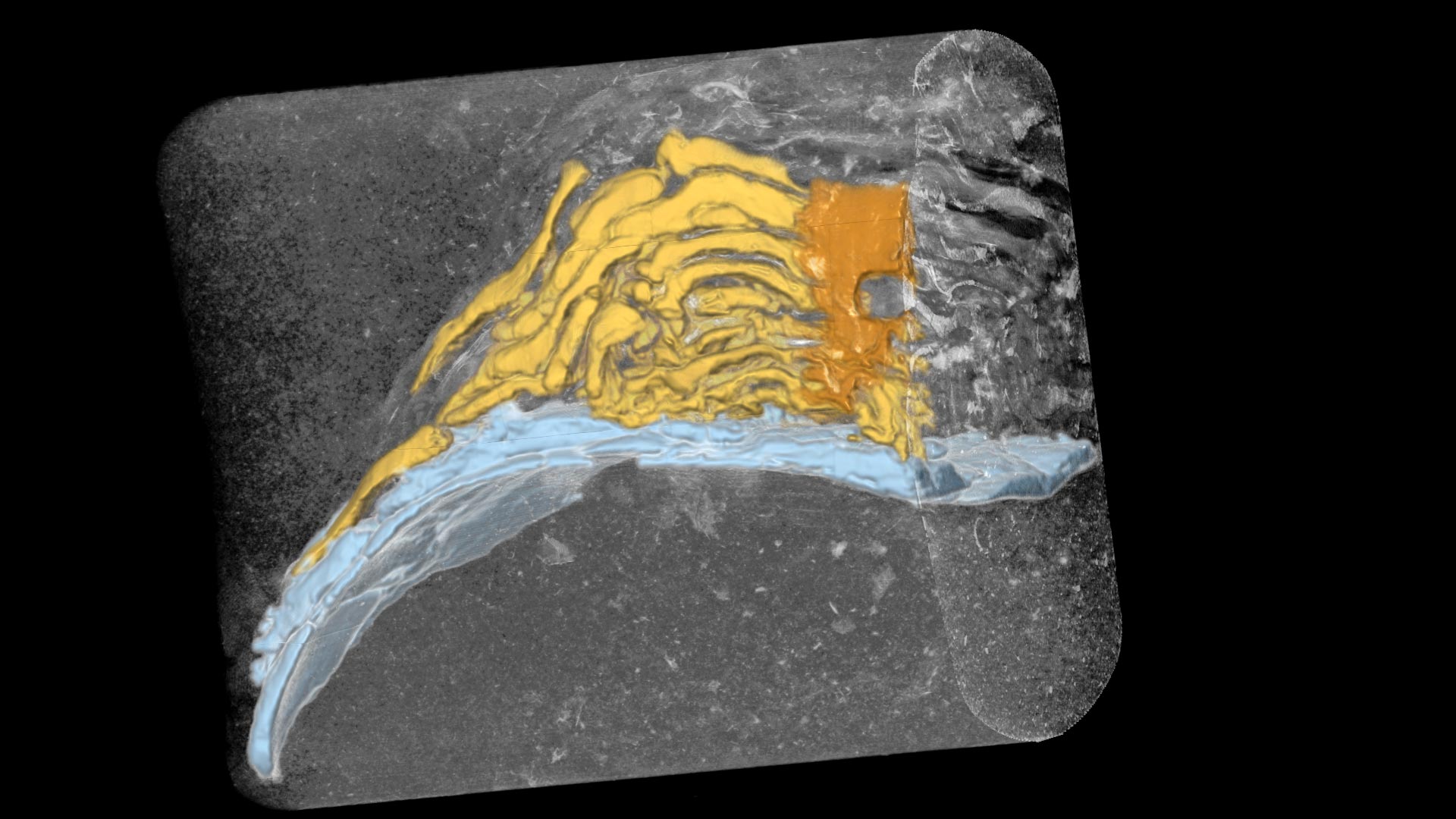
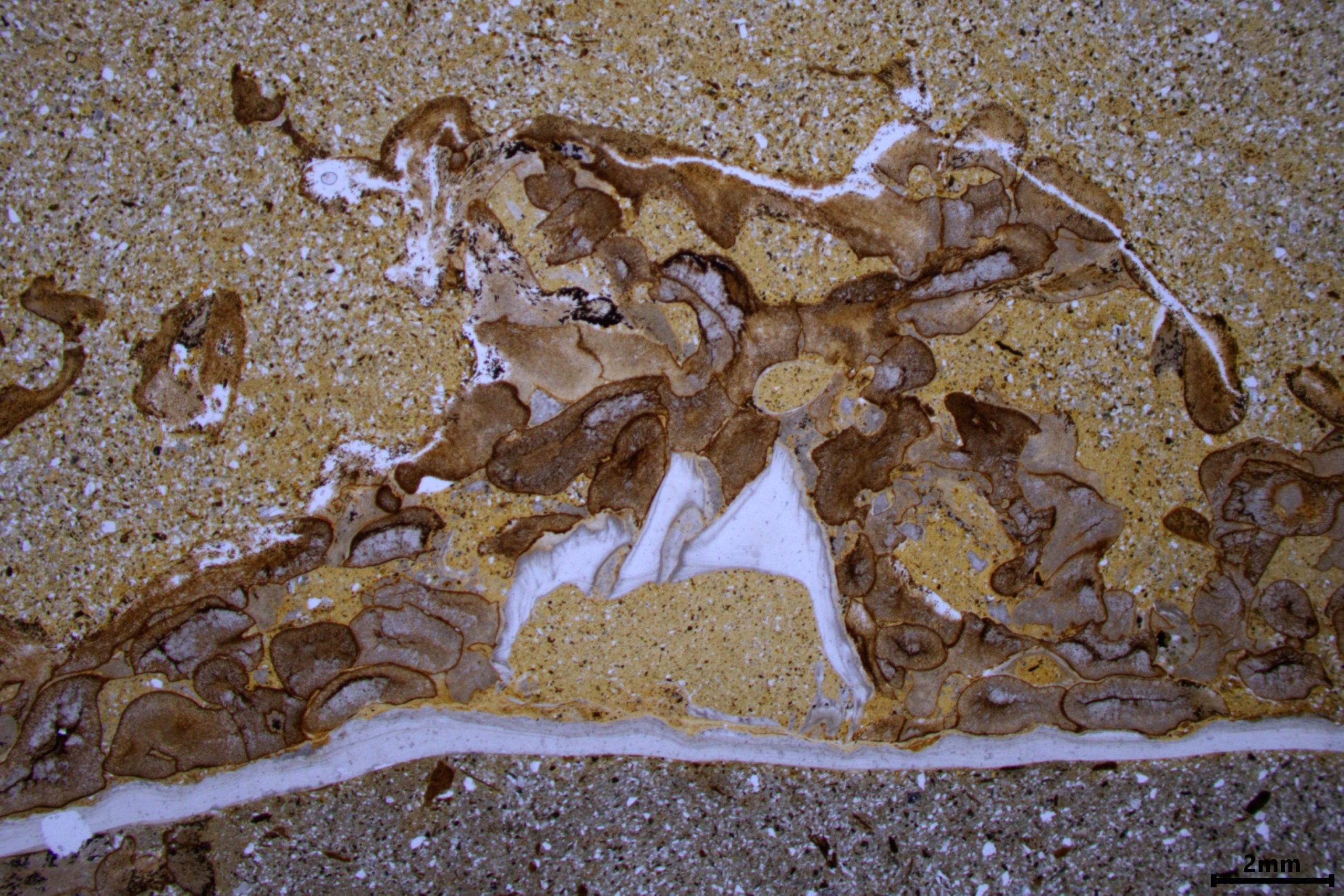
Evidence for the greater antiquity of kelp forests, reported this week in the journal Proceedings of the National Academy of Sciences, comes from newly discovered fossils of the kelp’s holdfast — the root-like part of the kelp that anchors it to rocks or rock-bound organisms on the seafloor. The stipe, or stem, attaches to the holdfast and supports the blades, which typically float in the water, thanks to air bladders.
Looy’s colleague, Steffen Kiel, dated these fossilized holdfasts, which still grasp clams and envelop barnacles and snails, to 32.1 million years ago, in the middle of the Cenozoic Era, which stretches from 66 million years ago to the present. The oldest previously known kelp fossil, consisting of one air bladder and a blade similar to that of today’s bull kelp, dates from 14 million years ago and is in the collection of the University of California Museum of Paleontology (UCMP).
Evolutionary Insights from Fossil Records
“Our holdfasts provide good evidence for kelp being the food source for an enigmatic group of marine mammals, the desmostylia,” said Kiel, lead author of the paper and a senior curator at the Swedish Museum of Natural History in Stockholm. “This is the only order of Cenozoic mammals that actually went extinct during the Cenozoic. Kelp had long been suggested as a food source for these hippo-sized marine mammals, but actual evidence was lacking. Our holdfasts indicate that kelp is a likely candidate.”
According to Kiel and Looy, who is the senior author of the paper and UCMP curator of paleobotany, these early kelp forests were likely not as complex as the forests that evolved by about 14 million years ago. Fossils from the late Cenozoic along the Pacific Coast indicate an abundance of bivalves — clams, oysters, and mussels — birds and sea mammals, including sirenians related to manatees and extinct, bear-like predecessors of the sea otter, called Kolponomos. Such diversity is not found in the fossil record from 32 million years ago.
“Another implication is that the fossil record has, once again, shown that the evolution of life — in this case, of kelp forests — was more complex than estimated from biological data alone,” Kiel said. “The fossil record shows that numerous animals appeared in, and disappeared from, kelp forests during the past 32 million years, and that the kelp forest ecosystems that we know today have only evolved during the past few million years.”
Contributions of Amateur Fossil Hunters
The fossils were discovered by James Goedert, an amateur fossil collector who has worked with Kiel in the past. When Goedert broke open four stone nodules he found along the beach near Jansen Creek on the Olympic Peninsula in Washington, he saw what looked like the holdfasts of kelp and other macroalgae common along the coast today.
Kiel, who specializes in invertebrate evolution, agreed and subsequently dated the rocks based on the ratio of strontium isotopes. He also analyzed oxygen isotope levels in the bivalve shells to determine that the holdfasts lived in slightly warmer water than today, at the upper range of temperatures found in modern kelp forests.
Looy reached out to co-author Dula Parkinson, a staff scientist with the Advanced Light Source at Lawrence Berkeley National Laboratory, for help obtaining a 3D X-ray scan of one of the holdfast fossils using Synchrotron Radiation X-ray Tomographic Microscopy (SRXTM). When she reviewed the detailed X-ray slices through the fossil, she was amazed to see a barnacle, a snail, a mussel, and tiny, single-celled foraminifera hidden within the holdfast, in addition to the bivalve on which it sat.
Looy noted, however, that the diversity of invertebrates found within the 32-million-year-old fossilized holdfast was not as high as would be found inside a kelp holdfast today.
“The holdfasts are definitely not as rich as they would be if you would go to a kelp ecosystem right now,” Looy said. “The diversifying of organisms living in these ecosystems hadn’t started yet.”
Kiel and Looy plan further studies of the fossils to see what they reveal about the evolution of the kelp ecosystem in the North Pacific and how that relates to changes in the ocean-climate system.
Reference: “Early Oligocene kelp holdfasts and stepwise evolution of the kelp ecosystem in the North Pacific” by Steffen Kiel, James L. Goedert, Tony L. Huynh, Michael Krings, Dula Parkinson, Rosemary Romero and Cindy V. Looy, 16 January 2024, Proceedings of the National Academy of Sciences.
DOI: 10.1073/pnas.2317054121
Other co-authors of the paper are Rosemary Romero, a specialist in algae who obtained her Ph.D. from UC Berkeley in 2018 and is now an environmental scientist with the California Department of Fish and Wildlife; paleobotanist Michael Krings at Ludwig-Maximilians-Universität in Munich, Germany; and former UC Berkeley undergraduate Tony Huynh. Goedert is a research associate at the Burke Museum of Natural History and Culture at the University of Washington, Seattle.
Never miss a breakthrough: Join the SciTechDaily newsletter.
Follow us on Google and Google News.