
Close Menu
    Facebook X (Twitter) Instagram
    SciTechDaily
    • Biology
    • Chemistry
    • Earth
    • Health
    • Physics
    • Science
    • Space
    • Technology
    Facebook X (Twitter) Pinterest YouTube RSS
    SciTechDaily
    Home»Health»Are Potential COVID-19 Vaccines Affected by Recent Mutations in the Virus?
    Health

    Are Potential COVID-19 Vaccines Affected by Recent Mutations in the Virus?

    By University of YorkOctober 8, 2020No Comments3 Mins Read
    Facebook Twitter Pinterest Telegram LinkedIn WhatsApp Email Reddit
    Share
    Facebook Twitter LinkedIn Pinterest Telegram Email Reddit
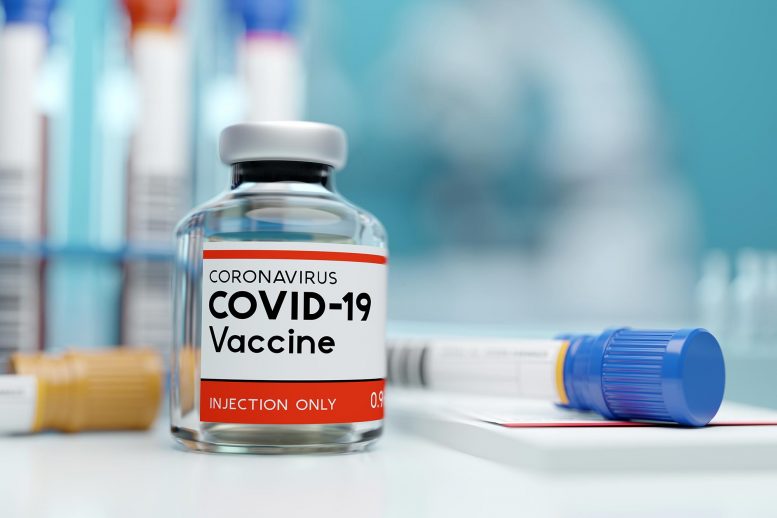
    COVID-19 Coronavirus Vaccine
    A recent study indicates that the mutations in the virus should not impact the effectiveness of the COVID-19 vaccines currently under development.

    Vaccines currently being developed for COVID-19 should not be affected by recent mutations in the virus, according to a new study involving a University of York virologist.

    Most vaccines under development worldwide have been modeled on the original ‘D-strain’ of the virus, which were more common amongst sequences published early in the pandemic.

    Since then, the virus has evolved to the globally dominant ‘G-strain’, which now accounts for about 85 percent of published SARS-CoV-2 genomes.

    There had been fears the G-strain, within the main protein on the surface of the virus, would negatively impact on vaccines under development. But the research by Australia’s national science agency the

    Commonwealth Scientific and Industrial Research Organization (CSIRO), found no evidence the change would adversely impact the efficacy of vaccine candidates.

    The study tested blood samples from ferrets given a candidate vaccine against virus strains that either possessed or lacked this mutation (known as ‘D614G’).

    Professor Seshadri Vasan, who holds an honorary chair in Health Sciences at the University of York, is leading the Dangerous Pathogens Team at CSIRO and is the senior author of the paper.

    Prof Vasan
    Professor Seshadri Vasan.

    Professor Vasan said: “This is good news for the hundreds of vaccines in development around the world, with the majority targeting the spike protein as this binds to the ACE2 receptors in our lungs and airways, which are the entry point to infect cells.

    “Despite this D614G mutation to the spike protein, we confirmed through experiments and modeling that vaccine candidates are still effective.

    “We’ve also found the G-strain is unlikely to require frequent ‘vaccine matching’ where new vaccines need to be developed seasonally to combat the virus strains in circulation, as is the case with influenza.”

    CSIRO Chief Executive Dr. Larry Marshall said the research was critically important in the race to develop a vaccine.

    Dr. Marshall said: “This brings the world one step closer to a safe and effective vaccine to protect people and save lives.

    “Research like this, at speed, is only possible through collaboration with partners in Australia and globally. We are tackling these challenges head on and delivering solutions through world-leading science.”

    Reference: “Experimental and in silico evidence suggests vaccines are unlikely to be affected by D614G mutation in SARS-CoV-2 spike protein” by Alexander J. McAuley, Michael J. Kuiper, Peter A. Durr, Matthew P. Bruce, Jennifer Barr, Shawn Todd, Gough G. Au, Kim Blasdell, Mary Tachedjian, Sue Lowther, Glenn A. Marsh, Sarah Edwards, Timothy Poole, Rachel Layton, Sarah-Jane Riddell, Trevor W. Drew, Julian D. Druce, Trevor R. F. Smith, Kate E. Broderick and S. S. Vasan, 8 October 2020, npj Vaccines.
    DOI: 10.1038/s41541-020-00246-8

    Never miss a breakthrough: Join the SciTechDaily newsletter.
    Follow us on Google and Google News.

    COVID-19 Infectious Diseases Popular University of York Vaccine Virology
    Share. Facebook Twitter Pinterest LinkedIn Email Reddit

    Related Articles

    New COVID-19 Vaccine: Nanoparticle Immunization Technology Could Protect Against Many Strains of Coronaviruses

    Potential Weakness in SARS-CoV-2 Discovered – Single Protein Needed for COVID-19 Virus to Reproduce and Spread

    Phase III Clinical Trial Success: Oxford COVID-19 Vaccine Is Safe and Protects Against Disease

    SARS-CoV-2 Could Evolve Resistance, Rendering COVID-19 Vaccines Ineffective

    Llama Nanobodies Could Be a Powerful New Weapon Against COVID-19

    SARS-CoV-2 Antibodies Provide Lasting COVID-19 Immunity

    COVID-19 Vaccine Innovation Could Massively Speed Up Worldwide Production

    Common Molecular Feature of Antibodies That Neutralize SARS-CoV-2 Discovered, Boosting COVID-19 Vaccine Prospects

    Infection Researchers Identify How Coronaviruses From Animals Need to Change to Spread to Humans

    Leave A Reply Cancel Reply

    • Facebook
    • Twitter
    • Pinterest
    • YouTube

    Don't Miss a Discovery

    Subscribe for the Latest in Science & Tech!

    Trending News

    Bone-Strengthening Discovery Could Reverse Osteoporosis

    Scientists Uncover Hidden Trigger Behind Stem Cell Aging

    Scientists Find Way to Reverse Fatty Liver Disease Without Changing Diet

    Could Humans Regrow Limbs? New Study Reveals Promising Genetic Pathway

    Scientists Reveal Eating Fruits and Vegetables May Increase Your Risk of Lung Cancer

    Scientists Reverse Brain Aging With Simple Nasal Spray

    Scientists Uncover Potential Brain Risks of Popular Fish Oil Supplements

    Scientists Discover a Surprising Way To Make Bread Healthier and More Nutritious

    Follow SciTechDaily
    • Facebook
    • Twitter
    • YouTube
    • Pinterest
    • Newsletter
    • RSS
    SciTech News
    • Biology News
    • Chemistry News
    • Earth News
    • Health News
    • Physics News
    • Science News
    • Space News
    • Technology News
    Recent Posts
    • This Student Recreated the Universe in a Bottle. What She Discovered Could Help Reveal How Life Started on Earth
    • Alzheimer’s Symptoms May Start Outside the Brain, Study Finds
    • Cancer’s Secret Weapon? Scientists Reveal How Tumors “Learn” To Survive Treatment
    • Millions Take This Popular Supplement – Scientists Discover a Concerning Link to Heart Failure
    • What Makes Rubber So Strong? Scientists Finally Solve 100-Year-Old Mystery
    Copyright © 1998 - 2026 SciTechDaily. All Rights Reserved.
    • Science News
    • About
    • Contact
    • Editorial Board
    • Privacy Policy
    • Terms of Use

    Type above and press Enter to search. Press Esc to cancel.