
Close Menu
    Facebook X (Twitter) Instagram
    SciTechDaily
    • Biology
    • Chemistry
    • Earth
    • Health
    • Physics
    • Science
    • Space
    • Technology
    Facebook X (Twitter) Pinterest YouTube RSS
    SciTechDaily
    Home»Biology»Australia’s Latest Surprise: New Species of Daddy Long-Legs Spider Discovered
    Biology

    Australia’s Latest Surprise: New Species of Daddy Long-Legs Spider Discovered

    By Pensoft PublishersJuly 29, 2023No Comments2 Mins Read
    Facebook Twitter Pinterest Telegram LinkedIn WhatsApp Email Reddit
    Share
    Facebook Twitter LinkedIn Pinterest Telegram Email Reddit
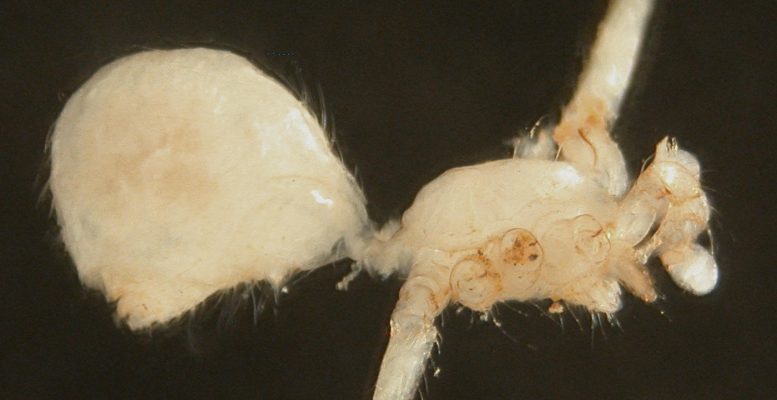
    Belisana coblynau
    Belisana coblynau, male. Credit: Huber et al.

    Scientists discovered a blind cave-dwelling daddy long-legs spider in Australia and another on Réunion Island, revealing new insights into their evolution and ancient distribution.

    Australia’s rich and diverse fauna continues to astonish us, with the documentation of a new spider species from the continent.

    This newly discovered species, a blind daddy long-legs spider, was located in boreholes in Western Australia’s dry Pilbara region. This is the first cave-adapted daddy long-legs spider to be reported from the continent, and other blind species of this genus have previously only been found in Thailand, Laos, and Vietnam.

    “It represents a subfamily that was previously thought to be restricted to the tropical north and east of the continent,” says Bernhard Huber, one of the authors of a recent study published in the journal Subterranean Biology.
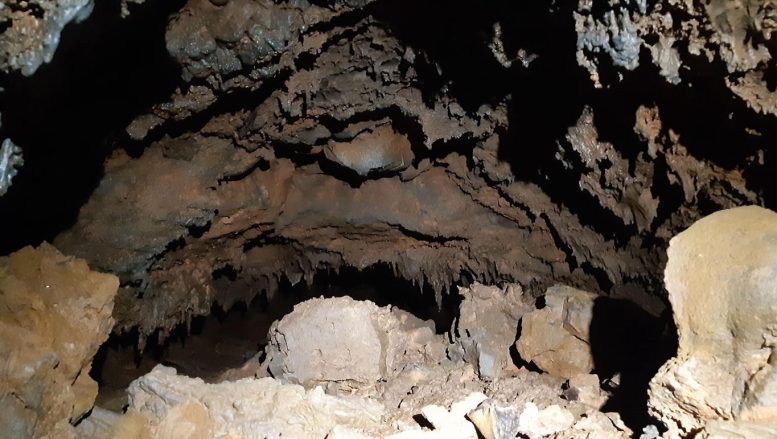
    Gallery of the Lost Goat in Caverne de la Tortue
    Gallery of the lost goat in Caverne de La Tortue. Credit: T. Percheron

    “The new species suggests that these spiders were widely distributed in Australia before the continent’s aridification in the last tens of millions of years,” he adds.

    Together with it, another extraordinary daddy long-legs species was described as new to science from Réunion island. It was collected in the Grotte de La Tortue, a 300,000-year-old lava tube. Its closest known relatives are in eastern Africa, which begs the question of how the species reached the island.
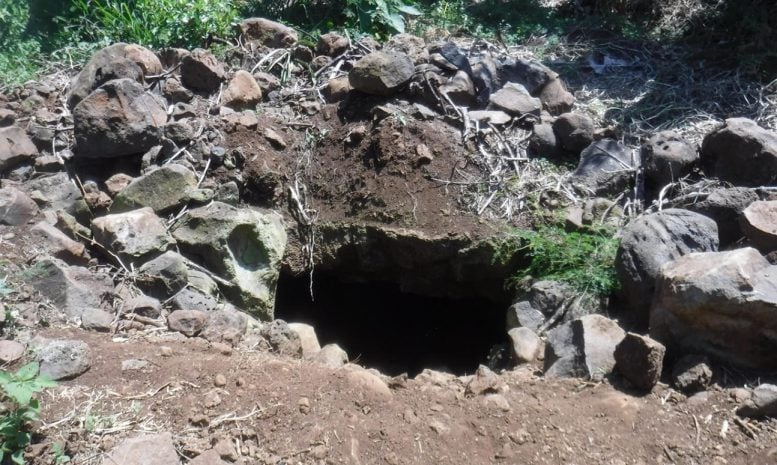
    Main Entrance of the Grotte de la Tortue
    Main entrance of the Grotte de La Tortue. Credit: T. Percheron

    The researchers believe its ground-dwelling ancestor arrived to Réunion “relatively recently and by highly accidental means (such as rafts or storms)” but adapted quickly to subterranean life.

    “If our generic assignment is correct, then the ancestor of Buitinga ifrit must have reached Réunion from East Africa within the last few million years,” they write in their paper.
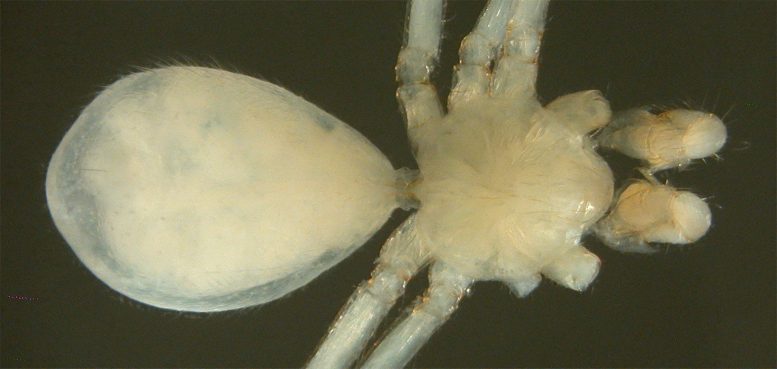
    Buitinga ifrit
    Buitinga ifrit, male. Credit: Hubert et al.

    Curiously, both spiders were named after mythical underground dwellers: Belisana coblynau, after “the mythical gnome-like creatures that are said to haunt mines and quarries,” and Buitinga ifrit, after “a demon in Islamic mythology that is often associated with the underworld.”

    Reference: “First blind daddy long-legs spiders from Australia and Réunion (Araneae, Pholcidae)” by Bernhard A. Huber, Guanliang Meng, Huon L. Clark and Grégory Cazanove, 24 July 2023, Subterranean Biology.
    DOI: 10.3897/subtbiol.46.105798

    Never miss a breakthrough: Join the SciTechDaily newsletter.
    Follow us on Google and Google News.

    Australia Evolutionary Biology New Species Pensoft Publishers Spiders
    Share. Facebook Twitter Pinterest LinkedIn Email Reddit

    Related Articles

    Scientists Discover Tiny New Spider That Hunts Prey 6x Its Size

    Fiery New Tarantula Species Discovered in Arizona’s Sky Islands – but It Could Soon Disappear Forever

    Electric Blue Surprise: Dazzling Tarantula Discovery in Thai Mangroves

    The “Venom” Spider: New Genus Named After Popular Marvel Character

    Web of Wonders: Expedition Discovers Four New Tarantula Species in Colombia’s Biodiversity Hotspot

    New Diamond Frog From Northern Madagascar – “As Soon as I Saw This Frog, I Knew It Was a New Species!”

    New Green Pit Viper From India Named After Salazar Slytherin From Harry Potter

    New Research Shows World’s Most Venomous Spiders Are Cousins

    1,000 Hidden Species Found in Australian Outback

    Leave A Reply Cancel Reply

    • Facebook
    • Twitter
    • Pinterest
    • YouTube

    Don't Miss a Discovery

    Subscribe for the Latest in Science & Tech!

    Trending News

    Wasp Colonies Explode Into Violence After Losing Their Queen

    Scientists Create “Living Plastic” That Self-Destructs in Just Six Days

    Your Blood May Carry a 700-Million-Year-Old Secret

    Scientists Discover Some “Zombie Cells” May Actually Help You Live Longer

    Earth May Be Seeding Venus With Life, According to New Research

    What Scientists Found Inside a 117-Year-Old Woman Reveals New Clues to Long Life

    Scientists Discover Mysterious Creature Living in the Great Salt Lake – and It Exists Nowhere Else on Earth

    It’s Alive? Surprising Discovery Changes What We Know About Fog

    Follow SciTechDaily
    • Facebook
    • Twitter
    • YouTube
    • Pinterest
    • Newsletter
    • RSS
    SciTech News
    • Biology News
    • Chemistry News
    • Earth News
    • Health News
    • Physics News
    • Science News
    • Space News
    • Technology News
    Recent Posts
    • Scientists Discover a Bizarre Crocodile Cousin That Walked Like a Dinosaur
    • How Pigeons Find Their Way Home May Finally Be Solved
    • This Dinosaur Had the Claws of a Raptor but Hunted Like a Heron
    • Doctors May Need To Rethink Calcium and Vitamin D Recommendations After Major Review
    • Researchers Suspected Brain Inflammation in Long COVID but Found Something Else
    Copyright © 1998 - 2026 SciTechDaily. All Rights Reserved.
    • Science News
    • About
    • Contact
    • Editorial Board
    • Privacy Policy
    • Terms of Use

    Type above and press Enter to search. Press Esc to cancel.