

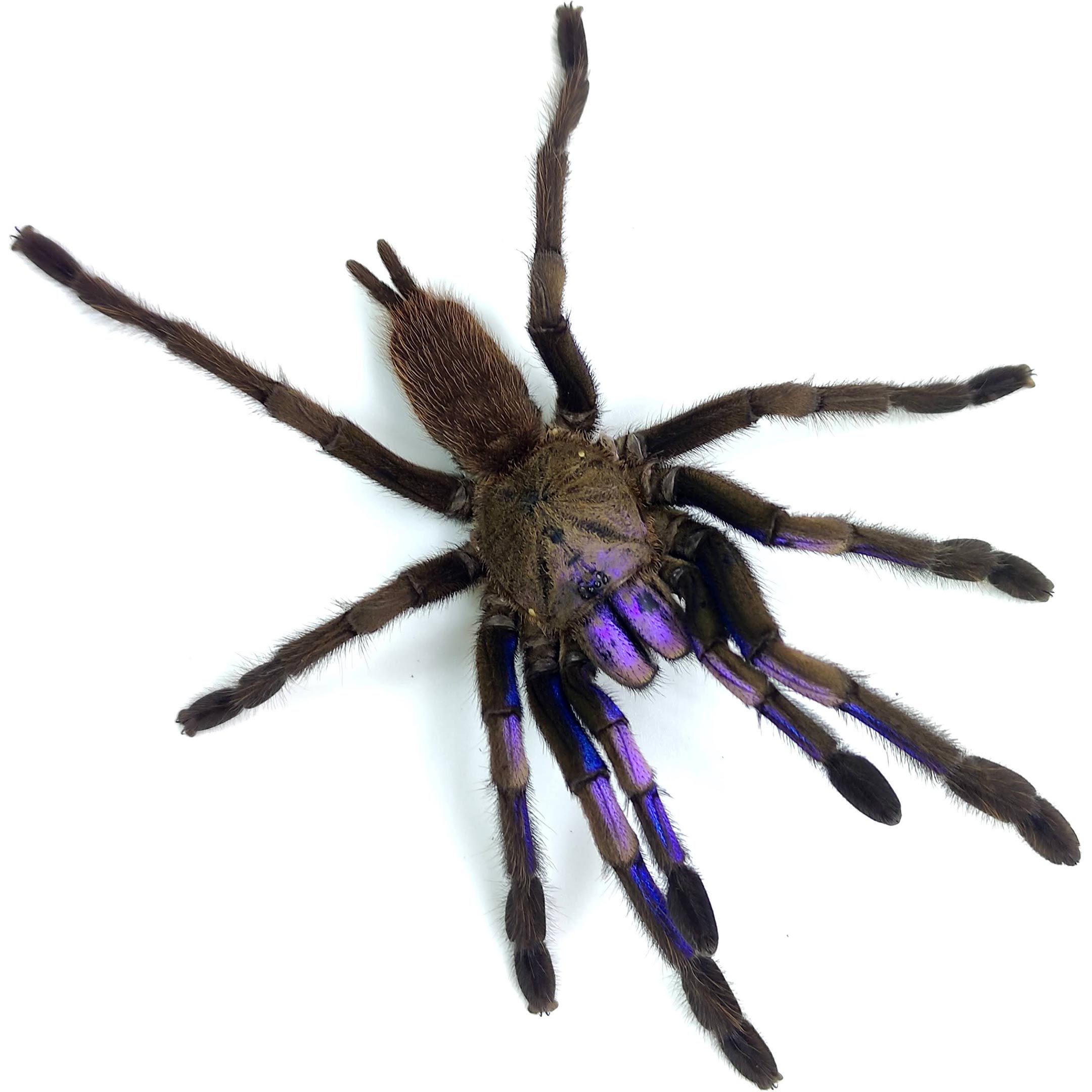
A new electric blue tarantula species was discovered in Thailand’s mangrove forests. Its color is attributed to unique hair nanostructures, and the species emphasizes the significance of taxonomy and the need for conservation efforts.
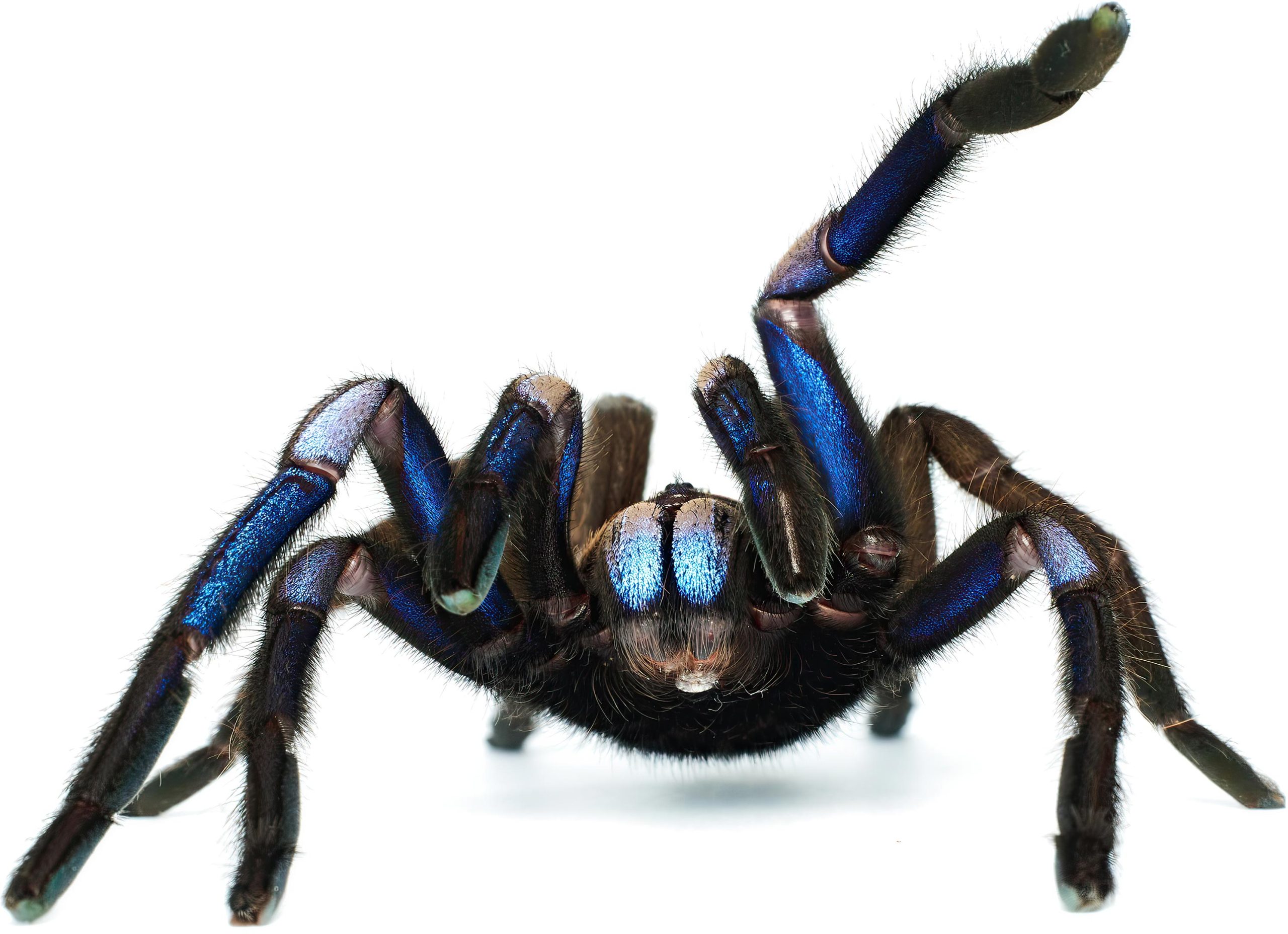
In an exciting discovery, a new species of tarantula with electric blue coloration was found in Thailand.
“In 2022, the bamboo culm tarantula was discovered, marking the first known instance of a tarantula species living inside bamboo stalks. Thanks to this discovery, we were inspired to rejoin the team for a fantastic expedition, during which we encountered a captivating new species of electric blue tarantula,” researcher Dr. Narin Chomphuphuang said.
After the announcement of Taksinus bambus in Thailand, he and his research team, along with local wildlife YouTuber JoCho Sippawat, embarked on a survey expedition in the Phang-Nga province. There, they identified the new tarantula species by its distinctive electric-blue coloration. This is the first tarantula species ever found in a Thai mangrove forest.
Expedition Insights and the Tarantula’s Unique Color
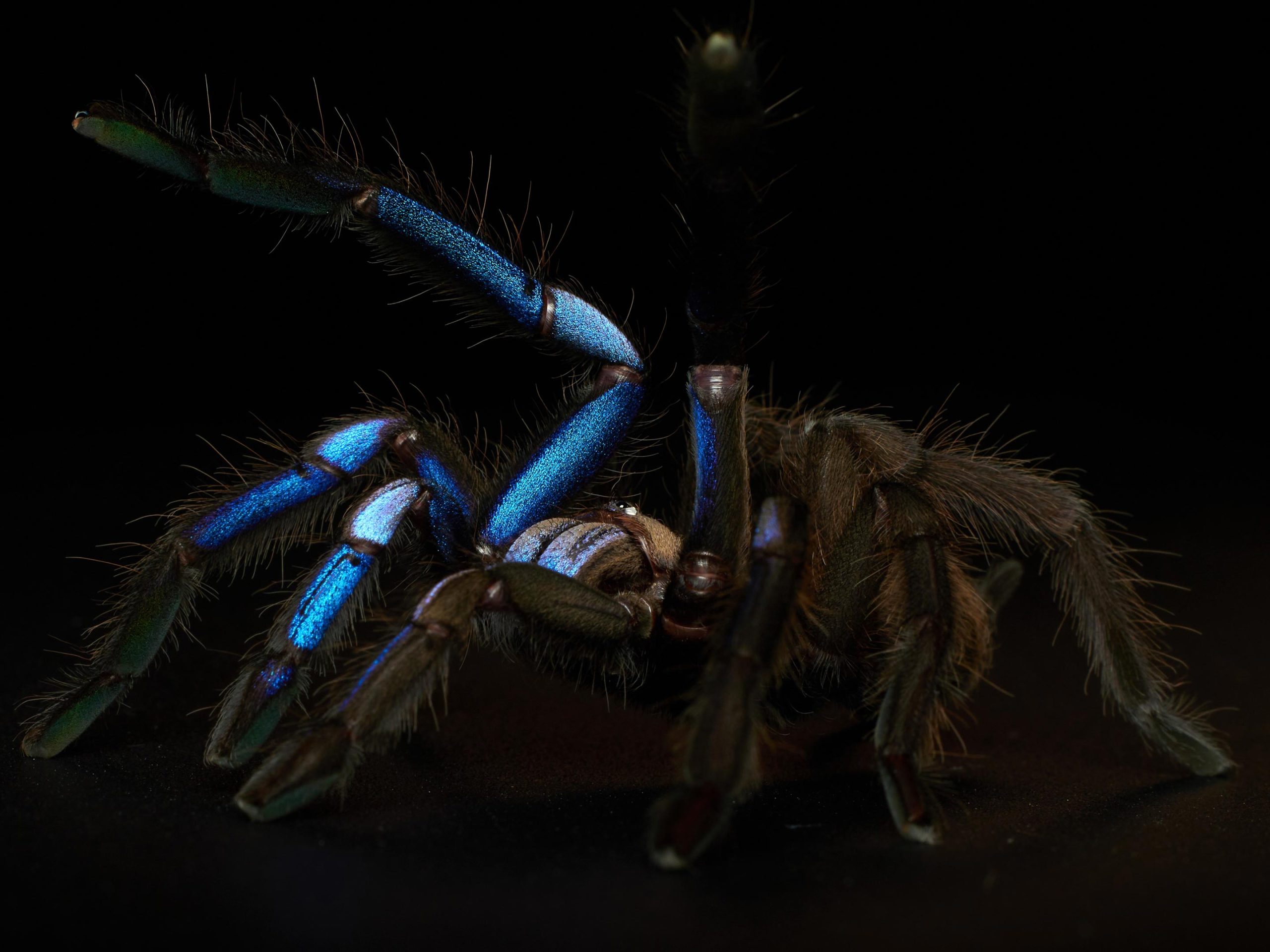
“The first specimen we found was on a tree in the mangrove forest. These tarantulas inhabit hollow trees, and the difficulty of catching an electric-blue tarantula lies in the need to climb a tree and lure it out of a complex of hollows amid humid and slippery conditions. During our expedition, we walked in the evening and at night during low tide, managing to collect only two of them,” Narin said.
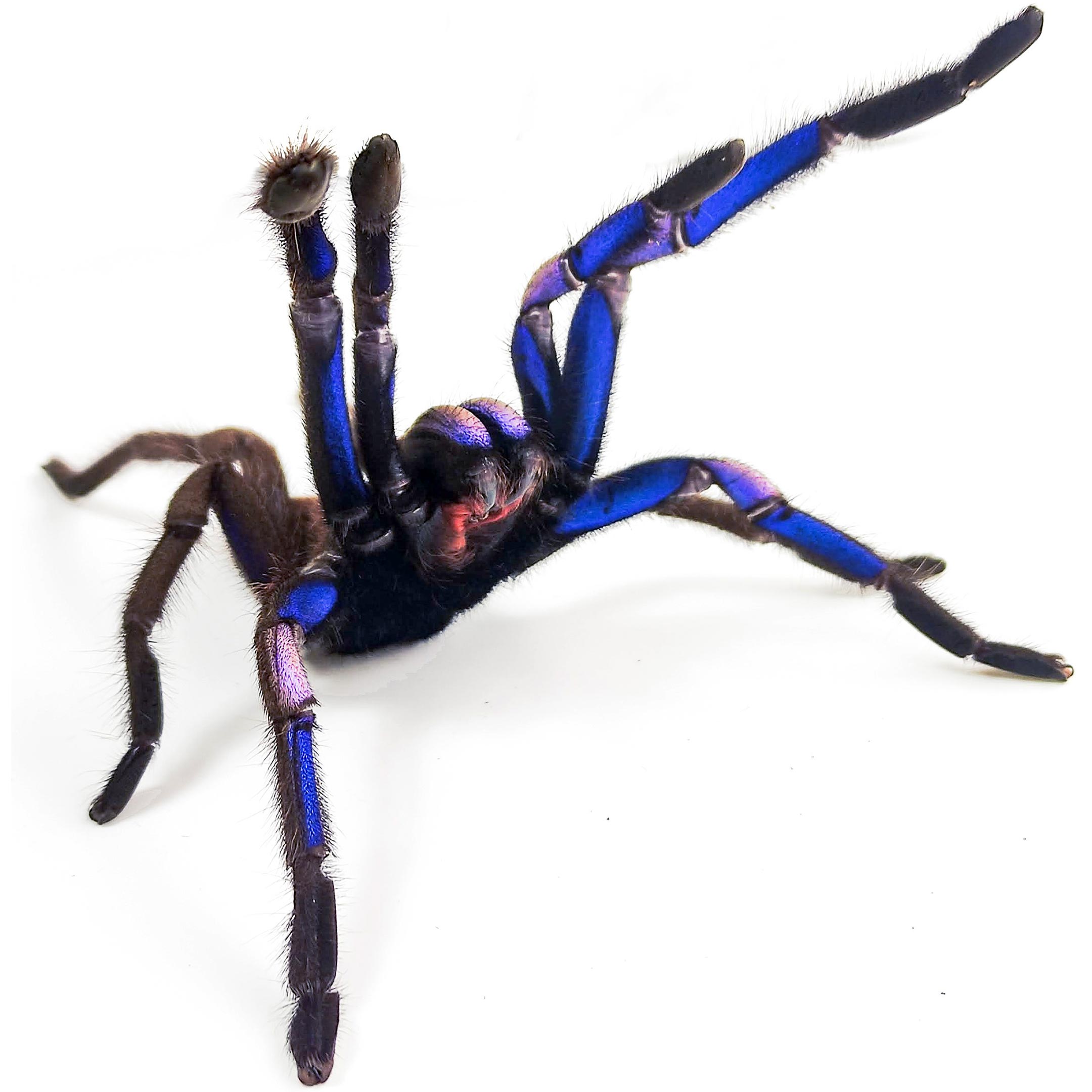
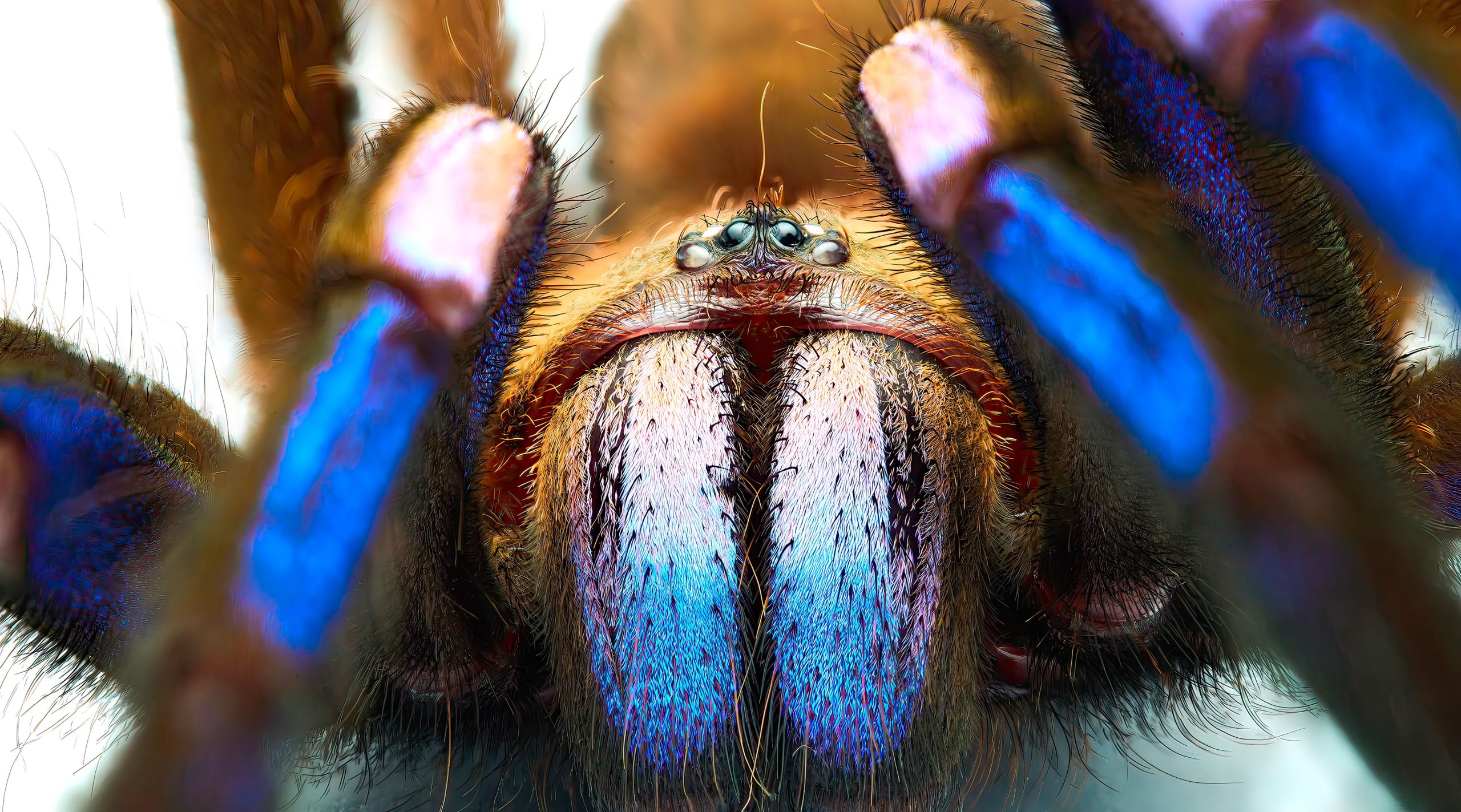
“The secret behind the vivid blue coloration of our tarantula lies not in the presence of blue pigments, but rather in the unique structure of their hair, which incorporates nanostructures that manipulate light to create this striking blue appearance.”
Blue is one of the rarest colors to appear in nature, which makes blue coloration in animals particularly fascinating. To appear blue, an object needs to absorb very small amounts of energy while reflecting high-energy blue light. Generating molecules capable of absorbing this energy is complex, making blue in nature relatively rare. What’s even more fascinating is its ability to not only display blue but also a beautiful violet hue, creating a remarkable iridescent effect.
Identification and Habitat Adaptability
“This species was previously found on the commercial tarantula market. There, it was known as the “Chilobrachys sp. Electric Blue Tarantula” but no documentation existed describing its distinctive features or natural habitat,” Narin said.
“The electric blue tarantula demonstrates remarkable adaptability. These tarantulas can thrive in arboreal as well as terrestrial burrows in evergreen forests. However, when it comes to mangrove forests, their habitat is restricted to residing inside tree hollows due to the influence of tides,” Narin also said.
Naming the New Species and Its Impact
The scientific name of Chilobrachys natanicharum was chosen after an auction campaign for naming the new species. The winner of the auction campaign was Nichada Properties Co., Ltd., Thailand, which suggested a combination of the names of company executives Mr. Natakorn Changrew and Ms. Nichada Changrew.
All proceeds from the auction were donated to support the education of Lahu children in Thailand and poor cancer patients.
“The Lahu people are an indigenous hill tribe in northern Thailand (Musoe) and are known for their vibrant culture and traditional way of life. Unfortunately, many Lahu children are denied access to education due to poverty, leaving them with limited opportunities for their future. Additionally, cancer remains a significant public health issue globally, affecting millions of people each year. Many cancer patients struggle with financial hardship, which can make accessing quality care even more difficult. We believe that everyone deserves access to quality healthcare, regardless of their financial situation,” the researchers write in their paper, which was just published on September 18 in the journal ZooKeys.
The Importance of Taxonomy and Conservation Concerns
“It’s essential for the general public to understand the significance of taxonomy as a fundamental aspect of research. Taxonomy serves a vital role, ranging from the basic, such as when people inquire on social media about the name of a spider, to conducting crucial research aimed at preserving these species from extinction.” Narin said.
Mangrove forests face the looming threat of deforestation. The electric blue tarantula is also one of the world’s rarest tarantulas. “This raises a critical question: Are we unintentionally contributing to the destruction of their natural habitats, pushing these unique creatures out of their homes?” the researchers say in conclusion.
Reference: “A new electric-blue tarantula species of the genus Chilobrachys Karsh, 1892 from Thailand (Araneae, Mygalomorphae, Theraphosidae)” by Narin Chomphuphuang, Zongtum Sippawat, Patipan Sriranan, Paveen Piyatrakulchai and Chaowalit Songsangchote, 18 September 2023, ZooKeys.
DOI: 10.3897/zookeys.1180.106278
Never miss a breakthrough: Join the SciTechDaily newsletter.
Follow us on Google and Google News.