
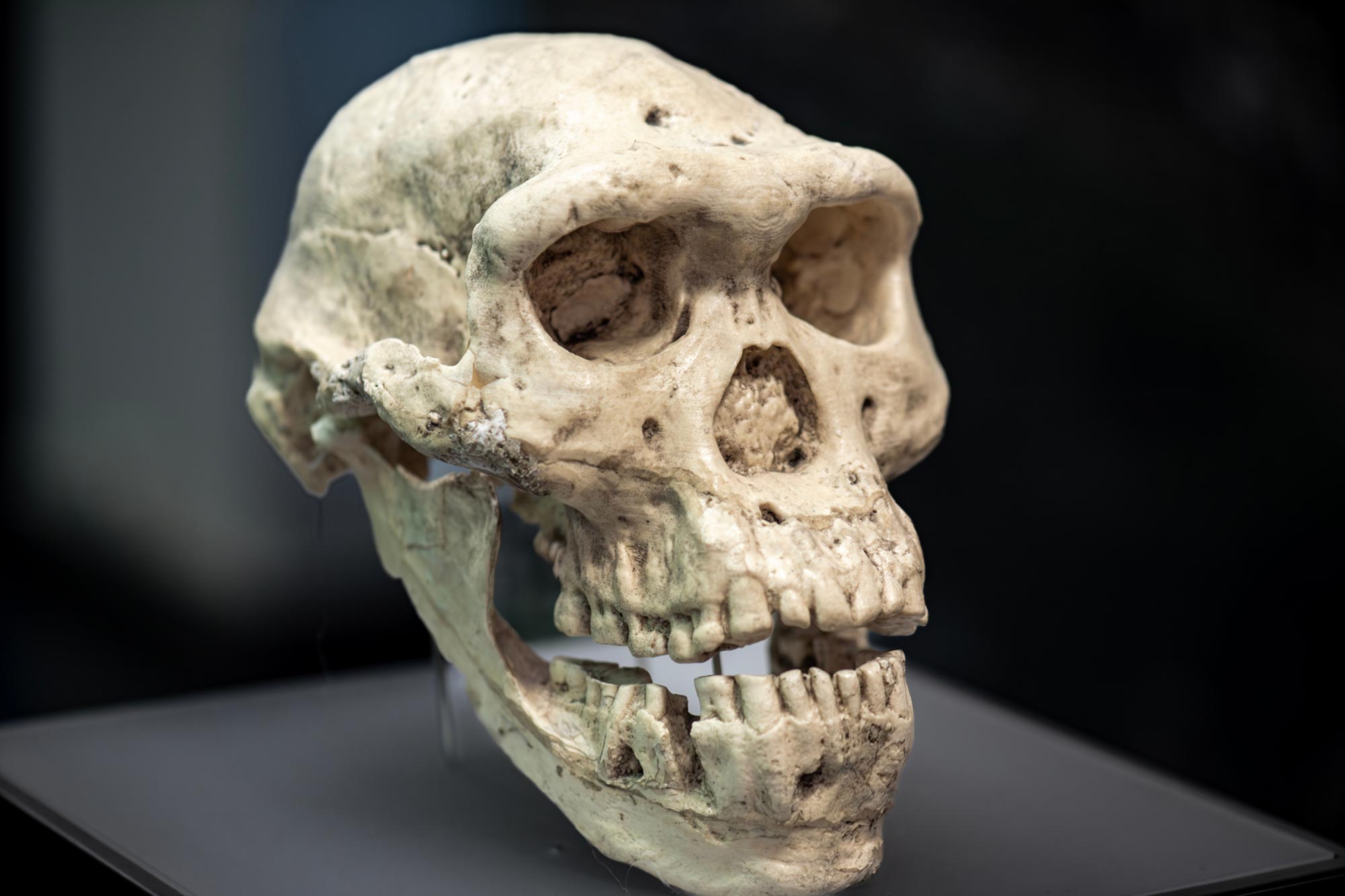
Homo erectus may have left a detectable genetic trace in living humans through ancient interbreeding with Denisovans.
For much of the 20th century, human evolution was often pictured as a branching tree. One trunk split into separate limbs, and each ancient human relative, or hominin, occupied its own tidy branch.
That was the version many students learned for decades. Homo sapiens emerged in Africa, spread across the globe, and replaced every archaic human group it encountered. Neanderthals, Homo erectus, and other ancient relatives were treated as evolutionary side paths that eventually disappeared without leaving descendants.
Over the past 30 years, that simple story has fallen apart. Human origins now look less like a clean tree and more like a tangled history of movement, contact, survival, and genetic exchange.
A new study published in Nature by Qiaomei Fu from the Chinese Academy of Sciences and colleagues adds another important piece to that revised picture. The team achieved something that would have seemed unreachable only a decade ago: recovering meaningful biological information from Homo erectus fossils that are far too old to preserve DNA.
Instead of genetic sequences, the team extracted ancient proteins from the enamel of six teeth from three Chinese sites – Zhoukoudian (which, in the early 20th century, produced fossil remains known as “Peking Man”), Hexian and Sunjiadong – all dating to around 400,000 years ago.
Homo erectus is widely regarded as the first hominin to leave Africa; the evidence suggests this species had moved into Eurasia nearly two million years ago. It remains the most geographically widespread human ancestor that ever lived. The new study indicates that Homo erectus exchanged genes (probably through interbreeding) with Denisovans in East Asia roughly 400,000 years ago.
The study suggests that some of that genetic legacy, it now appears, was passed on to living people in the Philippines, Papua New Guinea, and across south-east Asia.
Proteins reveal ancient mixing
Tooth enamel is the hardest tissue in the body, and its proteins survive long after DNA has degraded beyond recovery. What the team found in those proteins is striking. All six specimens share a previously unknown amino acid variant – a tiny molecular signature, a single letter changed in the protein sequence, never seen in any other hominin alive or dead.
This variant clusters these east Asian H. erectus into a distinct group, confirming their identity and settling a long-running debate about whether the unusual Hexian fossils were H. erectus at all. A second variant they share, however, is not unique to H. erectus.
It also appears in Denisovans – a mysterious archaic (non-Homo sapiens) human group known mainly from a cave in Siberia. The corresponding genetic variant turns up in living people at frequencies of 21% in the Philippines and about 1% in India, distributed in a pattern that matches what we’d expect if it entered modern humans via Denisovan ancestry.
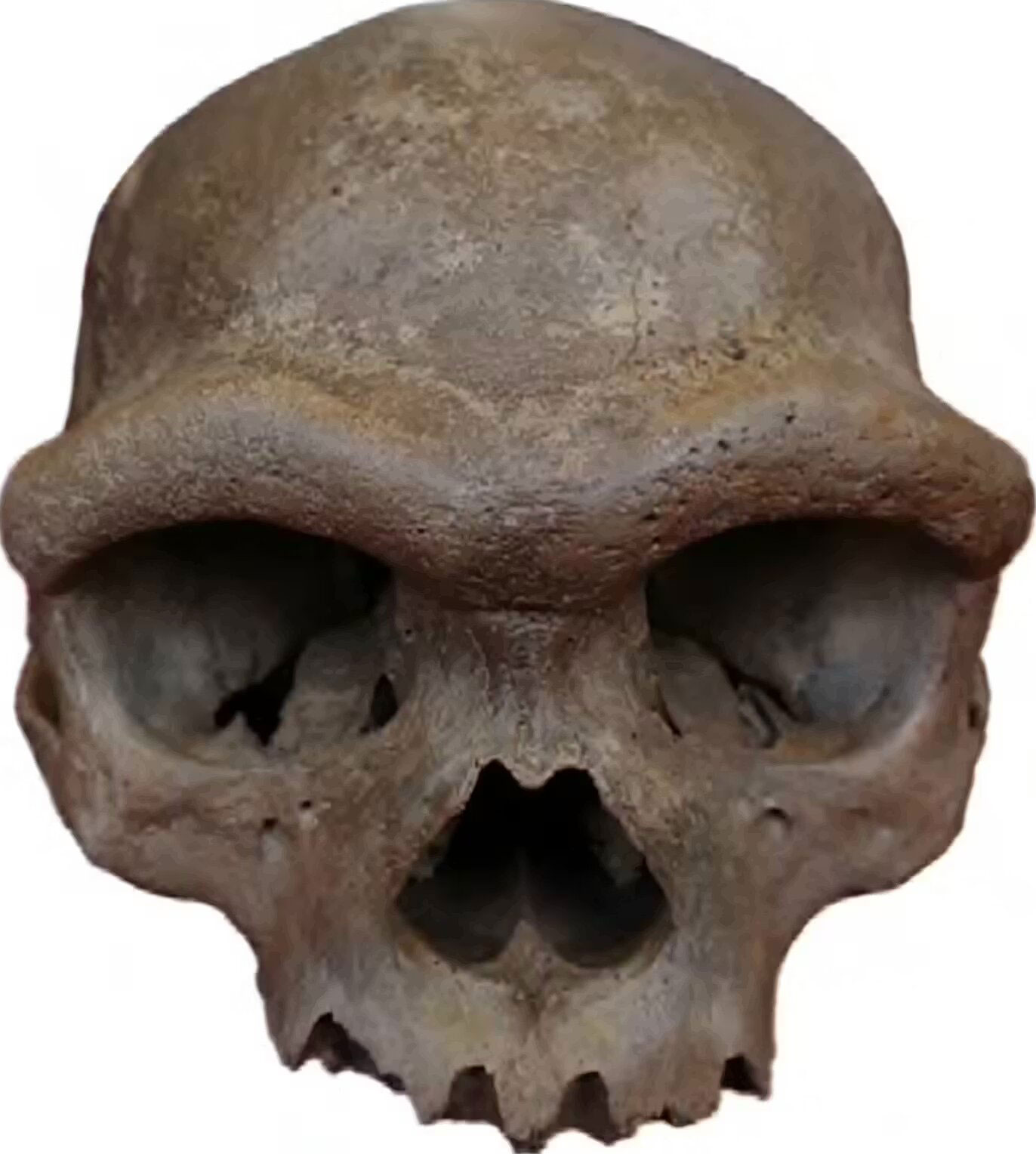
The most reasonable interpretation is that H. erectus populations in east Asia passed this variant to Denisovans through interbreeding, and Denisovans later passed it on to the ancestors of modern south-east Asians and Oceanians. This transfer of genetic material from one species to another is known as introgression.
The lineage we once thought was a dead end has, it turns out, left a small but detectable trace in living human genomes – a molecular thread connecting a Peking Man tooth to living people in Asia.
Interbreeding was not rare
But the significance of today’s paper extends well beyond the specific variant or the specific populations involved. What it really shows is that interbreeding between archaic human lineages was not exceptional. It was routine.
Every major hominin lineage we have been able to examine genomically shows admixture. Modern humans outside Africa carry roughly 2% Neanderthal DNA. Papuans and Aboriginal Australians carry an additional 2–5% Denisovan ancestry.
West African populations carry genetic signatures from an unidentified archaic lineage. Even Denisovans themselves, as today’s study adds further weight to, received gene flow from something older and more diverged — likely H. erectus.
A 2019 review in the American Journal of Physical Anthropology documents at least three distinct introgression events from Denisovan-like populations into south-east Asian and Oceanic ancestors alone, some occurring as recently as 20,000 years ago. The picture is not one of clean lineages but of a tangled web of contact and exchange extending across millions of years.
The implications are far-reaching. Our genomes are not the product of a single unbroken lineage emerging from Africa. They are mosaics, assembled from contributions by multiple archaic groups, each adapted to its own regional environment.
Some of the Denisovan-derived variants in Papuan genomes, for instance, appear to influence immune function. The H. erectus-derived variant identified today has unknown functional consequences – that remains an open question – but the precedent from other gene variants that have introgressed (genes that have passed from one species into another) suggests that adaptation to new environments may have been part of the story.
Lost lineages may remain
Perhaps most intriguing is what the new paper implies about all the populations we cannot yet study. H. erectus survived in Indonesia until perhaps 100,000 years ago. Homo floresiensis, the diminutive “hobbit” species, was present on Flores when modern humans arrived. Another human lineage, Homo luzonensis, occupied the Philippines.
None of these populations have yielded DNA, and until today, none had yielded any molecular data at all. Were they also absorbed, at least partially, into the human populations that replaced them? The genomic evidence from living people has not, so far, detected their signal clearly – but the tools available until recently were blunt instruments.
The proteomic approach demonstrated in today’s paper offers a way forward. If proteins can be recovered from H. erectus enamel at 400,000 years, the same approach applied to floresiensis or luzonensis material might finally reveal whether those lineages, too, contributed something to the humans who came after them.
The old metaphor of a tree – a single trunk branching into distinct species – has been quietly replaced in the scientific literature. It might be better to consider the process as a braided river, with many channels running partly together and partly apart, exchanging water continuously.
This new study is one more confirmation that when ancient human populations disappeared, they left traces of themselves behind.
Reference: “Enamel proteins from six Homo erectus specimens across China” by Qiaomei Fu, Zhongyou Wu, E. Andrew Bennett, Song Xing, Qiang Ji, Zhe Dong, Huiyun Rao, Xuejun Gu, Yizhao Dang, Jun Xing, Kai Zhou and Xiaotian Feng, 13 May 2026, Nature.
DOI: 10.1038/s41586-026-10478-8
This work was supported by the National Natural Science Foundation of China (L2424324), the Chinese Academy of Sciences (CAS) (YSBR-019), the Archaeological Talent Promotion Program of China (2024-278) and the New Cornerstone Science Foundation.
Adapted from an article originally published in The Conversation.
Never miss a breakthrough: Join the SciTechDaily newsletter.
Follow us on Google and Google News.