
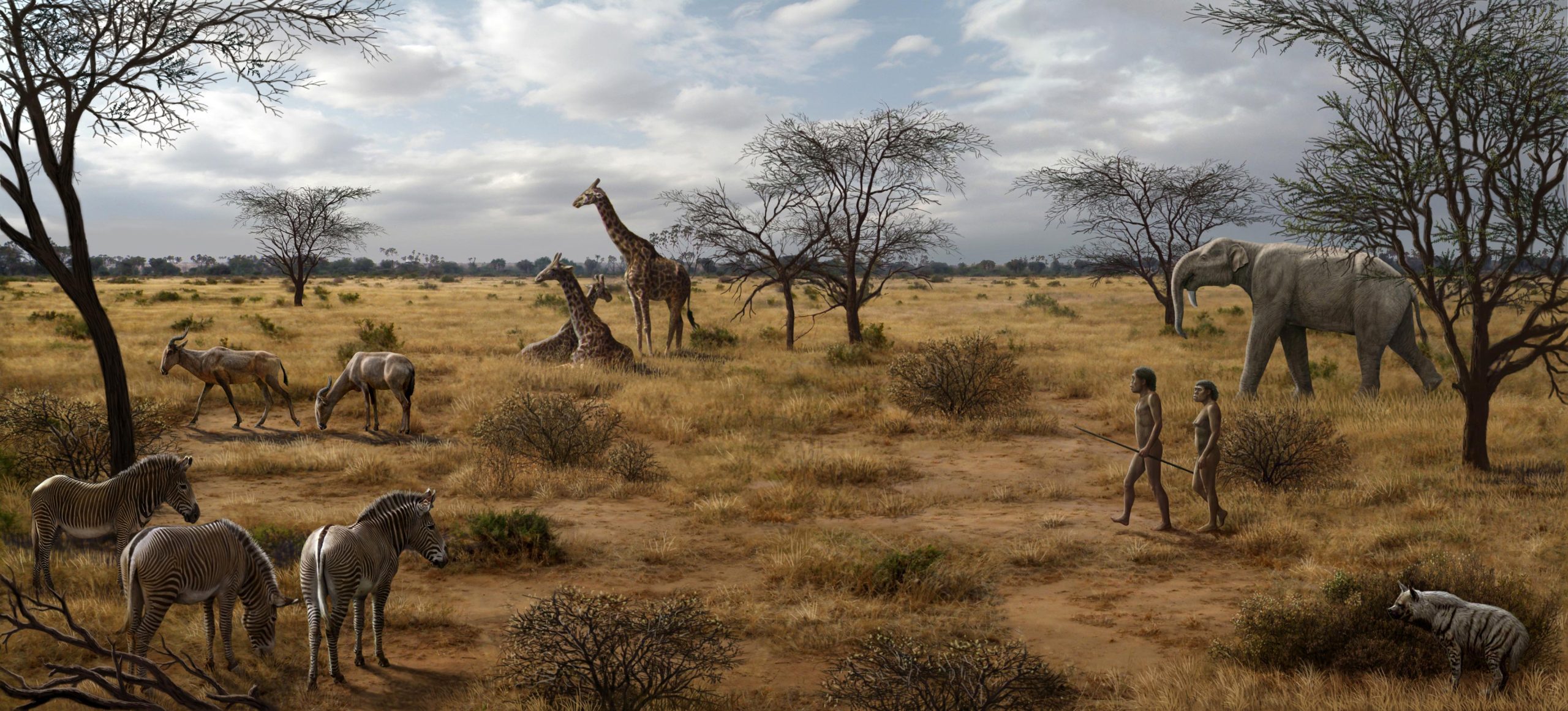
New study calls into question the importance of meat-eating in shaping our evolution.
By analyzing archaeological data across eastern Africa, researchers found that apparent increases in meat-eating evidence were likely due to intensified research efforts rather than actual changes in behavior. This finding prompts a reassessment of the role of meat in human evolution and highlights the need for exploring alternative evolutionary drivers.
Reevaluating Dietary Evolution in Early Humans
Quintessential human traits such as large brains first appear in Homo erectus nearly 2 million years ago. This evolutionary transition towards human-like traits is often linked to a major dietary shift involving greater meat consumption. A new study published today (January 24, 2022) in the Proceedings of the National Academy of Sciences, however, calls into question the primacy of meat-eating in early human evolution. While the archaeological evidence for meat-eating increases dramatically after the appearance of Homo erectus, the study authors argue that this increase can largely be explained by greater research attention on this time period, effectively skewing the evidence in favor of the “meat made us human” hypothesis.
“Generations of paleoanthropologists have gone to famously well-preserved sites in places like Olduvai Gorge looking for — and finding — breathtaking direct evidence of early humans eating meat, furthering this viewpoint that there was an explosion of meat-eating after 2 million years ago,” W. Andrew Barr, an assistant professor of anthropology at the George Washington University and lead author on the study, said. “However, when you quantitatively synthesize the data from numerous sites across eastern Africa to test this hypothesis, as we did here, that ‘meat made us human’ evolutionary narrative starts to unravel.”
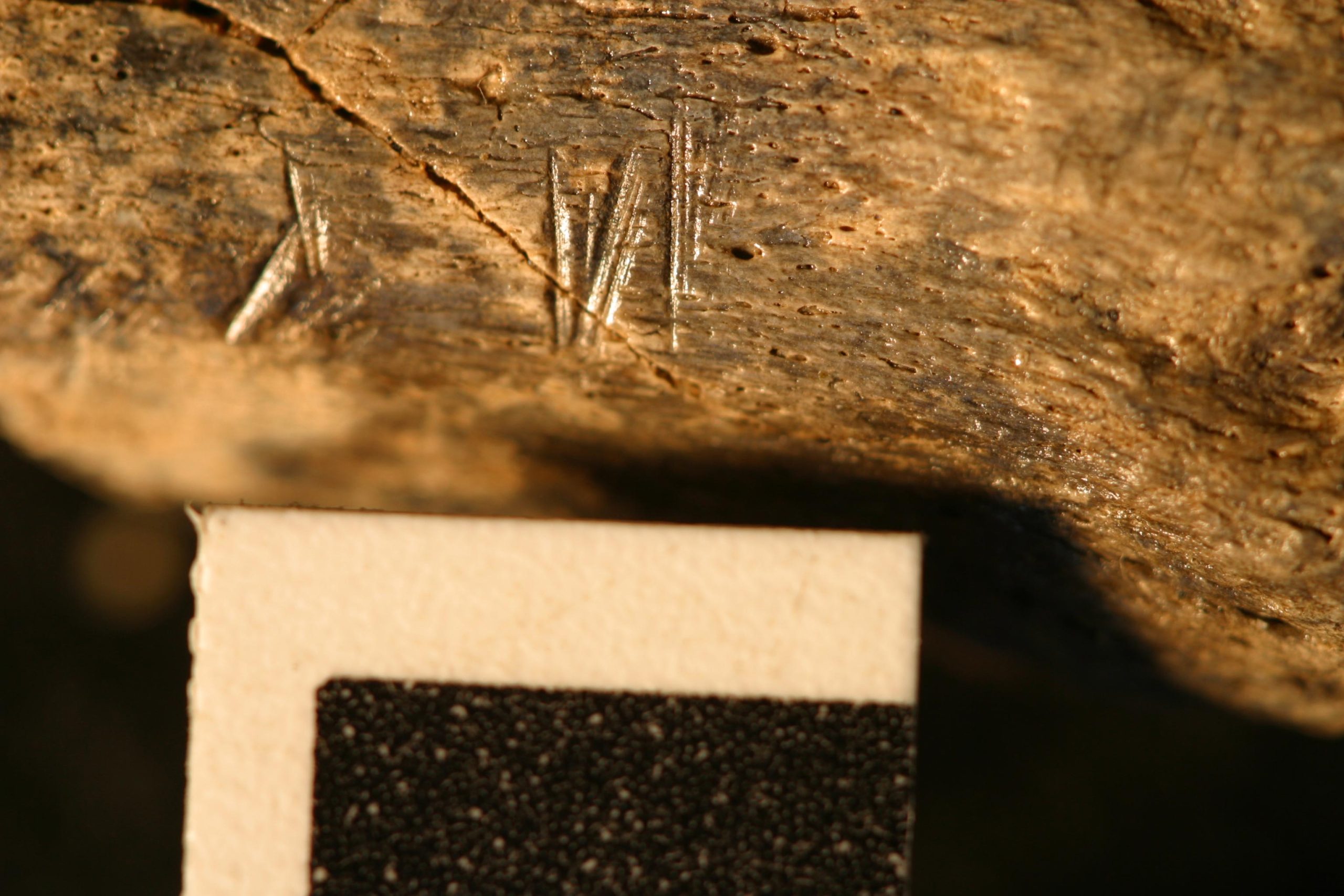
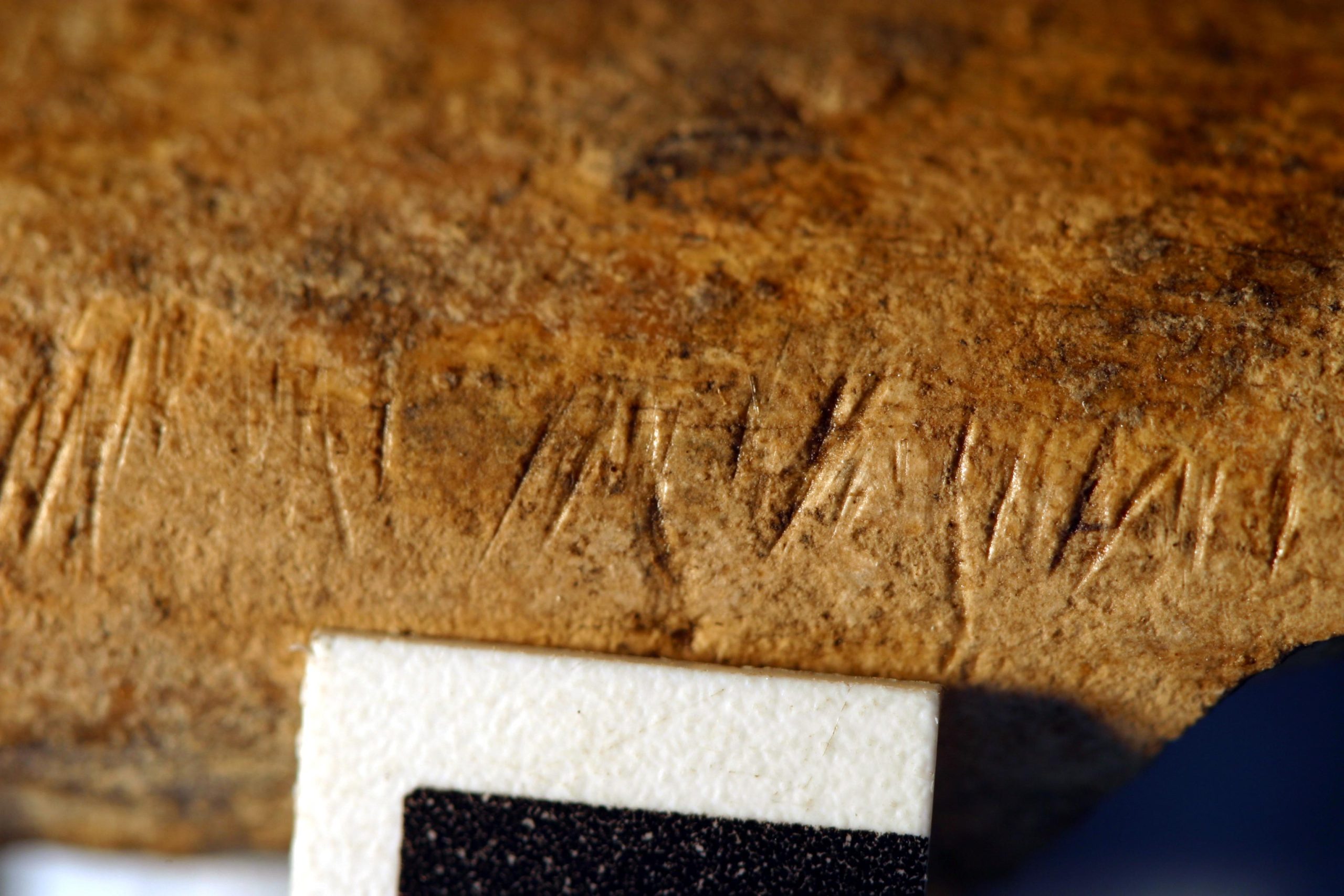
Barr and his colleagues compiled published data from nine major research areas in eastern Africa, including 59 site levels dating between 2.6 and 1.2 million years ago. They used several metrics to track hominin carnivory: the number of zooarchaeological sites preserving animal bones that have cut marks made by stone tools, the total count of animal bones with cut marks across sites, and the number of separately reported stratigraphic levels.
“When you quantitatively synthesize the data from numerous sites across eastern Africa to test this hypothesis, as we did here, that ‘meat made us human’ evolutionary narrative starts to unravel.” W. Andrew Barr
The researchers found that, when accounting for variation in sampling effort over time, there is no sustained increase in the relative amount of evidence for carnivory after the appearance of H. erectus. They note that while the raw abundance of modified bones and the number of zooarchaeological sites and levels all demonstrably increased after the appearance of H. erectus, the increases were mirrored by a corresponding rise in sampling intensity, suggesting that intensive sampling – rather than changes in human behavior – could be the cause.
Implications of New Findings on Human Evolution
“I’ve excavated and studied cut marked fossils for over 20 years, and our findings were still a big surprise to me,” Briana Pobiner, a research scientist in the Human Origins Program at the Smithsonian’s National Museum of Natural History and co-author on the study, said. “This study changes our understanding of what the zooarchaeological record tells us about the earliest prehistoric meat-eating. It also shows how important it is that we continue to ask big questions about our evolution, while we also continue to uncover and analyze new evidence about our past.”
In the future, the researchers stressed the need for alternative explanations for why certain anatomical and behavioral traits associated with modern humans emerged. Possible alternative theories include the provisioning of plant foods by grandmothers and the development of controlled fire for increasing nutrient availability through cooking. The researchers caution that none of these possible explanations currently have a strong grounding in the archaeological record, so much work remains to be done.
“I would think this study and its findings would be of interest not just to the paleoanthropology community but to all the people currently basing their dieting decisions around some version of this meat-eating narrative,” Barr said. “Our study undermines the idea that eating large quantities of meat drove evolutionary changes in our early ancestors.”
Reference: “No sustained increase in zooarchaeological evidence for carnivory after the appearance of Homo erectus” by W. Andrew Barr, Briana Pobiner, John Rowan, Andrew Du and J. Tyler Faith, 24 January 2022, Proceedings of the National Academy of Sciences.
DOI: 10.1073/pnas.2115540119
In addition to Barr and Pobiner, the research team included John Rowan, an assistant professor of anthropology at the University of Albany; Andrew Du, an assistant professor of anthropology and geography at Colorado State University; and J. Tyler Faith, an associate professor of anthropology at the University of Utah.
Never miss a breakthrough: Join the SciTechDaily newsletter.
Follow us on Google and Google News.
11 Comments
This study was sponsored by the George Washington University Vegan Association…
The title is pure click-bait heaven. What this study shows is that meat eating didn’t originate with H. erectus, but that it started much earlier and was consistently present in the older hominins (as the cut mark bone frequency was consistent).
So – no, humans didn’t evolve as vegans. Oh, in case you are wondering, no – there was no god needed either.
Piffle.
They pointed out that this perceived “boom” in carnivory, was an unintentional artifact of intensive sampling, all directed at a relatively narrow period of early human development.
I was a vegetarian for about 60 years.
It will unravel because none of it is science. Try to apply the scientific method to any of the bullsh*t these child minds throw out there to get grants.
So, much evidence of meat consumption has been actually found yet this is somehow not evidence that much meat was consumed? The first sentence of the last paragraph gets to the real point of this ‘revelation’.
And now, as we sit on our ever-expanding butts… meat can make us dead.
… if cow starts eating the meat would that made her a genius?…
Actually, when we foolish midern humans decided to feed cattle other DEAD LIVESTOCK, we managed to introduce a dread disease from sheep, scrapie – a terrifying brain disease, caused by prions.
Scrapie in sheep is now known as MAD COW in cattle, or “Kreutzfeld Jacob syndrome” in humans, AND it’s called “chronic wasting disease” in deer & other wild ungulates, in N America.
The introduction to N Am wildlife was via an idiotic researcher, who housed wild captive whitetail beside SCRAPIE INFECTED SHEEP, & when he was done collecting data, he TURNED THE DEER LOOSE. This despite recording in his logs that the deer & sheep often interacted thru the wove wire fence, LICKING NOSES – & transmitting disease prions between species.
For anyone who isn’t familiar with CWD, the prions from dead animals (deer, elk, mt goat…) enter the soil, adsorb onto clay particles, are taken up by plants, & enter the food web of grazing & browsing ungulates.
So, no – anywhere CWD has gotten, it’s now endemic. It began in ONE state, & thanks to careless interstate sales of captive raised deer, elk, & other game species, it has SPREAD to 35 U.S. states & 4 Canada provinces.
Congratulate our damfool species on permanently contaminating an entire continent, soon! Yay, us! 🤬
Prions are indestructible. If a brain surgeon operates on a patient with a prion disease, every surgical tool must be discarded. Autoclaving, radiation, potent acids – nothing renders prions “inert”. They remain infectious, no matter what “sterilization” process is attempted.
This is from 2022, but I just got this article Sept 5 2026.
Is this current evidence or has it been updated? If so what is the current update. I have something to add if this is current understanding.
Thanks.