
DOE Dark Energy Spectroscopic Instrument passes 7.5 million measured galaxy redshifts.
By 2026, it will map over 35 million galaxies, aiding in the study of dark energy and the universe’s expansion. The project overcame significant challenges, including pandemic-related delays.
The Dark Energy Spectroscopic Instrument (DESI) has cataloged more galaxies than all other previous three-dimensional redshift surveys combined, measuring 7.5 million galaxies in only seven months since beginning science operations. The US Department of Energy’s Lawrence Berkeley National Laboratory leads DESI, which is installed at Kitt Peak National Observatory, a program of NSF’s NOIRLab, on the Nicholas U. Mayall 4-meter (13-foot) Telescope.
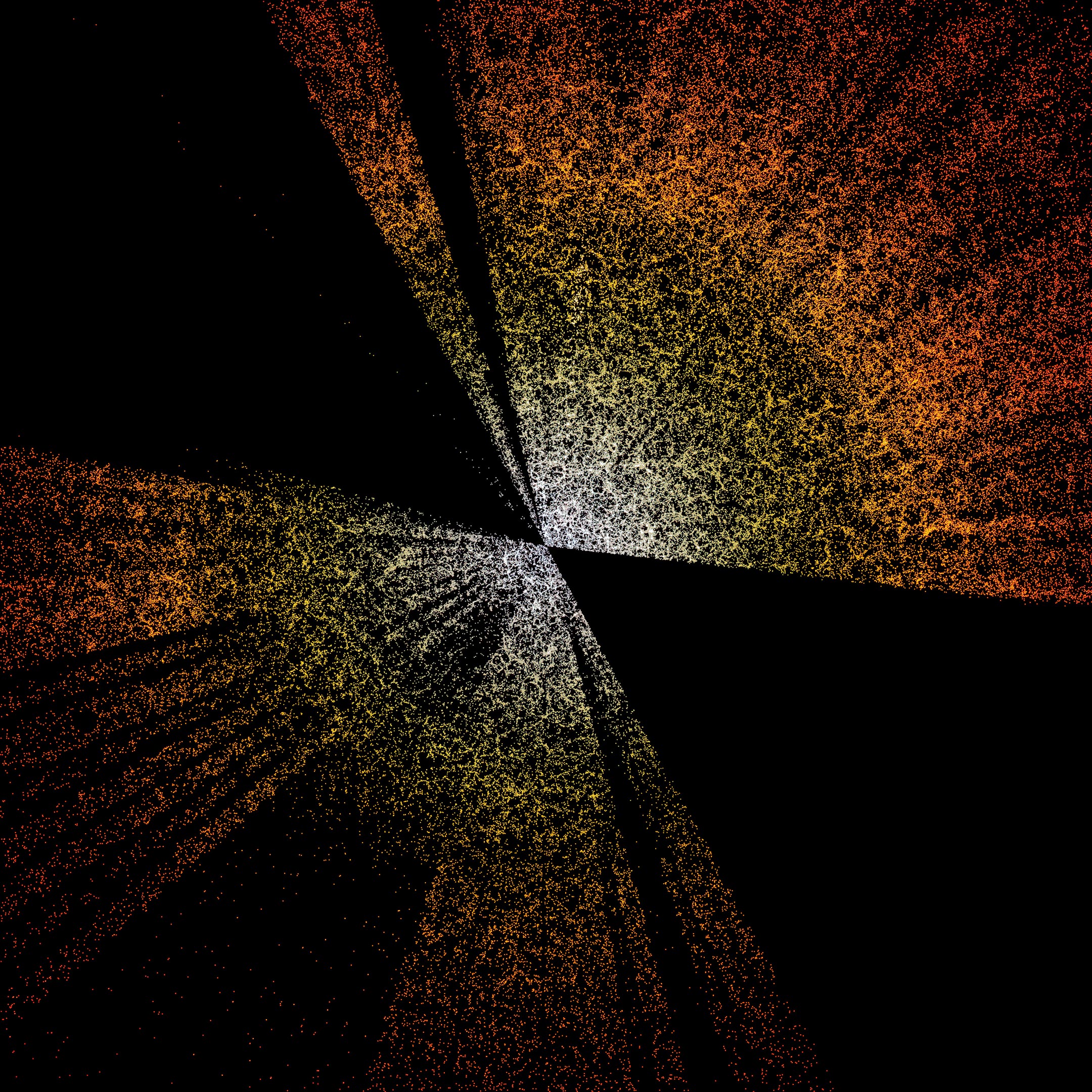
The Dark Energy Spectroscopic Instrument (DESI), has capped off the first seven months of its survey by smashing through all previous records for three-dimensional galaxy surveys, creating the largest and most detailed map of the Universe ever. The DESI survey has already cataloged over 7.5 million galaxies and is adding more at a rate of over a million a month. In November 2021 alone, DESI cataloged redshifts from 2.5 million galaxies. By the end of its run in 2026, DESI is expected to have over 35 million galaxies in its catalog, enabling an enormous, and so far unsurpassed, variety of cosmology and astrophysics research.
DESI’s three-dimensional “CT scan” of the Universe. The Earth is in the lower left, looking out in the directions of the constellations Virgo, Serpens, and Hercules to distances beyond 5 billion light-years. As this video progresses, the vantage point sweeps through 20 degrees towards the constellations Bootes and Corona Borealis. Each colored point represents a galaxy, which in turn is composed of 100 billion to 1 trillion stars. Gravity has clustered the galaxies into structures called the “cosmic web,” with dense clusters, filaments, and voids. Credit: D. Schlegel/Berkeley Lab using data from DESI
Unraveling the Universe’s Expansion History
The primary task of the survey is to collect spectra of millions of galaxies across more than a third of the entire sky. By breaking down the light from each galaxy into its spectrum of colors, DESI can determine how much the light has been redshifted — stretched out toward the red end of the spectrum by the expansion of the Universe during the billions of years it traveled before reaching Earth. It is those redshifts that let DESI see the depth of the sky. The more redshifted a galaxy’s spectrum is, in general, the farther away it is. With a 3D map of the cosmos in hand, physicists can chart clusters and superclusters of galaxies. Those structures carry echoes of their initial formation, when they were just ripples in the infant cosmos. By teasing out those echoes, physicists can use DESI’s data to determine the expansion history of the Universe.
A small patch of DESI’s 5000 fiber-optic “eyes” at work. The robotic fiber positioners can be seen moving around their patrol area. The fibers themselves are back-illuminated with blue light so that their positions can be measured with the Fiber View Camera. Credit: Claire Poppett/DESI Collaboration
DESI is an international science collaboration managed by the US Department of Energy’s (DOE) Lawrence Berkeley National Laboratory with primary funding for construction and operations from DOE’s Office of Science. DESI is installed at the Nicholas U. Mayall 4-meter Telescope at Kitt Peak National Observatory (KPNO) near Tucson, Arizona. KPNO is a program of NSF’s NOIRLab, and DOE contracts with NOIRLab to operate the Mayall Telescope for the DESI survey.

DESI is only about 10% of the way through its five-year mission. Once completed, the final 3D map will yield a better understanding of dark energy, and thereby give physicists and astronomers a better understanding of the past — and future — of the Universe.
“There is a lot of beauty to it,” says Berkeley Lab scientist Julien Guy of the map. “In the distribution of the galaxies in the 3D map, there are huge clusters, filaments, and voids. They’re the biggest structures in the Universe. But within them, you find an imprint of the very early Universe, and the history of its expansion since then.”
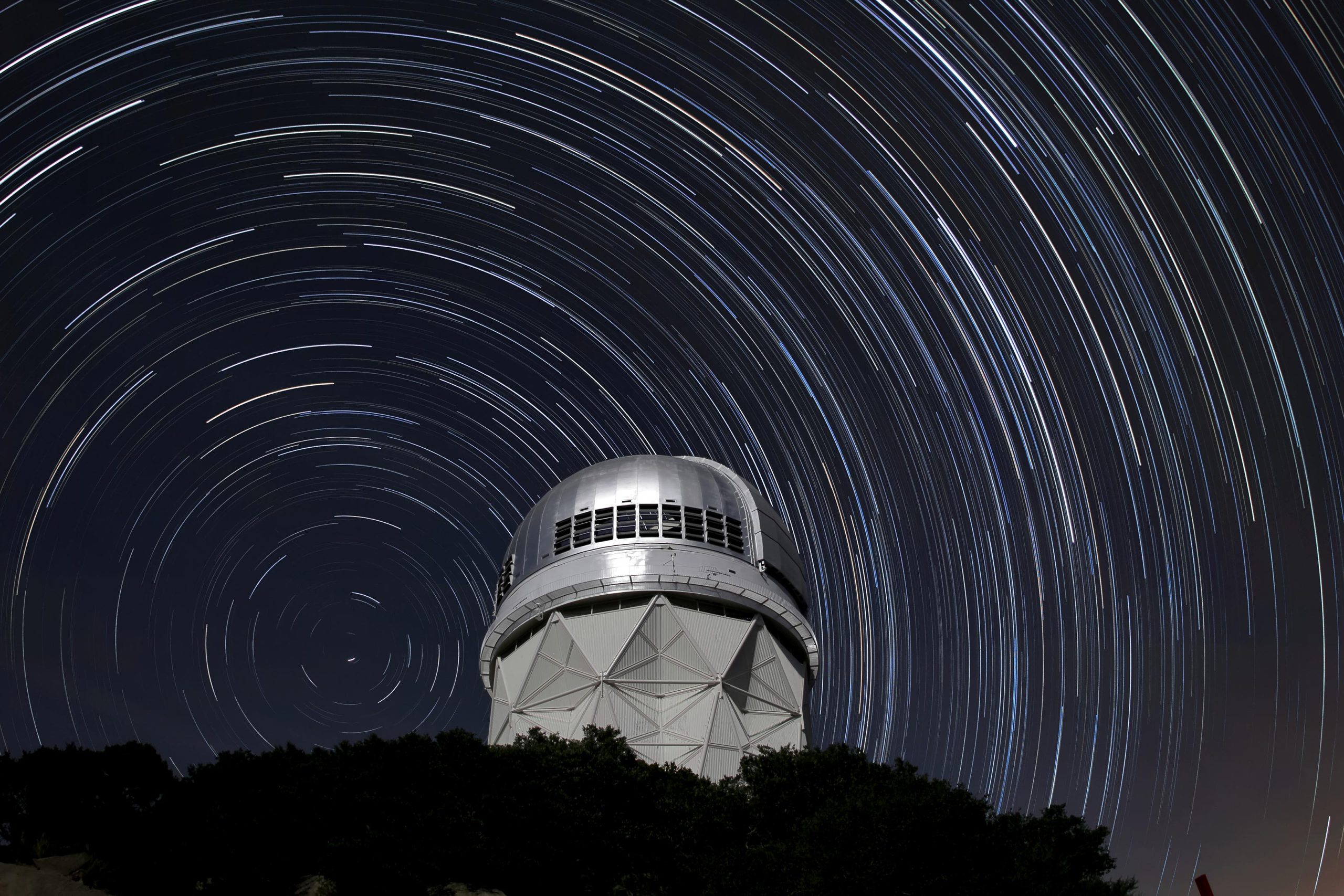
DESI has come a long way to reach this point. Originally proposed over a decade ago, construction on the instrument started in 2015 and it saw first light in late 2019. Then, during its validation phase, the coronavirus pandemic hit, shutting down the telescope for several months, though some work continued remotely. In December 2020, DESI turned its eyes to the sky again, testing out its hardware and software, and by May 2021 it started its science survey.
Related: Seeing Dark Energy’s True Colors: DESI Creates Largest 3D Map of the Cosmos
Never miss a breakthrough: Join the SciTechDaily newsletter.
Follow us on Google and Google News.