

Through citizen science, individuals globally can engage with NASA’s research on the Sun and its effects, participating in activities ranging from simple observations to complex data analysis.
NASA is celebrating the Sun during the Heliophysics Big Year, which extends through the end of 2024. You can get involved to help us learn more about our star and its influence on our planet. With exciting experiments happening during the total solar eclipse that will cross North America on April 8, to widespread investigations going on throughout the year, keep reading to find a project that’s right for you.
What Is Citizen Science (Also Called Participatory Science)?
NASA defines citizen science as “a form of open collaboration in which individuals or organizations participate in the scientific process in various ways” from collecting and analyzing data to making discoveries and solving problems. ”Citizen” here refers to citizens of planet Earth, and these projects are open to everyone, regardless of country of birth or legal citizenship status.
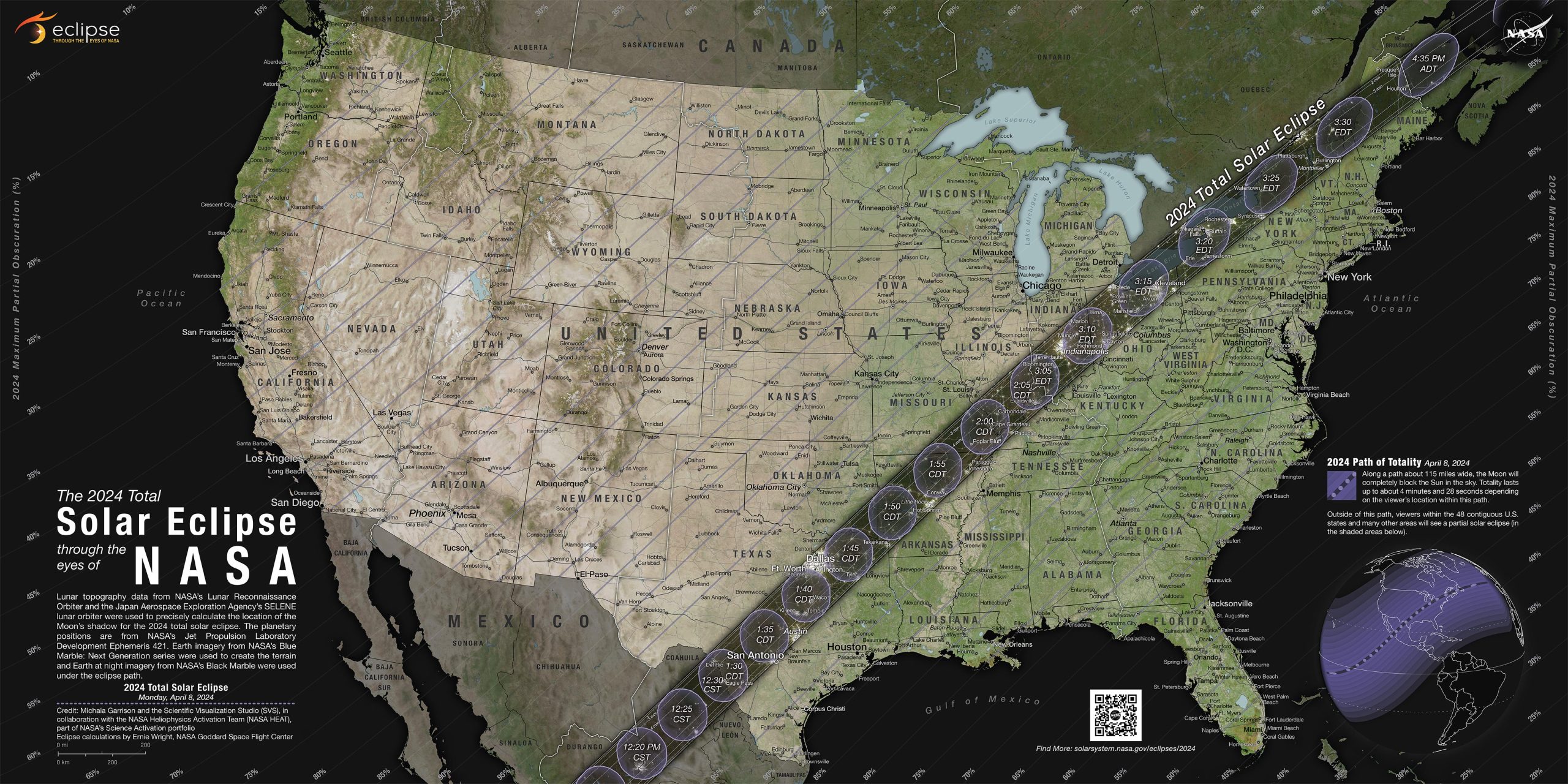
NASA sponsors citizen science projects across all five areas of research that it pursues: Earth science, planetary science, astrophysics, biological and physical sciences, and heliophysics. And yes, there are a few projects that are focused on the April 8 solar eclipse!
What You Can Do
Depending on which project you join, you might:
- Observe and record in pictures or words natural phenomena like clouds, animal noises, or a solar eclipse.
- Learn how to recognize or classify patterns in data or pictures of a comet or solar jet.
- Learn how to build and use scientific equipment like radio telescopes or ham radios.
Your contribution may be a large or small piece of the picture, but what you do as part of a NASA citizen science project is essential to answering the research question or need that the project addresses. And while you’re contributing to science, you might also develop new skills and make friends. You can read about some project participants – and what motivates them – in these profiles.
The Projects
NASA citizen science projects related to the April 8, 2024, eclipse and solar science are presented in four groups below. You can see all NASA citizen science projects on this website.
Use the tables below to find the project for you! A few notes:
- “Minimum time required” refers to how much time it would take you to get up to speed from the start.
- “Where” refers to where you need to be in order to participate.
Are you an educator looking for ways to involve your formal or informal students in eclipse-related science? Check out this companion blog post for some tips for educators.
Eclipse Projects That Need You on April 8!
Quick-Start Projects That Require No Special Equipment
| Prerequisite knowledge | Preparation/ Training | Required equipment | Challenge level | Minimum time required | Where | |
|---|---|---|---|---|---|---|
| Eclipse Soundscapes (Observer role) | none | online, minutes | printable form | easy | minutes | outside, in or near the path of totality |
| GLOBE Observer: Eclipse Protocol | none | in app, minutes | smartphone, air temperature thermometer | easy | minutes | outside, in or near the path of totality |
| SunSketcher | none | in app, minutes | smartphone (download app in advance) | easy | minutes | outside, in path of totality |
More Demanding Projects That Require Special Equipment
| Prerequisite knowledge | Preparation/ Training | Required equipment | Challenge level | Minimum time required | Where | |
|---|---|---|---|---|---|---|
| Eclipse Soundscapes (Data Collector role) | none | online, minutes | AudioMoth with micro-SD cards | easy | hours | outside, in or near the path of totality |
| Eclipse Megamovie 2024 | how to use DSLR camera | online, minutes | DSLR camera and tracking mount | moderate | hours | outside, in path of totality |
| HamSCI | familiarity with ham radios | online, self-directed, hours | web-connected device and/or ham radio | moderate | days | inside |
| Radio JOVE | none | online, self-directed, days to weeks | web-connected device and/or radio telescope | moderate | weeks | outside and/or online |
| Citizen Continental-America Telescope Eclipse (CATE) 2024 | none | in person, days | telescope, computer, cameras – provided to selected teams | high (application period closed) | days | outside, in path of totality |
| Dynamic Eclipse Broadcast (DEB) Initiative | none | online, hours | telescope – provided to selected teams | high (application period closed) | days | outside, in and off the path of totality |
Heliophysics Projects That You Can Do Anytime
Quick-Start Projects, No Special Equipment Required
| Prerequisite knowledge | Preparation/ Training | Required equipment | Challenge level | Minimum time required | Where | |
|---|---|---|---|---|---|---|
| HARP – Heliophysics Audified: Resonance in Plasmas | none | online, minutes | web-connected device | easy | minutes | online |
| Solar Jet Hunter | none | online, minutes | web-connected device | easy | minutes | online |
More Demanding Projects That Require Special Equipment
| Prerequisite knowledge | Preparation/ Training | Required equipment | Challenge level | Minimum time required | Where | |
|---|---|---|---|---|---|---|
| Aurorasaurus | none | online, minutes | web-connected device, camera optional | moderate | hours | outside, high latitudes |
| Dynamic Eclipse Broadcast (DEB) Initiative | none | online, hours | telescope – provided to selected teams | moderate | hours | outside |
| HamSCI | familiarity with ham radios | online, self-directed, hours | web-connected device and/or ham radio | moderate | weeks | indoors |
| Radio JOVE | familiarity with radio telescopes | online, self-directed, hours | web-connected device and/or radio telescope | moderate | weeks | outside and/or online |
| Spritacular | none | online, minutes | web-connected device and/or camera | moderate | minutes | outside and/or online |
| Sungrazer Project | none | online, hours | web-connected device | high | hours | online |
Advanced Participation
Many NASA citizen science projects start out with a straightforward, structured task, but that doesn’t have to be where your contributions end. Some projects offer webinars or host regular video conference calls where enthusiastic volunteers can learn about and participate in the work that comes after data collection or classification. Hundreds of volunteers have become involved in deep ways. Over 450 volunteers have even been recognized for their contributions by being named as co-authors of scientific papers, which are the formal way in which scientists announce new discoveries and ideas.
Never miss a breakthrough: Join the SciTechDaily newsletter.
Follow us on Google and Google News.