
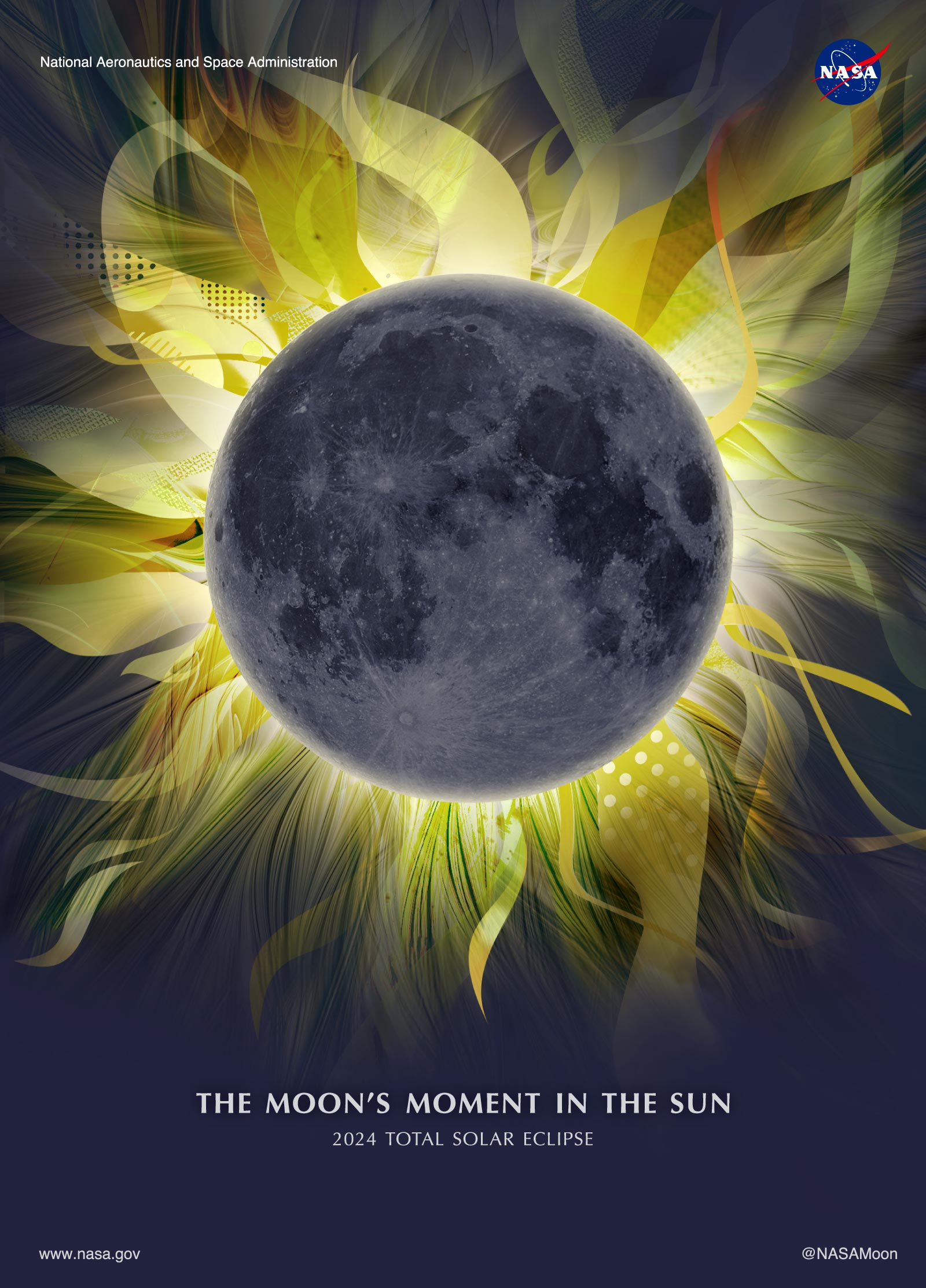
A solar eclipse will sweep across North America on April 8, 2024, creating a spectacular celestial event where the Sun, Moon, and Earth align perfectly. This phenomenon offers a rare opportunity to observe the mechanics of the cosmos, with the eclipse’s path moving from Mexico’s Pacific coast across the United States to Newfoundland, and then into the Atlantic.
On April 8, 2024, much of North America will experience a solar eclipse: a cosmic alignment of Sun, Moon, and Earth, in that order. The Moon’s shadow path will make landfall on Mexico’s Pacific coast, cross the United States from Texas to Maine, and exit North America via Newfoundland, Canada, continuing into the Atlantic Ocean.
Learn how to safely observe the 2024 Solar Eclipse
It’s All About Perspective
Solar eclipses on Earth are a convenient coincidence. The Sun’s diameter is about 400 times larger than the Moon’s, and the Sun is almost 400 times farther away from us than the Moon is. This combination makes the Sun and Moon appear nearly the same size in our sky, setting up a spectacular show when they align. Try experimenting with apparent size for yourself by holding up a small item, like your thumb, and moving it closer and farther away to block different-sized objects from your view.
The Moon’s distance from Earth varies, though only slightly. The Moon’s orbit is not a perfect circle, and it is not quite centered on our planet. At its closest, the Moon is about twenty-eight Earth diameters away; at its farthest, about thirty-two. As a result, the Moon’s apparent size changes over time, and eclipses are not all alike.
A total solar eclipse is only possible when the Moon is closer to Earth than average. When the Moon is farther away, its apparent size is smaller than the Sun’s, so it does not completely block the Sun’s bright disk. In this configuration, when the Moon passes between Earth and the Sun, a “ring of fire” remains visible – that’s an annular solar eclipse.
Video tutorial describing the 2024 total solar eclipse and explaining the Moon’s role in creating it. Credit: NASA’s Goddard Space Flight Center
An Orbital Dance
Ever wonder why solar eclipses don’t happen more often? Earth, Moon, and Sun don’t line up perfectly every month because the Moon’s orbit is tilted by about 5 degrees compared to Earth’s orbit around the Sun. Most of the time, the Moon’s shadow misses our planet.
When all three celestial bodies do align, views of the eclipse depend not just on our position in the solar system, but also on our location on Earth. The Moon’s shadow has two parts, the umbra and the penumbra. Observers in the umbra (or “path of totality”) will experience a total solar eclipse. For those in the penumbra, the eclipse will be partial.
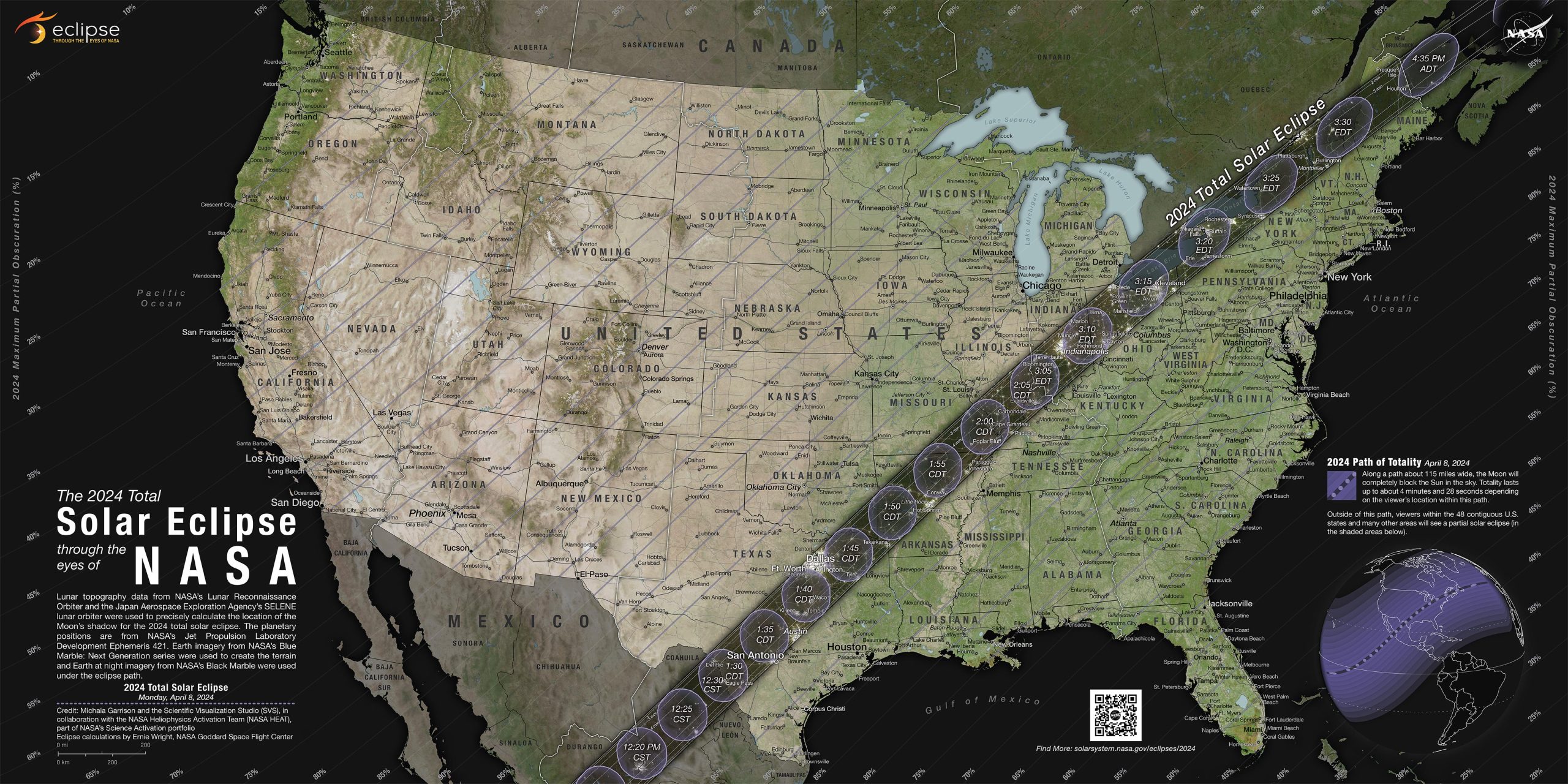
If you are planning to observe the eclipse, you’ve probably consulted a shadow path map like this one. But how do we know exactly where and when the Moon will cast its shadow? Eclipse prediction depends, first and foremost, on understanding the positions and movements of the Moon, Sun, and Earth. Modern maps build on a long human history of eclipse forecasting. And since 2009, NASA’s Lunar Reconnaissance Orbiter (LRO) has been mapping the Moon in unprecedented detail. LRO’s lunar topography data enables us to make more accurate eclipse predictions than ever before.
Moonshadow: The Making of a Map
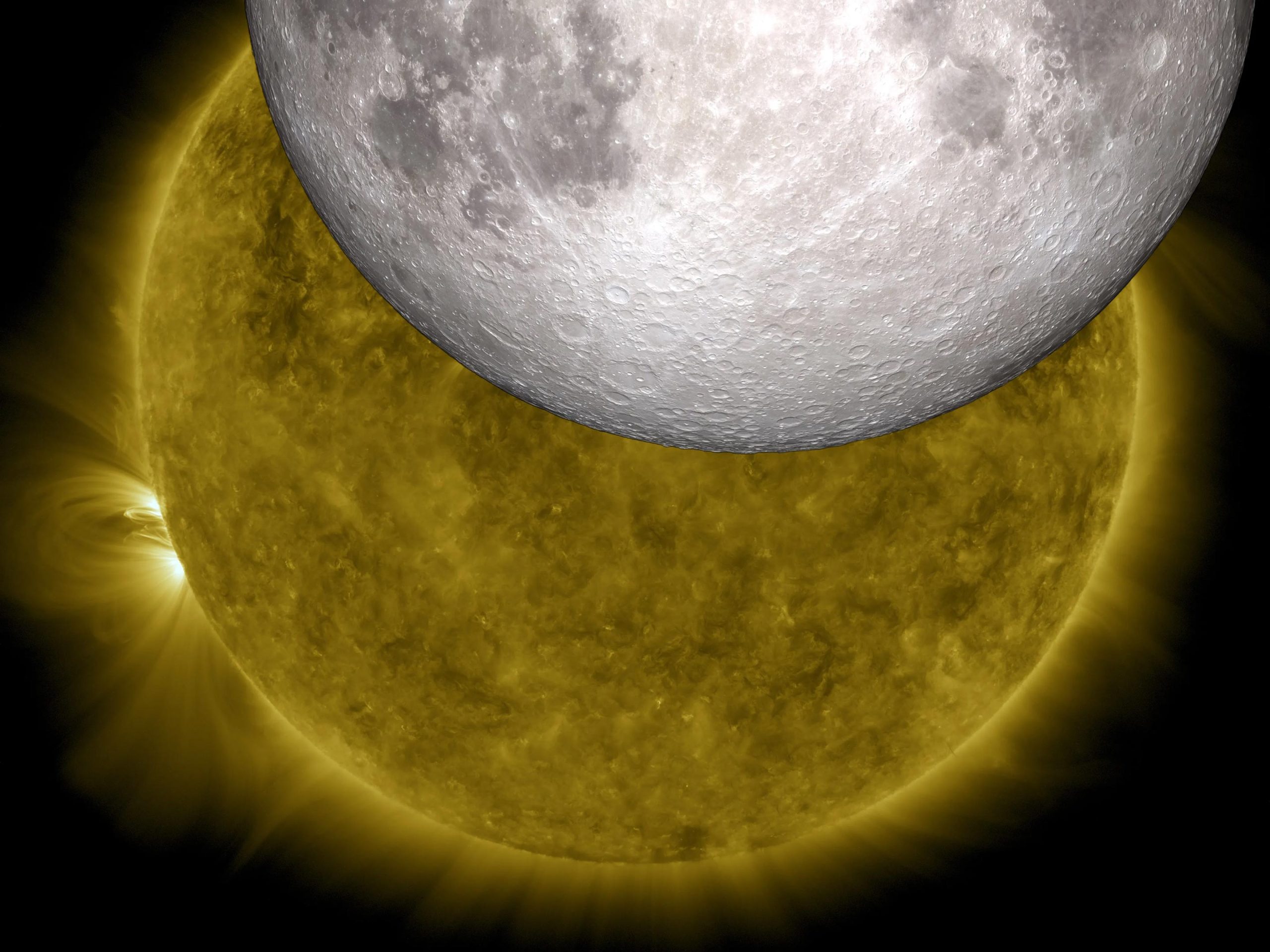
The Moon is a rugged world of peaks, craters, basins, and valleys. Since the lunar horizon is bumpy and jagged, the shadow it casts is not quite round. Knowing the precise shape of the Moon helps us understand exactly where its shadow will darken Earth’s surface. Of course, our own planet is not perfectly round, either. Today’s eclipse maps account not only for the lunar landscape, but also for the contours of Earth’s mountain ranges, lowlands, and other features.
Bursts of Light: Baily’s Beads and the Diamond Ring Effect
Casual observers don’t usually notice that the Moon’s silhouette is rough around the edges. At a distance of 239,000 miles (that’s the average gap between Earth and the Moon), our nearest neighbor in space looks round – even mountains appear too small for the human eye to distinguish. But, for two brief moments during a solar eclipse, craggy lunar terrain commands the spotlight.
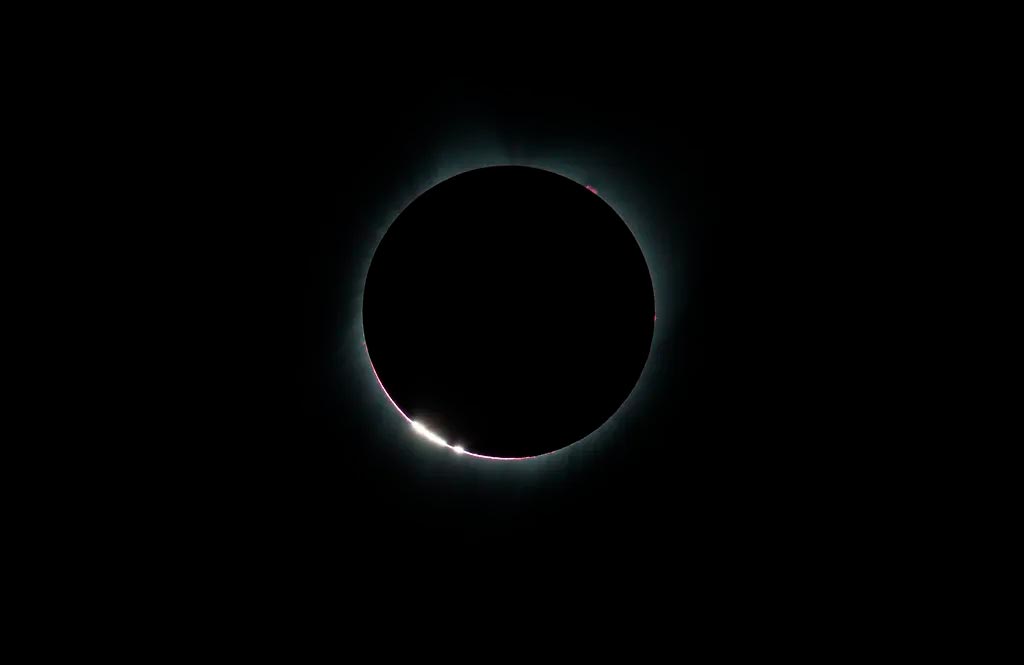
On the brink of totality, as the Moon moves into full Sun-blocking position, the Sun’s edge doesn’t go dark all at once. Last rays of sunlight peek through valleys on the lunar horizon. These isolated areas of intense brightness can resemble a string of glowing beads or a single dramatic burst of light like the gem on a ring. The same phenomena, sometimes called Baily’s Beads and the Diamond Ring Effect, can also occur as the Moon edges out of totality (or annularity). Since we know the shape and position of the Moon so well, we can predict where the first and last bits of sunlight will appear.
NASA Eclipse Science and You
NASA scientists take full advantage of the unusual atmospheric and environmental conditions the Moon’s passing shadow creates, and you can too. Here are just a few places to start.
- Join a community eclipse science project like Eclipse Soundscapes or GLOBE Eclipse.
- A solar eclipse is a rare opportunity to directly observe a new moon. Document your experience and kick off a month of Moon observations with our special edition Moon Observation Journal.
- Learn more about lunar and solar eclipses.
- Connect with observers around the world and keep celebrating the Moon’s place in science and culture on the next International Observe the Moon Night, Sept. 14, 2024.
Never miss a breakthrough: Join the SciTechDaily newsletter.
Follow us on Google and Google News.