
Close Menu
    Facebook X (Twitter) Instagram
    SciTechDaily
    • Biology
    • Chemistry
    • Earth
    • Health
    • Physics
    • Science
    • Space
    • Technology
    Facebook X (Twitter) Pinterest YouTube RSS
    SciTechDaily
    Home»Science»Accurate Hominin Data: Getting the Fossil Record Right on Human Evolution
    Science

    Accurate Hominin Data: Getting the Fossil Record Right on Human Evolution

    By Stony Brook UniversityJuly 13, 2022No Comments3 Mins Read
    Facebook Twitter Pinterest Telegram LinkedIn WhatsApp Email Reddit
    Share
    Facebook Twitter LinkedIn Pinterest Telegram Email Reddit
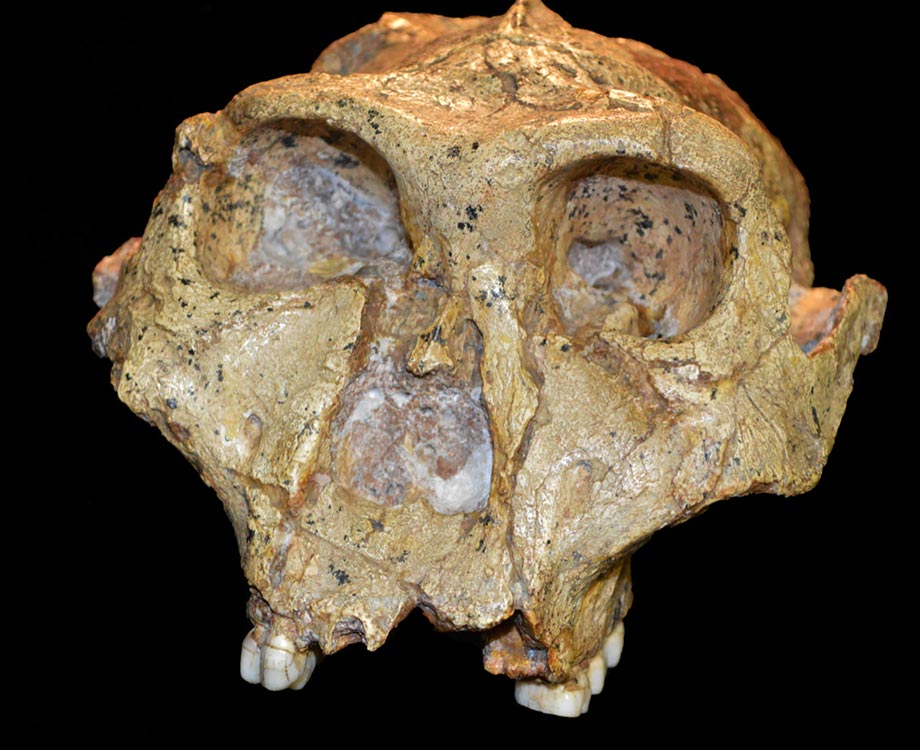
    SK 48 Cranium
    The SK 48 cranium of an ancient hominin, Paranthropus robustus, was one of the fossils included in the analysis of some new claims on human evolution. Credit: Carrie S. Mongle

    Importance of Accurate Data in Evolutionary Models

    Uncovering the evolution of any set of living creatures is a complex and highly meticulous task for researchers, and various theories and approaches that may differ over time may indeed change the fossil record. But paleoanthropologist and Stony Brook University Professor Carrie S. Mongle, PhD, and co-authors urge researchers to take caution on their findings.

    In a paper published on July 5, 2022, in the journal Nature Ecology & Evolution, they provide researchers investigating the evolutionary past of ancient hominins (a group including humans and our immediate fossil ancestors) with an important and foundational message. It is this: conclusions drawn from evolutionary models are only as good as the data upon which they are based.

    In “Modelling hominin evolution requires accurate hominin data,” the authors develop a response to a previous research paper that had made some major claims on when the genus Homo emerged based on fossil dates. However, the research team proved that many of the fossil dates from the study were wrong, and they provided data to correct these errors.

    “It has become increasingly common in our field for researchers to propose a ‘new and exciting’ synthesis of evolutionary events that a given group of scientists think overturns our understanding of human evolution,” says Mongle, Assistant Professor in the Department of Anthropology and Turkana Basin Institute. “Our paper is meant to draw attention to the issue that we cannot make major claims based on piecemeal compilations of the fossil record and questionable data from literature. We also offer a carefully constrained geochronological dataset for researchers to use for future studies.”

    Recommendations for Future Evolutionary Studies

    Mongle and co-authors found that by re-analyzing the original study with corrected fossil dates, the estimated timing of species divergences differed by as much as 300,000 years from the previously reported estimates. This is important because these estimates are often used to correlate evolutionary transitions with ancient environments and climate change. When estimates are off by this much, it can completely change scientists’ interpretations of the evolutionary drivers that made us human.

    Mongle and co-authors make the case for evolutionary scientists to develop future total evidence studies when studying human evolution. They conclude that it is “critical to recognize that no algorithm is a replacement for careful comparative anatomy and meticulously constrained geochronology when it comes to interpreting evolutionary trends from the fossil record.”

    Reference: “Modelling hominin evolution requires accurate hominin data” by Carrie S. Mongle, Kelsey D. Pugh, David S. Strait and Frederick E. Grine, 4 July 2022, Nature Ecology & Evolution.
    DOI: 10.1038/s41559-022-01791-2

    Never miss a breakthrough: Join the SciTechDaily newsletter.
    Follow us on Google and Google News.

    Anthropology Archaeology Evolution Fossils Paleoanthropology Popular Stony Brook University
    Share. Facebook Twitter Pinterest LinkedIn Email Reddit

    Related Articles

    Human Ancestor Fossils in the “Cradle of Humankind” May Be More Than a Million Years Older Than Thought

    Neandertals Dove Underwater to Collect Clam Shells to Use as Tools

    Earliest Interbreeding Between Ancient Human Populations Discovered – Evolutionary Puzzle Solved

    What Caused Neanderthal Extinction and Were Our Human Ancestors to Blame?

    New Evidence Shows Humans Mastered Fire Earlier Than Thought

    New View of Human Evolution Unearthed by Rare 10 Million-Year-Old Fossil [Video]

    Anthropologists Shed New Light on Prehistoric Human Migration

    400,000 Year Old Fossil Helps Shed New Light on Human Evolution

    Million-Year-Old Ash in South African Cave Yields Evidence of Cooking

    Leave A Reply Cancel Reply

    • Facebook
    • Twitter
    • Pinterest
    • YouTube

    Don't Miss a Discovery

    Subscribe for the Latest in Science & Tech!

    Trending News

    Scientists May Have Solved a Long-Standing Melanoma Treatment Mystery

    This Flesh-Eating Fly Is Back in the U.S. – Scientists Are Tracking Where It Could Strike Next

    Scientists Have Uncovered a Troubling New Pattern Hidden in America’s Rivers

    “Entirely Surprising” – Scientists Have Found a Martian Meteorite Unlike Any Known Before

    “Find of the Year” – Archaeologists Discover the Smallest Ice Age Figurines Ever Found

    New Research Challenges Common Exercise Advice for Bone Health

    Avoiding These 3 Health Risks in Midlife Linked to 13 More Years Without Dementia

    Where Were All the Tiny Dinosaurs? Scientists May Finally Have an Answer

    Follow SciTechDaily
    • Facebook
    • Twitter
    • YouTube
    • Pinterest
    • Newsletter
    • RSS
    SciTech News
    • Biology News
    • Chemistry News
    • Earth News
    • Health News
    • Physics News
    • Science News
    • Space News
    • Technology News
    Recent Posts
    • Light Reveals the Hidden Quantum Motion Inside an Exotic Crystal
    • CERN Experiment Finds Gluons Behaving Strangely Deep Inside Atomic Nuclei
    • Quantum Computer Solves a Problem in 15 Minutes That Classical Methods Can’t Practically Compute
    • New Imaging Technology Tracks Cancer From the Whole Body to Single Cells
    • Researchers Discover Rheumatoid Arthritis Vulnerability May Begin Before Birth
    Copyright © 1998 - 2026 SciTechDaily. All Rights Reserved.
    • Science News
    • About
    • Contact
    • Editorial Board
    • Privacy Policy
    • Terms of Use

    Type above and press Enter to search. Press Esc to cancel.