
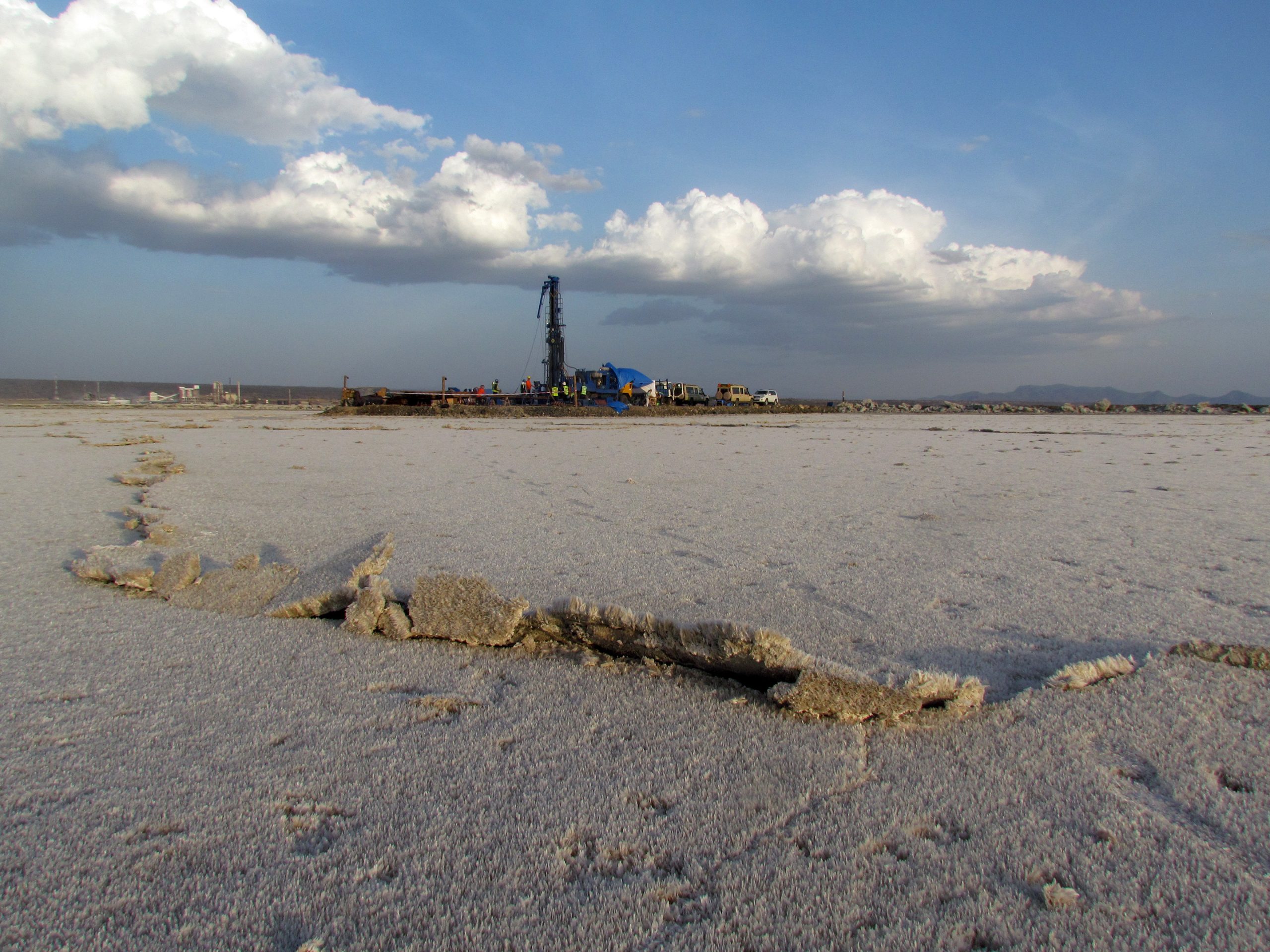
Combining climate change records over the last 3.5 million years with fossil evidence of mammals in Africa revealed that times of erratic climate change are not followed by substantial evolutionary shifts.
A new study that combines temperature data with fossil records of large mammals that existed across Africa during the previous 4 million years calls into question a long-held theory that repeated shifts in climate were important drivers of evolutionary change in mammals, including human ancestors.
Published recently in the journal Proceedings of the National Academy of Sciences, the study provides an African continent-wide synthesis of environmental variability during the Plio-Pleistocene, a period in Earth’s history that spans roughly the last 5 million years and includes the last ice age about 20,000 years ago.
Milankovitch cycles describe the collective effects of changes in the Earth’s movements on its climate over thousands of years. The term is named for Milutin Milanković, a Serbian geophysicist and astronomer.
According to the new study, environmental variability during that time mirrors changes in the Earth’s orbit and orientation with respect to the sun, as predicted by a natural phenomenon known as Milankovic cycles. These cycles expose our planet to varying intensities of solar radiation, resulting in well-documented, cyclical effects on Earth’s climate at various frequencies.
Climate Variability and Mammalian Evolution
The researchers observed a long-term trend of increasing environmental variability across Africa attributable to variations in global ice volume and ocean temperature. The results did not, however, yield a significant correlation between environmental variation and rates of species origination or extinction, suggesting that environmental variability and species turnover may not be closely related, a notion that has been widely debated in the scientific community.
The idea that long-term trends toward a wetter or drier climate may have been a driver of human evolution goes back to the time of Charles Darwin, according to the paper’s first author, Andrew Cohen, a University Distinguished Professor in the University of Arizona Department of Geosciences and the Department of Ecology and Evolutionary Biology. A major change came in the late 1990s, with the introduction in the scientific community of the influential variability selection hypothesis.
“The idea here is that it’s not just the direction of climate change that was important as a driver for evolutionary novelty in the hominin lineage, but the variability in the environmental and climate conditions,” Cohen explained. “As our ancestors faced rapidly shifting conditions, this hypothesis suggests they had to be more resourceful and capable of dealing with many different contingencies, which, in turn, led to new species appearing while others went extinct.”
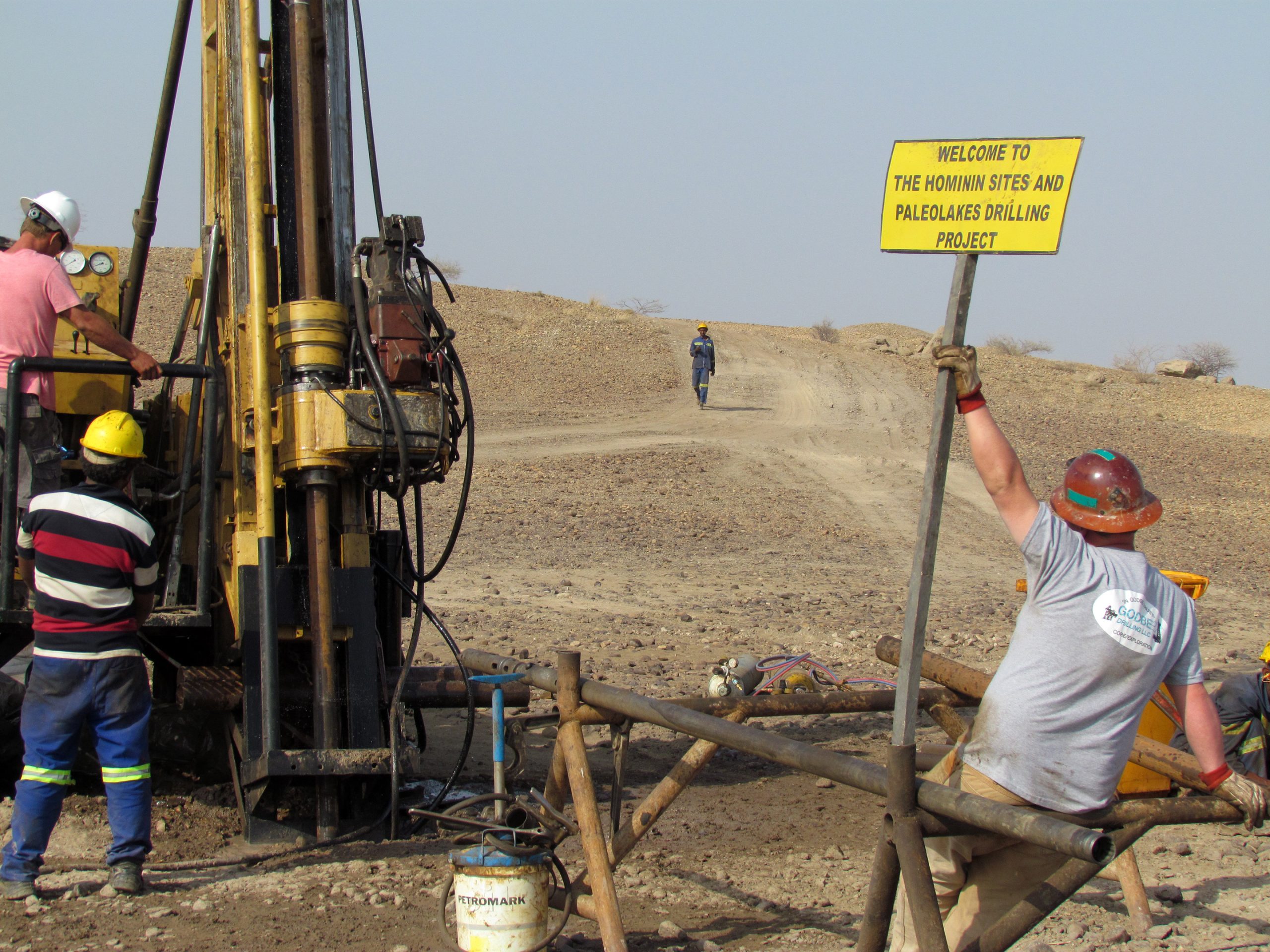
In the current study, researchers analyzed samples taken from sediment cores from lakebeds, ocean floors and terrestrial outcrops from 17 locations throughout the African continent and surrounding areas. The environmental data was sourced by analyzing records from pollen, fossilized algae, dust, leaf waxes, soil isotopes and other physical properties that provide clues about the types of vegetation and environmental conditions at the site where they were deposited. To combine data from these very different types of records and tease out the underlying pattern of climatic variability, Cohen said the team had to overcome a major challenge: how to quantify variability and compare it from one sampling location to another.
“This isn’t trivial because you have records on the one hand of things like fossil pollen telling you about how variable the vegetation was, others telling you about changing lake levels, still others telling you about dust blowing out onto the ocean,” he said. “We needed a way to not just look at one record but stack all these different types of reference that allows us to tease apart the rhythm of variability.”
To do this, the researchers developed statistical methods that allowed them to “compare apples and oranges,” Cohen explained, and assigned the climate record data points to “bins” of time periods comprising 20,000, 100,000 and 400,000 years. Once the individual datasets of variability scores in each bin had been standardized, the team could then “stack” them and calculate an averaged amount of variability for each time period.
Climate Data Versus Fossil Record
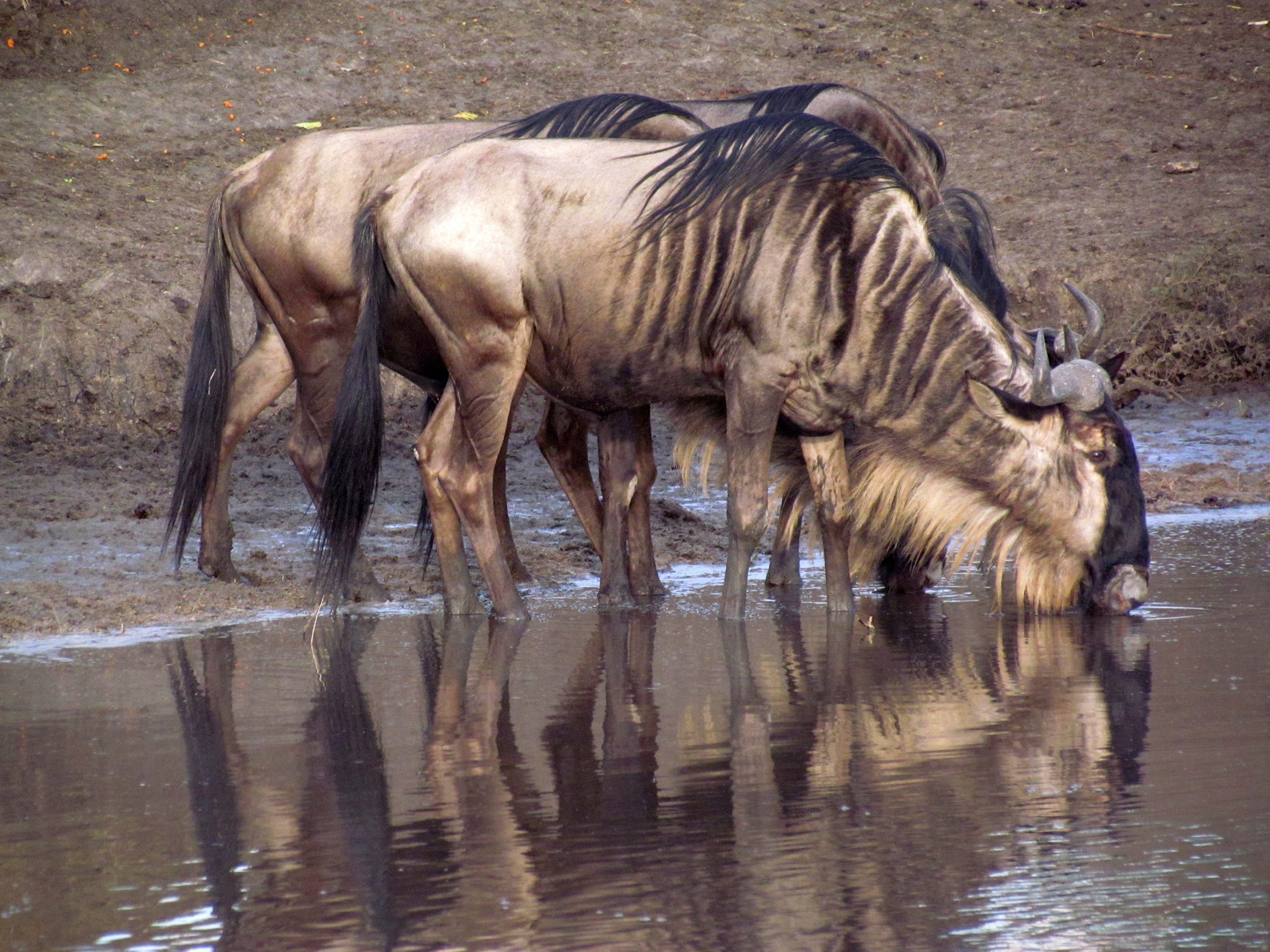
The climate data were then directly compared with the fossil record of large mammals – primarily bovids, a family that includes antelopes and other large herbivores – from eastern Africa. The researchers focused on large herbivores primarily because fossils from human ancestors are too rare to be useful in such an approach.
“I won’t say you could fit all of (the hominin fossils) in a shoebox anymore, but they’re still not that common,” Cohen said, “so we decided to look at other organisms with a better fossil record, because there’s no reason to think that only our closest relatives, our hominin ancestors, should be affected by climate change and variability.
“If climate variability is a significant driver in evolution, it ought to be a driver and evolution of other large mammals, too,” he added. “Think, for example, of polar bears and how they are affected by current climate change.”
The authors used a method borrowed from modern wildlife population biology to account for a bias that has long plagued paleontologists: the inherent incompleteness of the fossil record, which the study’s second author, Andrew Du, illustrates with a block of Swiss cheese. If one were to drill a core sample through cheese, it would have gaps from where the core hit a hole in the cheese. Similarly, the fossil record of a species has gaps – time periods when no fossils have been found – interspersed with periods when there are fossils. This makes it very difficult to establish exactly when a species originated in the fossil record and when it went extinct.
To circumvent this limitation, Du applied a technique known as capture, mark and recapture, which is frequently used by wildlife biologists when they survey animal populations: After an animal is caught, it is tagged for identification and released back into the wild. During a later survey, scientists compare the proportion of tagged to untagged animals. Applying statistics, this allows them to get an idea of the size and structure of the population at large.
Du, an assistant professor in the Department of Anthropology & Geography at Colorado State University, explained how the technique works in fossil systems.
“Let’s say we see the appearance of a new species in the fossil record in time period one, then we find a different fossil from the same species in time period two, we miss it in time period three, but we see it again in time period four,” he said. “What this tells us is that even though we didn’t see the species in time period three, we know it was around. This gives us an idea about the quality of the fossil record during certain time periods, and we can account for this quality when estimating speciation and extinction rates.”
Putting all these datasets together allowed the researchers to compare patterns of environmental variability and its relationship to mammal species origination and extinction rates.
“Overall, there has been a long-term trend over the last 3.5 million years of increasing variability in the environment,” he said. “That trend tracks rising variability in global ice volume and sea surface temperatures around Africa. Superimposed on that, we found another trend: Once we get into the ice ages, we see more ups and downs; the wiggles get bigger and bigger and bigger, reflecting the waxing and waning of the ice sheets, and that variability tracks the 400,000-year Milankovic cycles.”
Disconnect Between Climate and Evolutionary Trends
All the while, the fossil record of species origination and extinction among the large herbivores, and also hominin fossils, appears to be disconnected from these climatic variability trends. While the authors acknowledge that the variability selection hypothesis could still be correct but operating at different scales, they hope to encourage the scientific community to think about the variability selection hypothesis in a more critical way, “rather than just accepting it as an underlying principle of how we look at the fossil record in Africa, and especially the human fossil record,” Cohen said.
“We don’t say that environmental variability is not important for human evolution, but the data we have currently compiled is very inconsistent with that idea,” he said. “If environmental variability was as important as it has been made out to be, we would expect to see that long-term trend of increasing variability mirrored in evolutionary turnover in all kinds of species, including hominins, but we just don’t see that.”
Reference: “Plio-Pleistocene environmental variability in Africa and its implications for mammalian evolution” by Andrew S. Cohen, [email protected], Andrew Du, John Rowan, Chad L. Yost, Anne L. Billingsley, Christopher J. Campisano, Erik T. Brown, Alan L. Deino, Craig S. Feibel, Katharine Grant, John D. Kingston, Rachel L. Lupien, Veronica Muiruri, R. Bernhart Owen, Kaye E. Reed, James Russell and Mona Stockhecke, 11 April 2022, Proceedings of the National Academy of Sciences.
DOI: 10.1073/pnas.2107393119
Never miss a breakthrough: Join the SciTechDaily newsletter.
Follow us on Google and Google News.
1 Comment
“While the authors acknowledge that the variability selection hypothesis could still be correct but operating at different scales, …”
Consider what happens during an orogeny, or mountain building episode. What was originally probably fairly flat and close to sea level — and thus had a relatively uniform climate — over a period of millions of years the surface elevates. Because of the atmospheric lapse rate, the higher surfaces are cooler. Therefore, the life forms that had originally lived there would not have evolved to optimally utilize the new habits. The habitats could remain unoccupied, or life could evolve to adapt to the new conditions. It seems that the first possibility is rarely if ever the outcome. The higher the mountain range becomes, the more extreme the temperature and precipitation changes become. That is, the temperatures cool, and the precipitation increases.
As the mountain building episode concludes, as it always seems to do, erosion will dominate the surficial processes, acting most rapidly at the higher elevations. As the higher elevations are removed, the species adapted to the alpine biomes will become extinct for lack of suitable habitat. Eventually, after tens of millions of years, the area will be back to a peneplain with only low elevations. Thus, all the life forms that had evolved to utilize the alpine environment will no longer have a suitable habitat. Extinctions will rule during the time dominated by erosion, and when fossilization does occur, albeit less frequently than in the low-energy low-altitude regimes, the fossils and their enclosing matrix will be removed from their original sites.
A couple million years out of an orogenic cycle of about 100 million years is practically noise in the big picture. Logically, it is evident that plate tectonics also controls evolution. However, because of the stability of the ancient cratons in Africa, it may not be the best place to obtain the Big Picture.