
It’s the space-age old question: how do astronauts go to the bathroom in space? The most basic human biological processes becomes challenging off-planet due in part to the lack of gravity.
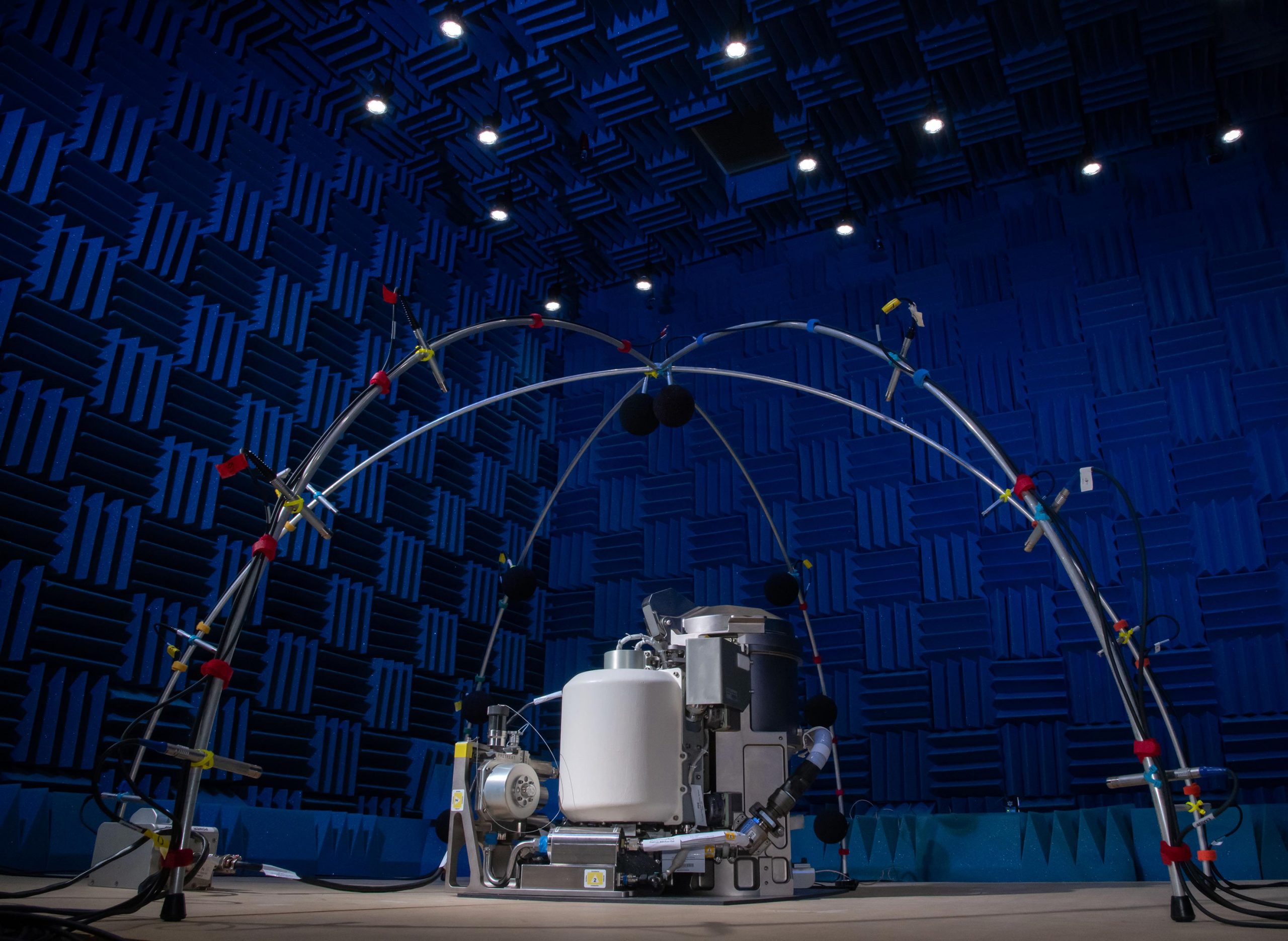
NASA launched a new space toilet, the Universal Waste Management System (UWMS), to the International Space Station on Northrop Grumman’s 14th contract resupply mission. Another UWMS unit will be installed in Orion for the Artemis II flight test that will send astronauts on a 10-day mission beyond the Moon and back.
The “Universal” in UWMS is key: the central design concept can be easily integrated into different spacecraft and life support systems. On platforms like the space station where astronauts live and work for extended time periods, UWMS will feed pre-treated urine into a regenerative system, which recycles water for further use. For shorter duration missions, like Artemis II, UWMS also works with a system where waste is not pre-treated with chemicals and is simply stored for disposal.
The toilet was designed to address astronaut feedback about comfort and ease of use. It also features a 65% smaller and 40% lighter build than the current space station toilet. Improved integration with other components of the space station water system will aid in recycling more urine, which, yes, the astronauts do drink after it is filtered and processed.
Nature has been recycling water on Earth for eons, and NASA is perfecting how to do it in space right now on the International Space Station. In constant operation for several years already, the Water Recovery System draws moisture from a number of sources to continuously provide astronauts with safe, clean drinking water. Follow the entire process in this video and learn how engineers are successfully turning yesterday’s coffee into tomorrow’s for these brave explorers! Credit: NASA Johnson
“We recycle about 90% of all water-based liquids on the space station, including urine and sweat,” explains NASA astronaut Jessica Meir. “What we try to do aboard the space station is mimic elements of Earth’s natural water cycle to reclaim water from the air. And when it comes to our urine on ISS, today’s coffee is tomorrow’s coffee!”
The regenerative life support system on the space station is critical to reduce the need to launch supplemental water from Earth. Initial lunar missions will be shorter in duration, so these complex systems may not be necessary. Roundtrip missions to Mars, however, will take about two years and there will be no opportunities to top off the water supply. NASA’s goal is to reach 98% recycling rates before the first human missions aboard a proposed Mars transport vehicle. The space station is currently the only in-space test location to validate long-term life support and recycling systems.
How do space toilets work?
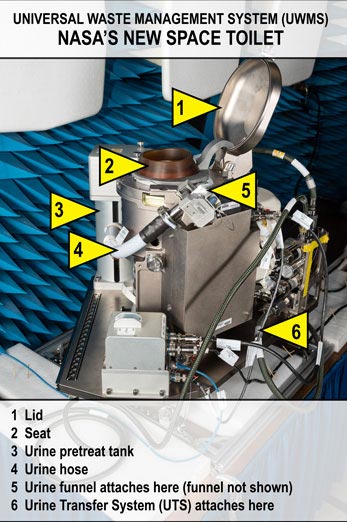
In the absence of gravity, space toilets use air flow to pull urine and feces away from the body and into the proper receptacles. A new feature of the UWMS is the automatic start of air flow when the toilet lid is lifted, which also helps with odor control. By popular (astronaut) demand, it also includes a more ergonomic design requiring less clean-up and maintenance time, with corrosion-resistant, durable parts to reduce the likelihood of maintenance outside of the set schedule. Less time spent on plumbing means more time for the crew to spend on science and other high-priority exploration focused tasks.

The crew use a specially shaped funnel and hose for urine and the seat for bowel movements. The funnel and seat can be used simultaneously, reflecting feedback from female astronauts. The UWMS seat may look uncomfortably small and pointy, but in microgravity it’s ideal. It provides ideal body contact to make sure everything goes where it should.
The UWMS includes foot restraints and handholds for astronauts to keep themselves from floating away. Everyone positions themselves differently while “going,” and consistent astronaut feedback indicated that the traditional thigh straps were a hassle.
Toilet paper, wipes, and gloves are disposed of in water-tight bags. Solid waste in individual water-tight bags is compacted in a removable fecal storage canister. A small number of fecal canisters are returned to Earth for evaluation, but most are loaded into a cargo ship that burns up on re-entry through Earth’s atmosphere. Currently, fecal waste is not processed for water recovery, but NASA is studying this capability.
“Going” beyond Earth
In space, every part of the water cycle is key for survival and advances in technology can make a pivotal difference in mission efficiency and success. As we prepare to return humans to the Moon with Artemis and look forward to the first human mission to Mars, life support systems will play a major role in keeping our astronauts healthy and safe as they live, work, and learn farther from Earth than ever before.
Never miss a breakthrough: Join the SciTechDaily newsletter.
Follow us on Google and Google News.
6 Comments
Why not just dig a hole in a different part of the back yard and move the outhouse like we did when I was kid?
Hope it wasn’t designed by Howard Wolowitz…:)
Will they recycle lady monthlies as well?
Kind of expensive considering the ISS is in its last days before it crashes and burns.
I believed they gonna achieve this goal with this new machine for recycling liquid. I hope female menses is gonna be recycled and how?
I would imagine female astronauts take hormones to stop their cycles before living in space.