
Close Menu
    Facebook X (Twitter) Instagram
    SciTechDaily
    • Biology
    • Chemistry
    • Earth
    • Health
    • Physics
    • Science
    • Space
    • Technology
    Facebook X (Twitter) Pinterest YouTube RSS
    SciTechDaily
    Home»Space»Best Space Station Science Imagery of 2022
    Space

    Best Space Station Science Imagery of 2022

    By NASADecember 31, 2022No Comments12 Mins Read
    Facebook Twitter Pinterest Telegram LinkedIn WhatsApp Email Reddit
    Share
    Facebook Twitter LinkedIn Pinterest Telegram Email Reddit

    The International Space Station continues its scientific journey orbiting over 200 miles above the Earth’s surface.

    Spacecraft carried crew from around the world to and from the space station, where they participated in and supported hundreds of scientific investigations and technology demonstrations this past year. From deploying CubeSats to studying fluid dynamics in space, the orbiting lab expanded its legacy of science and discovery for the benefit of humanity.

    Look back at some of the best photos of breakthrough science the crew members conducted in 2022.

    Understanding microgravity movement

    NASA Astronaut Bob Hines GRASP Investigation
    NASA astronaut Bob Hines participates in the GRASP investigation to help researchers better understand if and how gravity acts as a reference for the control of reach-to-grasp movement. The information could provide further insight into the human body’s adaptation to the microgravity environment. Credit: NASA

    NASA astronaut Bob Hines participates in the GRASP investigation to help researchers better understand if and how gravity acts as a reference for the control of reach-to-grasp movement. The information could provide further insight into the human body’s adaptation to the microgravity environment.

    Converting plant waste into food

    Plate Habitat (PHAB)
    A view of the of a Plate Habitat (PHAB) at -20°C prior to insertion into the SABL incubator aboard the International Space Station (ISS). The goal of the Protein Manufacturing project is to demonstrate the use of a novel bioreactor technology for growing high-protein food on the International Space Station (ISS). Credit: NASA

    A view of Plate Habitat at -20°C prior to insertion into the Space Automated Bioproduct Laboratory (SABL) incubator aboard the International Space Station. The Protein Manufacturing project demonstrates the use of novel bioreactor technology for converting inedible plant materials and other wastes into high-protein, edible fungal biomats in microgravity.

    Growing without soil
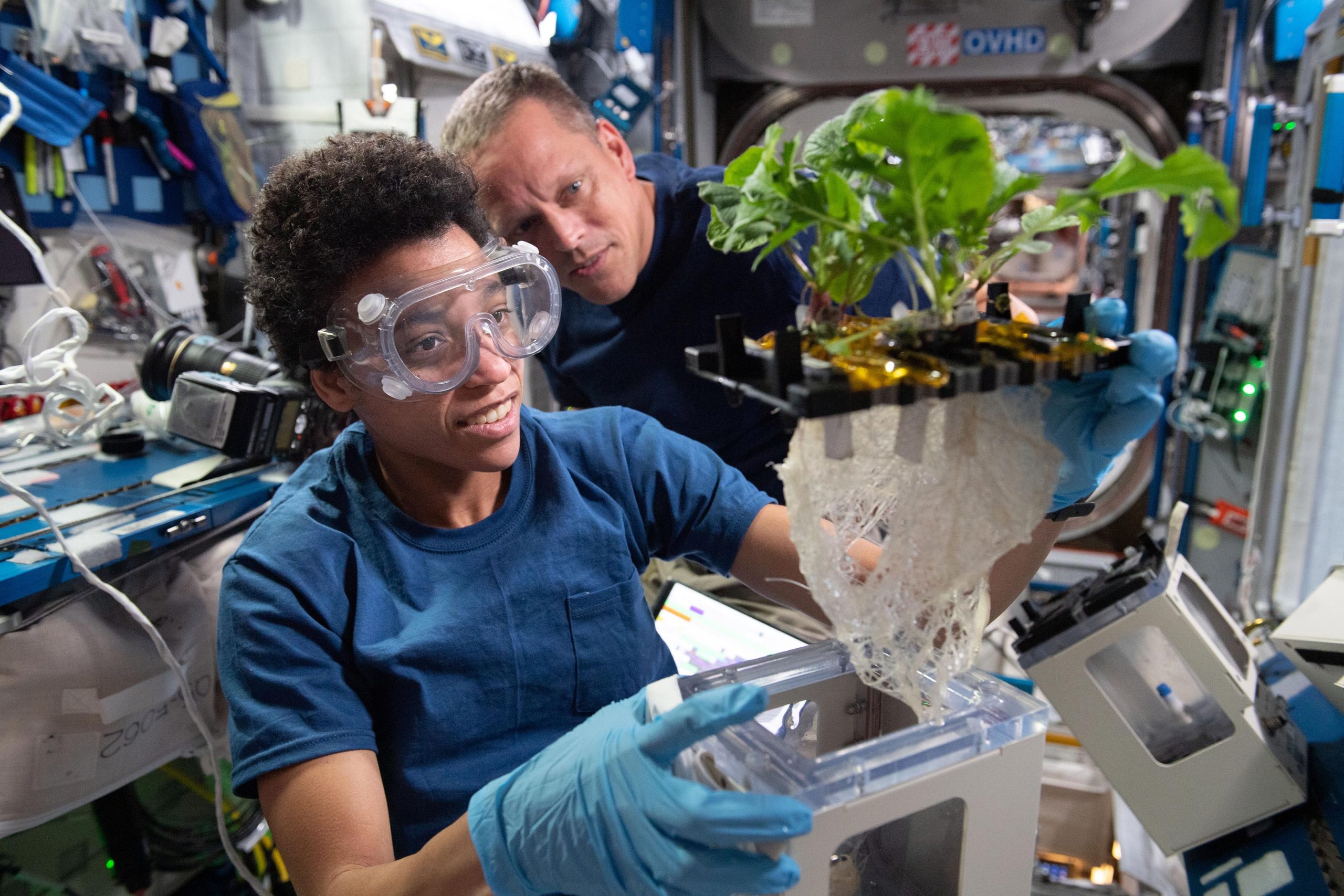
    Hydroponic and Aeroponic Plant Investigation on ISS
    NASA astronauts Jessica Watkins and Bob Hines work on XROOTS, which used the station’s Veggie facility to test liquid- and air-based techniques to grow plants rather than traditional growth media. These techniques could enable production of crops on a larger scale for future space exploration. Credit: NASA

    NASA astronauts Jessica Watkins and Bob Hines work on XROOTS, which uses the space station’s Veggie facility to test hydroponic and aeroponic techniques to grow plants rather than using traditional soil. These techniques could enable large-scale crop production for future space exploration.

    Party of six
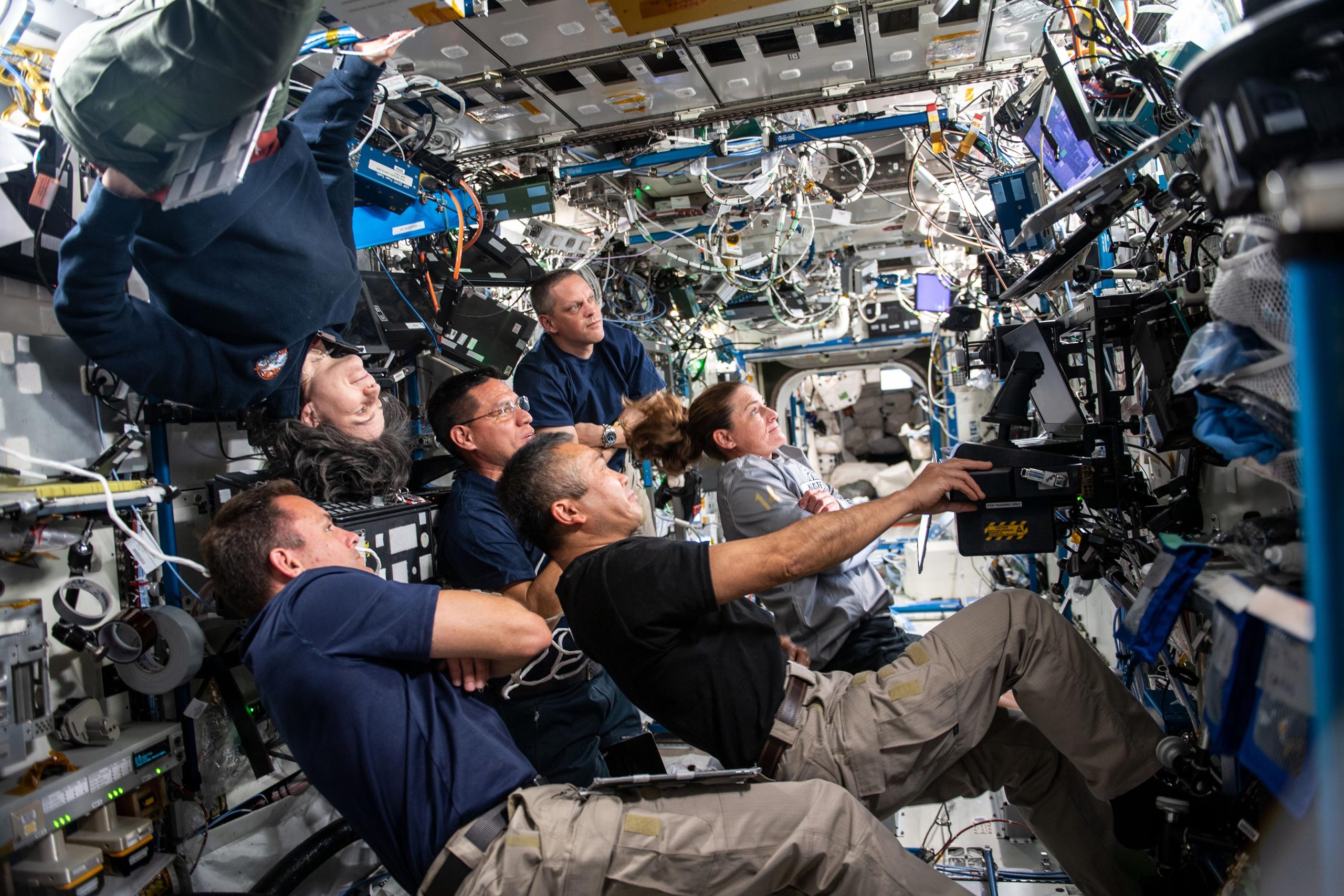
    Six Expedition 68 Crew Members Destiny Laboratory Module
    Six Expedition 68 crew members gather in the U.S. Destiny laboratory module and participate in an evening conference with International Space Station mission controllers on the ground. From front to back, are astronauts Josh Cassada, Koichi Wakata, Samantha Cristoforetti, Frank Rubio, Nicole Mann, and Bob Hines. Credit: NASA

    Crew members gather in the Destiny module, the primary research laboratory for U.S. payloads, to participate in an evening conference with mission controllers on the ground to review experiment schedules and receive updates. From front to back are NASA astronaut Josh Cassada; Japan Aerospace Exploration Agency (JAXA) astronaut Koichi Wakata; ESA (European Space Agency) astronaut Samantha Cristoforetti; and NASA astronauts Frank Rubio, Nicole Mann, and Bob Hines.

    In space for Earth
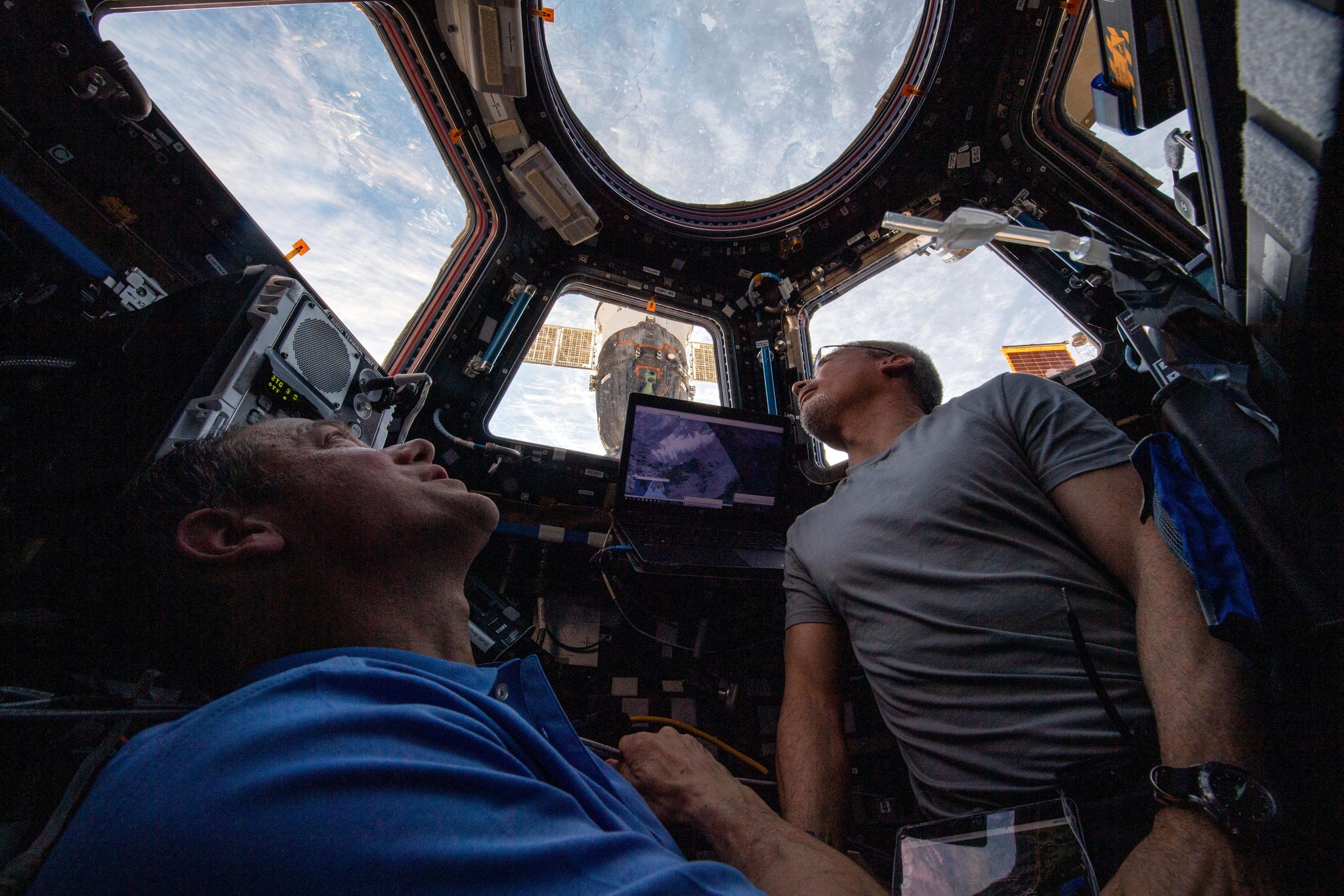
    Thomas Marshburn and Mark Vande Hei Cupola
    Expedition 66 Flight Engineers (from left) Thomas Marshburn and Mark Vande Hei, both from NASA, peer at the Earth below from inside the seven-windowed cupola, the International Space Station’s window to the world. Just outside the cupola is the Soyuz MS-19 crew ship docked to the Rassvet module. Credit: NASA

    NASA astronauts (from left) Thomas Marshburn and Mark Vande Hei gaze out the station’s cupola windows at Earth below. The Crew Earth Observations investigation provides researchers with key data from the perspective of the International Space Station to understand how the planet is changing over time.

    Three CubeSats start their journey

    Trio of CubeSats (TUMnanoSAT, FUTABA, and HSU-SAT1)
    A trio of CubeSats (TUMnanoSAT, FUTABA, and HSU-SAT1) designed for education and research programs are pictured moments after their deployment from a small satellite deployer (top right) positioned outiside the Kibo laboratory module. The International Space Station was orbiting 259 miles above the Atlantic Ocean at the time of this photograph. A portion of one the station’s main solar arrays is also pictured at left. Credit: NASA

    A trio of CubeSats (TUMnanoSAT, FUTABA, and HSU-SAT1) designed for education and research programs are pictured moments after their deployment from a small satellite deployer (top right) positioned outside the Kibo Japanese Experiment Module (JEM) as the space station orbits 259 miles above the Atlantic Ocean.

    Calls to seven continents
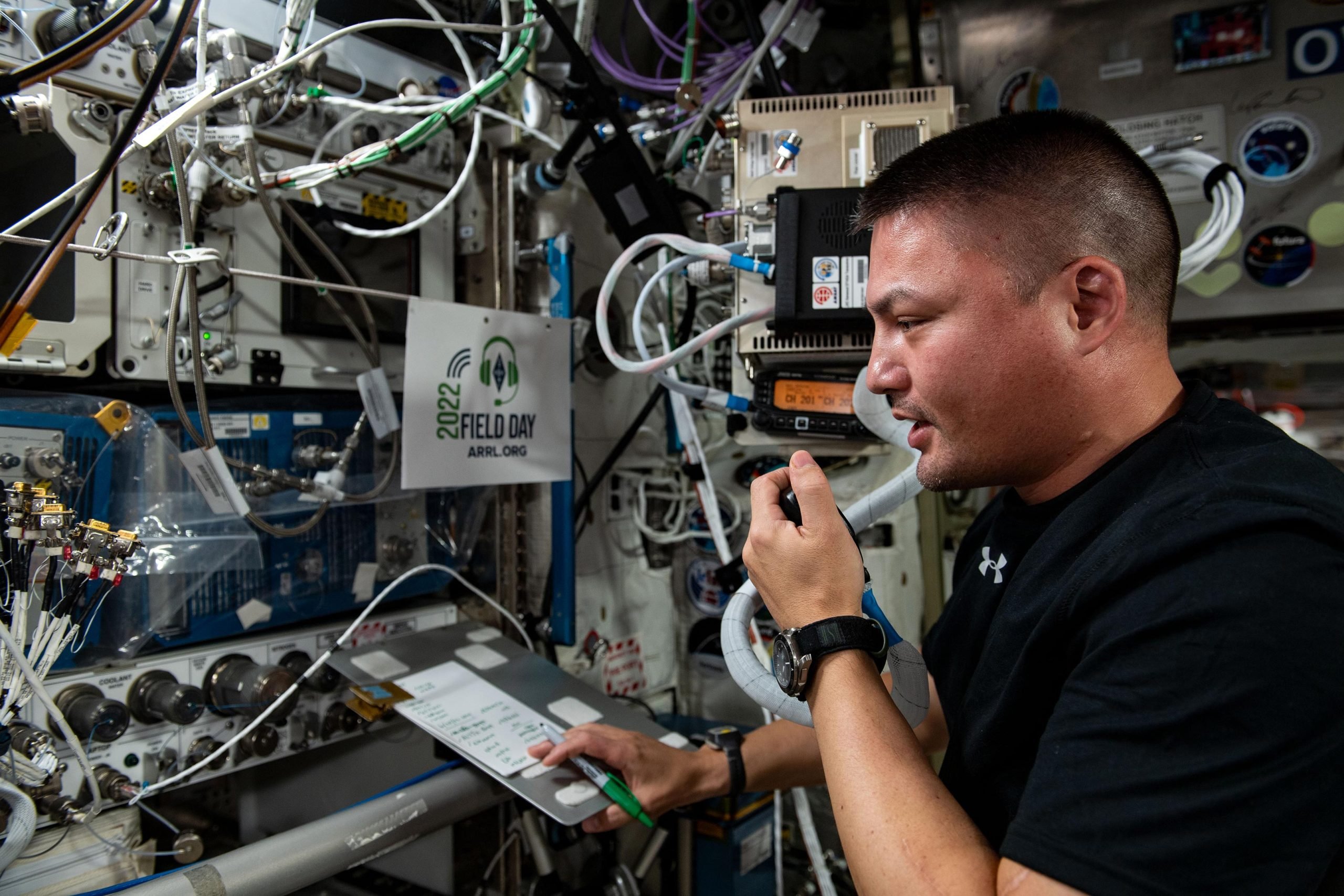
    Kjell Lindgren Amateur Radio Relay League (ARRL) Field Day
    NASA astronaut Kjell Lindgren uses the amateur radio in the Columbus module aboard the International Space Station (ISS) to participate in the annual Amateur Radio Relay League (ARRL) Field Day. Field Day allows amateur radio operators the chance to practice operating their equipment under simulated emergency conditions. Credit: NASA

    NASA astronaut Kjell Lindgren uses the amateur radio in the Columbus module to participate in the annual Amateur Radio Relay League (ARRL) Field Day. Field Day provides amateur radio operators the opportunity to practice operating their equipment under simulated emergency conditions. During his time on station, Lindgren made ARISS contacts with people on all seven continents, including the space station’s first call to Antarctica.

    All about the bones

    Koichi Wakata Osteogenic Cells Experiment
    Koichi Wakata of the Japan Aerospace Exploration Agency (JAXA) installs the Osteogenic Cells experiment. This experiment looks at whether bone loss in microgravity is restricted to a particular osteogenic or bone-forming cell type. This research tests the hypothesis that the underlying process results in decreased bone formation rather than increased loss of existing bone. Credit: NASA

    Koichi Wakata of the Japan Aerospace Exploration Agency (JAXA) installs the Osteogenic Cells experiment. This experiment looks at whether bone loss in microgravity is restricted to a particular osteogenic or bone-forming cell type. This research tests the hypothesis that the underlying process results in decreased bone formation rather than increased loss of existing bone.

    Igniting science
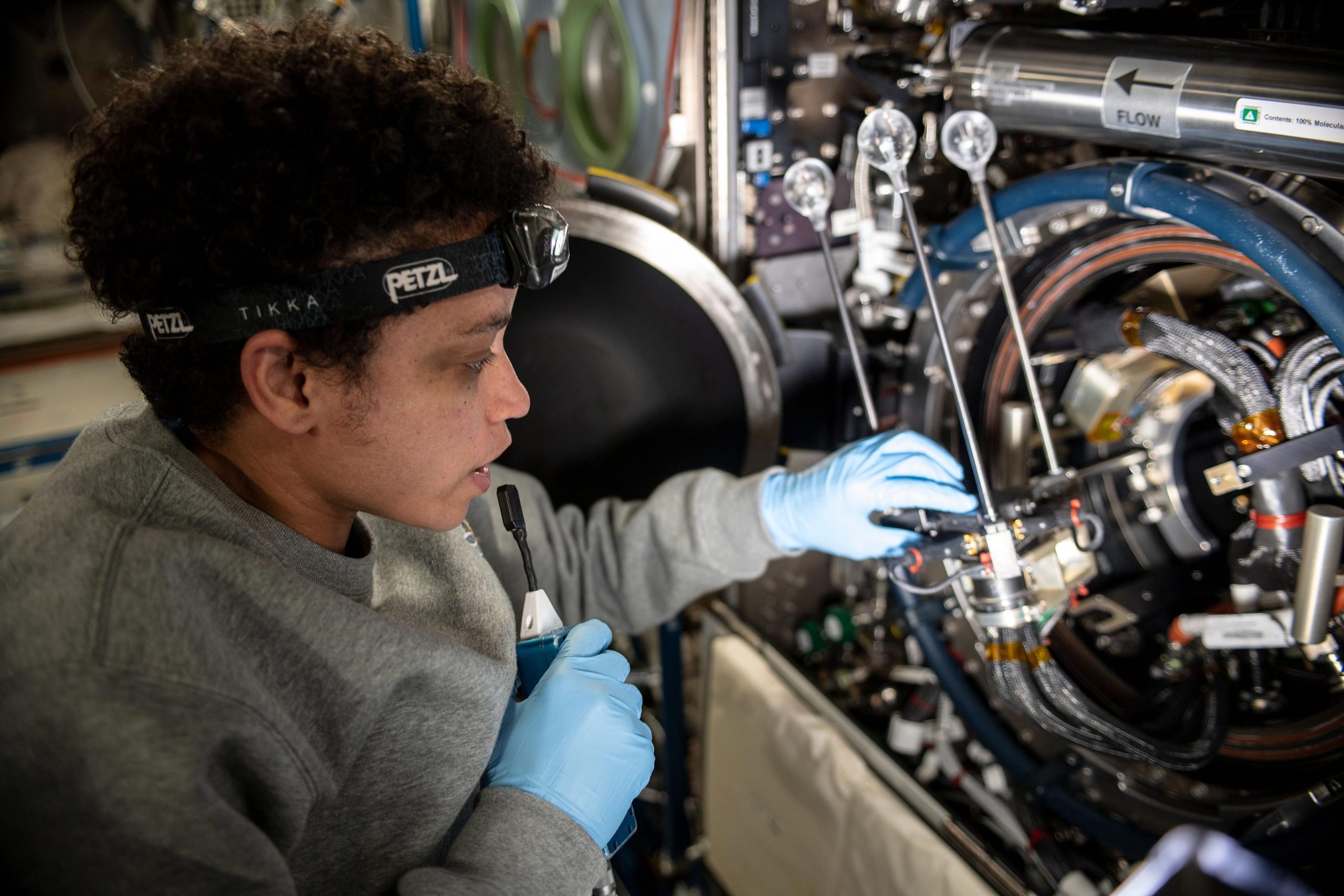
    Jessica Watkins SOFIE Fire Safety Experiment
    Expedition 67 Flight Engineer and NASA astronaut Jessica Watkins services components that support the Solid Fuel Ignition and Extinction (SOFIE) fire safety experiment inside the International Space Station’s Combustion Integrated Rack. Credit: NASA

    NASA astronaut Jessica Watkins services components that support the Solid Fuel Ignition and Extinction (SOFIE) fire safety experiment inside the International Space Station’s Combustion Integrated Rack. The experiment provides hardware to allow for the study and characterization of the ignition and flammability of solid spacecraft materials in realistic atmospheric conditions.

    Let the fluids flow
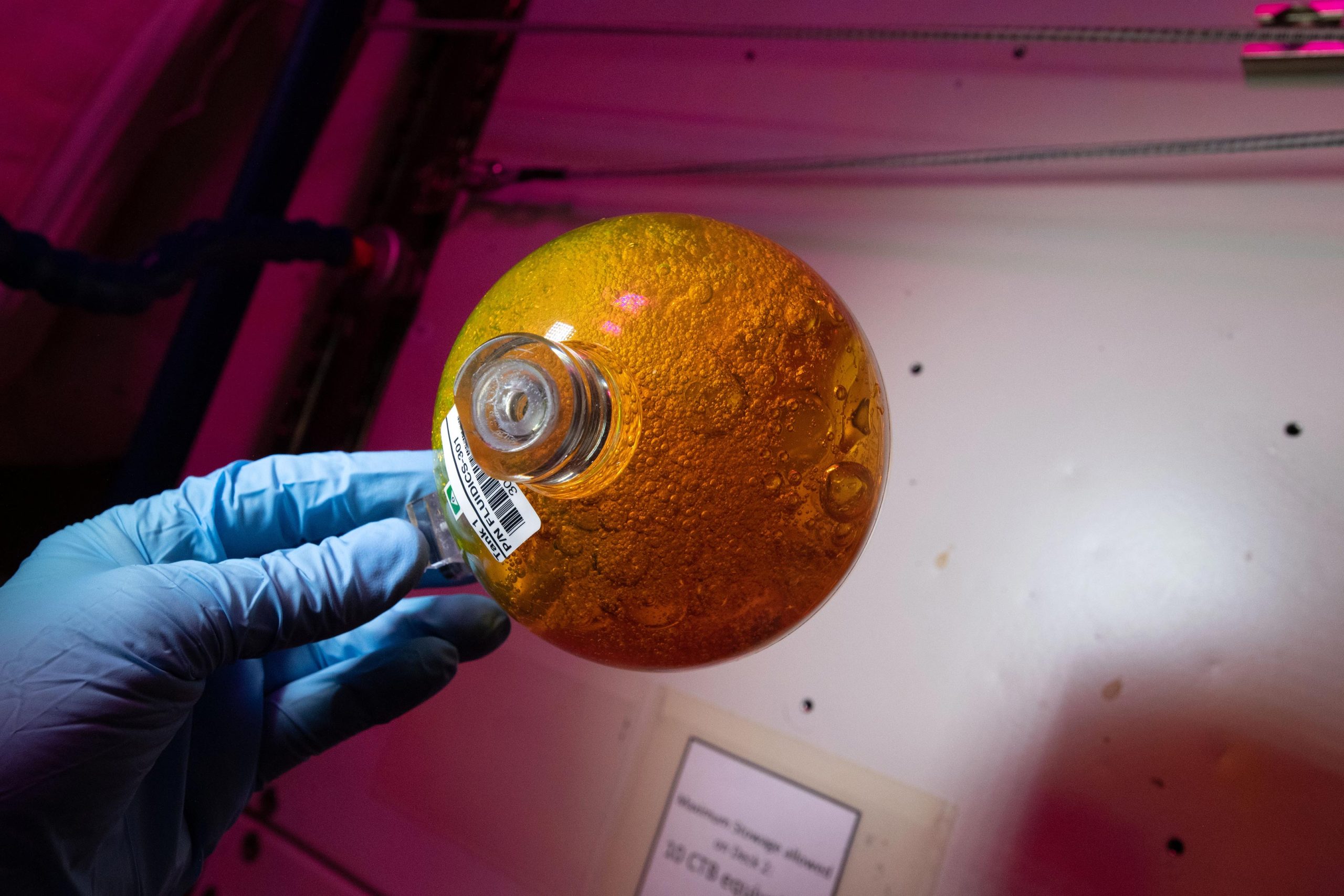
    Transparent FLUIDICS Sphere
    A view of a transparent FLUIDICS sphere aboard the International Space Station (ISS). The FLUIDICS investigation evaluates the Center of Mass (CoM) position regarding a temperature gradient on a representation of a fuel tank. The observation of capillary wave turbulence on the surface of a fluid layer in a low-gravity environment can provide insights into measuring the existing volume in a sphere. Credit: NASA

    A view of a transparent FLUIDICS sphere aboard the International Space Station. The investigation covers two aspects of fluid mechanics: the analysis of liquid sloshing phenomena in tanks of spacecraft in microgravity and the wave turbulence phenomena that occurs at the surface of liquids. The investigation could support development of better fuel systems for satellites and may provide a better understanding of how the Earth’s oceans work.

    Unlocking the cotton genome

    NASA Astronaut Raja Chari Final Harvest of Cotton Cell Cultures
    NASA astronaut and Expedition 66 Flight Engineer Raja Chari performs the final harvest of cotton cell cultures as part of the Plant Habitat-05 investigation (PH-05). The space agriculture study explored genetic expression in cotton cell cultures to learn more about the process of plant regeneration, potentially improving crop production on Earth. Credit: NASA

    NASA astronaut Raja Chari performs the final harvest of cotton cell cultures as part of the Plant Habitat-05 investigation (PH-05). This space agriculture study explored genetic expression in cotton cell cultures to learn more about the process of plant regeneration, potentially contributing to improved crop production on Earth.

    Power up
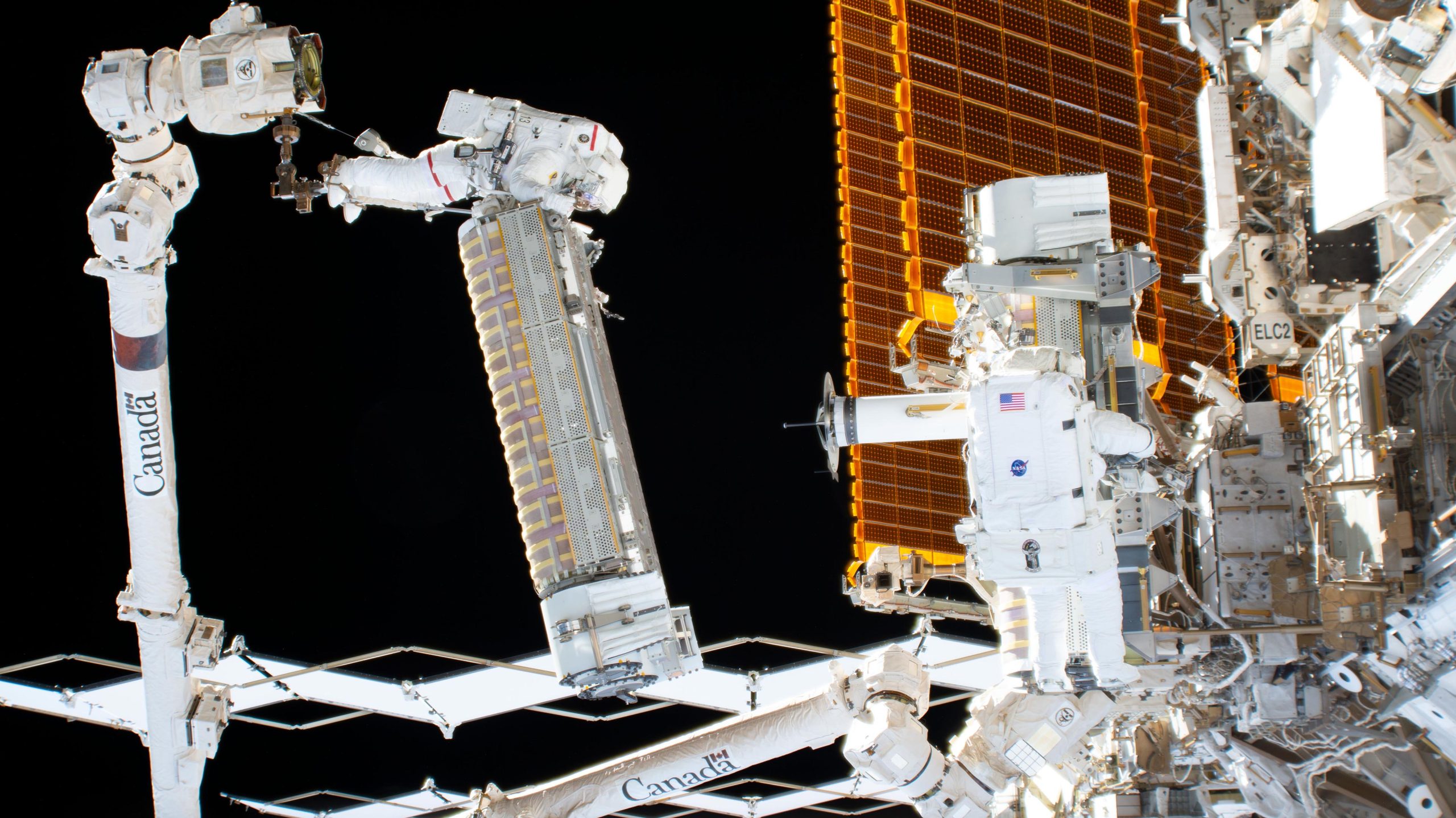
    Expedition 68 EVA 82
    NASA astronauts (left to right) Josh Cassada and Frank Rubio pictured during a spacewalk installing a roll-out solar array, or iROSA, to the International Space Station’s starboard truss structure. Once all six iROSAs are installed, the station’s power generation is expected to increase to a combined total of more than 250 kW, more than a 30% increase, benefiting space station research and operations. Credit: NASA

    NASA astronauts (left to right) Josh Cassada and Frank Rubio pictured during a spacewalk installing a roll-out solar array, or iROSA, to the International Space Station’s starboard truss structure. Once all six iROSAs are installed, the station’s power generation is expected to increase to a combined total of more than 250 kW, more than a 30% increase, benefiting space station research and operations.

    Space debris removal
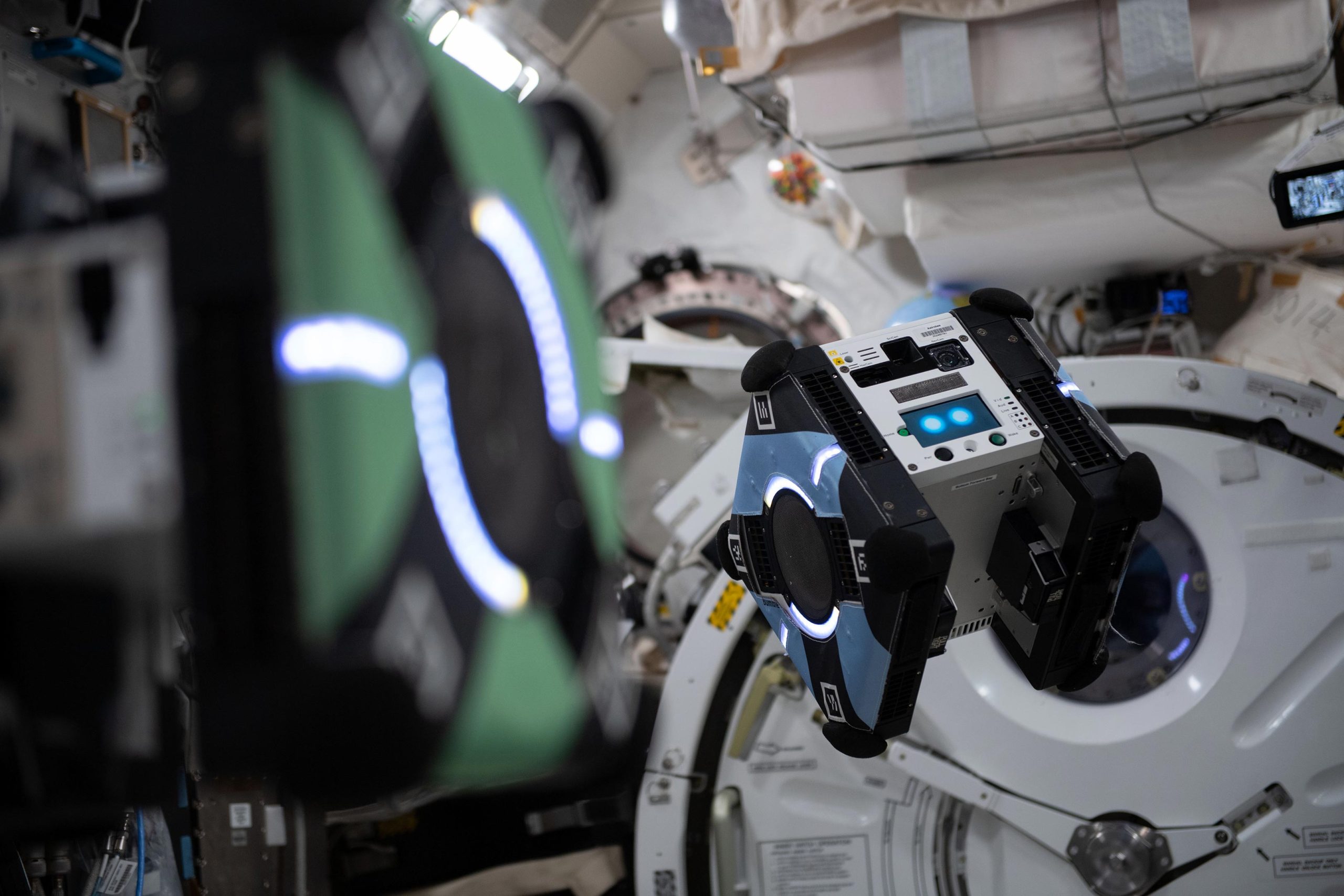
    Astrobee ROAM Operations Session 2
    A view of an Astrobee ROAM Operations Session 2 in the JEM during Expedition 66. ROAM demonstrates processes for a robotic craft to rendezvous with debris in space. Space debris includes satellites that could be repaired or taken out of orbit, but many of these objects are tumbling, making rendezvous and docking challenging. ROAM uses the space station’s Astrobee robots to observe and understand how targets tumble and uses this information to plan ways to safely reach them. Credit: Mark Vande Hei/NASA

    A view of an Astrobee ROAM Operations Session 2 in the JEM during Expedition 66. ROAM demonstrates processes for a robotic craft to rendezvous with debris in space. Space debris includes satellites that could be repaired or taken out of orbit, but many of these objects are tumbling, making rendezvous and docking challenging. ROAM uses the space station’s Astrobee robots to observe and understand how targets tumble and uses this information to plan ways to safely reach them.

    Expanding plant growth capabilities
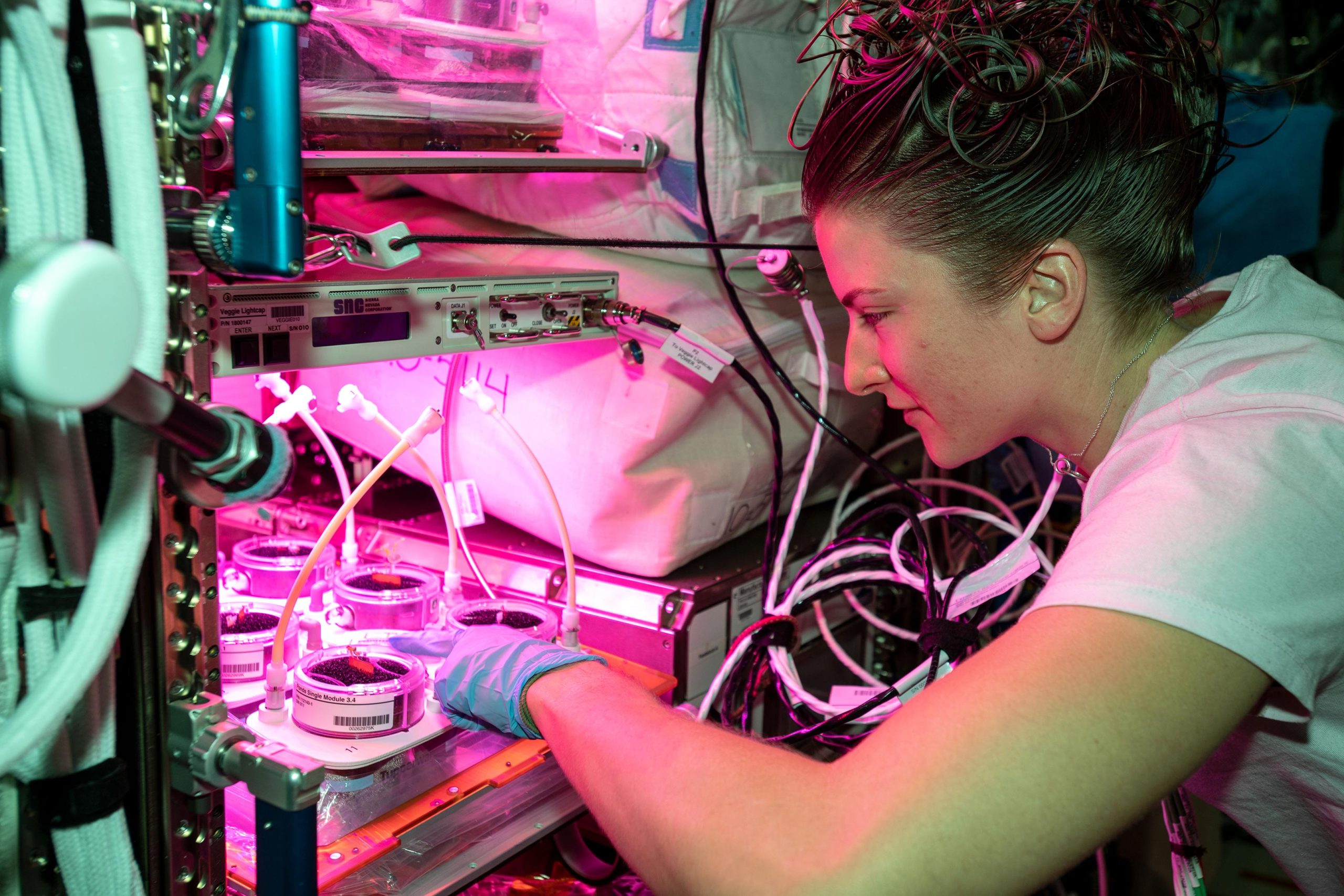
    Kayla Barron Veggie PONDS Experiment
    NASA astronaut and Expedition 66 Flight Engineer Kayla Barron checks out plants growing inside the Veggie botany research facility for the Veggie PONDS experiment. The investigation tests ways to grow crops in space to supporting long-term crewed missions to the Moon, Mars and beyond. Credit: NASA

    NASA astronaut Kayla Barron checks out plants growing inside the Veggie plant research facility for the Veggie PONDS experiment. The investigation tested ways to grow crops in space, which could be used to support long-term crewed missions to the Moon, Mars and beyond.

    Space archeology
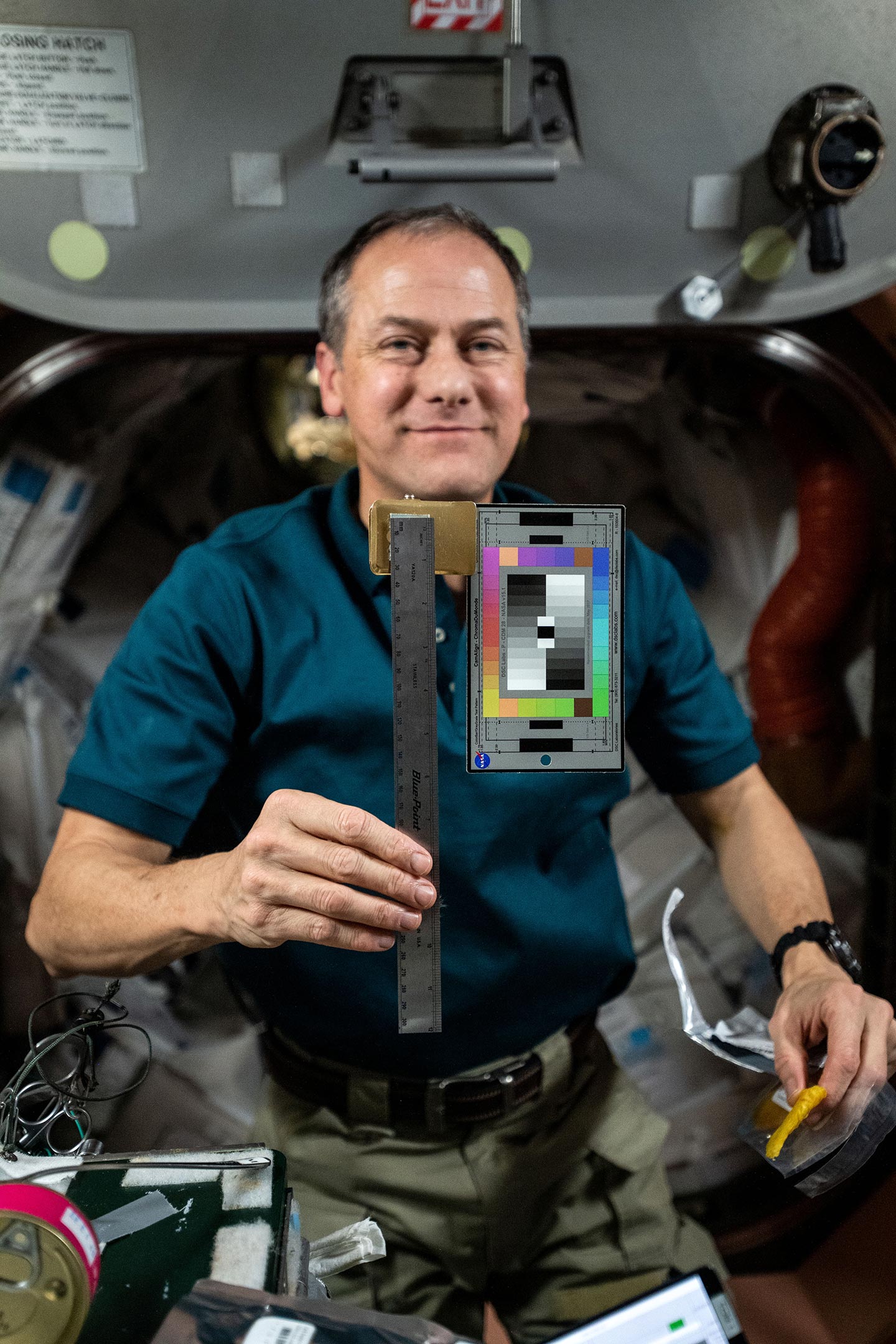
    Thomas Marshburn SQuARES Study
    NASA astronaut and Expedition 66 Flight Engineer Thomas Marshburn poses with a ruler and color chart aboard the International Space Station. The ruler and chart are used for the SQuARES study looking at how crew members use different objects and spaces over time. This investigation may provide information that helps improve the design of future spacecraft and habitats. Credit: NASA

    NASA astronaut Thomas Marshburn poses with a ruler and color chart aboard the International Space Station. The ruler and chart are used for SQuARE, which studies how crew members use different objects and spaces on station over time. Results from this study could be used to inform the design of future crewed spacecraft.

    Sending samples home
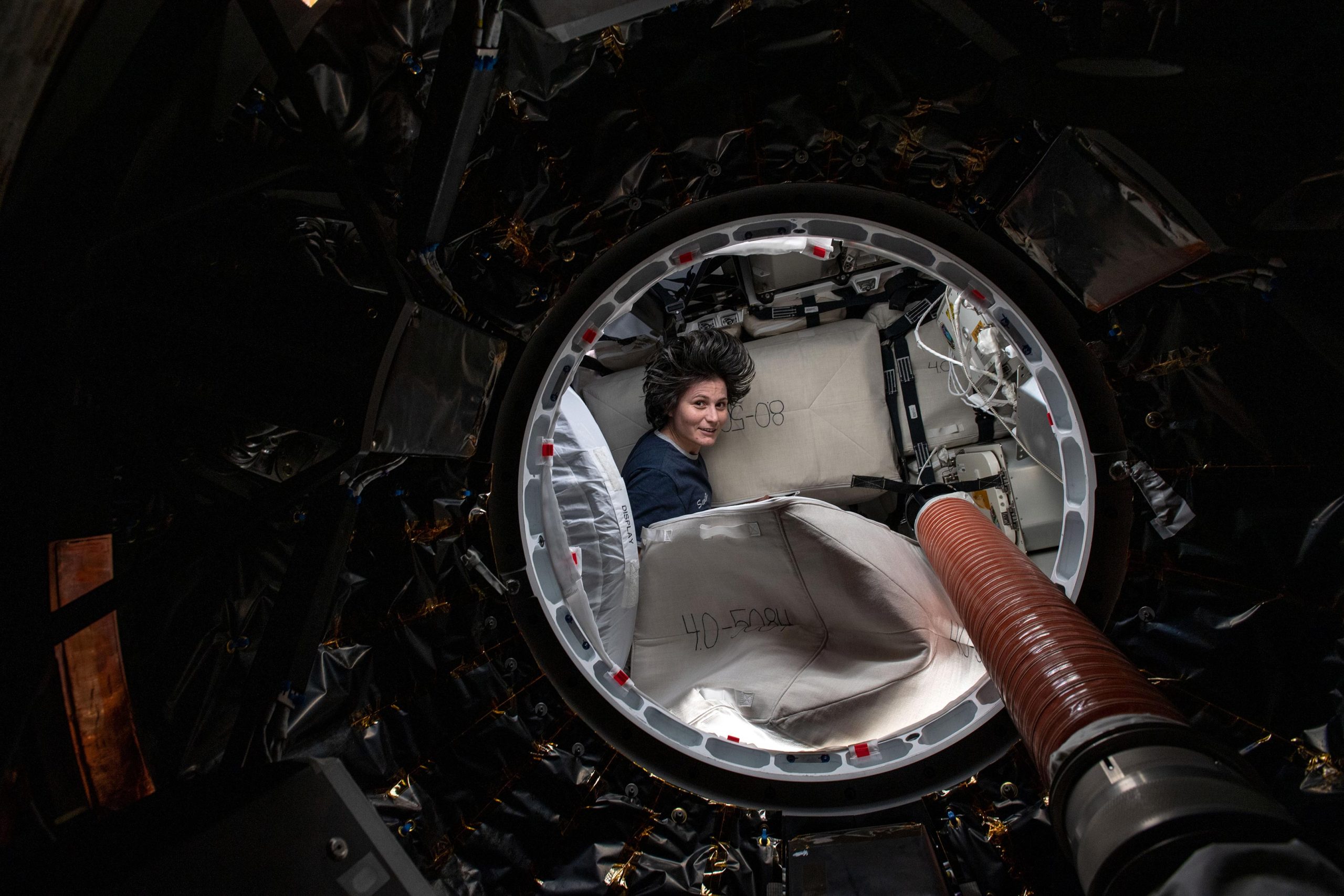
    Samantha Cristoforetti Packing Cargo
    ESA (European Space Agency) astronaut and Expedition 67 Flight Engineer Samantha Cristoforetti is pictured packing cargo inside the SpaceX Dragon resupply ship before it undocked from the International Space Station on August 19, 2022. Credit: NASA

    ESA (European Space Agency) astronaut Samantha Cristoforetti is pictured packing cargo inside the 25th SpaceX Dragon resupply ship before it undocked from the International Space Station on August 19, 2022. The spacecraft carried samples and hardware from multiple investigations, allowing researchers to continue data collection and analysis on the ground.

    A decades-long eruption

    Carrizozo Malpaís Lava Flow
    While in orbit over the Southwestern United States, an astronaut onboard the International Space Station took a sequence of photos of Carrizozo Malpaís, a large basaltic lava flow in central New Mexico. The four photos were then stitched together to produce a mosaic. Credit: NASA

    An astronaut aboard the International Space Station took a sequence of photos of Carrizozo Malpaís, showing a decades-long eruption creating this long strip of basalt in the desert of New Mexico. Crew members on the space station photograph the Earth using handheld cameras for Crew Earth Observations. These photographs record how the planet is changing over time and monitor events needing immediate disaster-level response. Astronauts have been photographing Earth from space since the early Mercury missions beginning in 1961.

    Boiling hot
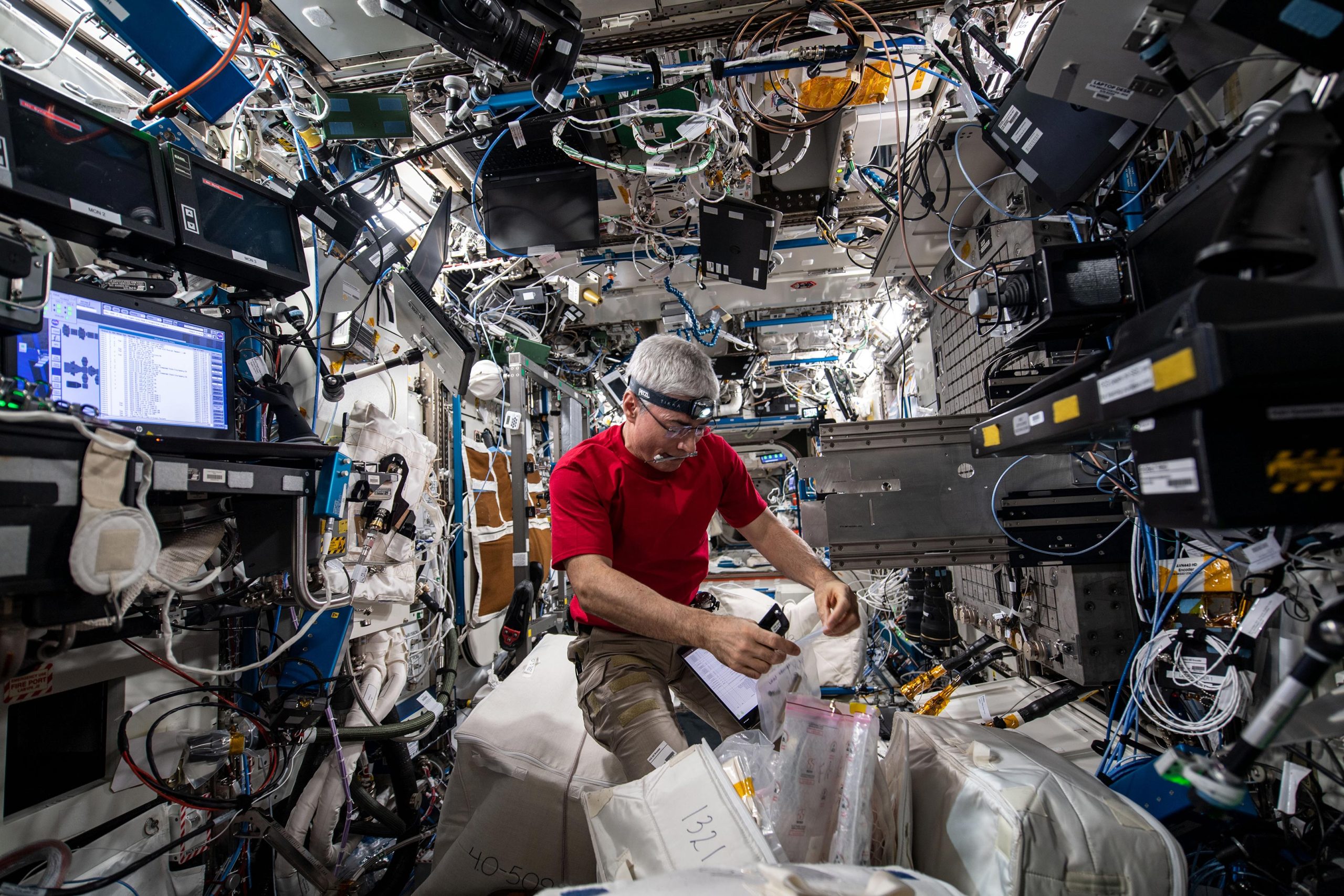
    Mark Flow Boiling and Condition Experiment Setup
    View of Mark Vande Hei setting up Mark Flow Boiling and Condition Experiment during Expedition 66. Credit: NASA

    On March 15, 2022, NASA astronaut Mark Vande Hei surpassed former NASA astronaut Scott Kelly’s record by spending 355 days in space. His extended mission aboard the International Space Station provides researchers an opportunity to observe the effects of long-duration spaceflight on the human body. In this image, Vande Hei sets up for the Flow Boiling Condensation Experiment (FBCE) investigation, examining a model for a heat management system based on boiling processes.

    Space construction
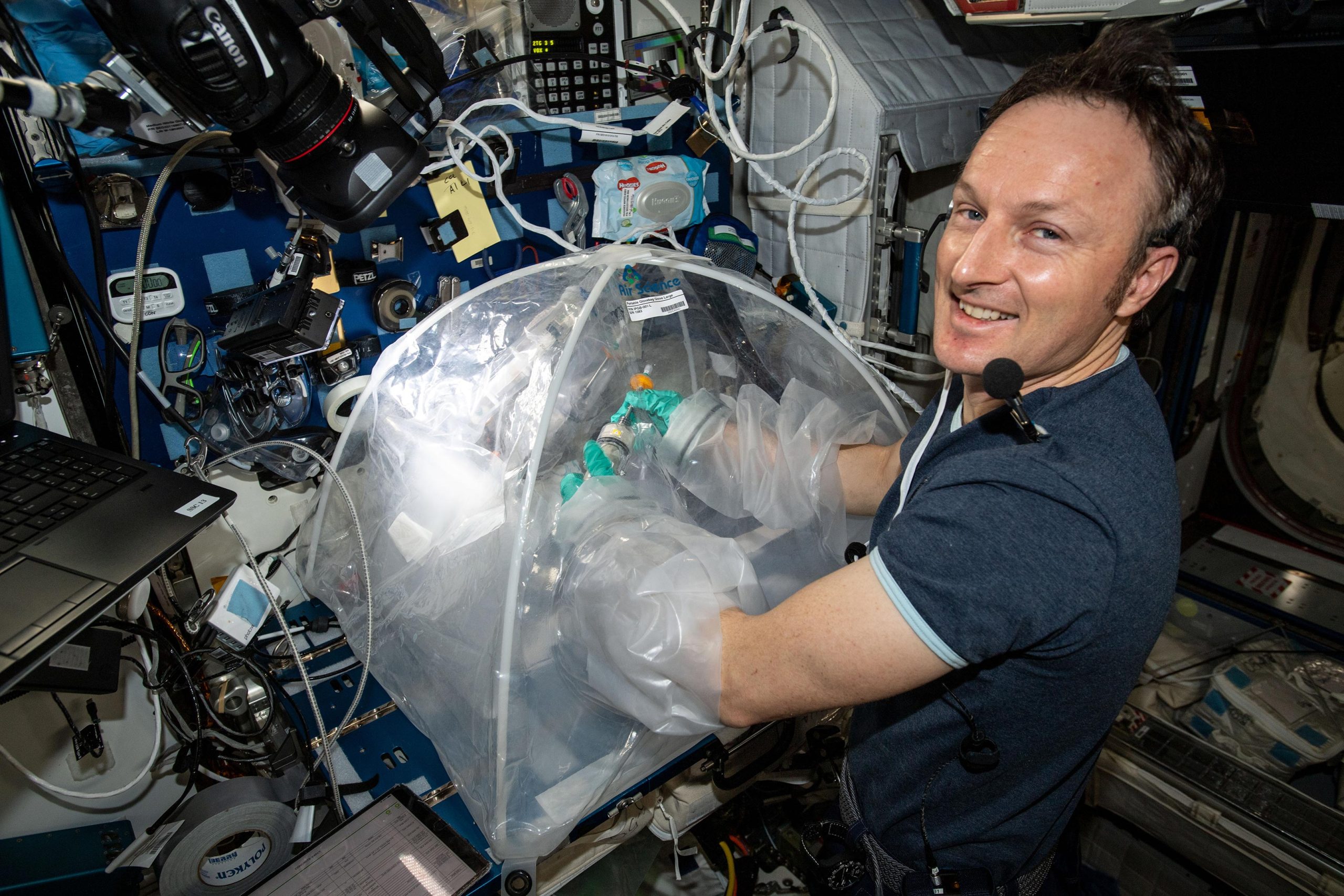
    Matthias Maurer Concrete Experiment
    ESA (European Space Agency) astronaut and Expedition 66 Flight Engineer Matthias Maurer explores how concrete hardens with the lack of gravity to inform future space construction techniques on lunar and planetary surfaces. Maurer conducts research operations in the portable glovebag with a variety of cement mixtures observing how pores, bubbles and crystals develop as the samples harden. Credit: NASA

    ESA (European Space Agency) astronaut Matthias Maurer works on the Concrete Hardening experiment, which seeks to provide a better understanding of how concrete hardens without gravity-driven convection, settling, and pressure gradients. Results could support future lunar and planetary construction techniques.

    It’s your destiny
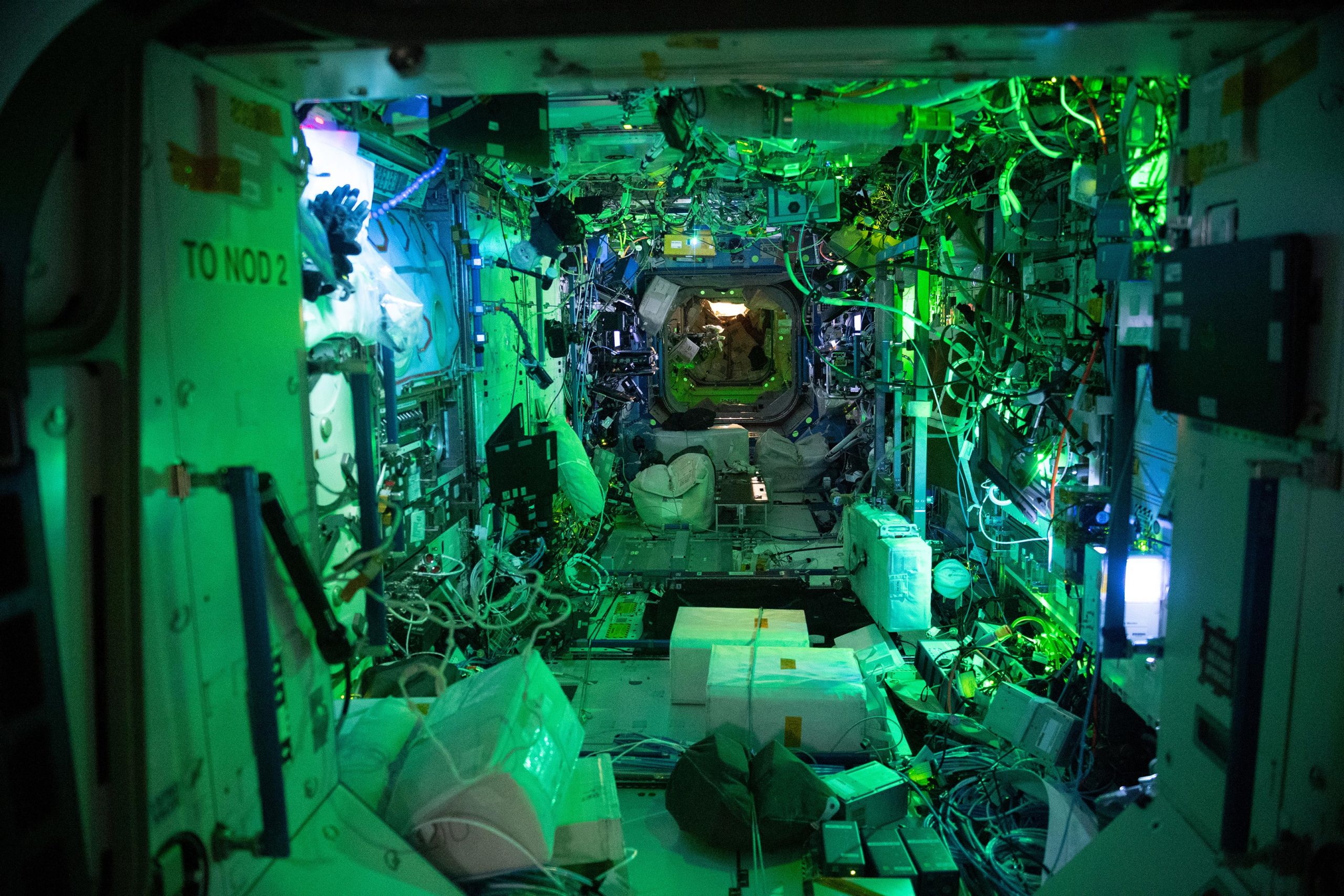
    Destiny Module Ambiant Light
    An interior view of the Destiny U.S. Laboratory at night under ambient light with the main lights turned off. The Destiny module supports a variety of life and physical sciences, technology demonstrations, and educational events. In 2022, hardware for the Solid Fuel Ignition and Extinction (SOFIE) facility was installed inside Destiny’s Combustion Integrated Rack opening opportunities for new combustion studies. Credit: NASA

    An interior view of the Destiny U.S. Laboratory at night under ambient light with the main lights turned off. The Destiny module supports a variety of life and physical sciences, technology demonstrations, and educational events. In 2022, hardware for the Solid Fuel Ignition and Extinction (SOFIE) facility was installed inside Destiny’s Combustion Integrated Rack opening opportunities for new combustion studies.

    Never miss a breakthrough: Join the SciTechDaily newsletter.
    Follow us on Google and Google News.

    International Space Station NASA
    Share. Facebook Twitter Pinterest LinkedIn Email Reddit

    Related Articles

    SpaceX Just Launched Robots, Atomic Clocks, and Mars Tech Into Orbit

    Watch Live: NASA Astronaut Don Pettit Returns to Earth on His 70th Birthday After 220 Days in Space

    Space Station Commander Swap, SpaceX Dragon Launch, and Birthday Earth Return All in One Weekend

    Dawn Docking, New Discoveries: NASA and Russian Crew Begin Space Station Mission

    Meet NASA’s SpaceX Crew-11: The Astronauts Launching to Shape Humanity’s Future in Space

    New Beginnings in Space As Astronauts Step Into Their Zero-Gravity Home

    NASA’s Crew-9 Returns After 286-Day Mission With a Spectacular Splashdown in the Gulf of America

    NASA’s SpaceX Crew-9 Splashes Down Off Coast of Florida

    SpaceX Dragon Undocks With NASA Crew-9 Members for Return to Earth

    Leave A Reply Cancel Reply

    • Facebook
    • Twitter
    • Pinterest
    • YouTube

    Don't Miss a Discovery

    Subscribe for the Latest in Science & Tech!

    Trending News

    Popular Sugar-Free Sweetener Linked to Liver Disease, Study Warns

    What Is Hantavirus? The Deadly Disease Raising Alarm Worldwide

    Scientists Just Discovered How the Universe Builds Monster Black Holes

    Scientists Unveil New Treatment Strategy That Could Outsmart Cancer

    A Simple Vitamin May Hold the Key to Treating Rare Genetic Diseases

    Scientists Think the Real Fountain of Youth May Be Hiding in Your Gut

    Ravens Don’t Follow Wolves, They Predict Them

    This Common Knee Surgery May Be Doing More Harm Than Good

    Follow SciTechDaily
    • Facebook
    • Twitter
    • YouTube
    • Pinterest
    • Newsletter
    • RSS
    SciTech News
    • Biology News
    • Chemistry News
    • Earth News
    • Health News
    • Physics News
    • Science News
    • Space News
    • Technology News
    Recent Posts
    • Why Are So Many New Fathers Dying? Scientists Say the U.S. Has a Dangerous Blind Spot
    • Scientists Identify Simple Supplement That Greatly Reduces Alzheimer’s Damage
    • You May Have a Dangerous Type of Cholesterol Even if Your Tests Look Normal
    • Study Reveals Dangerous Flaw in AI Symptom Checkers
    • New MRI Breakthrough Captures Stunningly Clear Images of the Eye and Brain
    Copyright © 1998 - 2026 SciTechDaily. All Rights Reserved.
    • Science News
    • About
    • Contact
    • Editorial Board
    • Privacy Policy
    • Terms of Use

    Type above and press Enter to search. Press Esc to cancel.