

SpaceX Crew-9’s return to Earth marks another milestone in NASA’s Commercial Crew Program, with four astronauts safely completing their long-duration mission aboard the International Space Station.
From record-breaking spacewalks to innovative scientific experiments, the crew pushed the boundaries of space research, investigating everything from plant growth to stem cell technology and even deploying the first wooden satellite. Their journey spanned millions of miles, testing human endurance in microgravity while paving the way for future Moon and Mars missions. Meanwhile, their trusty Dragon spacecraft, Freedom, completed its fourth mission and will soon be prepped for another adventure.
Crew-9 Returns to Earth
NASA’s SpaceX Crew-9 safely returned to Earth on Tuesday, completing the agency’s ninth commercial crew rotation mission to the International Space Station. The crew splashed down in the SpaceX Dragon spacecraft off the coast of Tallahassee, Florida, in the Gulf of America.
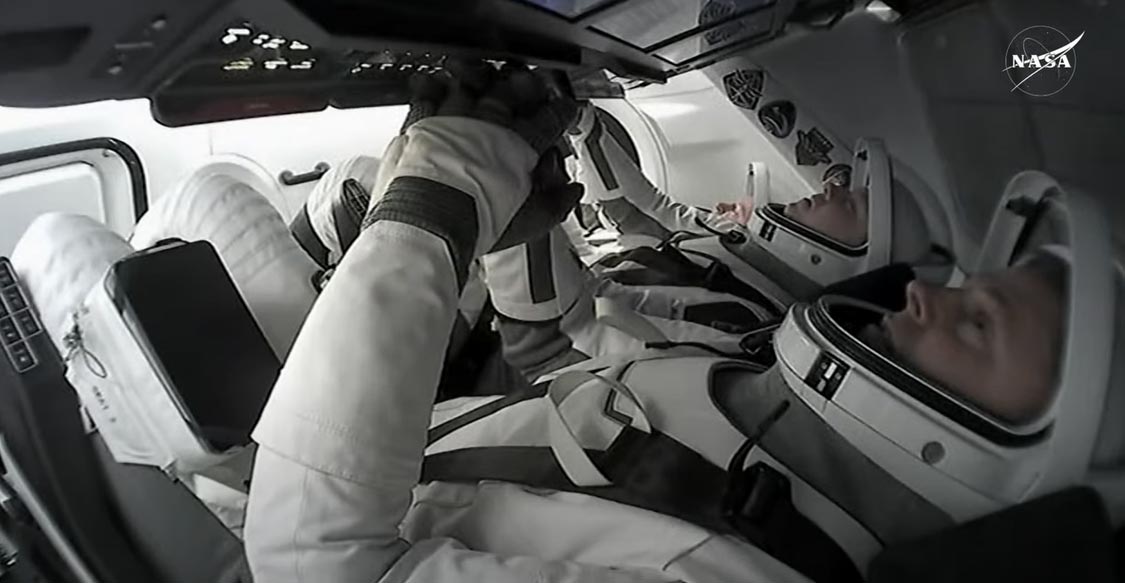
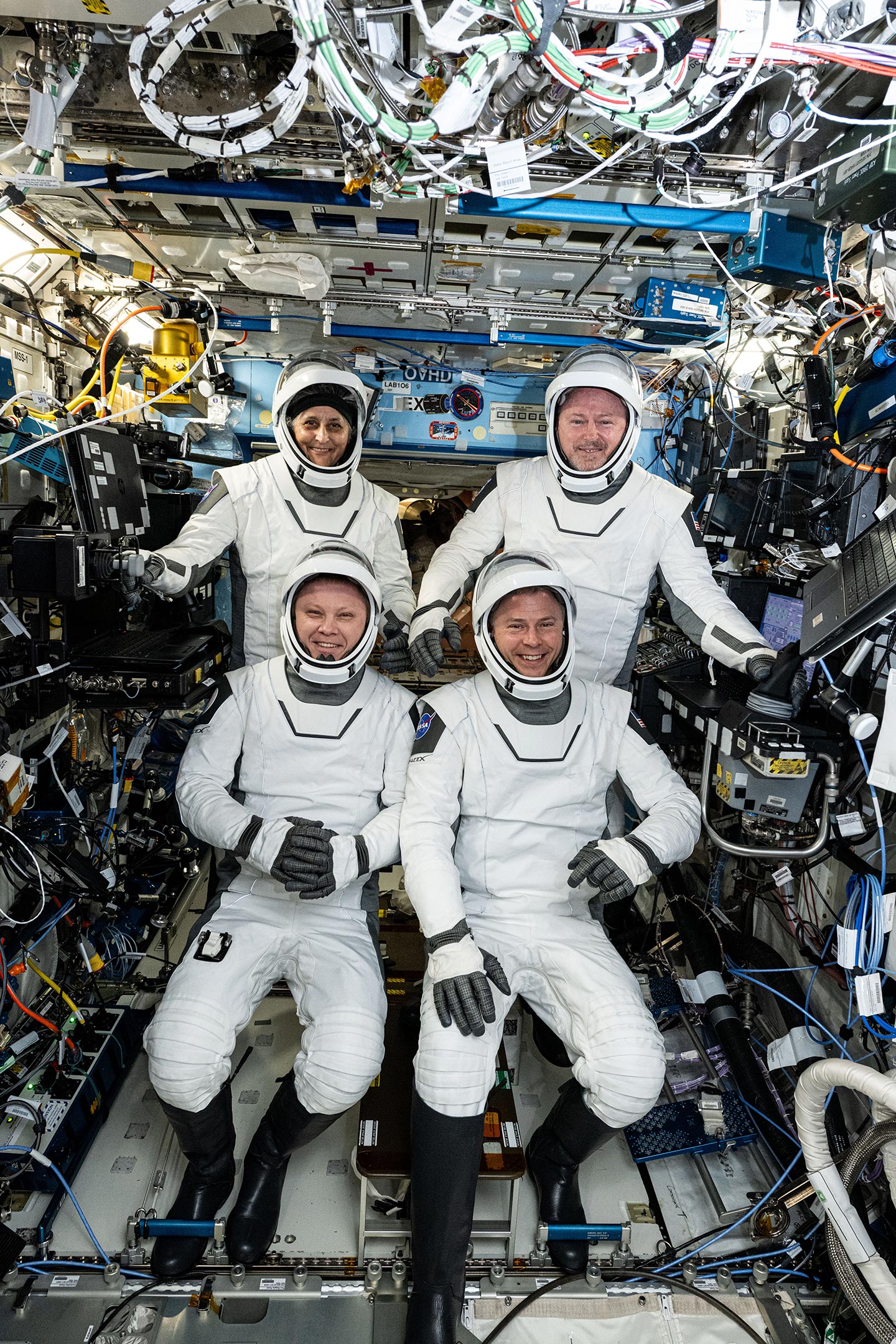
The mission brought home NASA astronauts Nick Hague, Suni Williams, and Butch Wilmore, along with Roscosmos cosmonaut Aleksandr Gorbunov. They landed at 5:57 p.m. EDT on March 18, where SpaceX recovery teams were on standby to retrieve the spacecraft and assist the crew. Once back on shore, the astronauts will travel to NASA’s Johnson Space Center in Houston to reunite with their families.

Mission Success and Presidential Influence
“We are thrilled to have Suni, Butch, Nick, and Aleksandr home after their months-long mission conducting vital science, technology demonstrations, and maintenance aboard the International Space Station,” said NASA acting Administrator Janet Petro. “Per President Trump’s direction, NASA and SpaceX worked diligently to pull the schedule a month earlier. This international crew and our teams on the ground embraced the Trump Administration’s challenge of an updated, and somewhat unique, mission plan, to bring our crew home. Through preparation, ingenuity, and dedication, we achieve great things together for the benefit of humanity, pushing the boundaries of what is possible from low Earth orbit to the Moon and Mars.”
Launch and Docking Details
Hague and Gorbunov launched aboard a SpaceX Falcon 9 rocket on September 28, 2024, from Space Launch Complex 40 at Cape Canaveral Space Force Station in Florida. They docked at the station’s Harmony module the following day. Williams and Wilmore traveled to the station separately on June 5, 2024, aboard Boeing’s Starliner spacecraft, launched on a United Launch Alliance Atlas V rocket as part of NASA’s Boeing Crew Flight Test. They arrived on June 6.
In August, NASA announced the uncrewed return of Starliner and integrated Wilmore and Williams into the space station’s Expedition 71/72, planning their return on Crew-9. The full crew of four undocked at 1:05 a.m. Tuesday to begin their journey home.
Miles Traveled and Days in Space
Williams and Wilmore traveled 121,347,491 miles during their mission, spent 286 days in space, and completed 4,576 orbits around Earth. Hague and Gorbunov traveled 72,553,920 miles during their mission, spent 171 days in space, and completed 2,736 orbits around Earth. The Crew-9 mission was the first spaceflight for Gorbunov. Hague has logged 374 days in space over his two missions, Williams has logged 608 days in space over her three flights, and Wilmore has logged 464 days in space over his three flights.
Spacewalks and Scientific Contributions
Throughout its mission, Crew-9 contributed to a host of science and maintenance activities and technology demonstrations. Williams conducted two spacewalks, joined by Wilmore for one and Hague for another, removing a radio frequency group antenna assembly from the station’s truss, collecting samples from the station’s external surface for analysis, installing patches to cover damaged areas of light filters on an X-ray telescope, and more. Williams now holds the record for total spacewalking time by a female astronaut, with 62 hours and 6 minutes outside of station, and is fourth on the all-time spacewalk duration list.
Groundbreaking Research and Experiments
The American crew members conducted more than 150 unique scientific experiments and technology demonstrations between them, with over 900 hours of research. This research included investigations on plant growth and quality, as well as the potential of stem cell technology to address blood diseases, autoimmune disorders, and cancers. They also tested lighting systems to help astronauts maintain circadian rhythms, loaded the first wooden satellite for deployment, and took samples from the space station’s exterior to study whether microorganisms can survive in space.
Dragon’s Fourth Journey
The Crew-9 mission was the fourth flight of the Dragon spacecraft named Freedom. It also previously supported NASA’s SpaceX Crew-4, Axiom Mission 2, and Axiom Mission 3. The spacecraft will return to Florida for inspection and processing at SpaceX’s refurbishing facility at Cape Canaveral Space Force Station, where teams will inspect the Dragon, analyze data on its performance, and begin processing for its next flight.
The Crew-9 mission is part of NASA’s Commercial Crew Program, which ensures safe, reliable, and cost-effective transportation to and from the International Space Station. Its return comes shortly after NASA’s SpaceX Crew-10 launch, which docked at the station on March 16 to begin another long-duration science expedition.
By expanding research time and opportunities for discovery in microgravity, the Commercial Crew Program plays a crucial role in advancing space exploration. It not only supports scientific investigations aboard the space station but also helps NASA prepare for future human missions to the Moon and Mars.
Never miss a breakthrough: Join the SciTechDaily newsletter.
Follow us on Google and Google News.
19 Comments
Gulf of Mexico! sorry!
I knew there would be at least one person make this comment.
Gulf of America is much more appropriate.
It’s not, it’s stupid. Every gulf across the American continent is a gulf of America.
Besides, there is no Gulf of Europe, no Gulf of Asia, no Gulf of Africa and no Gulf of Australia. Why? Because it would be stupid.
Yep, Gulf of Mexico. The evil orange turd can kiss my ass.
Why did Biden’s puppeteers leave the crew up their for so long? Does the audience of this site care that the same people who were willing to do that, are burning Teslas and will not stop proclaiming a climate crisis and an environmental crisis despite the fact that dolphins greeted the capsule?
Seriously, 1/3 of the articles on this site articulate doom and gloom. Glad it’s not censored by a jaundiced eye is necessary. Glad they’re home.
….an environmental crisis despite the fact that dolphins greeted the capsule?…..
Clear proof that dolphins are just as stupid as human beings.
Fascists like you, dumb boy.
It’s the Gulf of Mexico, and you know it, just like every other country on this planet *except* for the one that tried to rename it.
Use the correct name, please!
What was “spectacular” about the ‘splashdown?’
It made a splash!
I find the politically-motivated name-calling quite juvenile and inappropriate for a science website.
Welcome to the 21st century.
No offense, but sometimes it’s best to sit back and let them have their little kittenfight. Be glad that T-bot and FG4U seem to have left the building.
If there is no push back on inappropriate behavior then there is no reason to change the behavior.
“The only thing necessary for the triumph of evil is for good men to do nothing.” — Edmund Burke (?)
True… but notice I said ‘sometimes’. And, in the case of the ‘work from home’ harpies, I’m very glad they’ve been chased away.
Spot on!
Just like french fries were not “freedom fries”, the Gulf of Mexico is not the Gulf of America. The constitution does not assign the executive branch the right to rename international bodies of water. This is a science website. It should not take part in this political nonsense.
The Gulf of Mexico remains the Gulf of Mexico. Donald Trump, King of the USA, is not the International Names Place Committee and nor is His Majesty the USA’s Names Place Committee as He is yet to abolish that body by Executive Order.
If SciTech Daily is so gutless as to feel the need to pander to His Majesty, at least have the decency to call the Gulf of Mexico the “Caribbean Sea” , a neutral named recognising the original inhabitants, the Carib Indians, who once lived there before the Spanish arrived in Mexico as well as Texas and probably a couple of other now-States of the USA.
Or maybe the Cuban Sea is a name would satisfy King Donald………….
….” said NASA acting Administrator Janet Petro. “Per President Trump’s direction, NASA and SpaceX worked diligently to pull the schedule a month earlier. This international crew and our teams on the ground embraced the Trump Administration’s challenge of an updated, and somewhat unique, mission plan, to bring our crew home”….
This sort of claptrap is what I have learned as normally emanating from North Korea and and PR China where assorted tyrants had their sycophantic apparatatchiki utter such grandiose phrases claiming credit for stuff that that had been built by others.
Dodged the bullet, have they? Or, perhaps, not, given how prolonged stay in orbit cannot be good for health.
And I concur with the other comments: it’s the Gulf of Mexico Have some decency, SciTechDaily, even if your prez has none.