
Close Menu
    Facebook X (Twitter) Instagram
    SciTechDaily
    • Biology
    • Chemistry
    • Earth
    • Health
    • Physics
    • Science
    • Space
    • Technology
    Facebook X (Twitter) Pinterest YouTube RSS
    SciTechDaily
    Home»Space»Helium Leaks and Thruster Fails: Boeing Starliner’s High-Stakes Docking Drama
    Space

    Helium Leaks and Thruster Fails: Boeing Starliner’s High-Stakes Docking Drama

    By NASAJune 7, 20241 Comment4 Mins Read
    Facebook Twitter Pinterest Telegram LinkedIn WhatsApp Email Reddit
    Share
    Facebook Twitter LinkedIn Pinterest Telegram Email Reddit
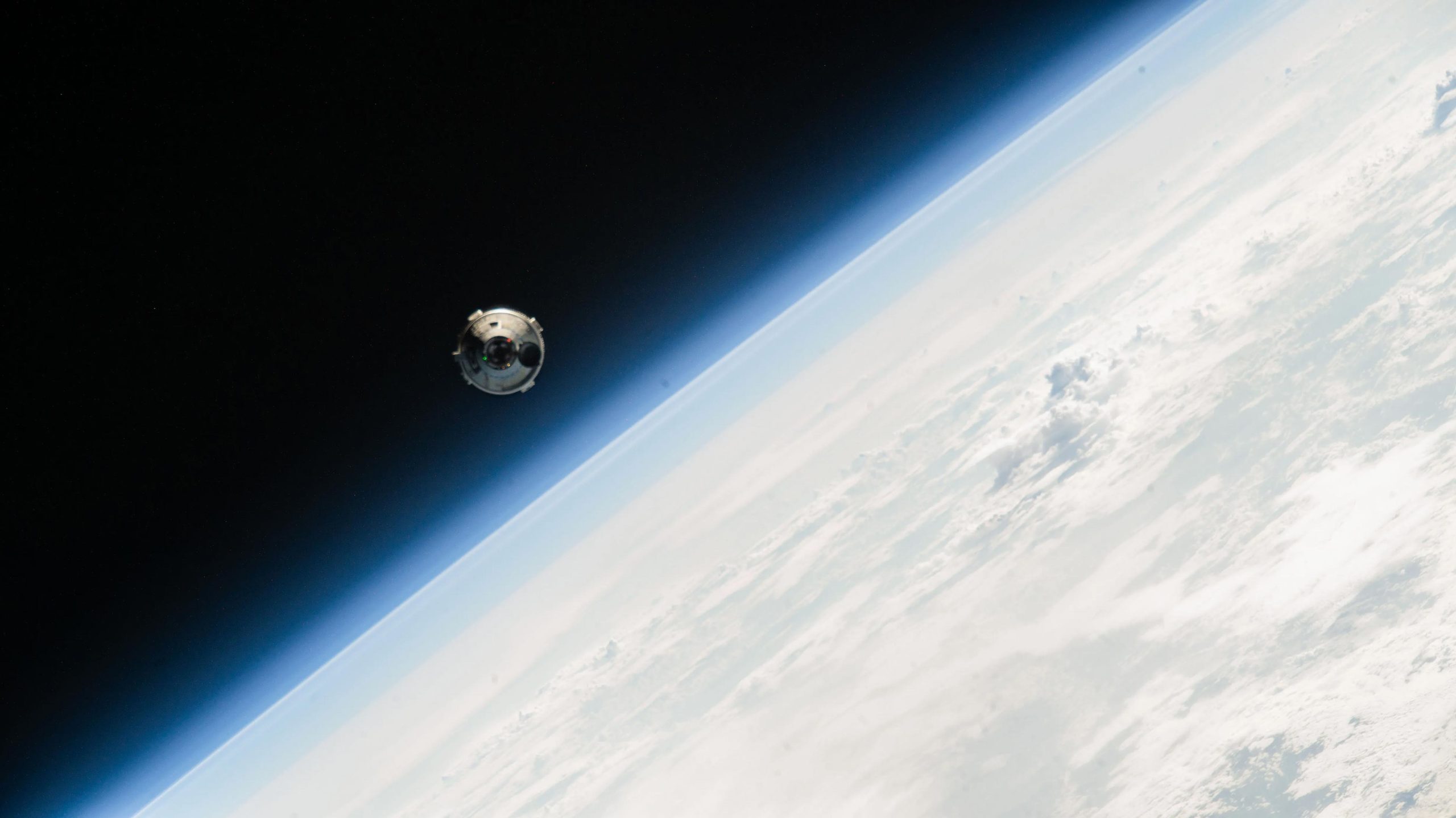
    Boeing’s Starliner Spacecraft Approaches the ISS
    Boeing’s Starliner spacecraft, with NASA astronauts Butch Wilmore and Suni Williams aboard, approaches the International Space Station for an autonomous docking as it orbited 257 miles above the South Pacific Ocean. Credit: NASA Television

    Astronauts Butch Wilmore and Suni Williams aboard the Starliner spacecraft docked successfully at the ISS after overcoming challenges like helium leaks and thruster failures. The flight included manual piloting demonstrations and strategic management of spacecraft systems to ensure a successful docking.

    NASA astronauts Butch Wilmore and Suni Williams, aboard Boeing’s Starliner spacecraft, successfully docked to the International Space Station (ISS) at 1:34 p.m. EDT on June 6. Starliner’s hatch opening began at about 3:20 p.m., and the pair of astronauts entered the ISS at 3:45 p.m. Starliner launched on a United Launch Alliance Atlas V rocket at 10:52 a.m. on June 5 from Space Launch Complex-41 at Cape Canaveral Space Force Station in Florida.
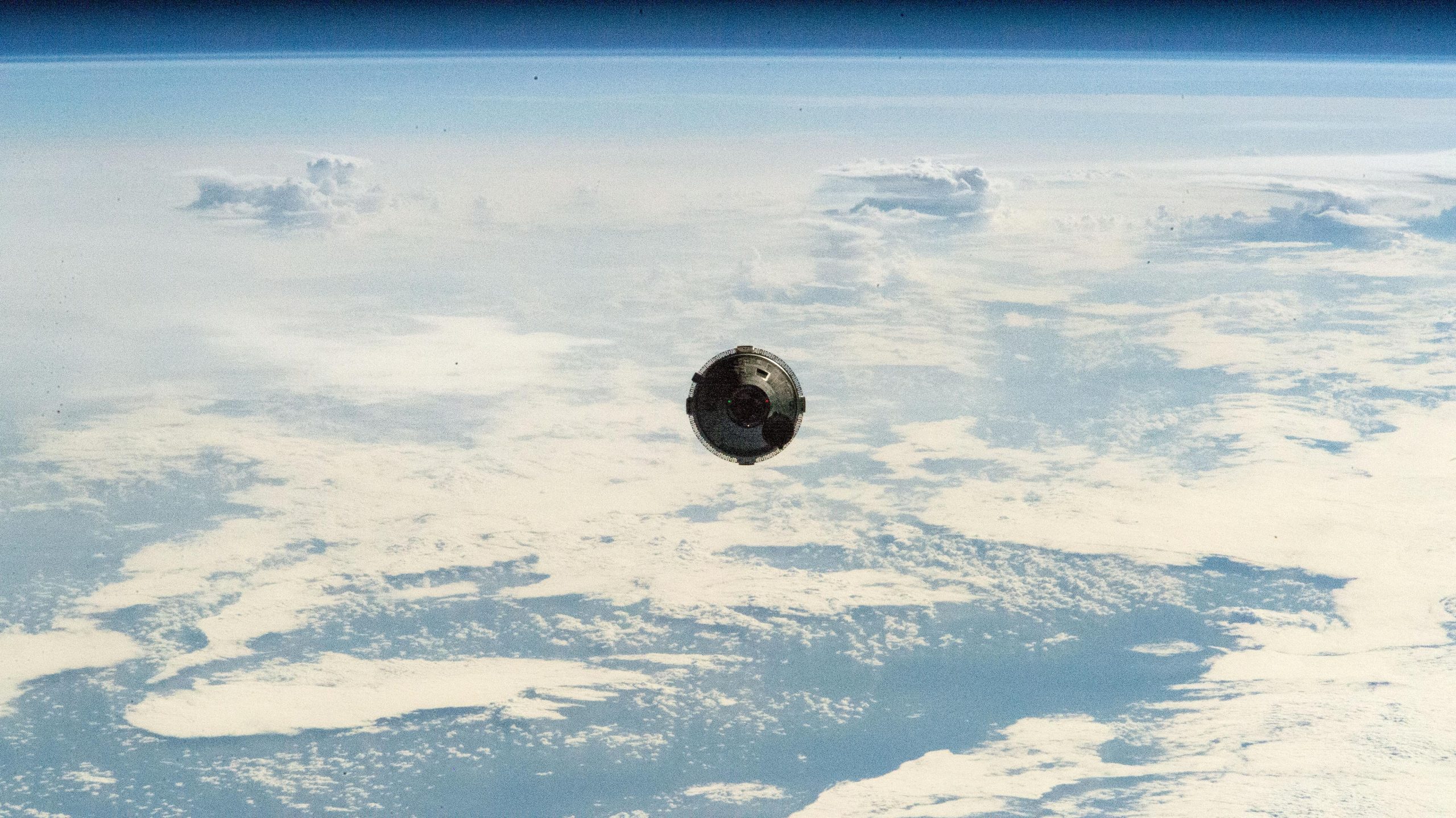
    Boeing’s Starliner Spacecraft Approaches the International Space Station
    Boeing’s Starliner spacecraft is pictured approaching the International Space Station for an autonomous docking on June 6, 2024 as the spacecraft and orbiting laboratory soared 257 miles above the South Pacific Ocean. Starliner launched on June 5, with NASA astronauts Butch Wilmore and Suni Williams aboard, as part of NASA’s Boeing Crew Flight Test. This first crewed flight of Starliner aims to certify the spacecraft for rotational missions to the space station. Credit: NASA

    During flight, Wilmore and Williams successfully performed manual piloting demonstrations of Starliner and completed a sleep period. Prior to crew sleep, mission teams identified three helium leaks in the spacecraft. One of these was previously discussed before flight along with a management plan, and the other two occured when the spacecraft arrived in orbit. To monitor and manage these leaks, the three helium manifolds were closed in flight during the crew’s sleep period and were all reopened ahead of rendezvous and docking operations. After docking, all Starliner manifolds are closed per normal plans.
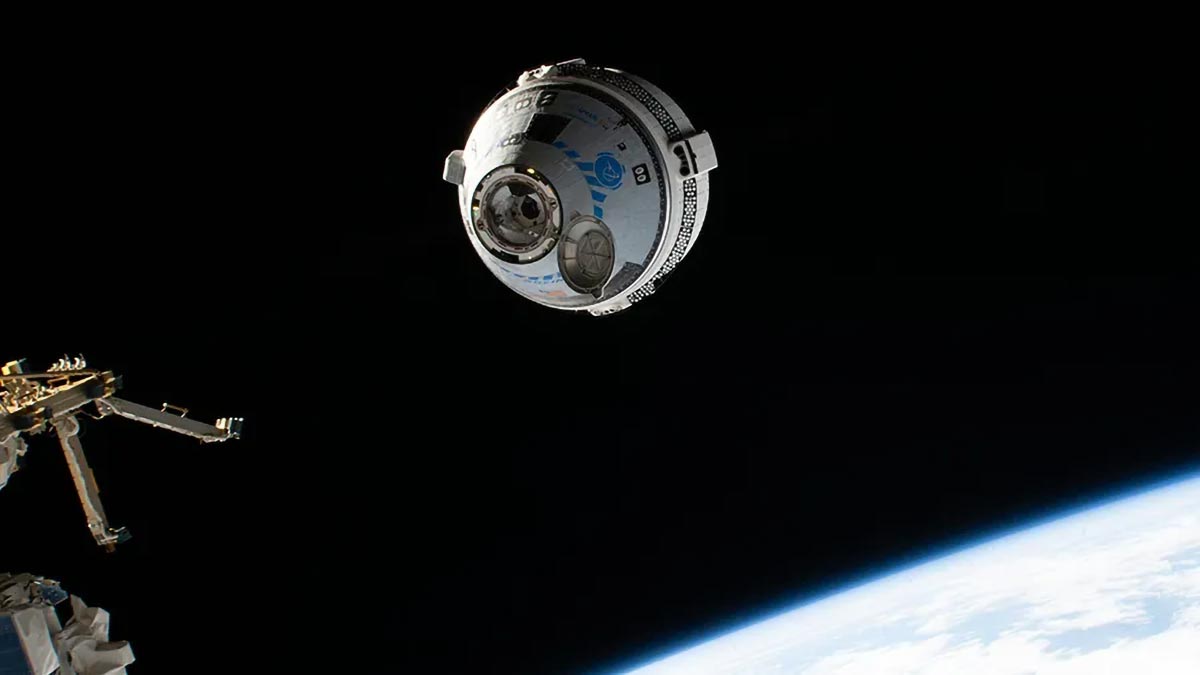
    Boeing’s Starliner Crew Ship Docking to the International Space Station
    Boeing’s Starliner crew ship approaches the space station during the company’s uncrewed Orbital Flight Test-2 mission on May 20, 2022. Credit: NASA

    As Starliner began its approach to the space station, five reaction control system thrusters failed during flight. Mission teams performed a series of hot-fire tests which re-enabled four of the thrusters while the crew manually piloted the spacecraft at the station’s 200-meter hold point. After re-selecting four of the thrusters, Starliner had the fault tolerance required to approach the space station for docking. At the 10-meter hold point, the mission team completed system readiness evaluations and proceeded with docking.
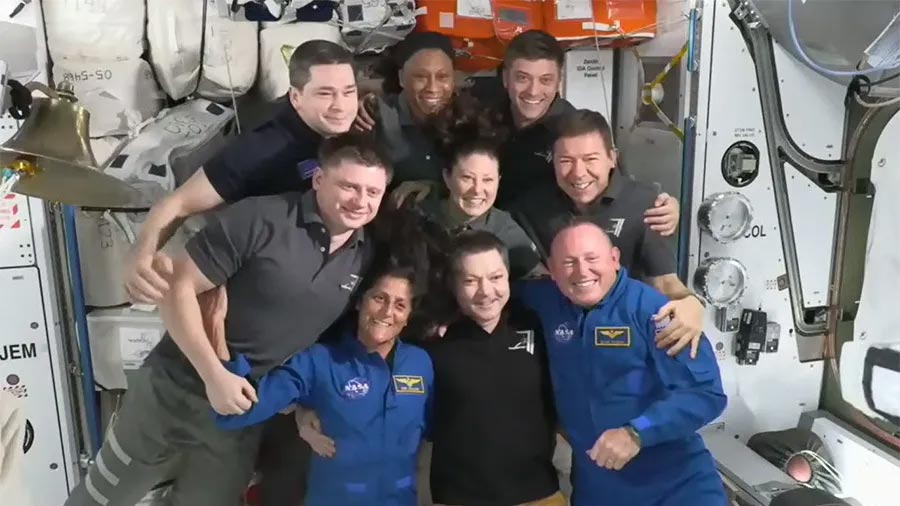
    Seven Expedition 71 Crew Members
    The seven Expedition 71 crew members gather with the two Crew Flight Test members for a team portrait aboard the space station. In the front from left are, Suni Williams, Oleg Kononenko, and Butch Wilmore. Second row from left are, Alexander Grebenkin, Tracy C. Dyson, and Mike Barratt. In the back are, Nikolai Chub, Jeanette Epps, and Matthew Dominick. Credit: NASA TV

    NASA’s Boeing Crew Flight Test

    NASA’s Boeing Crew Flight Test (CFT) is a pivotal mission for the Commercial Crew Program, which aims to facilitate the development of U.S.-led crewed spaceflight capabilities. This test flight, conducted in partnership between NASA and Boeing, involves the CST-100 Starliner spacecraft. The mission’s primary goal is to demonstrate the Starliner’s ability to safely transport crew to and from the International Space Station (ISS).

    The Crew Flight Test is Boeing’s first crewed mission, following an uncrewed test flight that assessed the spacecraft’s performance without a crew. The CFT will carry NASA astronauts to the ISS, where they will dock, stay aboard for a short duration, and then return to Earth. This mission serves as a crucial step in certifying the Starliner for regular operational missions, enabling NASA to have another reliable method of transporting astronauts to and from the ISS alongside SpaceX’s Crew Dragon.

    Success in this mission will mark a significant milestone for Boeing, showcasing its ability to fulfill NASA’s commercial crew transportation needs. The Crew Flight Test is designed not only to validate the spacecraft’s systems in a real-world crewed scenario but also to ensure that it meets NASA’s stringent safety standards for human spaceflight.

    Never miss a breakthrough: Join the SciTechDaily newsletter.
    Follow us on Google and Google News.

    Astronaut Boeing Boeing Starliner International Space Station NASA
    Share. Facebook Twitter Pinterest LinkedIn Email Reddit

    Related Articles

    Stuck in Space? NASA Outlines Updated Return Plans for Boeing Starliner

    NASA, Boeing Complete Starliner Engine Testing – What’s Next for the Troubled Spacecraft?

    Starliner’s Final Countdown: New Thruster Testing Before Earth Return

    Liftoff! NASA Astronauts Pilot First Boeing Starliner Crewed Mission to Space Station

    Starliner’s Stellar Liftoff: NASA Astronauts Embark on Historic Journey to ISS

    Liftoff Looms: Boeing Starliner Ready for Launch

    Ready for Liftoff: NASA, Boeing, ULA “Go” for Starliner Crew Flight Test

    Historic Boeing Starliner Launch Delayed Again Due to Helium Leak

    Space Station Crew Opens Boeing Starliner Hatch, Greet “Rosie the Rocketeer”

    1 Comment

    1. Shan on June 7, 2024 9:22 pm

      Still no story on Starship’s successful test?

      Reply
    Leave A Reply Cancel Reply

    • Facebook
    • Twitter
    • Pinterest
    • YouTube

    Don't Miss a Discovery

    Subscribe for the Latest in Science & Tech!

    Trending News

    New Pill Lowers Stubborn Blood Pressure and Protects the Kidneys

    Humans May Have Hidden Regenerative Powers, New Study Suggests

    Scientists Just Solved the Mystery of Why Crabs Walk Sideways

    Doctors Are Surprised by What This Vaccine Is Doing to the Heart

    This Popular Supplement May Boost Your Brain, Not Just Your Muscles

    Scientists Say This Simple Supplement May Actually Reverse Heart Disease

    Warming Oceans Could Trigger a Dangerous Methane Surge

    This Simple Movement Could Be Secretly Cleaning Your Brain

    Follow SciTechDaily
    • Facebook
    • Twitter
    • YouTube
    • Pinterest
    • Newsletter
    • RSS
    SciTech News
    • Biology News
    • Chemistry News
    • Earth News
    • Health News
    • Physics News
    • Science News
    • Space News
    • Technology News
    Recent Posts
    • This Magnetic Field Trick Creates Entirely New Forms of Matter
    • Astronomers Stunned by Ancient Galaxy With No Spin
    • Physicists May Be on the Verge of Discovering “New Physics” at CERN
    • AI Learns To Work Backward and Reveal Hidden Forces in Nature
    • Scientists Warn of Rising Male Childlessness As Global Fertility Changes
    Copyright © 1998 - 2026 SciTechDaily. All Rights Reserved.
    • Science News
    • About
    • Contact
    • Editorial Board
    • Privacy Policy
    • Terms of Use

    Type above and press Enter to search. Press Esc to cancel.