
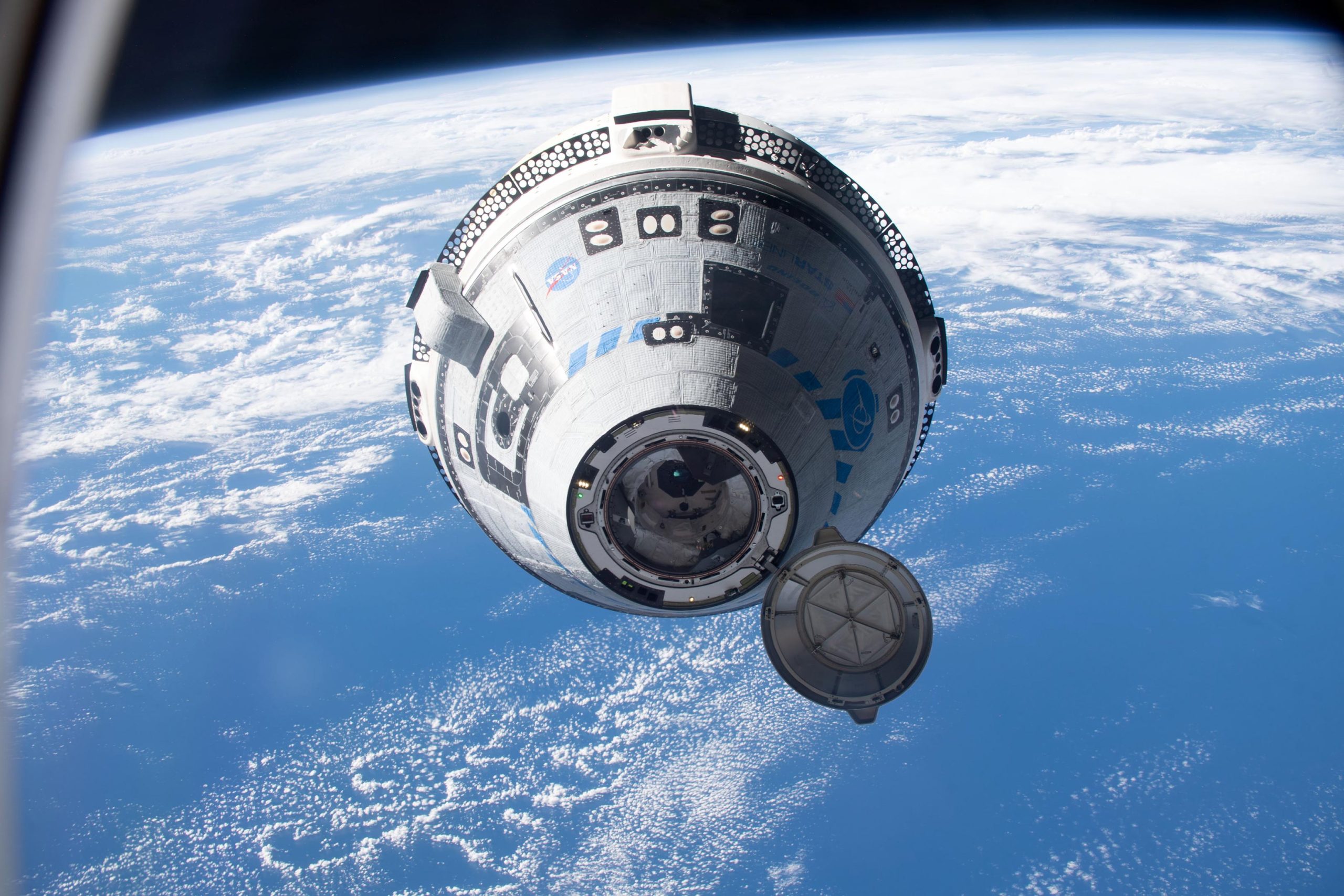
NASA has decided to return the Boeing Starliner to Earth uncrewed, prioritizing safety after identifying issues like helium leaks.
Astronauts Butch Wilmore and Suni Williams, who will stay at the ISS until 2025, will return via SpaceX’s Dragon spacecraft. This strategic choice reflects NASA’s commitment to safety and allows continued data collection to enhance Starliner’s future performance.
Starliner’s Uncrewed Return Decision
NASA will return Boeing’s Starliner to Earth without astronauts Butch Wilmore and Suni Williams aboard the spacecraft, the agency announced Saturday. The uncrewed return allows NASA and Boeing to continue gathering testing data on Starliner during its upcoming flight home, while also not accepting more risk than necessary for its crew.
Wilmore and Williams, who flew to the International Space Station (ISS) in June aboard NASA’s Boeing Crew Flight Test, have been busy supporting station research, maintenance, and Starliner system testing and data analysis, among other activities.
Commitment to Safety and Testing
“Spaceflight is risky, even at its safest and most routine. A test flight, by nature, is neither safe, nor routine. The decision to keep Butch and Suni aboard the International Space Station and bring Boeing’s Starliner home uncrewed is the result of our commitment to safety: our core value and our North Star,” said NASA Administrator Bill Nelson. “I’m grateful to both the NASA and Boeing teams for all their incredible and detailed work.”
Wilmore and Williams will continue their work formally as part of the Expedition 71/72 crew through February 2025. They will fly home aboard a Dragon spacecraft with two other crew members assigned to the agency’s SpaceX Crew-9 mission. Starliner is expected to depart from the space station and make a safe, controlled autonomous re-entry and landing in early September.
Challenges and Solutions for Starliner
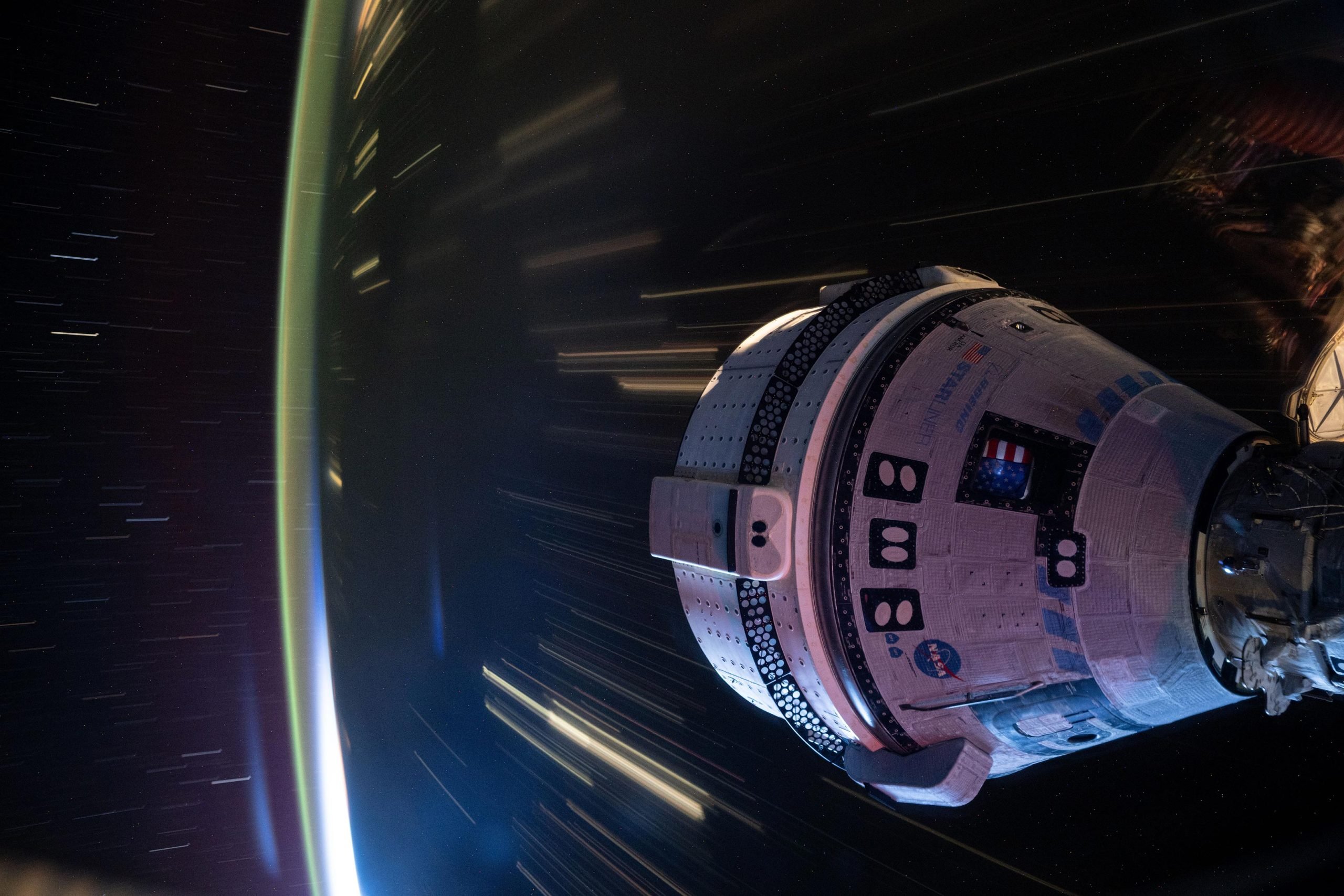
NASA and Boeing identified helium leaks and experienced issues with the spacecraft reaction control thrusters on June 6 as Starliner approached the space station. Since then, engineering teams have completed a significant amount of work, including reviewing a collection of data, conducting flight and ground testing, hosting independent reviews with agency propulsion experts, and developing various return contingency plans. The uncertainty and lack of expert concurrence does not meet the agency’s safety and performance requirements for human spaceflight, thus prompting NASA leadership to move the astronauts to the Crew-9 mission.
“Decisions like this are never easy, but I want to commend our NASA and Boeing teams for their thorough analysis, transparent discussions, and focus on safety during the Crew Flight Test,” said Ken Bowersox, associate administrator for NASA’s Space Operations Mission Directorate. “We’ve learned a lot about the spacecraft during its journey to the station and its docked operations. We also will continue to gather more data about Starliner during the uncrewed return and improve the system for future flights to the space station.”
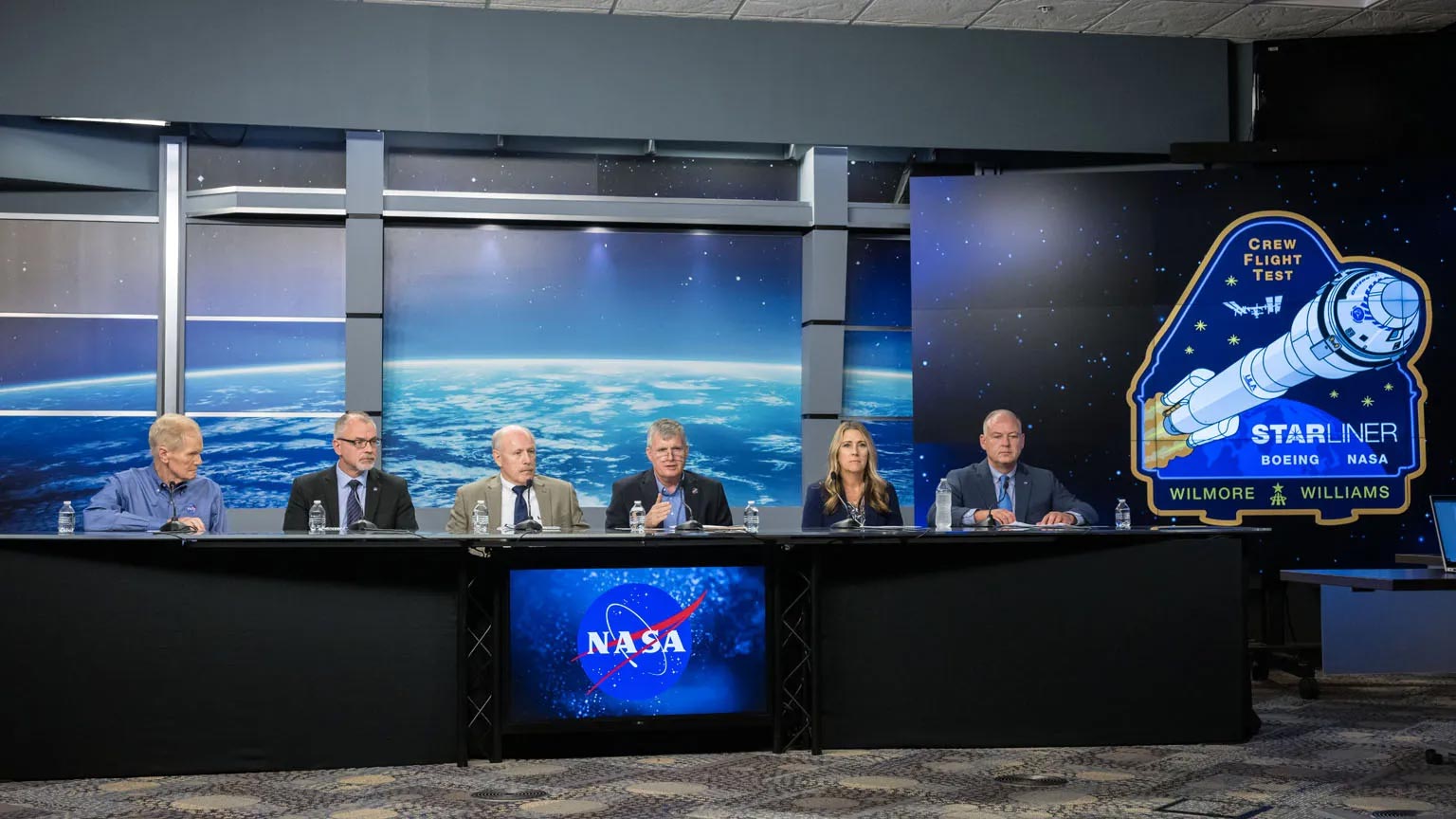
NASA Administrator Bill Nelson, leaders from the agency and Boeing managers discussed the forward plan for the Boeing Crew Flight Test (CFT) to the International Space Station during a briefing on August 24. Boeing launched NASA astronauts Butch Wilmore and Suni Williams to the International Space Station in June aboard its Starliner spacecraft. Following further analysis of the vehicle’s propulsion system, Starliner will return uncrewed in September and Wilmore and Williams will remain onboard the space station until February as Expedition members. The duo will return to Earth on a SpaceX Dragon in February. Credit: NASA
Preparing for Future Missions
Starliner is designed to operate autonomously and previously completed two uncrewed flights. NASA and Boeing will work together to adjust end-of-mission planning and Starliner’s systems to set up for the uncrewed return in the coming weeks. Starliner must return to Earth before the Crew-9 mission launches to ensure a docking port is available on station.
“Starliner is a very capable spacecraft and, ultimately, this comes down to needing a higher level of certainty to perform a crewed return,” said Steve Stich, manager of NASA’s Commercial Crew Program. “The NASA and Boeing teams have completed a tremendous amount of testing and analysis, and this flight test is providing critical information on Starliner’s performance in space. Our efforts will help prepare for the uncrewed return and will greatly benefit future corrective actions for the spacecraft.”
NASA’s Commercial Crew Program requires spacecraft fly a crewed test flight to prove the system is ready for regular flights to and from the space station. Following Starliner’s return, the agency will review all mission-related data to inform what additional actions are required to meet NASA’s certification requirements.
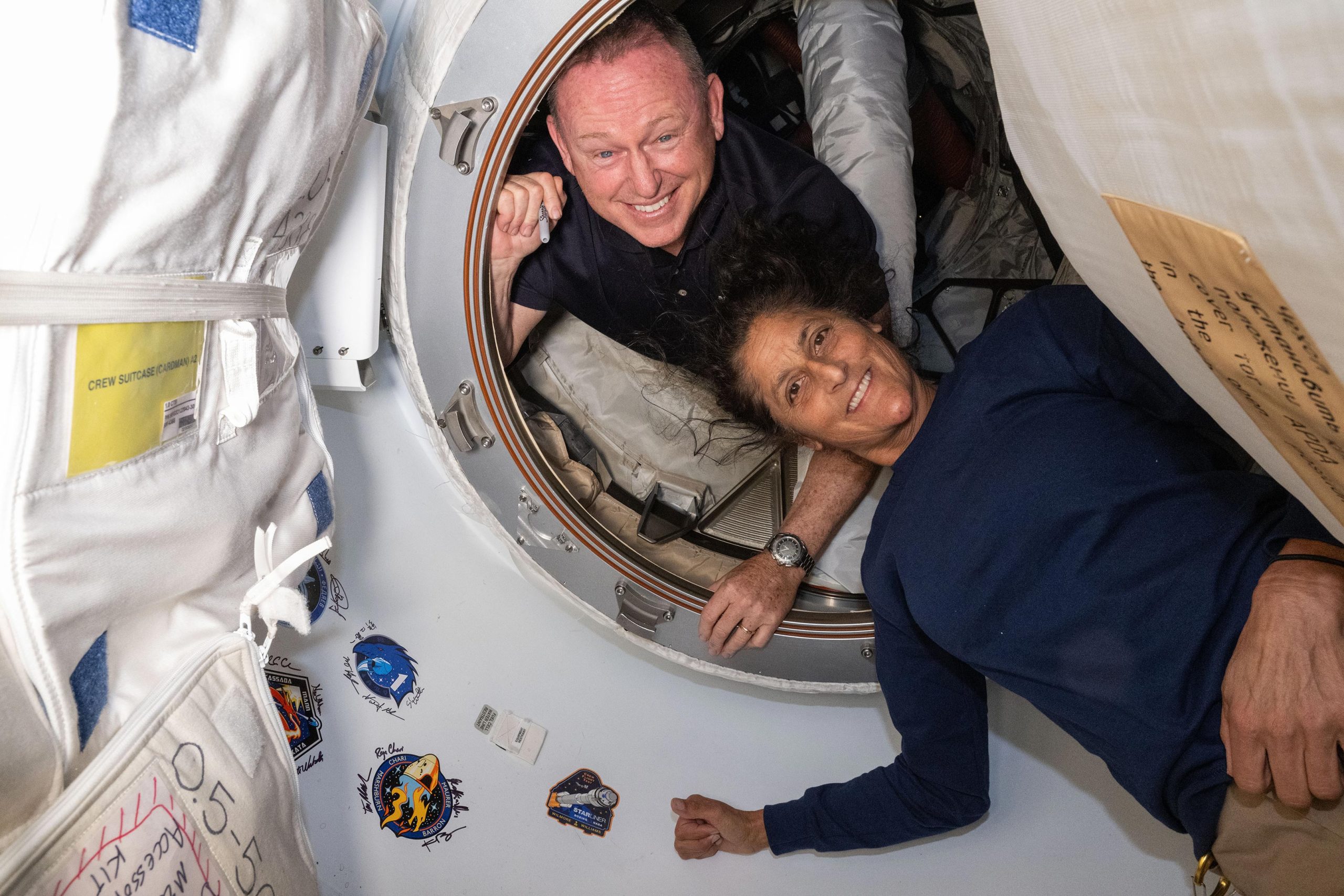
The agency’s SpaceX Crew-9 mission, originally slated with four crew members, will launch no earlier than Tuesday, September 24. The agency will share more information about the Crew-9 complement when details are finalized.
NASA and SpaceX currently are working several items before launch, including reconfiguring seats on the Crew-9 Dragon, and adjusting the manifest to carry additional cargo, personal effects, and Dragon-specific spacesuits for Wilmore and Williams. In addition, NASA and SpaceX now will use new facilities at Space Launch Complex-40 at Cape Canaveral Space Force Station in Florida to launch Crew-9, which provides increased operational flexibility around NASA’s planned Europa Clipper launch.
The Crew-9 mission will be the ninth rotational mission to the space station under NASA’s Commercial Crew Program, which works with the American aerospace industry to meet the goal of safe, reliable, and cost-effective transportation to and from the orbital outpost on American-made rockets and spacecraft launching from American soil.
For more than two decades, people have lived and worked continuously aboard the International Space Station, advancing scientific knowledge and demonstrating new technologies, making research breakthroughs not possible on Earth. The station is a critical testbed for NASA to understand and overcome the challenges of long-duration spaceflight and to expand commercial opportunities in low Earth orbit. As commercial companies focus on providing human space transportation services and destinations as part of a robust low Earth orbit economy, NASA’s Artemis campaign is underway at the Moon where the agency is preparing for future human exploration of Mars.
Never miss a breakthrough: Join the SciTechDaily newsletter.
Follow us on Google and Google News.
9 Comments
At least they’ll live on for a little while longer.
Elon Musk may be giggling right now, but his stuff is known to go up in smoke just the same. Crew Dragon may have had an impeccable record this far, but nothing lasts forever.
U sound like you’re full of hate. As well as envy, jealousy, and despair. People like u sicken the world. You are without a doubt, hoping for failure. You are without a doubt longing and urning for failure of anyone . Especially the ones who have only done good . Failure of others seems to make you very happy. Almost like a high, you thrive for it. You aren’t the same as the rest of us. Your a demon or a dark entity. Your filled with hate.
Why should I be envious of Elon Musk, you clown? I don’t need his money, and I definitely wouldn’t want to have his personality.
He’s a fraud, a scammer and a ruthless psychopathic tyrant. What good has he done, you absolute nitwit?
But go ahead, fawn all over him like a lowlife cultie loser you are..
…and it’s spelled “you’re”, you tulip.
Just the same?? Space X launches a rocket every other day. Please do explain how that’s “just the same” as failing on your third try?? Space X is so far ahead of Boeing that they’re not even running the same race anymore.
All Starships have exploded thus far, as well as some Falcons. One even obliterated a ramp at the Cape, a rare feat nowadays. Crewed flights have luckily gone off without a hitch so far, but with Musks general reckless attitude and a penchant to rush and cut corners, and a severe lack of outside supervision, that may soon change.
Do pay attention so I don’t have to school you next time.
This is nothing more than corporate welfare. Boeing only made it this far because NASA has tripped over themselves giving Boeing every possible opportunity. It was supposed to be a competition. But Boeing is struggling to get off the start while Space X has already showered and gone home…
In case you haven’t noticed, SpaceX is also on government welfare.