
Close Menu
    Facebook X (Twitter) Instagram
    SciTechDaily
    • Biology
    • Chemistry
    • Earth
    • Health
    • Physics
    • Science
    • Space
    • Technology
    Facebook X (Twitter) Pinterest YouTube RSS
    SciTechDaily
    Home»Space»Space Station Crew Opens Boeing Starliner Hatch, Greet “Rosie the Rocketeer”
    Space

    Space Station Crew Opens Boeing Starliner Hatch, Greet “Rosie the Rocketeer”

    By NASAMay 22, 20221 Comment2 Mins Read
    Facebook Twitter Pinterest Telegram LinkedIn WhatsApp Email Reddit
    Share
    Facebook Twitter LinkedIn Pinterest Telegram Email Reddit
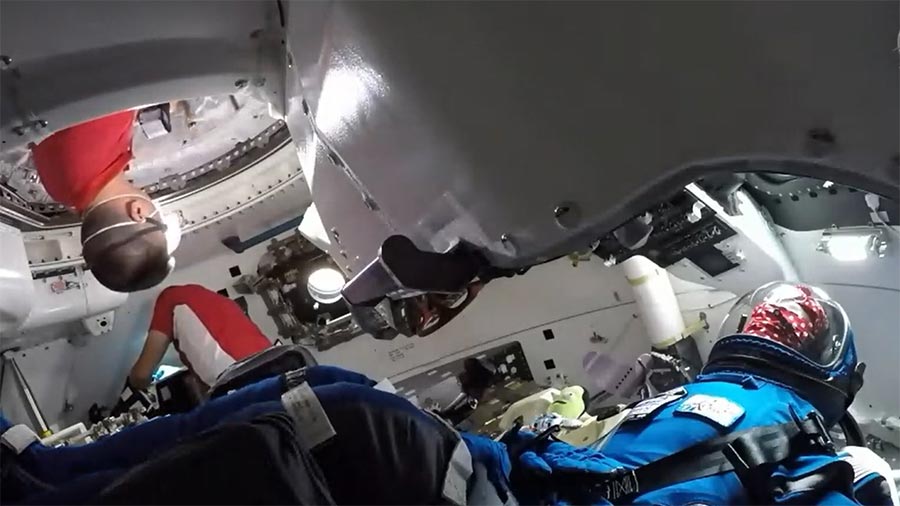
    Rosie the Rocketeer on Boeing Starliner
    NASA astronauts Bob Hines and Kjell Lindgren greet “Rosie the Rocketeer” inside the Boeing Starliner spacecraft shortly after opening its hatch. Credit: NASA

    Astronauts living aboard the International Space Station (ISS) opened the hatch for the first time to Boeing’s CST-100 Starliner spacecraft at 12:04 p.m. EDT Saturday, May 21, on its uncrewed Orbital Flight Test-2 (OFT-2).

    Starliner launched on a United Launch Alliance Atlas V rocket on a flight test to the International Space Station at 6:54 p.m. on Thursday, May 19, from Space Launch Complex-41 at Cape Canaveral Space Force Station in Florida. The uncrewed spacecraft successfully docked to the space station’s Harmony module at 8:28 p.m. EDT Friday, May 20.
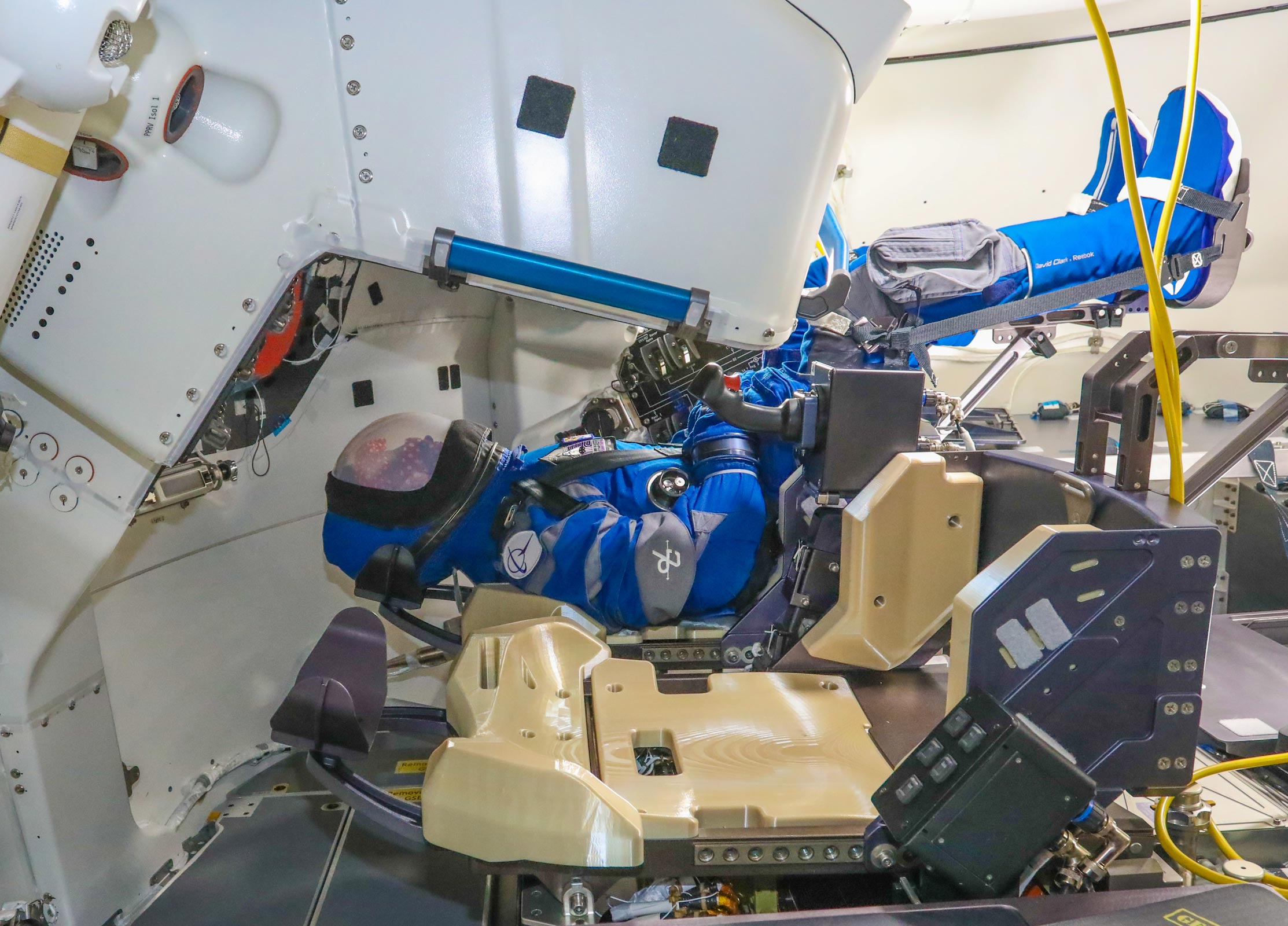
    Rosie the Rocketeer
    Rosie the Rocketeer, Boeing’s anthropometric test device, claimed her spot once again in the commander’s seat inside the company’s CST-100 Starliner spacecraft for its second uncrewed Orbital Flight Test for NASA’s Commercial Crew Program. Rosie’s first flight, OFT, provided hundreds of data points about what astronauts will experience during flight. For OFT-2, she will help maintain Starliner’s center of gravity during ascent, docking, undocking, and landing. Credit: Boeing/John Proferes

    For the flight test, Starliner carried about 500 pounds of NASA cargo and crew supplies and more than 300 pounds of Boeing cargo to the International Space Station. Following certification, NASA missions aboard Starliner will carry up to four crew members to the orbiting outpost, enabling the continued expansion of the crew and increasing the amount of science and research that can be performed aboard the space laboratory.

    The uncrewed flight test was designed to test the end-to-end capabilities of the crew-capable system as part of NASA’s Commercial Crew Program. OFT-2 will provide valuable data for NASA certifying Boeing’s crew transportation system for regular flights with astronauts to and from the space station.

    Starliner is scheduled to depart the space station on Wednesday, May 25, when it will undock and return to Earth, with a desert landing in the western U.S. The spacecraft will return with more than 600 pounds of cargo, including Nitrogen Oxygen Recharge System reusable tanks that provide breathable air to station crew members. The tanks will be refurbished on Earth and sent back to the station on a future flight.

    Never miss a breakthrough: Join the SciTechDaily newsletter.
    Follow us on Google and Google News.

    Astronaut Boeing Boeing Starliner International Space Station NASA
    Share. Facebook Twitter Pinterest LinkedIn Email Reddit

    Related Articles

    Stuck in Space? NASA Outlines Updated Return Plans for Boeing Starliner

    NASA, Boeing Complete Starliner Engine Testing – What’s Next for the Troubled Spacecraft?

    Starliner’s Final Countdown: New Thruster Testing Before Earth Return

    Helium Leaks and Thruster Fails: Boeing Starliner’s High-Stakes Docking Drama

    Liftoff! NASA Astronauts Pilot First Boeing Starliner Crewed Mission to Space Station

    Starliner’s Stellar Liftoff: NASA Astronauts Embark on Historic Journey to ISS

    Liftoff Looms: Boeing Starliner Ready for Launch

    Ready for Liftoff: NASA, Boeing, ULA “Go” for Starliner Crew Flight Test

    Historic Boeing Starliner Launch Delayed Again Due to Helium Leak

    1 Comment

    1. The 10th Man on May 22, 2022 6:30 am

      Well NASA bull dozed through endangering the lives of everyone aboard the space station. Who cares if the thrusters quit working. Job complete. We just want to get paid. You go NASA!

      Reply
    Leave A Reply Cancel Reply

    • Facebook
    • Twitter
    • Pinterest
    • YouTube

    Don't Miss a Discovery

    Subscribe for the Latest in Science & Tech!

    Trending News

    Beyond Pain Relief: Scientists Discover a Protein That Could Stop Osteoarthritis in Its Tracks

    Scientists Discover Why Alcohol Prevents the Liver From Healing, Even After You Quit

    Scientists Stunned As Volcano Removes Methane From the Air

    Scientists Discover Signs Africa May Be Splitting Apart Beneath Zambia

    Common Blood Pressure Drug Supercharges Cancer Treatment in Surprising New Study

    540-Million-Year-Old Fossils Reveal a Huge Surprise About Early Life on Earth

    Scientists Reverse Stroke Damage Using Stem Cells in Breakthrough Study

    Eating One Egg a Day Could Cut Alzheimer’s Risk by 27%

    Follow SciTechDaily
    • Facebook
    • Twitter
    • YouTube
    • Pinterest
    • Newsletter
    • RSS
    SciTech News
    • Biology News
    • Chemistry News
    • Earth News
    • Health News
    • Physics News
    • Science News
    • Space News
    • Technology News
    Recent Posts
    • Scientists Uncover Promising New Strategy To Stop Parkinson’s in Its Tracks
    • New Study Reveals How Vitamin D Could Calm Gut Inflammation
    • Experts Reveal the Surprising Cancer Link Behind a Common Vitamin
    • NASA’s Roman Space Telescope Could Finally Find the Milky Way’s Missing Neutron Stars
    • Strange “Worm Towers” Found in the Wild for the First Time May Be Hitchhiking on Beetles
    Copyright © 1998 - 2026 SciTechDaily. All Rights Reserved.
    • Science News
    • About
    • Contact
    • Editorial Board
    • Privacy Policy
    • Terms of Use

    Type above and press Enter to search. Press Esc to cancel.