
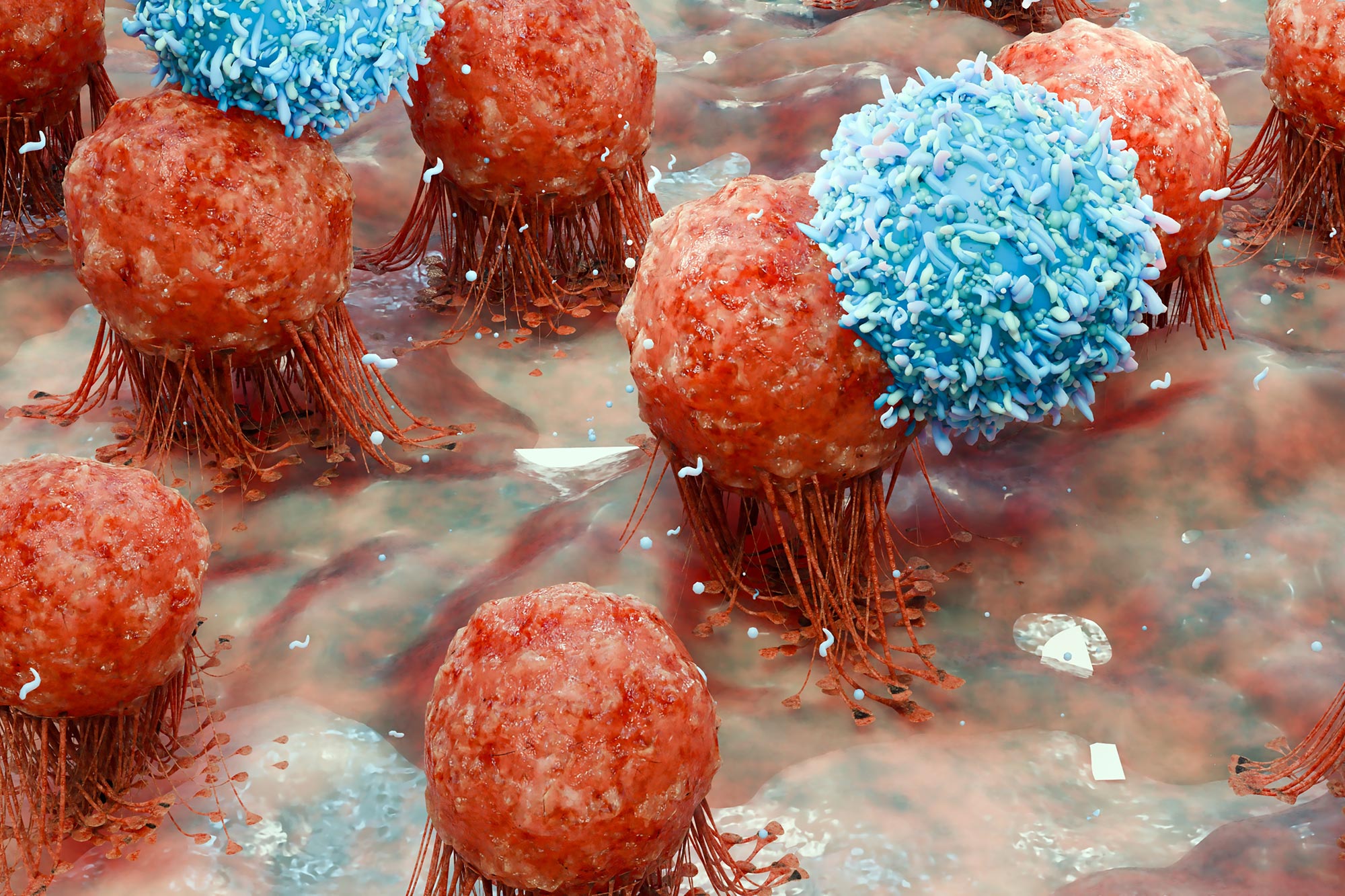
A newly discovered weakness in cancer cells could open the door to treatments that help the immune system overcome tumors that have resisted immunotherapy.
Cancer immunotherapy has helped some patients fight even advanced cancers, yet many tumors still find ways to escape the immune system. Researchers have now uncovered one possible reason why. Cancer cells can release a protein that removes chemical signals needed by the very immune cells trying to destroy them.
The finding, published in the journal Science, points to a potential new target for cancer treatment. It also challenges a familiar assumption about antioxidants, which are generally associated with protecting cells from damage.
Cancer turns antioxidants against T cells
At the center of the discovery are reactive oxygen species (ROS), often called free radicals. These molecules have long been linked to aging, DNA damage, and cancer. In small amounts, however, they serve another purpose. Cancer-fighting immune cells called T cells rely on ROS to activate and attack tumors.
Researchers found that some cancers exploit this dependency by releasing an antioxidant enzyme called peroxiredoxin-1 (PRDX1). The protein removes ROS from the surrounding environment, depriving T cells of signals they need to function.
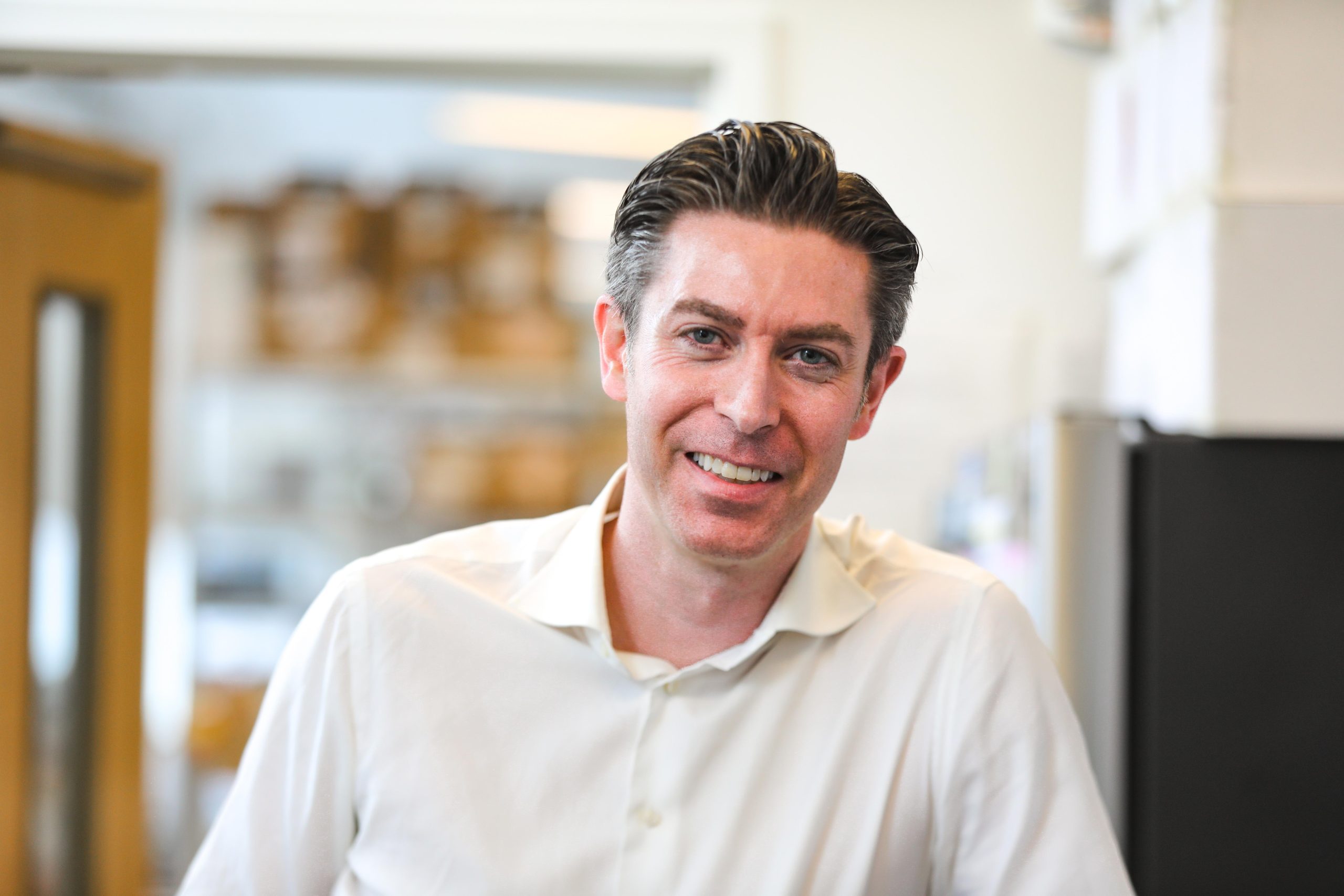
“One of the surprising findings is that antioxidants aren’t always beneficial in the context of cancer,” said Robert L. Eil, M.D., a physician-scientist who co-led the research. “While reactive oxygen species sound threatening, T cells actually need them to perform their tumor-fighting job. What we found is that tumors can exploit the T cell’s dependency by removing the reactive oxygen species the immune system depends on.”
Eil is an associate professor of surgery in the Oregon Health & Science University (OHSU) School of Medicine and a member of the OHSU Knight Cancer Institute. The study was conducted alongside investigators at the University of Cambridge.
The researchers uncovered the mechanism by examining tumor interstitial fluid, the liquid surrounding cells within tumors. They found high levels of PRDX1, creating an antioxidant-rich environment that could interfere with the immune response.
Removing PRDX1 leaves tumors vulnerable
To determine whether the protein was directly helping cancer survive, the team used CRISPR gene-editing technology to prevent cancer cells from producing PRDX1. Without the enzyme, immune activity increased and tumor growth declined across multiple experimental models.
In one melanoma model, the immune system rejected tumors lacking PRDX1 without additional treatment. In other models, removing the protein made previously resistant tumors respond to immune checkpoint blockade, a type of immunotherapy that helps T cells recognize and attack cancer.
The researchers also looked for evidence of the same process in humans. They analyzed published data from human cancer cell lines, studied gene activity across thousands of tumors, and measured PRDX1 in fluid collected from patient tumors. All three approaches provided evidence that human cancers release PRDX1 into their surroundings, where it can suppress T cell activity.

“We tend to think of reactive oxygen species purely as damaging byproducts of metabolism. But we are increasingly understanding that ROS have important functions within cells, and T cells require them to activate,” said Alexander J. Wesolowski, Ph.D., the study’s first author and a researcher in the Department of Pathology at the University of Cambridge. “Our study develops this picture, revealing that tumors can exploit this very dependency to evade elimination.”
The team also found that cancer cells increased PRDX1 production during a process called immunoediting. As tumors evolve under pressure from the immune system, they can develop characteristics that help them survive. Producing more of this antioxidant protein appears to be one way they may strengthen their defenses.
The researchers describe the mechanism as a previously unrecognized “redox checkpoint,” referring to the way tumors manipulate ROS levels to suppress immune activity.
Understanding this process could be particularly useful for improving immunotherapy, which remains ineffective for many patients despite its success against certain cancers.
“The immune system has already shown us that it can eradicate advanced cancers in some patients,” Eil said. “The challenge is that current immunotherapies don’t work for most people, and even when they do, complete responses remain relatively uncommon. The more we understand how tumors suppress T cells, the more opportunities we have to design therapies that reverse that suppression.”
Targeting the antioxidant shield
Possible treatments could include drugs that neutralize antioxidants released by tumors, therapies that block PRDX1 activity, or engineered immune cells capable of functioning in antioxidant-rich environments. These approaches remain possibilities for future research rather than established treatments.
“What’s exciting is that we’ve identified a target nobody was really looking for before,” Eil said. “This doesn’t put a drug in patients’ hands tomorrow, but it gives us an entirely new pathway to pursue. Discovering new targets is how future treatments begin.”
Eil and his collaborators plan to continue investigating how tumors weaken immune responses and whether those defenses can be overcome with next-generation immunotherapies, including engineered T cell treatments.
“This is one more victory against ignorance in understanding why cancers are so difficult to treat,” Eil said. “Every time we uncover a new way tumors suppress the immune system, we gain another opportunity to fight back. That’s how better treatments are built.”
Reference: “Tumor-derived antioxidants suppress immunity by depriving T cells of reactive oxygen species” by Alexander J. Wesolowski, Ardon M. Pillay, Panagiota Vardaka, Rabab Nasrallah, Randy Greaves, Housaiyin Li, Iliana Loffreda, Chelsea Jenkin, Andrew M. James, Alica Nübling, Christopher J. Ward, Teresa von Linde, Alberto G. Conti, Sheue-Fen Tzeng, Layla Dahmani, Alexander C. Evans, Sarah K. Whiteside, Yumi Yamashita-Kanemaru, Charlotte J. Imianowski, Jie Yang, Ignacio Moraga Gonzalez, Jack Chapman, Aws Al-Deka, Klaus Okkenhaug, Michael P. Murphy, Bartlomiej Swiatczak, Geoffrey Guittard, Enrico Lugli, Lukas Flatz, Ping-Chih Ho, Robert L. Eil and Rahul Roychoudhuri, 3 September 2026, Science.
DOI: 10.1126/science.adz8203
The research was supported by the Medical Research Council grants MR/Y013301/1, MR/W018454/1, MR/S024468/1, the Wellcome Trust/Royal Society grant 105663/Z/14/Z, the European Research Council Consolidator Award EP/X024709/1, the Japan Society for the Promotion of Science, the Cancer Research Institute and the Associazione Italiana per la Ricerca sul Cancro, National Cancer Institute of the National Institutes of Health award number K08CA256179, Phi Beta Psi, The Kuni Foundation for Cancer Research, The American Cancer Society and the American Association for Cancer Research.
Never miss a breakthrough: Join the SciTechDaily newsletter.
Follow us on Google and Google News.