

Scientists have discovered significant discrepancies in PD-1 between humans and rodents, indicating that common lab models may not adequately reflect human immune responses.
This revelation, which traces PD-1’s evolutionary path back millions of years, could transform how future cancer therapies are tested.
PD-1 and Its Significance in Cancer Treatment
Discovered in the 1990s, “programmed cell death protein 1” (PD-1) has become a key focus in cancer treatment research. PD-1 is a “checkpoint” receptor found on the surface of immune cells, acting as an off switch to prevent these cells from attacking other cells in the body.
This groundbreaking discovery, which earned a Nobel Prize in 2018, led to the development of drugs designed to block PD-1 and activate the immune system against cancer. However, these treatments are effective in only a small percentage of patients, underscoring the need for a deeper understanding of PD-1’s mechanisms. Most of what we know about PD-1 comes from mouse studies, which assume similarities between human and rodent biology — a premise that may not be entirely accurate.
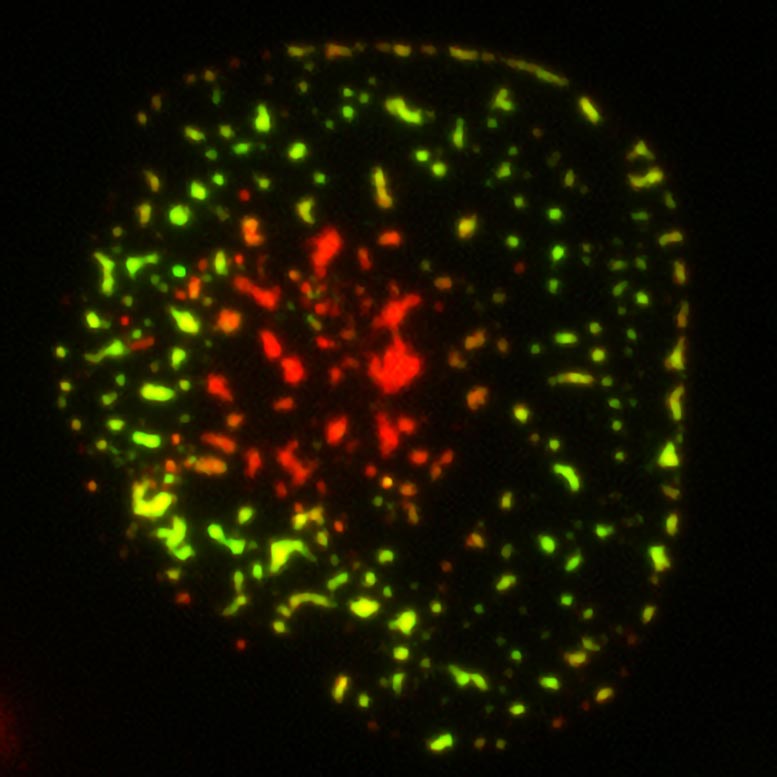
New Insights from UC San Diego Research
Researchers in UC San Diego’s School of Biological Sciences and School of Medicine have now discovered that this assumption may be flawed. In a comprehensive assessment of PD-1 that featured novel biochemical analyses, animal modeling, and a new evolutionary roadmap tracing PD-1 back millions of years, the UC San Diego scientists and their colleagues at the Chinese Academy of Sciences found that PD-1 in mice is significantly weaker than the human version.
The study, led by assistant project scientist Takeya Masubuchi, revealed several previously unknown PD-1 characteristics, including a “motif” — a specific sequence of amino acids — that is vastly different in rodents and humans.
“Our work uncovers unexpected species-specific features of PD-1 with implications for developing better pre-clinical models for PD-1,” said Associate Professor Enfu Hui of the School of Biological Sciences, Department of Cell and Developmental Biology, and a senior author of the paper. “We found a motif in PD-1 that’s present in most mammals, including humans, but is surprisingly missing in rodents, making rodent PD-1 uniquely weaker.”
The results of the study are published January 3, 2025, in the journal Science Immunology.
“Although many proteins in mice and humans have similar sequences, receptors in the immune system often show greater differences,” said Masubuchi. “Our study shows that these sequence differences can lead to functional variations of immune checkpoint receptors across species.”
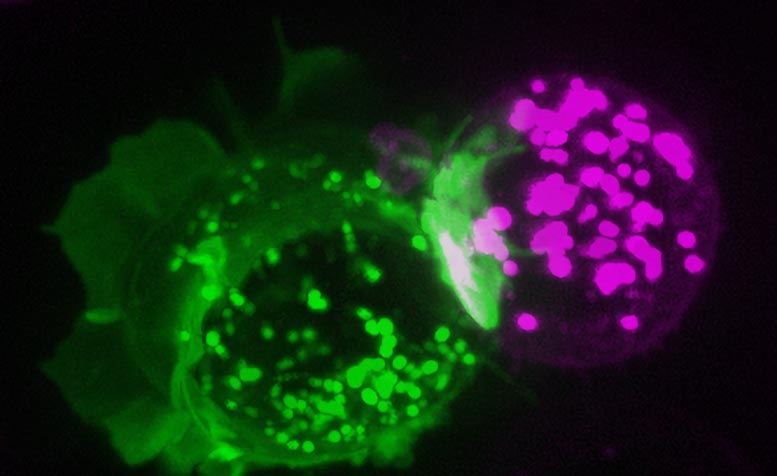
Implications for Future Research
Furthering their analysis, the researchers tested the impact of PD-1 humanization in mice — replacing mouse PD-1 with the human version — through co-senior author Professor Jack Bui’s laboratory in the Department of Pathology. They found that PD-1 humanization disrupted the ability of immune cells (T cells) to combat tumors.
“This study shows that as science progresses we need to have a rigorous understanding of the model systems that we use to develop medicines and drugs,” said Bui. “Finding that rodents might be outliers in terms of PD-1 activity forces us to rethink how to deploy medicines to people. If we’ve been testing medicines in rodents and they’re really outliers, we might need better model systems.”
Historical Context and Evolutionary Adaptations of PD-1
To trace the PD-1 human-rodent differences over time, the researchers collaborated with co-senior author Professor Zhengting Zou and his Chinese Academy of Sciences colleagues. They discovered evidence of a major dip in ancestral rodent PD-1 activity around 66 million years ago after the Cretaceous–Paleogene (K–Pg) mass extinction event, which wiped out the (non-avian) dinosaurs. The analysis showed that the rodent PD-1 is uniquely weak among all vertebrates. The weakening may be attributed to special ecological adaptations to escape the effects of rodent-specific pathogens.
“The rodent ancestors survived the extinction event but their immune receptor activities or landscape might have been altered as a consequence of adaptation to new environmental challenges,” said Hui.
Future studies will assess the impact of PD-1 on the anti-tumor activity of T cells in a humanized context across various tumor types.
Reference: “Functional differences between rodent and human PD-1 linked to evolutionary divergence” by Takeya Masubuchi, Lin Chen, Nimi Marcel, George A. Wen, Christine Caron, Jibin Zhang, Yunlong Zhao, Gerald P. Morris, Xu Chen, Stephen M. Hedrick, Li-Fan Lu, Chuan Wu, Zhengting Zou, Jack D. Bui and Enfu Hui, 3 January 2025, Science Immunology.
DOI: 10.1126/sciimmunol.ads6295
Never miss a breakthrough: Join the SciTechDaily newsletter.
Follow us on Google and Google News.