

Blocking an antioxidant protein that tumors use to suppress immune attacks improved cancer immunotherapy responses in mice.
Cancer cells can release antioxidants that interfere with the immune cells trying to kill them. Researchers have discovered how this chemical defense works, raising the possibility of switching it off to make cancer immunotherapy more effective.
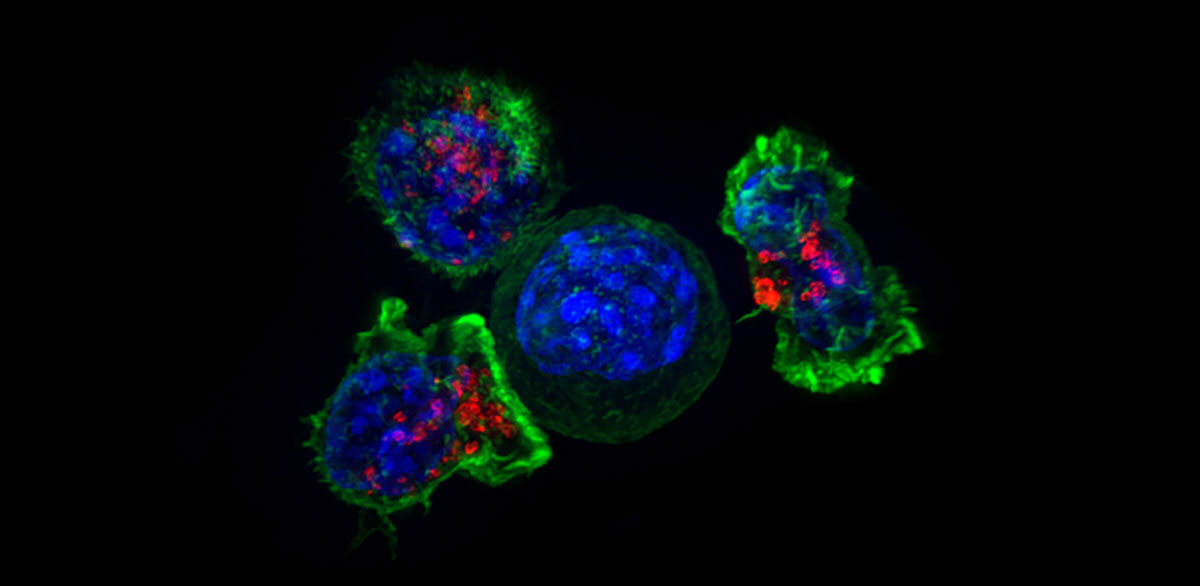
The defense takes advantage of a requirement of cancer-fighting immune cells called T cells. To activate their attack, T cells need small amounts of reactive oxygen species, chemically reactive molecules that can damage cells but also help transmit signals inside them. Tumors release an antioxidant protein that clears away those molecules, leaving T cells without the signals they need.
Researchers at the University of Cambridge and Oregon Health & Science University identified this mechanism by analyzing fluid surrounding cells in tumors grown in mice. The cancers released large amounts of Peroxiredoxin 1, or PRDX1, a protein that acts as a natural antioxidant. The findings were published in Science.
Cell-damaging molecules help T cells activate
Reactive oxygen species have long been viewed as damaging byproducts of metabolism, helping drive interest in antioxidant supplements as a possible way to reduce cancer risk. Their role in activating T cells shows why removing them can also interfere with the body’s defenses.
Dr. Xan Wesolowski, one of the lead authors from Cambridge’s Department of Pathology, said: “We tend to think of reactive oxygen species purely as damaging byproducts of metabolism. But we are increasingly understanding they have important functions within cells, and T cells need them to activate. Our study develops this picture, revealing that tumors can exploit this very dependency to evade elimination.”
Evidence from human cancers also pointed to PRDX1 being released into the surrounding environment. The team analyzed published data on proteins released by human cancer cell lines, examined gene activity across thousands of human tumors, and collected fluid surrounding tumors removed from patients. All three approaches indicated that human cancers release PRDX1 into their surroundings, where it can remove the reactive oxygen species that T cells depend on.
Removing PRDX1 helps immunotherapy in mice
To test what happens when cancer cells lose this defense, the researchers used CRISPR gene-editing technology to create mouse cancer cells that could no longer make PRDX1. Removing that ability increased immune-cell activity and limited tumor growth. It also improved the cancers’ response to immunotherapy, which uses the immune system to fight the disease.
Immunotherapies can be highly effective, but they work only in some patients. The mouse results suggest that targeting PRDX1 could help overcome one barrier to treatment.
Professor Rahul Roychoudhuri, also from Cambridge’s Department of Pathology, said: “We’ve found a new way by which cancers shut down the immune system. When we block this process, tumors that don’t respond to some immunotherapies start responding to treatment. That tells us this is a pathway worth targeting therapeutically, and there are several ways we might be able to achieve this.”
Antioxidant supplements may undermine immune defenses
The findings may also help explain why antioxidant supplements have disappointed in cancer prevention research. Several large randomized clinical trials have found that these supplements fail to reduce cancer risk and, in some cases, worsen outcomes. Antioxidants could inadvertently weaken the immune system’s attack on cancer by removing molecules needed to activate T cells.
Dr. Robert Eil of the School of Medicine at Oregon Health & Science University said: “Our study suggests a possible way to boost T cell immunotherapies. Rather than using antioxidants, it could be that prooxidants can kickstart the T cells into action against tumor cells.”
Prooxidants promote the formation or activity of reactive molecules, the opposite of what antioxidants do. Whether that approach could safely improve cancer treatment in people remains to be established. The team stresses that its treatment findings come from preclinical laboratory models, and people living with cancer should not change their treatment or diet without medical advice.
Reference: “Tumor-derived antioxidants suppress immunity by depriving T cells of reactive oxygen species” by Alexander J. Wesolowski, Ardon M. Pillay, Panagiota Vardaka, Rabab Nasrallah, Randy Greaves, Housaiyin Li, Iliana Loffreda, Chelsea Jenkin, Andrew M. James, Alica Nübling, Christopher J. Ward, Teresa von Linde, Alberto G. Conti, Sheue-Fen Tzeng, Layla Dahmani, Alexander C. Evans, Sarah K. Whiteside, Yumi Yamashita-Kanemaru, Charlotte J. Imianowski, Jie Yang, Ignacio Moraga Gonzalez, Jack Chapman, Aws Al-Deka, Klaus Okkenhaug, Michael P. Murphy, Bartlomiej Swiatczak, Geoffrey Guittard, Enrico Lugli, Lukas Flatz, Ping-Chih Ho, Robert L. Eil and Rahul Roychoudhuri, 3 September 2026, Science.
DOI: 10.1126/science.adz8203
The research was largely funded by the Medical Research Council, European Research Council, Wellcome and the National Institutes of Health/National Cancer Institute.
Never miss a breakthrough: Join the SciTechDaily newsletter.
Follow us on Google and Google News.