
Exerting Self-Control Does Not Mean Sacrificing Pleasure
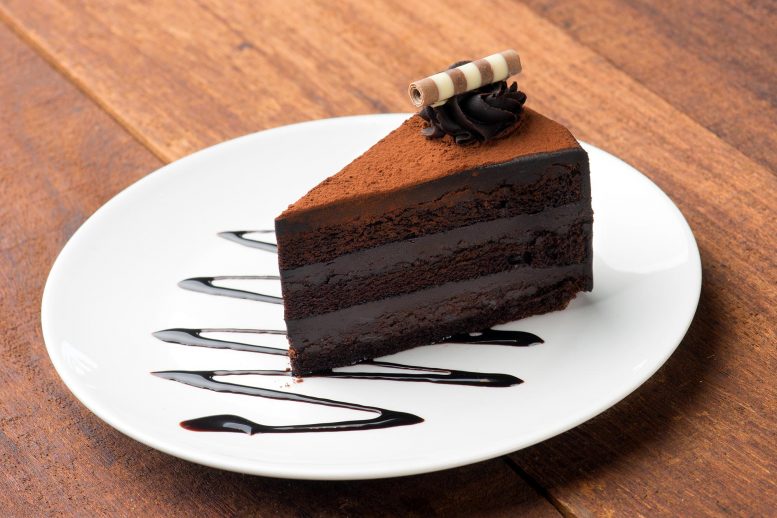
Choosing to eat chocolate cake instead of carrot sticks does not equal a lack of self-control, according to new research co-authored by a Cass Business School academic.
In the field of consumer research, self-control is often conceptualized as, and tested through, the ability or inability to abstain from ‘hedonic consumption’ — at its most base level, eating sugary, fatty foods.
According to this common conceptualization, food decisions involve a trade-off between health and pleasure, where deciding on pleasure is associated with a self-control failure.
But, as the authors of Exerting Self-Control ≠ Sacrificing Pleasure argue, for a choice to constitute a self-control failure, it must be accompanied by anticipated regret and violate a long-term goal held by the consumer.
“Presented with the opportunity to eat cake or carrot sticks, a person intent on losing weight would experience a self-control failure when they choose to eat the cake and expect to regret having done so. Anticipated regret would signal that eating the cake violated a long-term goal of losing weight,” said Dr. Irene Scopelliti, associate professor of marketing at Cass Business School.
“If the same person ate only a small piece of cake, however, they may not experience a self-control failure because they haven’t eaten enough to violate their goal of losing weight and trigger regret.
“It is not the consumption of cake that automatically signals a self-control failure, it is whether consumers believe that they may regret their food choice in the future; our research demonstrates that health and pleasure are not necessarily in conflict.
“That thinking plays into the dichotomous perception of foods being either good or bad, which is an incorrect over-simplification of eating practices.”
As a consequence, Dr. Scopelliti and her co-authors, Professor Joachim Vosgerau of Bocconi University and Dr. Young Eun Huh from the Korea Advanced Institute of Science and Technology’s School of Business and Technology Management, argue that obesity should not, as it often is, be associated with a lack of self-control, as the two cannot be empirically linked.
“Because individuals’ long-term goals often differ, so too do the prerequisites for self-control failures,” Professor Vosgerau said.
“If a person is comfortable with their weight and does not anticipate to regret in advance their food consumption choices, then we cannot say that person lacks self-control.”
Concluding their paper, the authors question whether consumer behavior researchers and psychologists have the expertise to advise consumers on their eating practices or give advice on what constitutes a healthy lifestyle.
“We argue that this task falls into the remit of nutritionists, biologists, and medical professionals, who can objectively determine which foods and in what quantities are good or bad,” Dr. Huh said.
“Consumer behavior researchers and psychologists are better placed to help consumers realize that they have a self-control problem, and to assist them in altering their perceptions of food so that tastiness and healthiness become more positively associated.
“By abandoning the idea that eating “bad foods” equals a self-control failure, consumers should find it easier to exert self-control, particularly if they are armed with the combined dietary knowledge of medically trained professionals and the behavioral knowledge of psychologists and consumer researchers.”
Reference: “Exerting Self‐Control ≠ Sacrificing Pleasure” by Joachim Vosgerau, Irene Scopelliti and Young Eun Huh, 19 October 2019, Journal of Consumer Psychology.
DOI: 10.1002/jcpy.1142
Never miss a breakthrough: Join the SciTechDaily newsletter.
Follow us on Google and Google News.