
In 2020 a team led by European Southern Observatory (ESO) astronomers reported the closest black hole to Earth, located just 1000 light-years away in the HR 6819 system. But the results of their study were contested by other researchers, including by an international team based at KU Leuven, Belgium. In a paper published today, these two teams have united to report that there is in fact no black hole in HR 6819, which is instead a “vampire” two-star system in a rare and short-lived stage of its evolution.
The original study on HR 6819 received significant attention from both the press and scientists. Thomas Rivinius, a Chile-based ESO astronomer and lead author on that paper, was not surprised by the astronomy community’s reception to their discovery of the black hole. “Not only is it normal, but it should be that results are scrutinized,” he says, “and a result that makes the headlines even more so.”
One team found a black hole, the other challenged their results. This is the story of how they got together to find out who was right. Credit: ESO
Rivinius and his colleagues were convinced that the best explanation for the data they had, obtained with the MPG/ESO 2.2-meter telescope, was that HR 6819 was a triple system, with one star orbiting a black hole every 40 days and a second star in a much wider orbit. But a study led by Julia Bodensteiner, then a PhD student at KU Leuven, Belgium, proposed a different explanation for the same data: HR 6819 could also be a system with only two stars on a 40-day orbit and no black hole at all. This alternative scenario would require one of the stars to be “stripped,” meaning that, at an earlier time, it had lost a large fraction of its mass to the other star.
“We had reached the limit of the existing data, so we had to turn to a different observational strategy to decide between the two scenarios proposed by the two teams,” says KU Leuven researcher Abigail Frost, who led the new study published today (March 2, 2022) in Astronomy & Astrophysics.
To solve the mystery, the two teams worked together to obtain new, sharper data of HR 6819 using ESO’s Very Large Telescope (VLT) and Very Large Telescope Interferometer (VLTI). “The VLTI was the only facility that would give us the decisive data we needed to distinguish between the two explanations,” says Dietrich Baade, author on both the original HR 6819 study and the new Astronomy & Astrophysics paper. Since it made no sense to ask for the same observation twice, the two teams joined forces, which allowed them to pool their resources and knowledge to find the true nature of this system.
“The scenarios we were looking for were rather clear, very different, and easily distinguishable with the right instrument,” says Rivinius. “We agreed that there were two sources of light in the system, so the question was whether they orbit each other closely, as in the stripped-star scenario, or are far apart from each other, as in the black hole scenario.”
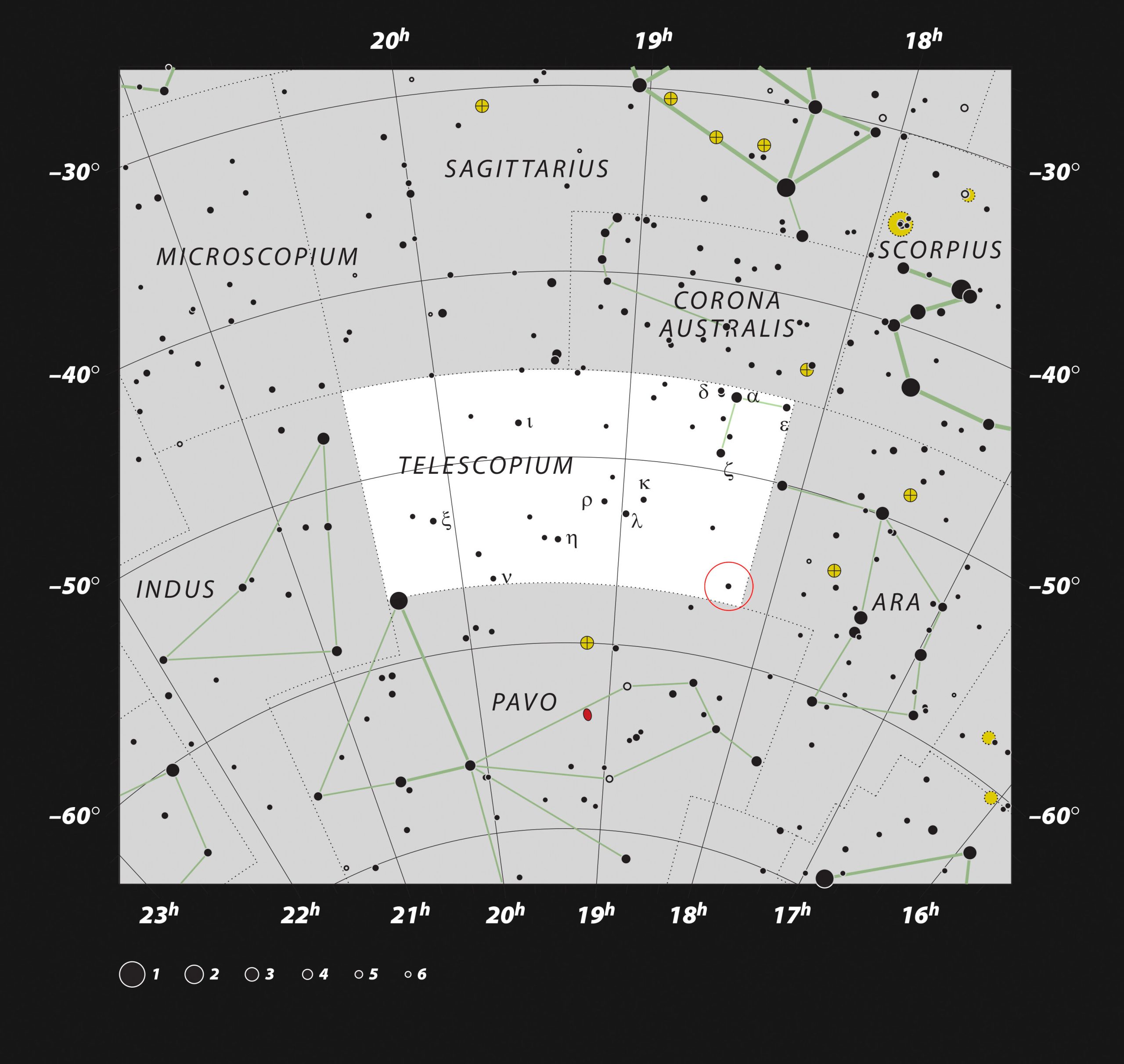
To distinguish between the two proposals, the astronomers used both the VLTI’s GRAVITY instrument and the Multi Unit Spectroscopic Explorer (MUSE) instrument on ESO’s VLT.
“MUSE confirmed that there was no bright companion in a wider orbit, while GRAVITY’s high spatial resolution was able to resolve two bright sources separated by only one-third of the distance between the Earth and the Sun,” says Frost. “These data proved to be the final piece of the puzzle, and allowed us to conclude that HR 6819 is a binary system with no black hole.”
“Our best interpretation so far is that we caught this binary system in a moment shortly after one of the stars had sucked the atmosphere off its companion star. This is a common phenomenon in close binary systems, sometimes referred to as “stellar vampirism” in the press,” explains Bodensteiner, now a fellow at ESO in Germany and an author on the new study. “While the donor star was stripped of some of its material, the recipient star began to spin more rapidly.”
“Catching such a post-interaction phase is extremely difficult as it is so short,” adds Frost. “This makes our findings for HR 6819 very exciting, as it presents a perfect candidate to study how this vampirism affects the evolution of massive stars, and in turn the formation of their associated phenomena including gravitational waves and violent supernova explosions.”
The newly formed Leuven-ESO joint team now plans to monitor HR 6819 more closely using the VLTI’s GRAVITY instrument. The researchers will conduct a joint study of the system over time, to better understand its evolution, constrain its properties, and use that knowledge to learn more about other binary systems.
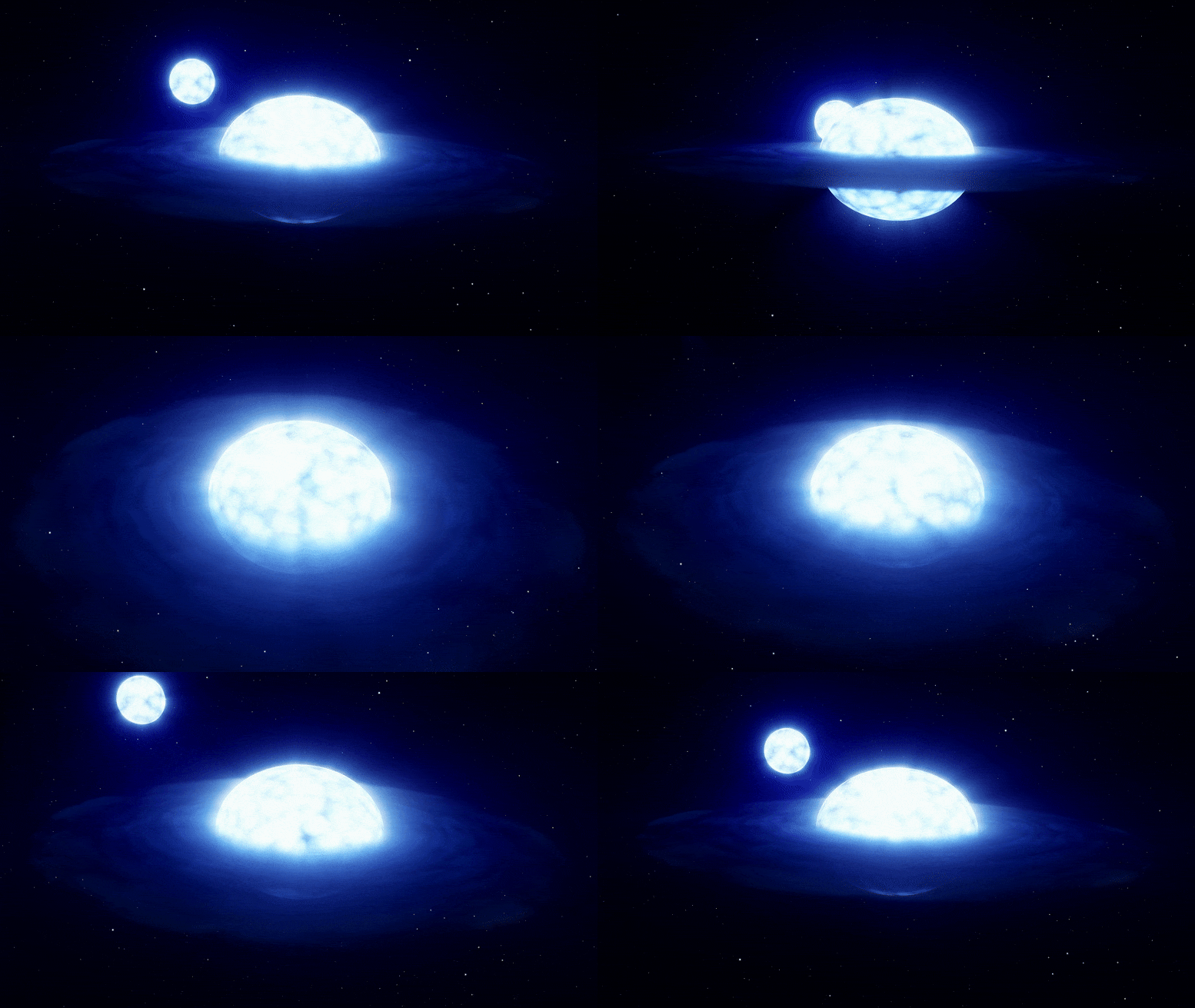
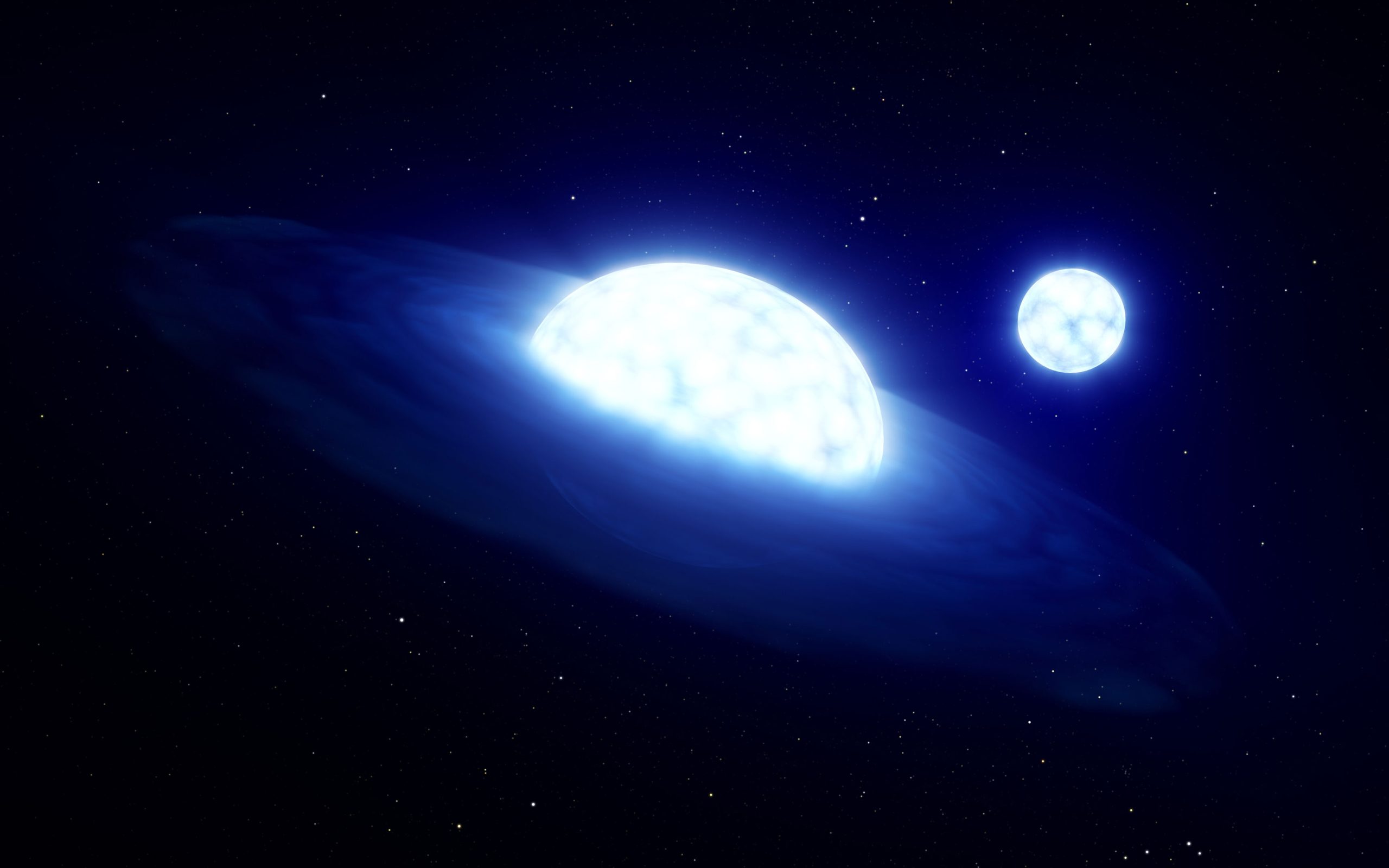
New research using data from ESO’s Very Large Telescope and Very Large Telescope Interferometer has revealed that HR 6819, previously believed to be a triple system with a black hole, is in fact a system of two stars with no black hole. The scientists, a KU Leuven-ESO team, believe they have observed this binary system in a brief moment after one of the stars sucked the atmosphere off its companion, a phenomenon often referred to as “stellar vampirism”. This animation shows what the system might look like; it’s composed of an oblate star with a disc around it (a Be “vampire” star; foreground) and B-type star that has been stripped of its atmosphere (background). Credit: ESO/L. Calçada
As for the search for black holes, the team remains optimistic. “Stellar-mass black holes remain very elusive owing to their nature,” says Rivinius. “But order-of-magnitude estimates suggest there are tens to hundreds of millions of black holes in the Milky Way alone,” Baade adds. It is just a matter of time until astronomers discover them.
Reference: “HR 6819 is a binary system with no black hole: Revisiting the source with infrared interferometry and optical integral field spectroscopy” by A. J. Frost, J. Bodensteiner, Th. Rivinius, D. Baade, A. Merand, F. Selman, M. Abdul-Masih, G. Banyard, E. Bordier, K. Dsilva, C. Hawcroft, L. Mahy, M. Reggiani, T. Shenar, M. Cabezas, P. Hadrava, M. Heida, R. Klement and H. Sana, 2 March 2022, Astronomy & Astrophysics.
DOI: 10.1051/0004-6361/202143004
It has received funding from the European Research Council (ERC) under the European Union’s Horizon 2020 research and innovation program (grant agreement number 772225: MULTIPLES; PI: Hugues Sana).
The team is composed of A. J. Frost (Institute of Astronomy, KU Leuven, Belgium [KU Leuven]), J. Bodensteiner (European Southern Observatory, Garching, Germany [ESO]), Th. Rivinius (European Southern Observatory, Santiago, Chile [ESO Chile]), D. Baade (ESO), A. Mérand (ESO), F. Selman (ESO Chile), M. Abdul-Masih (ESO Chile), G. Banyard (KU Leuven), E. Bordier (KU Leuven, ESO Chile), K. Dsilva (KU Leuven), C. Hawcroft (KU Leuven), L. Mahy (Royal Observatory of Belgium, Brussels, Belgium), M. Reggiani (KU Leuven), T. Shenar (Anton Pannekoek Institute for Astronomy, University of Amsterdam, The Netherlands), M. Cabezas (Astronomical Institute, Academy of Sciences of the Czech Republic, Prague, Czech Republic [ASCR]), P. Hadrava (ASCR), M. Heida (ESO), R. Klement (The CHARA Array of Georgia State University, Mount Wilson Observatory, Mount Wilson, USA) and H. Sana (KU Leuven).
Never miss a breakthrough: Join the SciTechDaily newsletter.
Follow us on Google and Google News.